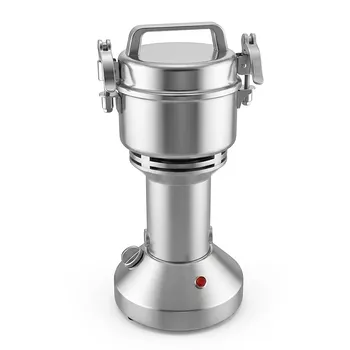
Why is high-efficiency ultra-fine grinding required for Portland cement before XRD? Get Accurate Rietveld Results
Updated 3 months ago
High-efficiency ultra-fine grinding is a prerequisite for Portland cement XRD analysis because it reduces the median particle size ($d_{50}$) to below 10 micrometers. This drastic reduction in size—ideally reaching approximately 6 micrometers—is the only way to eliminate "preferred orientation" and displacement errors. By achieving this level of refinement, you ensure a random distribution of crystal grains, which is fundamental for accurate and repeatable phase quantification via Rietveld refinement.
Core Takeaway: Ultra-fine grinding transforms heterogeneous cement clinker into a uniform, micron-level powder to eliminate physical biases that distort X-ray signals. Without this step, diffraction peak intensities will be inaccurate, leading to significant errors in the calculated mass fractions of cement phases.
Eliminating Preferred Orientation and Displacement Errors
The Problem of Particle Alignment
In their raw state, cement minerals often have irregular shapes that tend to align in specific directions when pressed into a sample holder. This preferred orientation causes some diffraction peaks to appear artificially strong while others disappear, making quantitative analysis impossible.
Achieving Random Distribution
High-efficiency grinding mills break down these irregular aggregates into uniform, near-spherical particles. This ensures that the crystal grains achieve a random distribution within the sample holder, allowing the XRD equipment to capture the true diffraction peaks of phases like quartz, calcite, and silicate components.
Correcting Peak Displacement
Large particles can cause the X-ray beam to reflect from a position slightly above or below the ideal sample plane. Reducing the particle size to the micron level minimizes these displacement errors, ensuring high-resolution and representative diffraction patterns.
Ensuring Sample Homogeneity and Representativeness
Representing the Bulk Material
Quantitative XRD often uses very small sample quantities to characterize large batches of Portland cement. Ultra-fine grinding ensures that these small samples are physically homogeneous and truly representative of the bulk material’s mineralogical composition.
Capturing Trace and Secondary Minerals
Portland cement contains various secondary minerals, such as hexahydrite or halite, which may be unevenly distributed. High-precision grinding ensures these fragile minerals are integrated uniformly into the powder, allowing for the precise identification of complex carbonate and silicate phases.
Minimizing Micro-absorption Effects
When particles are too large, certain mineral phases can "shield" others from the X-ray beam, a phenomenon known as micro-absorption. Refining the powder to below 10 micrometers ensures that X-ray penetration is consistent across all phases, resulting in more accurate quantitative results for minerals like magnetite or fayalite.
Understanding the Trade-offs and Pitfalls
Risk of Crystal Lattice Damage
While fine grinding is necessary, excessive mechanical energy can damage the crystal structure of the minerals, leading to "amorphization." If the grinding is too aggressive, the crystalline peaks will broaden and lose intensity, which negatively impacts the accuracy of the Rietveld refinement.
Heat Generation and Phase Transformation
Dry grinding at high speeds generates significant heat, which can cause sensitive hydrated phases in cement to dehydrate or change form. Using a liquid medium, such as ethanol, during the grinding process is often required to dissipate heat and protect the integrity of the mineral phases.
The Limitation of Traditional Sieving
While passing a sample through a 200-mesh sieve is a common laboratory benchmark, it only guarantees particles are smaller than 75 micrometers. For high-stakes quantitative XRD, this is often insufficient; the $d_{50}$ must be pushed much lower to satisfy the statistical requirements of the Rietveld method.
How to Apply This to Your Analysis
To achieve the best results in Portland cement characterization, your sample preparation strategy should align with your specific analytical requirements.
- If your primary focus is Rietveld Phase Quantification: Utilize a high-efficiency micronizing mill to reach a $d_{50}$ of approximately 6 micrometers to ensure peak intensity accuracy.
- If your primary focus is preserving delicate hydrated phases: Perform grinding in a liquid medium like ethanol or isopropanol to minimize friction-induced heat and crystal damage.
- If your primary focus is rapid qualitative screening: A standard vibration pulverizer or 200-mesh sieving may suffice, though you must accept lower precision in phase mass fractions.
Superior XRD data is not a product of the instrument alone, but of a meticulous grinding process that ensures every crystal grain is positioned to tell the truth about its composition.
Summary Table:
| Key Factor | Requirement | Analytical Impact |
|---|---|---|
| Particle Size ($d_{50}$) | < 10 μm (Ideal ~6 μm) | Eliminates preferred orientation and displacement errors |
| Grain Distribution | Random & Uniform | Ensures representative sampling and repeatable phase data |
| Crystal Integrity | Low Mechanical Stress | Prevents amorphization and preserves diffraction peak intensity |
| Thermal Control | Liquid Medium (Ethanol) | Dissipates heat to protect sensitive hydrated mineral phases |
Achieve Unmatched Precision in Material Characterization
Superior XRD data depends on meticulous sample preparation. At our core, we provide complete laboratory sample preparation solutions designed specifically for the rigorous demands of material science. Whether you are analyzing Portland cement or advanced ceramics, our equipment ensures your samples meet the strict physical standards required for accurate Rietveld refinement.
Our specialized product line includes:
- High-Efficiency Mills: Planetary ball mills, jet mills, and disc mills for reaching sub-10 micron particle sizes.
- Sample Processing: Jaw and roll crushers for initial reduction, plus liquid nitrogen cryogenic grinders for heat-sensitive materials.
- Precision Compaction: A full spectrum of hydraulic presses, including Cold/Warm Isostatic Presses (CIP/WIP), standard lab presses, and vacuum hot presses for perfect pellet formation.
- Classification: Sieve shakers and various test meshes to verify your grinding results.
Optimize your laboratory workflow today. Contact our technical team to find the ideal powder processing and compaction equipment for your specific research needs.
References
- Paul E. Stutzman, Pan Feng. Phase Analysis of Portland Cement by Combined Quantitative X-Ray Powder Diffraction and Scanning Electron Microscopy. DOI: 10.6028/jres.121.004
Mentioned Products
- Laboratory Desktop Ultra Fine Powder Grinder High Speed Micronizing Pulverizer
- Water Cooled Airflow Ultra Fine Grinder for Low Temperature Material Processing
- Water Cooled Pulse Jet Ultrafine Grinder
- Air Guided Ultrafine Pulverizer High Speed Laboratory Powder Grinder for Chemical and Material Processing
- Laboratory Ultrafine Impact and Airflow Grinder for Precise Particle Size Control
People Also Ask
- What role does a laboratory grinder play in the pretreatment of sunflower seed shell-based adsorbents? Boost Efficiency.
- How does a laboratory grinder or mill enhance the adsorption performance of agricultural waste materials? Boost Surface Area
- What is the function of a laboratory high-speed pulverizer in the preparation of eggshell powder? Essential Pretreatment
- What is the function of a laboratory pulverizer in Boerhavia diffusa-based adsorbent prep? Maximize Surface Area
- Why must soil samples be ground before XRD or XRF analysis? Ensure Precision & Homogeneity in Lab Results

Tech Team · PowderPreparation
Last updated on Jun 03, 2026
Related Products
Laboratory Desktop Ultra Fine Powder Grinder High Speed Micronizing Pulverizer
Water Cooled Airflow Ultra Fine Grinder for Low Temperature Material Processing
Water Cooled Pulse Jet Ultrafine Grinder
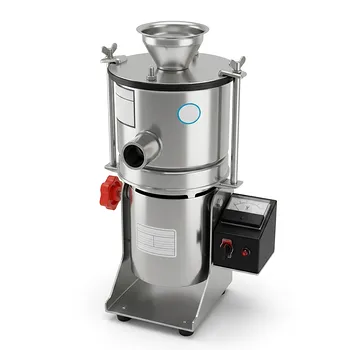
Air Guided Ultrafine Pulverizer High Speed Laboratory Powder Grinder for Chemical and Material Processing
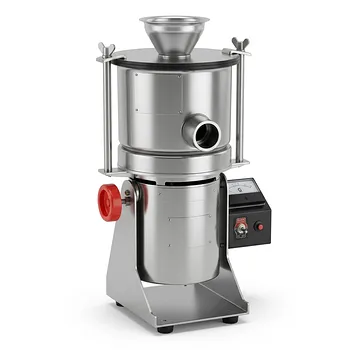
Laboratory Ultrafine Impact and Airflow Grinder for Precise Particle Size Control
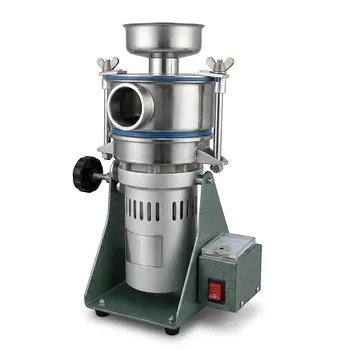
Small Airflow Ultra-Fine Grinder for Laboratory Sample Preparation
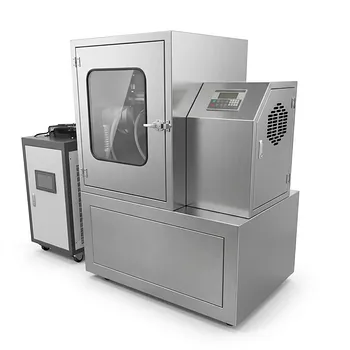
Vibratory Superfine Grinder for Ultra Fine Laboratory Powder Milling
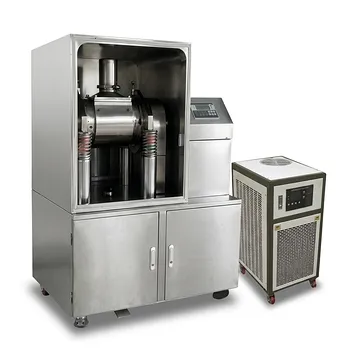
Small Vibrating Ultrafine Grinder for Traditional Chinese Medicine
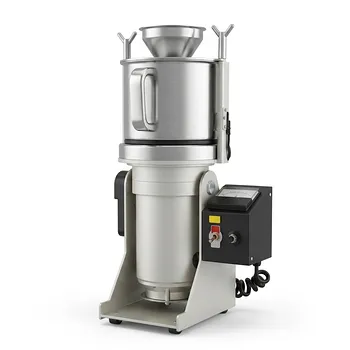
Water Cooled Pulse Jet Ultra Fine Pulverizer for Continuous Grinding
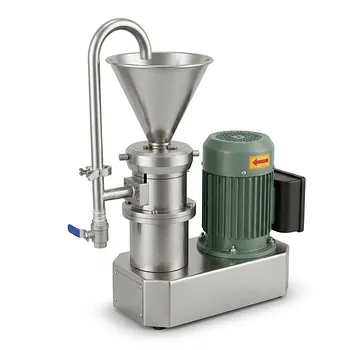
Small Laboratory Colloid Mill for Ultra-Fine Wet Grinding and Emulsification
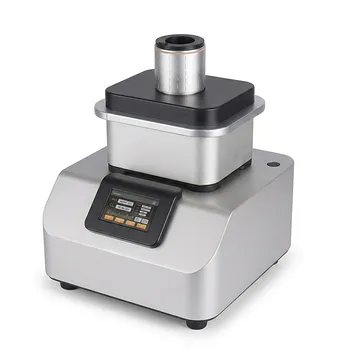
Ultra Centrifugal Mill High Speed Laboratory Grinder for Fibrous and Brittle Sample Preparation
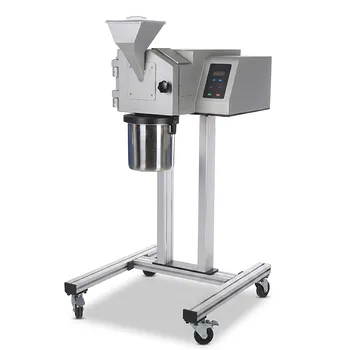
Cross Beater Mill for Brittle Material Grinding and Continuous Fine Crushing Industrial Sample Preparation
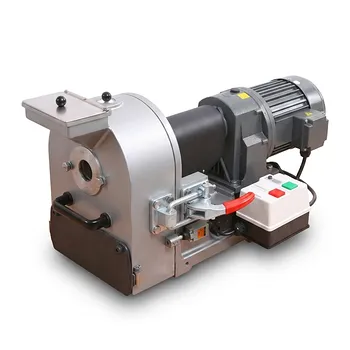
Laboratory Disc Mill for Fine Sample Preparation of Hard and Brittle Materials
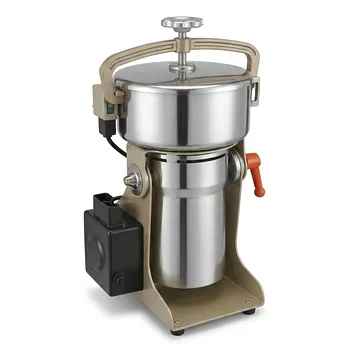
Multifunctional High Efficiency High Speed Laboratory Grinder
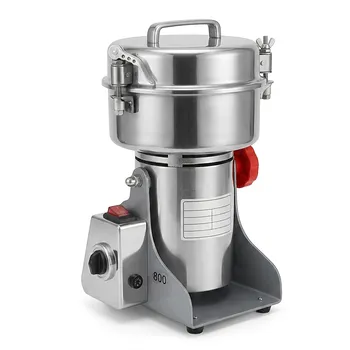
Small High-Speed Laboratory Grinder for Rapid Sample Preparation
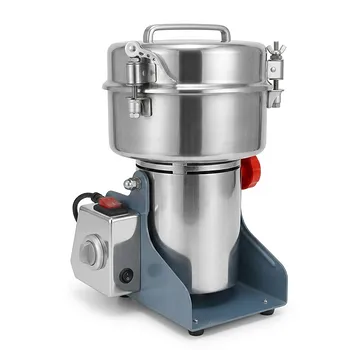
Small High-Speed Grinder for Efficient Laboratory Sample Preparation
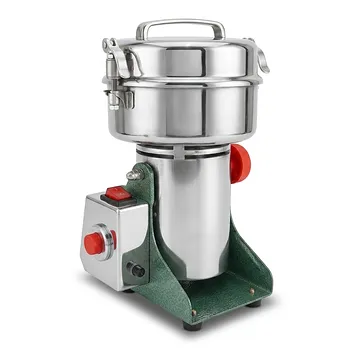
Small High-Speed Laboratory Grinder for Powder Processing
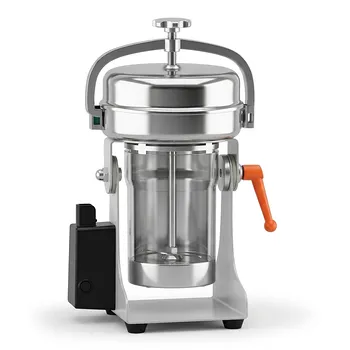
High Efficiency High Speed Grinder 2200W 25000 RPM Laboratory Sample Preparation
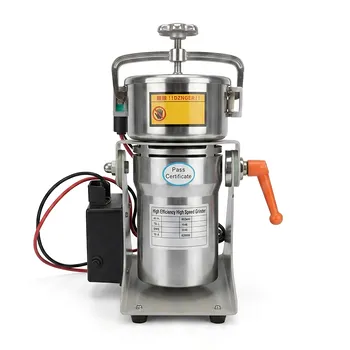
High Efficiency High Speed Grinder Laboratory Mill 1300W 25000rpm