Why use high-purity zirconia grinding balls for zirconia powders? Ensure Maximum Purity and Milling Efficiency
Updated 5 months ago
The primary reason for using high-purity zirconia grinding balls is the "homogeneous grinding principle." By matching the chemistry of the grinding media to the powder, manufacturers ensure that any inevitable wear results in the same material already being processed, rather than introducing foreign contaminants. This approach, combined with zirconia's extreme density and hardness, provides the high-impact energy needed to refine powders while preserving the chemical and structural integrity of the final ceramic product.
Utilizing zirconia media for zirconia powders optimizes grinding efficiency through high kinetic energy while safeguarding material purity. This "like-with-like" strategy prevents foreign inclusions that would otherwise degrade the mechanical, electrical, and dielectric properties of the finished ceramic.
The Homogeneous Grinding Principle
Eliminating Foreign Chemical Impurities
When milling for extended periods (often 10 to 24 hours), grinding media naturally undergoes wear. By using high-purity zirconia balls, any particles shed during the process are chemically identical to the powder being milled. This prevents the introduction of iron, silica, or alumina, which could compromise the final product's composition.
Maintaining Material Consistency
Using a "like-with-like" material strategy ensures that the mechanical properties and structural stability of the zirconia-based composite remain uniform. This is particularly critical for high-performance applications like refractory materials or oxygen sensors where phase purity is paramount.
Maximizing Grinding Efficiency
High Density and Kinetic Energy
Zirconia is characterized by a high density, which allows the grinding balls to generate significant kinetic energy during rotation. This energy is essential for effectively crushing particles and reducing them to the target size in a shorter timeframe.
Extreme Hardness and Wear Resistance
Zirconia, particularly in its cubic form, possesses an extreme hardness of approximately 12.663 Hv. This property allows the media to withstand the abrasive nature of ceramic powders without excessive degradation, ensuring a stable and repeatable milling process.
Impact on Final Material Performance
Preserving Electrical and Dielectric Properties
In the production of electronic ceramics, even trace amounts of foreign metal or oxide impurities can drastically alter impedance characteristics and dielectric constants. High-purity media ensures that these electrical properties remain stable and predictable at high temperatures.
Controlling Grain Growth
The introduction of foreign impurities during milling can lead to abnormal grain growth during the subsequent sintering process. By maintaining high purity through zirconia media, manufacturers can ensure a fine, uniform microstructure in the finished ceramic.
Understanding the Trade-offs
Cost vs. Contamination
High-purity zirconia media is significantly more expensive than alumina or steel alternatives. However, the cost of media wear and the risk of "poisoning" a high-value batch of powder often make zirconia the more economical choice in the long run for high-precision applications.
Density and Heat Generation
While high density improves milling speed, it also increases the thermal energy generated within the mill. If the ceramic powder is heat-sensitive, the cooling system of the ball mill must be capable of offsetting the intense kinetic energy provided by the heavy zirconia balls.
How to Apply This to Your Milling Process
When selecting grinding media for your specific zirconia-based application, consider the following priorities:
- If your primary focus is electrical or piezoelectric performance: Always use the highest purity zirconia media available to prevent trace metal contamination that could degrade impedance or dielectric stability.
- If your primary focus is reducing processing time: Leverage the high density of zirconia balls to maximize impact energy, but monitor the mill temperature to avoid thermal degradation of the powder.
- If your primary focus is structural integrity: Ensure the media matches the specific stabilizer (e.g., Yttria or Magnesia) of your zirconia powder to maintain complete chemical homogeneity throughout the batch.
The strategic selection of high-purity zirconia media is not merely a preference, but a technical necessity for maintaining the integrity and performance of advanced ceramic materials.
Summary Table:
| Key Feature | Benefit for Zirconia Milling | Technical Impact |
|---|---|---|
| Chemical Homogeneity | Eliminates foreign contaminants | Preserves phase purity & electrical properties |
| High Density | Increases kinetic energy | Faster particle size reduction & shorter mill time |
| Extreme Hardness | Superior wear resistance | Prevents media degradation & ensures consistency |
| Microstructure Control | Prevents abnormal grain growth | Ensures fine, uniform ceramic grain structure |
| Mechanical Stability | Matches structural properties | Maintains integrity of the final sintered product |
Elevate Your Material Science Research with Precision Powder Solutions
Achieving ultra-pure, uniform powders requires more than just the right grinding media; it demands high-performance equipment designed for precision. We provide complete laboratory sample preparation solutions tailored for material science professionals, specializing in advanced powder processing and compaction.
Our extensive product range includes:
- Milling & Grinding: Planetary ball mills, jet mills, disc mills, and liquid nitrogen cryogenic grinders for ultrafine particle reduction.
- Sizing & Mixing: Vibratory/air-jet sieve shakers and high-efficiency powder or defoaming mixers.
- Compaction Excellence: A full spectrum of hydraulic presses, including Cold/Warm Isostatic Presses (CIP/WIP), standard lab presses, and vacuum hot presses for superior sample density.
Don't let impurities compromise your high-performance ceramics. Contact our experts today to discover how our specialized equipment can optimize your workflow and safeguard your material integrity.
References
- Arife Yurdakul, Hilmi Yurdakul. Highly tough and hard zirconia-based composites derived from 3Y-TZP and 12ce-tzp powders by co-doping approach. DOI: 10.2298/sos250129012y
Mentioned Products
- High Energy Laboratory Planetary Ball Mill for Nano Grinding and Material Science Sample Preparation
- Vertical Square Planetary Ball Mill for Laboratory Sample Preparation and Nanoscale Grinding
- 8L Planetary Ball Mill for Laboratory Grinding and Sample Preparation
- High Energy Planetary Ball Mill for Nano Scale Grinding and Mechanical Alloying
- Vertical Semi Circular Planetary Ball Mill for Laboratory Precision Grinding
People Also Ask
- How does the size distribution of steel ball grinding media affect ore grindability? Optimize Energy & Lab Accuracy
- What role does a laboratory ball mill play in the study of chalcopyrite mineral liberation? Key for Recovery Success
- What are the primary functions of a laboratory ball mill or powder mixer when synthesizing multi-component standard reference materials?
- What core function does a laboratory ball mill perform during phosphate ore grinding? Achieve Monomer Dissociation
- What role does a laboratory ball mill serve in the Berry and Bruce modified Bond method? Standardizing Ore Analysis

Tech Team · PowderPreparation
Last updated on May 14, 2026
Related Products

High Energy Laboratory Planetary Ball Mill for Nano Grinding and Material Science Sample Preparation

Vertical Square Planetary Ball Mill for Laboratory Sample Preparation and Nanoscale Grinding

8L Planetary Ball Mill for Laboratory Grinding and Sample Preparation

High Energy Planetary Ball Mill for Nano Scale Grinding and Mechanical Alloying

Vertical Semi Circular Planetary Ball Mill for Laboratory Precision Grinding

Miniature Planetary Ball Mill with Vacuum Grinding and High Efficiency for Laboratory Sample Preparation

High Energy Omnidirectional Planetary Ball Mill 20L

Heavy Duty Horizontal Planetary Ball Mill for Efficient Industrial Grinding and Sample Preparation

High Energy Omnidirectional Planetary Ball Mill 16L
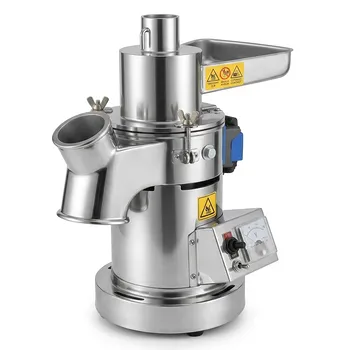
Continuous Feeding Grinder High Efficiency Pulverizer for Lab Sample Preparation

360° Rotating Omnidirectional Laboratory Planetary Ball Mill for Homogeneous Ultra-Fine Grinding and Mixing