All Questions
How Do Horizontal Oscillation And Stainless Steel Media Work In Cryogenic Ball Milling Of Cnts? Optimize Dispersion.
Learn how horizontal oscillation and stainless steel media synergize to disperse carbon nanotubes via high-energy impacts and cryogenic shearing.
What Role Does Liquid Nitrogen Cryogenic Grinding Play In The Modification Of Cnts? Optimize Nanomaterial Processing
Learn how cryogenic grinding enables structural shortening and disentanglement of CNTs while preventing thermal degradation and chemical damage.
Advantages Of Cryogenic Ball Milling Vs Traditional Mixing For Powders? Achieve Superior Dispersion & Refinement.
Explore how cryogenic ball milling improves metal-polymer composites by inducing brittleness, preventing oxidation, and accelerating grain refinement.
What Is The Function Of Liquid Nitrogen Cryogenic Grinding In The Initial Preparation Of Phbh Polymer Powder? Key Roles
Learn how liquid nitrogen cryogenic grinding enables PHBH powder preparation through cold embrittlement and thermal protection for superior results.
How Does Liquid Nitrogen As A Processing Medium Affect Copper Powder Beyond Cooling? Impacts On Purity & Sintering
Discover how liquid nitrogen acts as a reactive medium in copper cryomilling, influencing grain refinement, surface chemistry, and sintering density.
What Is The Primary Role Of The Cryomilling Process In The Preparation Of Nanocrystalline Copper Powder? Refine Grains
Explore how cryomilling inhibits recovery to produce nanocrystalline copper powder with ultra-fine grain structures and high chemical purity.
What Is The Role Of A High-Energy Cryogenic Grinder In Al-Gr Nanocomposites? Optimize Refinement & Dispersion
Discover how cryogenic grinding ensures nanocrystalline refinement, prevents oxidation, and optimizes graphene dispersion in Al-Gr nanocomposites.
What Is The Function Of Cryomilling In The Preparation Of Bimodal Nanostructured Metals? Achieve Superior Alloy Strength
Learn how cryomilling inhibits recrystallization to create nanocrystalline matrices for high-strength bimodal metals. Optimize your grain refinement.
Why Is Liquid Nitrogen Cryogenic Grinding Used For Coal And Microbial Experiments? Preserve Sample Integrity
Learn why cryogenic grinding is vital for coal and microbial research to prevent thermal degradation and ensure chemical integrity for experiments.
Why Is Liquid Nitrogen Cryogenic Treatment Necessary Before Grinding Conventional And Biodegradable Plastics? Pro Tips
Learn how cryogenic grinding uses liquid nitrogen to achieve cold brittleness, prevent melting, and produce fine plastic powders without degradation.
Why Is Liquid Nitrogen Used For Iron Ore Pellet Analysis? Preserve Integrity For Accurate Particle Size Distribution
Discover how liquid nitrogen cryogenic treatment preserves iron ore green pellet integrity for accurate particle size distribution (PSD) analysis.
Why Use Cryogenic Grinders For Nanoplastic (Mnp) Prep? Ensure Thermal Stability And Nanoscale Precision
Explore the benefits of cryogenic grinding for MNPs: prevent thermal degradation, ensure chemical fidelity, and achieve precise nanoscale uniformity.
What Are The Advantages Of Using Liquid Nitrogen Cryomilling? Achieve Ultra-Fine Grains And High Chemical Purity.
Discover how liquid nitrogen cryomilling produces nanocrystalline powders with ultra-fine grain sizes, high purity, and minimal thermal degradation.
What Is The Role Of A Liquid Nitrogen Cryogenic Grinder In Drug-Polymer Mixing? Achieve Superior Sample Homogeneity
Discover how cryogenic grinding ensures uniform drug-polymer mixtures and protects heat-sensitive components through low-temperature embrittlement.
Why Is Cryogenic Milling Using Liquid Nitrogen Necessary During The Mechanical Alloying Of Cu-Ta Alloy Powders? Key Benefits
Learn how liquid nitrogen cryogenic milling prevents grain growth, oxidation, and cold welding in Cu-Ta alloys for superior nanocrystalline structures.
What Are The Key Advantages Of Liquid Nitrogen Cryogenic Grinders Compared To Conventional Grinders For Processing Turmeric Powder? Key Benefits
Discover how liquid nitrogen cryogenic grinding preserves turmeric’s volatile oils, vibrant color, and bioactivity while achieving ultra-fine powder.
Why Is Liquid Nitrogen Cryomilling Utilized In The Processing Of Metal Alloys? Achieve Nanocrystalline Precision
Discover how liquid nitrogen cryomilling prevents recrystallization and oxidation to create superior nanocrystalline metal alloys and powders.
Besides Cooling, What Roles Does Liquid Nitrogen Play Within The Grinding Jar? Unlock Advanced Material Engineering.
Discover how liquid nitrogen in cryomilling prevents oxidation, suppresses grain growth, and ensures material purity for nanostructural engineering.
What Are The Advantages Of A Cryogenic Grinder (Cryomill) For Nanopowders? Faster, Purer Material Refinement
Discover how cryogenic grinding prevents oxidation, suppresses thermal recovery, and accelerates grain refinement for high-purity nanopowders.
Why Is It Necessary To Use A Liquid Nitrogen Cryogenic Grinder When Preparing Standard Tire Tread Reference Samples? Ensure Sample Integrity
Discover how liquid nitrogen induces cold embrittlement for rubber grinding, preserving chemical integrity and preventing melting in reference samples.
Why Use Cryogenic Ball Milling For Polyurethane Tga/Dsc? Ensure Accurate Thermal Analysis & Sample Integrity
Learn why liquid nitrogen cryogenic ball milling is the gold standard for polyurethane foam prep to achieve high-precision TGA/DSC results.
How Does Liquid Nitrogen Influence Al7075-Bnnt Modification? Achieve Nanocrystalline Precision In Cryomilling
Learn how liquid nitrogen cooling drives grain refinement, prevents oxidation, and improves BNNT dispersion in Al7075 composites during cryomilling.
Why Use Mixed-Diameter Balls For Copper Cryogenic Milling? Achieve Superior Nanocrystalline Powder Refinement
Learn how mixed-diameter grinding balls optimize kinetic energy in cryogenic milling to produce high-quality nanocrystalline copper powder.
What Is The Role Of A Cryogenic Ball Mill And Its Liquid Nitrogen System? Achieve Nano-Scale Grain Refinement In Copper
Learn how cryogenic ball mills and liquid nitrogen systems produce ultra-fine grained copper by suppressing thermal recovery and preventing oxidation.
What Is The Function Of A Liquid Nitrogen Cryogenic Grinder In The Recycling Process Of Permanent Magnet Materials? Guide
Learn how liquid nitrogen grinders enable brittle pulverization and prevent oxidation to preserve magnetic properties in permanent magnet recycling.
What Precautions For Grinding Low Tg Plastics Like Polyethylene? Master Cryogenic Milling For Perfect Powders
Learn essential precautions for grinding low Tg plastics like PE. Discover how cryogenic cooling prevents smearing and ensures high-quality powder.
What Is The Function Of Liquid Nitrogen Cryogenic Pre-Cooling In The Preparation Of Microplastic (Mps) Particles? Explained
Discover how liquid nitrogen pre-cooling enables brittle fracture and preserves chemical integrity for realistic microplastic particle preparation.
What Is The Function Of Cryogenic Grinders In Asd Pre-Mixing? Achieve Superior Api Homogeneity And Thermal Stability.
Learn how cryogenic grinders use liquid nitrogen to embrittle materials, prevent recrystallization, and ensure uniform API distribution in ASD prep.
What Is The Role Of Liquid Nitrogen Cryogenic Grinding In The Preparation Of Microplastic Reference Materials?
Discover how liquid nitrogen cryogenic grinding ensures the chemical integrity and realistic morphology of microplastic reference materials.
Why Is Cryogenic Grinding Necessary For Cnf/Pa6 Pbf Powders? Achieve Superior 3D Printing Results
Learn how liquid nitrogen cryogenic grinding ensures cold brittleness and flowability for CNF/PA6 composite powders in PBF 3D printing.
What Are The Advantages Of Using Liquid Nitrogen-Driven Cryomilling Compared To Room-Temperature Ball Milling For High-Entropy Alloys?
Discover how cryomilling achieves superior grain refinement, prevents oxidation, and ensures high purity for high-entropy alloys (HEAs).
How Cryogenic Vibration Mills Assist Cellulose Analysis? Achieve High-Precision Substitution Degree Measurements
Discover how liquid nitrogen cooling in cryogenic milling preserves cellulose integrity for accurate substitution degree analysis and titration.
Why Use Nitrogen For Milling Brass-Doped Cobalt Antimonide? Prevent Oxidation & Ensure High Phase Purity
Learn why high-purity nitrogen is critical for ball milling brass-doped cobalt antimonide to prevent oxidation and ensure thermoelectric efficiency.
Why Is A Liquid Nitrogen Cryogenic Grinder Required Before Dsc? Ensure Accurate Thermal Analysis & Sample Integrity.
Learn why cryogenic grinding is vital for DSC preparation to prevent resin curing and thermal degradation in composites for accurate thermal data.
What Is The Function Of A Cryogenic Grinder For Gtr In Sbr Composites? Optimize Particle Activation & Bonding
Explore how cryogenic grinders transform waste rubber into active fillers for SBR composites through ultra-low temperature pulverization.
What Are The Advantages Of Using Cryomilling Processes For Nanocrystalline Copper? Achieve Nano-Scale Precision.
Learn how cryomilling suppresses grain growth, prevents oxidation, and enables finer nanocrystalline copper powders for high-performance metallurgy.
What Are The Advantages Of Using A Liquid Nitrogen Cryogenic Grinder? Superior Amorphization & Thermal Control
Discover how cryogenic grinding prevents thermal degradation and ensures stable amorphization for heat-sensitive drugs like Simvastatin.
How Can Liquid Nitrogen Cryogenic Treatment Assist In Processing Difficult-To-Spheronize Pellet Wet Masses? Expert Guide
Learn how liquid nitrogen cryogenic treatment solves viscosity issues, reduces stickiness, and improves pellet spheronization for wet masses.
What Are The Advantages Of Using Liquid Nitrogen Cryogenic Grinding For Pp Mp Samples? Ensure Purity And Precision
Discover how liquid nitrogen cryogenic grinding preserves PP microplastic integrity, prevents thermal degradation, and ensures precise particle sizing.
What Are The Technical Advantages Of Using A Cryogenic Grinder For Cured Epoxy Resin? Preserve Sample Integrity.
Learn how cryogenic grinding prevents thermal degradation in cured epoxy resin to ensure high-fidelity powder for accurate TGA and FTIR analysis.
Why Is A Cryogenic Grinder Essential For Nano-Encapsulated Materials? Protect Integrity And Boost Remediation Success
Learn how cryogenic grinding prevents thermal degradation in nano-encapsulated materials, ensuring high surface area and stability for remediation.
What Is The Critical Role Of A Liquid Nitrogen Cryogenic Grinder In Nif/Pvp? Enhance Mixing & Prevent Degradation
Learn how cryogenic grinders prevent degradation and ensure high mixing uniformity for NIF/PVP pharmaceutical mixtures and material stability.
Why Is A Cryogenic Ball Mill Necessary For Preparing Bimodal-Structured Aluminum Alloys? Master Nanoscale Refinement
Discover why cryogenic milling is essential for bimodal aluminum alloys, preventing oxidation and thermal recovery for superior grain refinement.
What Role Do Stainless Steel Grinding Balls Play In Cryogenic Al-Ni Milling? Essential Energy For Nano-Alloying
Learn how stainless steel balls drive energy transfer, grain refinement, and lamellar formation in cryogenic milling for high-purity Al-Ni powders.
What Is The Primary Function Of Cryogenic Grinding (Cryomilling) In The Preparation Of Al-Ni High Energy Density Materials?
Learn how cryomilling suppresses premature reactions and creates reactive nanostructures in Al-Ni high energy density materials for max performance.
What Is The Function Of Cryogenic Grinding In The Preparation Of Microplastic Samples For Soil Research? Vital Insights
Discover how cryogenic grinding preserves polymer integrity and creates realistic microplastic fragments for accurate soil environmental studies.
What Is The Impact Of Grinding Time On Drug-Loaded Powders In Cryogenic Grinding? Optimize Morphology & Performance
Discover how cryogenic grinding time influences drug powder morphology, porosity, and aerosolization to ensure optimal drug delivery performance.
How Do Steel Grinding Balls Contribute To The Production Of Inhalable Powders Within A Cryogenic Grinder? Key Insights
Learn how steel grinding balls use kinetic energy and high-frequency impact to create low-density, inhalable powders in cryogenic grinding processes.
Why Is A Laboratory-Grade Liquid Nitrogen Cryogenic Grinder Essential For Processing Drug-Loaded Polymer Nanofiber Mats?
Learn how liquid nitrogen cryogenic grinders prevent thermal degradation and preserve bio-activity in drug-loaded polymer nanofiber mats.
How Does Cryogenic Milling Affect The Dispersion And Structural Integrity Of Graphene In Polymer Nanocomposites? Guide.
Explore the impact of cryogenic milling on graphene dispersion and structural integrity. Learn to balance ultrafine powdering with lattice preservation.
What Role Does A Cryogenic Grinder Play In The Preparation Of Magnetic Nanocomposite Microparticle (Mnm) Gels? Key Guide
Learn how cryogenic grinding preserves heat-sensitive monomers and ensures uniform particle size for high-efficiency MNM gel preparation.
Why Is A Liquid Nitrogen Cryogenic Grinder Necessary For Plastic Pre-Processing? Achieve Precise Co-Pyrolysis Results
Discover why cryogenic grinding is vital for PLA and HDPE co-pyrolysis. Prevent thermal degradation and ensure uniform fine powder for your research.
How Does A Liquid Nitrogen Cryogenic Grinder Facilitate The Analysis Of Cured Epoxy Resins? Preserve Sample Integrity
Learn how liquid nitrogen cryogenic grinders enable precise epoxy resin analysis by preventing thermal degradation and ensuring uniform particle size.
What Is The Function Of High-Energy Cryogenic Grinding Equipment For Polystyrene Microplastics? Prep Pure Fragments.
Learn how cryogenic grinding uses liquid nitrogen to create chemically stable, irregular polystyrene microplastics while preserving chemical integrity.
Why Is Cryogenic Grinding Technology Utilized During The Ball Milling Of Rice Straw? Preserve Cellulose Structure
Learn how cryogenic grinding prevents thermal degradation and manages cellulose amorphization in rice straw ball milling for superior research results.
Why Is A Liquid Nitrogen Cryogenic Grinder Essential For Processing Oxidized Nd-Fe-B Magnet Powders? Boost Efficiency
Discover how liquid nitrogen cryogenic grinders prevent oxidation and enable ultra-fine pulverization of Nd-Fe-B magnets at -196°C for recycling.
What Is The Function Of Liquid Nitrogen Cryogenic Pre-Crushing For Bioethanol? Maximize Your Biomass Conversion Yields.
Explore how cryogenic pre-crushing enhances woody biomass-to-bioethanol conversion through ultra-fine grinding and improved enzymatic accessibility.
What Is The Specific Application Of Cryomilling In Rare Earth Magnet Recycling? Key To High-Purity Additive Manufacturing
Discover how cryomilling prevents oxidation in rare earth magnet recycling, producing fine Nd-Fe-B powders optimized for additive manufacturing.
What Are The Core Advantages Of Using A Cryogenic Grinder For Zns Powders? Achieve Nanoscale Purity And Efficiency
Discover why cryogenic grinding is superior for ultra-fine ZnS powders, offering nanoscale refinement and total thermal degradation prevention.
What Role Do Pcas Like Stearic Acid Play In Cryogenic Ball Milling? Prevent Cold Welding & Optimize Powder Yield
Learn how stearic acid acts as a process control agent to inhibit cold welding, reduce surface energy, and refine particle size in ball milling.
What Is The Primary Purpose Of Using A Cryogenic Stirrer Mill For Pure Titanium Powder? Achieve Nanoscale Refinement
Learn how cryogenic stirrer mills achieve 20-30nm grain refinement in titanium by suppressing thermal recovery and recrystallization.
How Does A High-Capacity Cryogenic Grinder Facilitate The Preparation Of Pet Microplastic Fibers? Expert Prep Guide
Learn how cryogenic grinders use liquid nitrogen to embrittle PET, creating high-fidelity microplastic fibers without thermal degradation or melting.
Why Use Liquid Nitrogen Cryogenic Grinding For Polymer Degradation? Preserve Sample Integrity & Prevent Thermal Damage
Learn why cryogenic grinding is vital for polymer studies: it preserves chemical integrity, prevents melting, and ensures accurate analytical results.
What Is The Role Of A Liquid Nitrogen Cryogenic Grinder In Biomass Pretreatment? Optimize Your Activated Carbon Quality
Discover how cryogenic grinding preserves biomass integrity and optimizes particle size for high-performance activated carbon production.
Featured Products
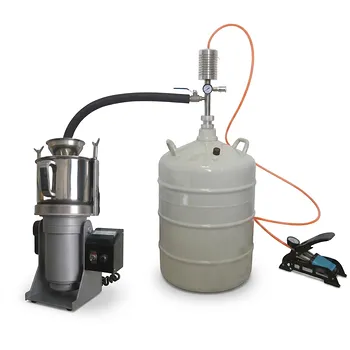
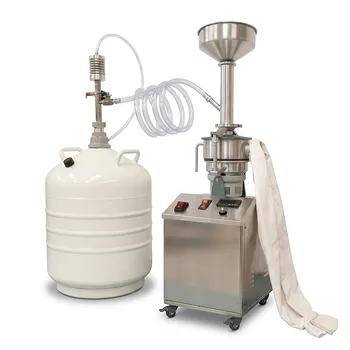
Liquid Nitrogen Cryogenic Grinder for Plastic and Heat-Sensitive Materials
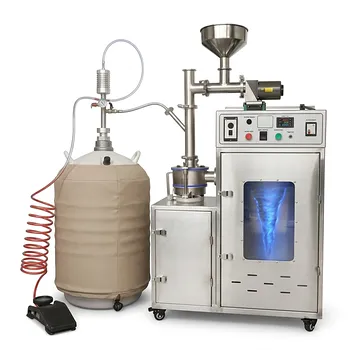
Small Liquid Nitrogen Cryogenic Grinder for Ultrafine Grinding of Heat-Sensitive Materials in Laboratories
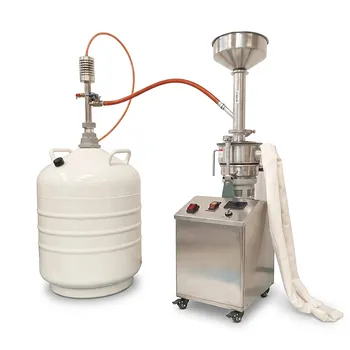
Laboratory Liquid Nitrogen Cryogenic Grinder for Polymer and Elastomer Materials
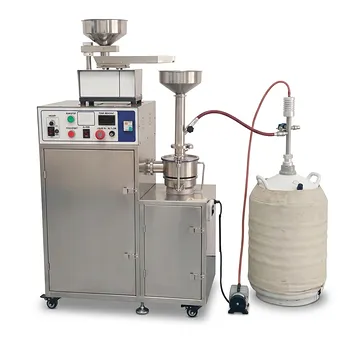
Small Liquid Nitrogen Cryogenic Grinder with Vibratory Feeder for Laboratory Sample Preparation
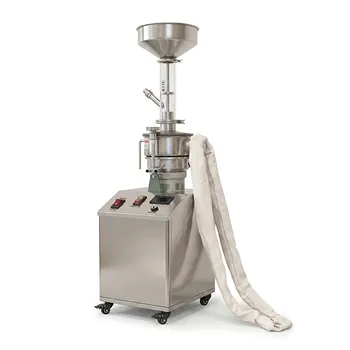
Small Liquid Nitrogen Cryogenic Grinder for Plastic and Heat-Sensitive Material Sample Preparation