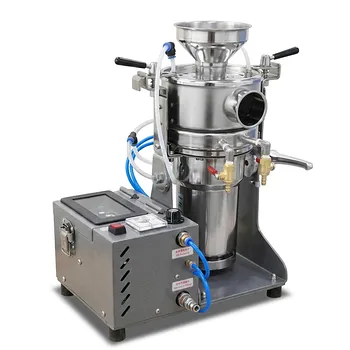
What is the function of cryogenic grinders in ASD pre-mixing? Achieve Superior API Homogeneity and Thermal Stability.
Updated 4 months ago
Cryogenic grinders function as high-energy pretreatment systems that utilize liquid nitrogen to embrittle and pulverize materials. During the pre-mixing stage of Amorphous Solid Dispersion (ASD) preparation, these machines use intense impact forces to reduce the particle size of Active Pharmaceutical Ingredients (APIs) and polymer carriers while simultaneously achieving a molecular-level uniform distribution. By maintaining an ultra-low temperature environment, they prevent the heat-induced recrystallization or degradation that often plagues standard room-temperature milling.
The core function of a cryogenic grinder in ASD preparation is to transform tough or heat-sensitive materials into a brittle state, allowing for high-energy homogenization and amorphization. This process eliminates kinetic barriers between components, ensuring a stable and uniform precursor for subsequent thermal processing like hot-melt extrusion.
Enhancing Material Brittleness and Size Reduction
Overcoming Material Toughness
Many polymer carriers used in ASD, as well as certain drug strands, exhibit high toughness or thermal softening at room temperature, making them difficult to grind. Liquid nitrogen lowers the temperature below the material's glass transition point, transitioning it into a highly brittle state that is easily fragmented.
Achieving Deep Micronization
The grinder employs high-energy impact and frictional forces to break down the crystalline structure of the API. This results in sub-micron fineness, which is essential for ensuring the drug is effectively dispersed within the polymer matrix.
Preventing Agglomeration
In standard ball milling, materials like Itraconazole often undergo physical agglomeration due to the heat generated by mechanical friction. The cryogenic environment inhibits drug adhesion, ensuring the resulting powder remains fine and free-flowing.
Thermal Management and Phase Stability
Inhibiting Secondary Recrystallization
Mechanical grinding naturally generates heat, which can cause drugs with low glass transition temperatures, such as ibuprofen or fenofibrate, to recrystallize. Cryogenic cooling offsets this thermal energy, maintaining the drug in a non-crystalline, amorphous state.
Eliminating Kinetic Barriers
By achieving high homogenization in a very short time, cryogenic grinding eliminates the kinetic barriers between the API and the polymer. This allows for more accurate measurement of API dissolution temperatures during Differential Scanning Calorimetry (DSC) testing.
Maintaining Chemical Integrity
The ultra-low temperature environment effectively suppresses thermal recovery and oxidation that typically occur during standard milling. This is particularly critical for heat-sensitive APIs that might undergo chemical denaturation if exposed to the heat of traditional size-reduction methods.
Understanding the Trade-offs and Challenges
Moisture and Condensation Risks
Operating at ultra-low temperatures introduces the risk of atmospheric moisture condensation once the material is removed from the grinder. For hygroscopic APIs or polymers, this moisture can trigger instability or unwanted chemical reactions.
Operational Costs and Complexity
The continuous requirement for liquid nitrogen significantly increases the operational cost compared to standard dry mixing. Furthermore, the equipment requires specialized safety protocols to handle cryogenic fluids and high-pressure hydraulic systems.
Potential for Over-Processing
High-energy milling can occasionally introduce excessive lattice defects or unintentional degradation if the processing time is not strictly controlled. While usually beneficial for amorphization, excessive energy can sometimes complicate the long-term physical stability of the final dosage form.
How to Apply This to Your ASD Project
Cryogenic grinding is a sophisticated tool that should be deployed strategically based on the physical properties of your formulation components.
- If your primary focus is processing heat-sensitive or low-Tg drugs: Utilize cryogenic grinding specifically to prevent recrystallization and maintain the amorphous state during size reduction.
- If your primary focus is achieving maximum homogeneity with tough polymers: Use the liquid nitrogen environment to embrittle the carrier, ensuring a fine, uniform blend that improves the efficiency of subsequent hot-melt extrusion.
- If your primary focus is foundational research and phase diagram construction: Employ cryogenic pretreatment to eliminate kinetic barriers, allowing for precise and reproducible thermal analysis data.
By integrating cryogenic grinding into your pre-mixing workflow, you ensure a chemically stable and physically uniform starting material for high-performance solid dispersions.
Summary Table:
| Feature | Function in ASD Preparation | Key Benefit |
|---|---|---|
| Embrittlement | Lowers temperature below glass transition (Tg) | Enables grinding of tough polymers and heat-sensitive APIs |
| Thermal Management | Offsets heat generated by mechanical friction | Prevents secondary recrystallization and chemical degradation |
| Micronization | High-energy impact and frictional forces | Achieves sub-micron fineness for effective drug dispersion |
| Homogenization | Molecular-level uniform distribution | Eliminates kinetic barriers for stable hot-melt extrusion (HME) |
Optimize Your ASD Formulation with Precision Sample Prep
Achieve unmatched consistency in your Amorphous Solid Dispersion research. At [Your Brand Name], we provide complete laboratory sample preparation solutions for material science, specializing in advanced powder processing and compaction equipment.
Our extensive product line is designed to handle the most challenging materials, featuring:
- Cryogenic & Specialized Mills: Liquid nitrogen cryogenic grinders, planetary ball mills, jet mills, and rotor mills for sub-micron particle sizes.
- Crushing & Sifting: Jaw/roll crushers and vibratory/air-jet sieve shakers for precise size control.
- Advanced Compaction: A full spectrum of hydraulic presses, including Cold/Warm Isostatic Presses (CIP/WIP), vacuum hot presses, and XRF pellet presses.
- Mixing Solutions: Powder and defoaming mixers to ensure absolute homogeneity.
Whether you are preventing API recrystallization or overcoming polymer toughness, our equipment ensures a stable, uniform precursor for your pharmaceutical and material science projects.
Ready to elevate your lab's performance? Contact us today to discuss your application!
References
- Kanika Sarpal. Phase Behavior of Amorphous Solid Dispersions: Miscibility and Molecular Interactions. DOI: 10.13023/etd.2019.152
Mentioned Products
- Small Liquid Nitrogen Cryogenic Grinder for Ultrafine Grinding of Heat-Sensitive Materials in Laboratories
- Cryogenic Liquid Nitrogen Grinder for DNA Analysis and Polymer Pulverization with Automatic Cooling and Electromagnetic Impact Technology
- Cryogenic Liquid Nitrogen Grinder for Ultrafine Heat-Sensitive Powder Processing
- Laboratory Cryogenic Grinder Liquid Nitrogen Low Temperature Ultrafine Grinding
- Liquid Nitrogen Cryogenic Grinder for Plastic and Heat-Sensitive Materials
People Also Ask
- What are the advantages of using liquid nitrogen Cryomilling? Achieve ultra-fine grains and high chemical purity.
- How does liquid nitrogen as a processing medium affect copper powder beyond cooling? Impacts on Purity & Sintering
- What is the function of liquid nitrogen cryogenic grinding in the initial preparation of PHBH polymer powder? Key Roles
- Why is liquid nitrogen cryogenic grinding used for coal and microbial experiments? Preserve Sample Integrity
- Why use liquid nitrogen cryogenic grinding for polymer degradation? Preserve sample integrity & prevent thermal damage

Tech Team · PowderPreparation
Last updated on Jun 03, 2026
Related Products
Small Liquid Nitrogen Cryogenic Grinder for Ultrafine Grinding of Heat-Sensitive Materials in Laboratories
Cryogenic Liquid Nitrogen Grinder for DNA Analysis and Polymer Pulverization with Automatic Cooling and Electromagnetic Impact Technology
Cryogenic Liquid Nitrogen Grinder for Ultrafine Heat-Sensitive Powder Processing
Laboratory Cryogenic Grinder Liquid Nitrogen Low Temperature Ultrafine Grinding
Liquid Nitrogen Cryogenic Grinder for Plastic and Heat-Sensitive Materials
Small Liquid Nitrogen Cryogenic Grinder for Plastic and Heat-Sensitive Material Sample Preparation
Small Liquid Nitrogen Cryogenic Grinder with Vibratory Feeder for Laboratory Sample Preparation
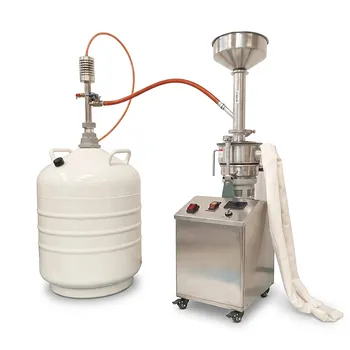
Laboratory Liquid Nitrogen Cryogenic Grinder for Polymer and Elastomer Materials
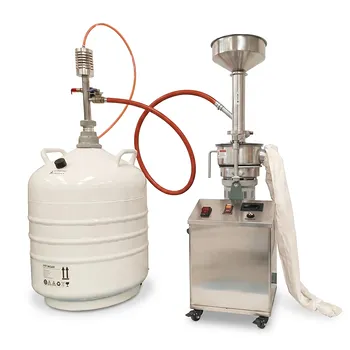
Laboratory Liquid Nitrogen Cryogenic Grinder Polymer Sample Preparation Pulverizer
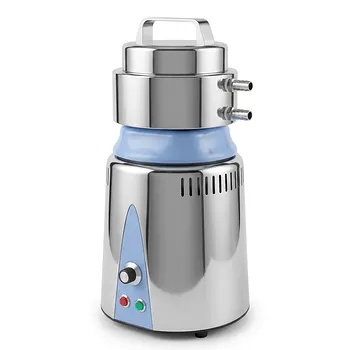
Low Temperature Laboratory Knife Mill Cryogenic Sample Grinder Material Science Powder Processing
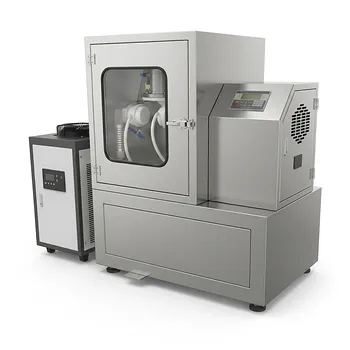
Vibratory Ultra-Low Temperature Ultrafine Grinder for Cryogenic Powder Processing
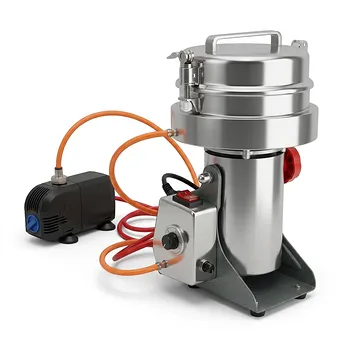
Water Cooled High Speed Grinder with Cryogenic Option for Laboratory Sample Preparation
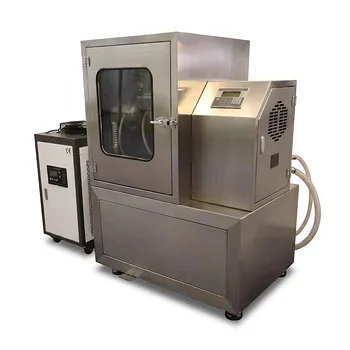
Ultra-Low Temperature Vibratory Mill for Ultrafine Grinding
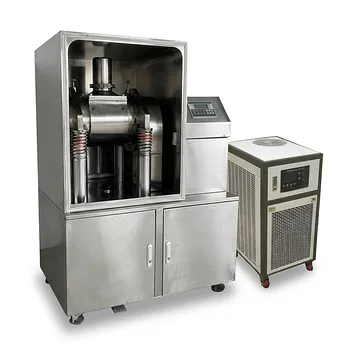
Water Cooled Cryogenic Ultra Fine Cell Wall Breaking Mill
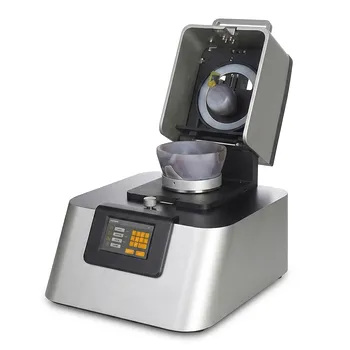
Laboratory Mortar Grinder for Sample Preparation and Cryogenic Powder Homogenization
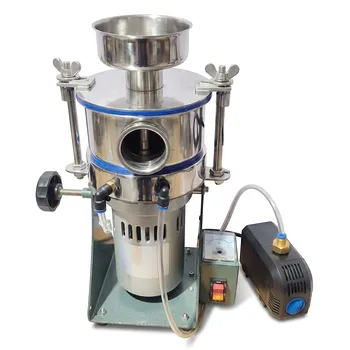
Water Cooled Airflow Ultra Fine Grinder for Low Temperature Material Processing
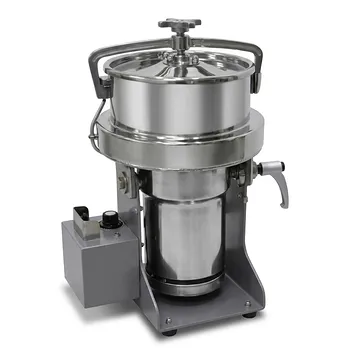
500g Capacity Water Cooled Low Temperature Grinder with Variable Speed and Safety Cover
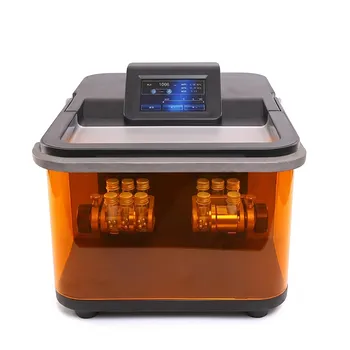
High Throughput Micro Ball Mill for Cryogenic Grinding and Laboratory Cell Disruption
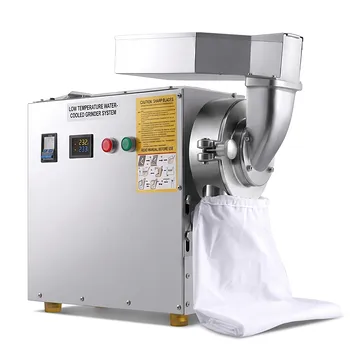
Low Temperature Water Cooled Continuous Feed Grinder Two Stage Coarse and Fine Grinding System