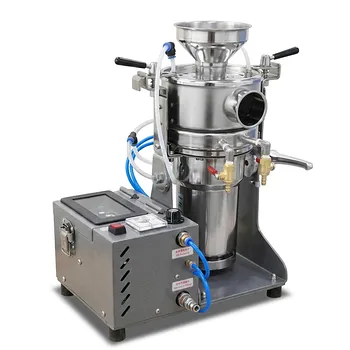
Why is a liquid nitrogen cryogenic grinder essential for processing oxidized Nd-Fe-B magnet powders? Boost Efficiency
Updated 4 months ago
Cryogenic grinding is the definitive solution for processing sensitive Nd-Fe-B magnet materials. It utilizes liquid nitrogen to maintain operating temperatures as low as -196 °C, inducing a state of cold embrittlement that allows the material to be pulverized with extreme efficiency. This process is essential because it prevents the mechanical heat of grinding from causing further oxidation or thermal degradation, preserving the material's core properties for recycling or refinement.
A liquid nitrogen cryogenic grinder is critical because it simultaneously addresses material toughness and thermal sensitivity. By maintaining an inert, ultra-low temperature environment, it enables the production of ultra-fine powders while preventing the chemical and magnetic phase changes that occur during standard high-heat milling.
Overcoming Material Ductility via Cold Embrittlement
Inducing Brittle Fracture
Nd-Fe-B magnets and their associated polymer binders can exhibit high toughness or elasticity at room temperature, making them difficult to grind. The liquid nitrogen environment lowers the material temperature below its ductile-to-brittle transition temperature (DBTT).
This shift ensures that the material undergoes brittle fracture rather than plastic deformation when subjected to high-energy impacts. Instead of stretching or "smearing," the particles shatter cleanly into smaller fragments.
Improving Pulverization Efficiency
Because the material is rendered brittle, the mechanical energy required to reduce particle size is significantly lower. This efficiency allows for the production of ultra-fine powders with a highly uniform average particle size, often reaching approximately 2.35 μm.
Achieving this level of fineness is nearly impossible at room temperature without excessive energy consumption and equipment wear. The extreme cold prevents the "cold welding" of particles, where fine grains fuse back together under pressure.
Thermal Management and Chemical Stability
Preventing Secondary Oxidation
Nd-Fe-B is highly sensitive to oxygen, especially when its surface area increases during grinding. The mechanical energy of standard milling converts into heat, which accelerates oxidation reactions that degrade magnetic performance.
The cryogenic grinder uses liquid nitrogen to dissipate this heat instantly. Furthermore, the resulting inert nitrogen or argon atmosphere displaces oxygen, providing a protective shield that prevents the powder from combusting or oxidizing during the process.
Preserving Phase Integrity and Magnetic Properties
In the context of recycling waste magnets, maintaining the original magnetic characteristics is paramount. Excessive heat can cause phase changes or the denaturation of polymer binders in bonded magnets.
By suppressing the temperature rise, cryogenic grinding ensures the material does not undergo premature crystallization or thermal softening. This allows for the efficient recovery of magnetic composites that retain their high-performance capabilities.
Enhancing Post-Processing Reactivity
Optimizing for Chemical Leaching
For oxidized Nd-Fe-B powders intended for recycling, the goal is often chemical leaching to recover rare earth elements. The cryogenic process produces a powder with superior reaction activity.
The uniform, ultra-fine particle size increases the total surface area available for chemical agents. This results in a more efficient and complete extraction of valuable elements during the subsequent leaching phases.
Understanding the Trade-offs
Operational Costs and Complexity
The primary drawback of cryogenic grinding is the high consumption of liquid nitrogen, which adds to the operational cost per kilogram of powder. The system also requires specialized vacuum-insulated piping and sensors to manage the cryogenic fluid safely.
Equipment Maintenance
Operating at -196 °C places extreme stress on mechanical components. Parts can become brittle and prone to cracking if not specifically designed for cryogenic service, necessitating a higher standard of material engineering for the grinder itself.
How to Apply This to Your Project
Implementation Guidelines
- If your primary focus is Rare Earth Recovery: Prioritize cryogenic grinding to achieve the 2.35 μm particle size, as this maximize the efficiency of chemical leaching and acid digestion.
- If your primary focus is High-Performance Re-bonding: Ensure the grinder uses an argon-enriched environment to provide the highest level of protection against oxygen pick-up during the milling of waste magnets.
- If your primary focus is Cost Reduction: Evaluate the trade-off between nitrogen consumption and milling time; often, the increased throughput and reduced waste offset the cost of the liquid nitrogen.
By leveraging the physics of cold embrittlement, you can transform a difficult, heat-sensitive material into a high-value, high-reactivity powder ready for the next stage of the manufacturing lifecycle.
Summary Table:
| Feature | Mechanism | Benefit for Nd-Fe-B |
|---|---|---|
| Cold Embrittlement | Operates at -196 °C | Converts tough magnets into brittle material for clean shattering. |
| Oxidation Control | Inert nitrogen atmosphere | Prevents chemical degradation and combustion during grinding. |
| Thermal Stability | Instant heat dissipation | Preserves magnetic phases and prevents thermal softening/denaturation. |
| Particle Precision | High-energy impact | Achieves ultra-fine, uniform powders (~2.35 μm) for superior leaching. |
Elevate Your Material Research with Expert Sample Preparation
Processing sensitive materials like Nd-Fe-B requires precision and the right technology. We provide complete laboratory sample preparation solutions for material science, specializing in high-performance powder processing and compaction equipment.
Whether you need to achieve ultra-fine powders via our liquid nitrogen cryogenic grinders, planetary ball mills, and jet mills, or require advanced shaping with our Cold/Warm Isostatic Presses (CIP/WIP), standard lab presses, and vacuum hot presses, our equipment is engineered for excellence.
Ready to optimize your powder quality and recovery rates? Contact our technical team today to find the perfect solution for your lab!
References
- Shruti Srivastava, Krishanu Biswas. Recovery of rare earth elements (Nd, Dy) from discarded hard disk magnets using EDTA functionalised chitosan. DOI: 10.1039/d3su00427a
Mentioned Products
- Liquid Nitrogen Cryogenic Grinder for Plastic and Heat-Sensitive Materials
- Small Liquid Nitrogen Cryogenic Grinder for Ultrafine Grinding of Heat-Sensitive Materials in Laboratories
- Cryogenic Liquid Nitrogen Grinder for DNA Analysis and Polymer Pulverization with Automatic Cooling and Electromagnetic Impact Technology
- Cryogenic Liquid Nitrogen Grinder for Ultrafine Heat-Sensitive Powder Processing
- Small Liquid Nitrogen Cryogenic Grinder with Vibratory Feeder for Laboratory Sample Preparation
People Also Ask
- Why is a liquid nitrogen cryogenic grinder required before DSC? Ensure Accurate Thermal Analysis & Sample Integrity.
- Why is a liquid nitrogen cryogenic grinder necessary for plastic pre-processing? Achieve Precise Co-Pyrolysis Results
- What role does liquid nitrogen cryogenic grinding play in the modification of CNTs? Optimize Nanomaterial Processing
- Why is a laboratory-grade liquid nitrogen cryogenic grinder essential for processing drug-loaded polymer nanofiber mats?
- What is the role of a liquid nitrogen cryogenic grinder in drug-polymer mixing? Achieve Superior Sample Homogeneity

Tech Team · PowderPreparation
Last updated on May 14, 2026
Related Products
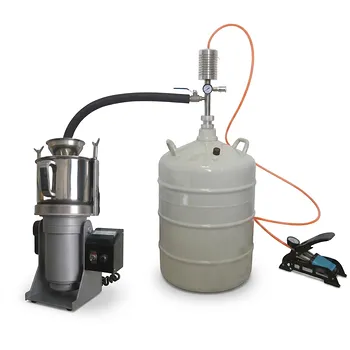
Liquid Nitrogen Cryogenic Grinder for Plastic and Heat-Sensitive Materials
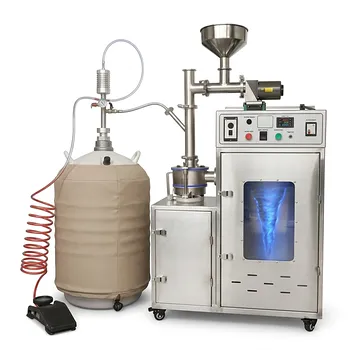
Small Liquid Nitrogen Cryogenic Grinder for Ultrafine Grinding of Heat-Sensitive Materials in Laboratories
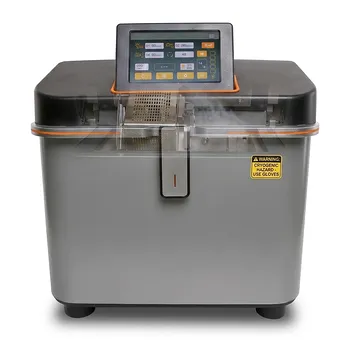
Cryogenic Liquid Nitrogen Grinder for DNA Analysis and Polymer Pulverization with Automatic Cooling and Electromagnetic Impact Technology
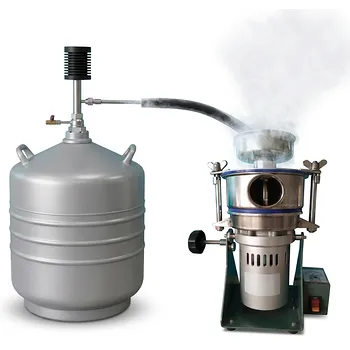
Cryogenic Liquid Nitrogen Grinder for Ultrafine Heat-Sensitive Powder Processing
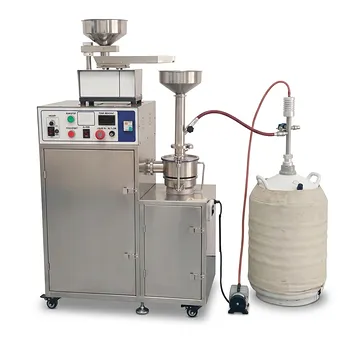
Small Liquid Nitrogen Cryogenic Grinder with Vibratory Feeder for Laboratory Sample Preparation
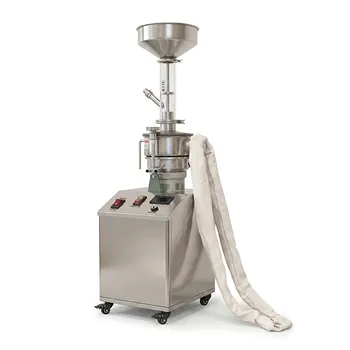
Small Liquid Nitrogen Cryogenic Grinder for Plastic and Heat-Sensitive Material Sample Preparation
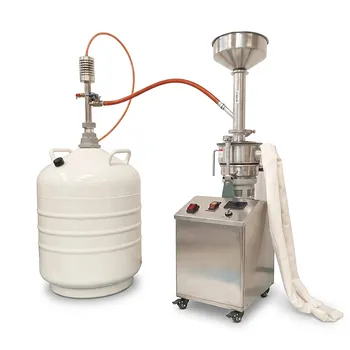
Laboratory Liquid Nitrogen Cryogenic Grinder for Polymer and Elastomer Materials
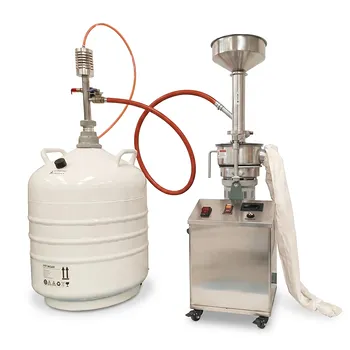
Laboratory Liquid Nitrogen Cryogenic Grinder Polymer Sample Preparation Pulverizer
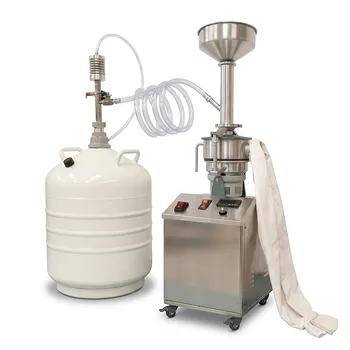
Laboratory Cryogenic Grinder Liquid Nitrogen Low Temperature Ultrafine Grinding
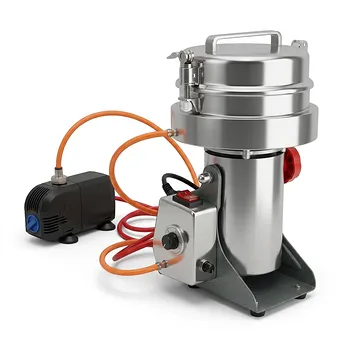
Water Cooled High Speed Grinder with Cryogenic Option for Laboratory Sample Preparation
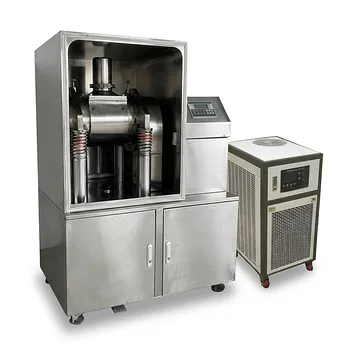
Water Cooled Cryogenic Ultra Fine Cell Wall Breaking Mill
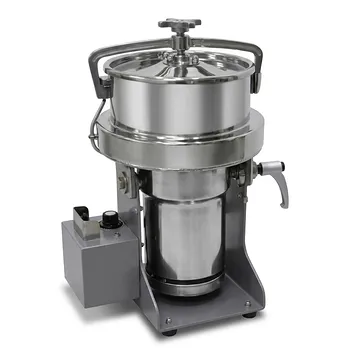
500g Capacity Water Cooled Low Temperature Grinder with Variable Speed and Safety Cover
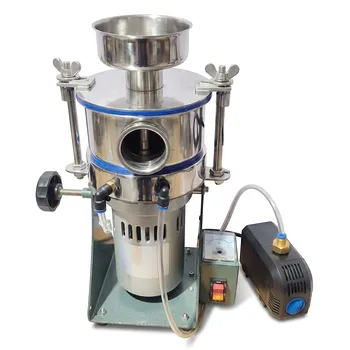
Water Cooled Airflow Ultra Fine Grinder for Low Temperature Material Processing
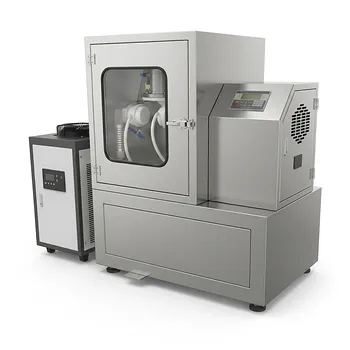
Vibratory Ultra-Low Temperature Ultrafine Grinder for Cryogenic Powder Processing
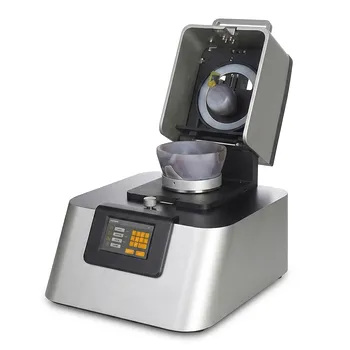
Laboratory Mortar Grinder for Sample Preparation and Cryogenic Powder Homogenization
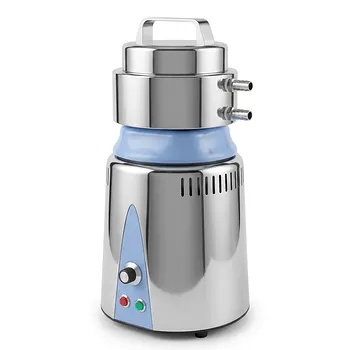
Low Temperature Laboratory Knife Mill Cryogenic Sample Grinder Material Science Powder Processing
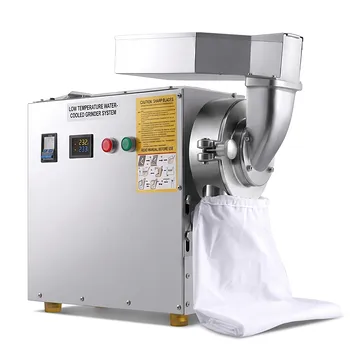
Low Temperature Water Cooled Continuous Feed Grinder Two Stage Coarse and Fine Grinding System
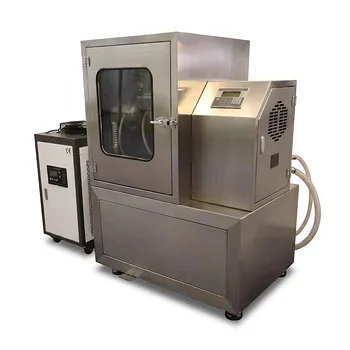
Ultra-Low Temperature Vibratory Mill for Ultrafine Grinding
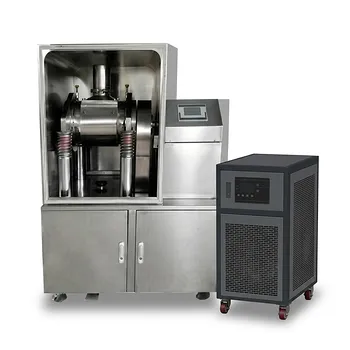
Ultra-low Temperature Vibratory Mill Ultrafine Grinder