What is the primary function of cryogenic grinding (cryomilling) in the preparation of Al-Ni high energy density materials?
Updated 4 months ago
The primary function of cryogenic grinding (cryomilling) in the preparation of Al-Ni high energy density materials is to suppress premature chemical reactions while facilitating the formation of a highly reactive, nanostructured multilayer composite. By maintaining an ultra-low temperature environment (typically -160°C), the process prevents the aluminum and nickel from forming intermetallic compounds during the mixing stage, ensuring the energy potential of the material remains stored for later use.
Cryomilling utilizes liquid nitrogen to inhibit thermal recovery and atomic diffusion, allowing mechanical forces to bypass premature exothermic reactions and create a metastable, nano-layered structure with maximized energy density.
Inhibiting Premature Chemical Reactions
Suppressing Localized Heat
Standard mechanical milling generates significant localized heat through high-energy impacts and friction. In the Al-Ni system, this heat is often sufficient to trigger an immediate exothermic reaction, forming intermetallic compounds (IMCs) prematurely.
Cryomilling uses a liquid nitrogen circulation system to dissipate this heat instantly. This ensures the temperature remains well below the threshold required for chemical synthesis during the processing phase.
Limiting Atomic Diffusion
At room temperature, the atoms of aluminum and nickel naturally tend to diffuse across interfaces when subjected to mechanical stress. The ultra-low temperatures of cryomilling effectively "freeze" atomic mobility and suppress diffusion.
By preventing this diffusion, the process ensures that the two elements remain distinct phases rather than merging into a stable alloy. This maintains the chemical potential energy required for high energy density applications.
Facilitating Nanostructural Refinement
Severe Plastic Deformation (SPD)
The cryogenic environment alters the mechanical behavior of the metal powders, often increasing brittleness and resistance to recovery. High shear stresses during milling induce severe plastic deformation, forcing the Al and Ni particles to cold-weld and fracture repeatedly.
This mechanical action creates a multilayer composite structure where the layers are reduced to nanometer scales. These high-density interfaces are critical for the rapid reaction speeds required in energetic materials.
Preventing Recovery and Recrystallization
In standard milling, metals undergo dynamic recovery where crystal defects are "healed" by the heat of the process. Cryomilling inhibits this thermal recovery and recrystallization, allowing for the accumulation of high-density lattice defects.
This result is a nanocrystalline grain structure that significantly enhances the hardness and reactivity of the powder. The "trapped" energy within these defects contributes to the overall energy state of the composite.
Understanding the Trade-offs
Equipment and Operational Complexity
Cryomilling requires specialized equipment capable of handling liquid nitrogen and maintaining hermetic seals at extreme temperatures. This increases the operational cost and complexity compared to traditional ball milling.
Potential for Unintended Phases
While the process is designed to prevent IMCs, the use of nitrogen can sometimes introduce aluminum nitride (AlN) dispersion phases. While these can strengthen the matrix, they may be considered an impurity if the goal is a pure Al-Ni reactive system.
Material Handling Challenges
The resulting nanopowders are often highly pyrophoric due to their massive surface area and stored energy. Transitioning these materials from the cryogenic mill to storage requires strict atmosphere control to prevent spontaneous ignition or oxidation.
Applying Cryomilling to Material Design
How to Match the Process to Your Goal
- If your primary focus is Maximum Reactivity: Utilize the lowest possible temperatures to ensure the finest nanolayer spacing without any IMC formation.
- If your primary focus is Grain Refinement: Focus on the duration of high-energy impact to maximize lattice defects while the cryogenic liquid inhibits grain growth.
- If your primary focus is Purity and Stability: Monitor nitrogen absorption levels to ensure that unintended strengthening phases do not interfere with the material's energetic performance.
By precisely controlling the cryogenic environment, developers can engineer Al-Ni composites that remain stable during production yet deliver explosive energy release upon thermal activation.
Summary Table:
| Feature | Cryomilling Mechanism | Impact on Al-Ni Composites |
|---|---|---|
| Thermal Control | Instant heat dissipation via LN2 | Prevents premature exothermic reactions |
| Structural Refinement | Severe Plastic Deformation (SPD) | Creates reactive nanometer-scale layers |
| Atomic Diffusion | "Freezes" atomic mobility | Maintains distinct phases and chemical potential |
| Energy Retention | Inhibits thermal recovery | Traps energy within high-density lattice defects |
Elevate Your Material Synthesis with Professional Prep Solutions
At [Brand Name], we specialize in providing complete laboratory sample preparation solutions tailored for advanced material science. Whether you are developing Al-Ni high energy density materials or advanced ceramics, our equipment ensures precision and stability in every grain.
Our extensive product line includes:
- Advanced Grinding: High-performance liquid nitrogen cryogenic grinders, planetary ball mills, jet mills, and rotor mills.
- Powder Processing: Sieve shakers, powder mixers, and high-speed defoaming mixers.
- Compaction Excellence: A full spectrum of hydraulic presses, including Cold/Warm Isostatic Presses (CIP/WIP), vacuum hot presses, and XRF pellet presses.
Ready to optimize your powder processing workflow? Contact our technical experts today to discover how our specialized equipment can enhance your research outcomes and production efficiency.
References
- Minseok Oh, Byungmin Ahn. Exothermic Reaction Kinetics in High Energy Density Al-Ni with Nanoscale Multilayers Synthesized by Cryomilling. DOI: 10.3390/met8020121
Mentioned Products
- Small Liquid Nitrogen Cryogenic Grinder for Ultrafine Grinding of Heat-Sensitive Materials in Laboratories
- Cryogenic Liquid Nitrogen Grinder for DNA Analysis and Polymer Pulverization with Automatic Cooling and Electromagnetic Impact Technology
- Cryogenic Liquid Nitrogen Grinder for Ultrafine Heat-Sensitive Powder Processing
- Laboratory Cryogenic Grinder Liquid Nitrogen Low Temperature Ultrafine Grinding
- Liquid Nitrogen Cryogenic Grinder for Plastic and Heat-Sensitive Materials
People Also Ask
- What are the advantages of using liquid nitrogen Cryomilling? Achieve ultra-fine grains and high chemical purity.
- How does liquid nitrogen as a processing medium affect copper powder beyond cooling? Impacts on Purity & Sintering
- What is the function of liquid nitrogen cryogenic grinding in the initial preparation of PHBH polymer powder? Key Roles
- Why is liquid nitrogen cryogenic grinding used for coal and microbial experiments? Preserve Sample Integrity
- Why use liquid nitrogen cryogenic grinding for polymer degradation? Preserve sample integrity & prevent thermal damage

Tech Team · PowderPreparation
Last updated on May 14, 2026
Related Products
Small Liquid Nitrogen Cryogenic Grinder for Ultrafine Grinding of Heat-Sensitive Materials in Laboratories
Cryogenic Liquid Nitrogen Grinder for DNA Analysis and Polymer Pulverization with Automatic Cooling and Electromagnetic Impact Technology
Cryogenic Liquid Nitrogen Grinder for Ultrafine Heat-Sensitive Powder Processing
Laboratory Cryogenic Grinder Liquid Nitrogen Low Temperature Ultrafine Grinding
Liquid Nitrogen Cryogenic Grinder for Plastic and Heat-Sensitive Materials
Small Liquid Nitrogen Cryogenic Grinder for Plastic and Heat-Sensitive Material Sample Preparation
Small Liquid Nitrogen Cryogenic Grinder with Vibratory Feeder for Laboratory Sample Preparation
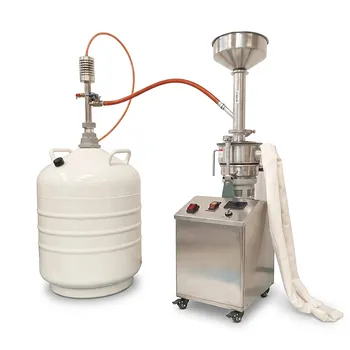
Laboratory Liquid Nitrogen Cryogenic Grinder for Polymer and Elastomer Materials
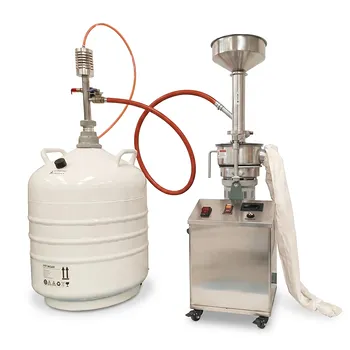
Laboratory Liquid Nitrogen Cryogenic Grinder Polymer Sample Preparation Pulverizer
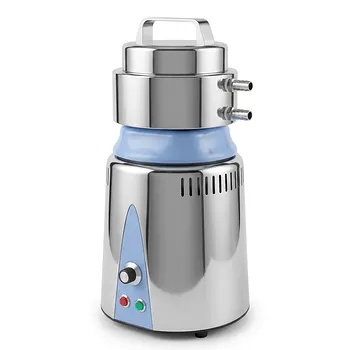
Low Temperature Laboratory Knife Mill Cryogenic Sample Grinder Material Science Powder Processing
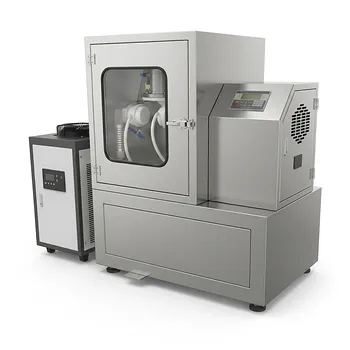
Vibratory Ultra-Low Temperature Ultrafine Grinder for Cryogenic Powder Processing
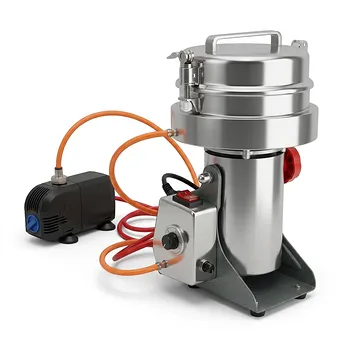
Water Cooled High Speed Grinder with Cryogenic Option for Laboratory Sample Preparation
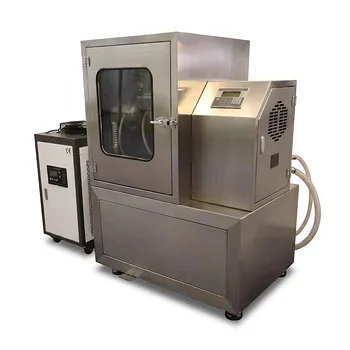
Ultra-Low Temperature Vibratory Mill for Ultrafine Grinding
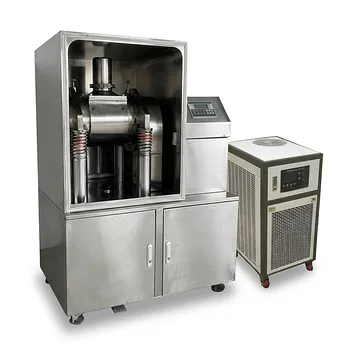
Water Cooled Cryogenic Ultra Fine Cell Wall Breaking Mill
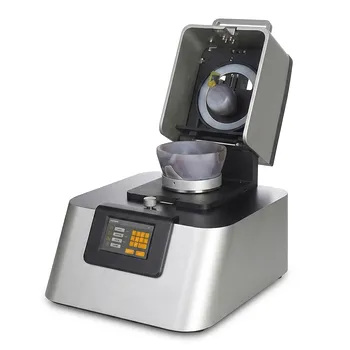
Laboratory Mortar Grinder for Sample Preparation and Cryogenic Powder Homogenization
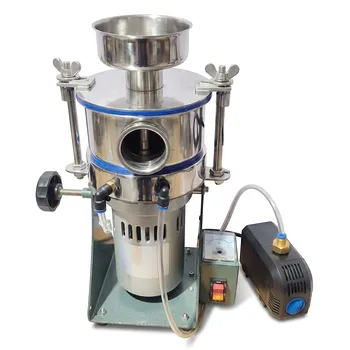
Water Cooled Airflow Ultra Fine Grinder for Low Temperature Material Processing
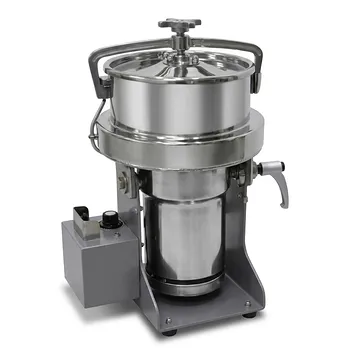
500g Capacity Water Cooled Low Temperature Grinder with Variable Speed and Safety Cover
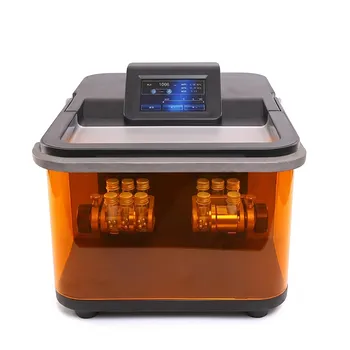
High Throughput Micro Ball Mill for Cryogenic Grinding and Laboratory Cell Disruption
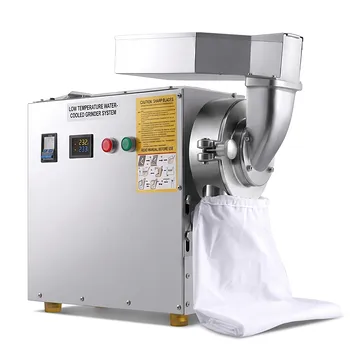
Low Temperature Water Cooled Continuous Feed Grinder Two Stage Coarse and Fine Grinding System