How do steel grinding balls contribute to the production of inhalable powders within a cryogenic grinder? Key Insights
Updated 5 months ago
Steel grinding balls function as high-energy transfer agents that convert mechanical vibration into the precise impact and shear forces necessary for particle refinement.
Within a cryogenic grinder, these high-hardness spheres strike embrittled materials—such as nanofiber mats or drug-carrier mixtures—at high frequencies. This physical interaction reduces the material to a fine powder while preserving the microscopic structures and low density required for effective pulmonary delivery.
The central role of steel grinding balls is to deliver the mechanical energy needed to crush embrittled substances into porous, low-density particles. By balancing impact force with structural preservation, they enable the production of powders with the low aerodynamic diameters essential for inhalation.
The Mechanics of Kinetic Energy Transfer
High-Frequency Impact and Shear
In the sealed chamber of a cryogenic grinder, steel balls respond to high-frequency oscillations, often reaching speeds like 30 Hz. This movement generates intense kinetic energy that is transferred directly to the material upon impact.
These forces are dual-action: impact forces crush the frozen, embrittled material, while shear forces grind it into finer fractions. This mechanical disturbance is the physical basis for reducing tough polymers or fibers into irregular micro-particles.
Breaking the Crystal Lattice
Beyond simple size reduction, the energy from steel balls can disrupt a drug’s crystal lattice. This process induces a transition to an amorphous state, which is often necessary for improving the solubility of the inhaled drug.
The high-energy mechanical action also ensures microscopic uniform mixing. This allows the active pharmaceutical ingredient (API) and its carrier to bond physically, improving the consistency of the final composite.
Engineering Inhalable Properties
Preserving Microscopic Porosity
A critical requirement for inhalable powders is a low aerodynamic diameter, which allows particles to travel deep into the lungs. Steel grinding balls achieve this by crushing nanofiber mats into fine particles without destroying their internal microscopic fiber structure.
By maintaining this structure, the resulting particles remain highly porous and low-density. This physical characteristic is what allows relatively large particles to behave aerodynamically like much smaller ones.
Enhancing Physical Bonding
In complex mixtures, such as sawdust and PCL or metallic powders, the balls apply forces that cause components to embed into one another. This cold welding or surface embedding refines the component size while enhancing physical bonding.
This mechanism is vital for creating dispersible composite particles. It ensures that the different elements of the powder do not separate during storage or administration.
Understanding the Trade-offs
The Ball-to-Powder Ratio
Selecting the correct ball-to-powder ratio (such as 30:1) is a delicate balancing act. A high ratio increases the frequency of impacts and grinding efficiency, but it also increases the heat generated and the potential for material over-processing.
Material Wear and Impurities
While stainless steel is chosen for its high strength and mass density, the intense mechanical action can lead to microscopic wear of the balls themselves. This introduces a risk of metallic impurities in the final powder, which must be strictly monitored in pharmaceutical applications.
Thermal Management
Cryogenic grinding relies on liquid nitrogen to keep materials in an embrittled state. If the mechanical energy from the steel balls is too high or the process is too long, the local temperature can rise, potentially causing the material to lose its brittleness and become tough or "gummy."
How to Optimize Grinding for Your Goal
To achieve the best results with steel grinding balls in a cryogenic environment, the process parameters must align with your specific material requirements.
- If your primary focus is pulmonary drug delivery: Prioritize maintaining high porosity and low density by using moderate vibration frequencies that preserve the microscopic fiber structure.
- If your primary focus is increasing drug solubility: Focus on high-energy impact settings to maximize the transition from a crystalline to an amorphous state.
- If your primary focus is material purity: Optimize the ball-to-material ratio to reach the target particle size as quickly as possible, minimizing the duration of mechanical wear on the steel media.
By precisely controlling the kinetic energy of steel grinding balls, you can transform brittle raw materials into highly specialized, inhalable powders tailored for advanced medical applications.
Summary Table:
| Feature/Mechanism | Impact on Material | Benefit for Inhalable Powders |
|---|---|---|
| High-Frequency Impact | Converts vibration to kinetic energy | Efficient reduction of embrittled polymers/drugs |
| Shear Forces | Grinds material into finer fractions | Achieves the target micron-level particle size |
| Structural Preservation | Maintains microscopic fiber porosity | Ensures low aerodynamic diameter for lung delivery |
| Lattice Disruption | Induces transition to amorphous state | Increases drug solubility and bioavailability |
| Cold Welding | Enhances physical bonding/embedding | Creates stable, dispersible composite particles |
Optimize Your Sample Preparation with Industry-Leading Expertise
Achieving the perfect particle size and structure for inhalable powders requires precision equipment. At [Company Name], we provide complete laboratory sample preparation solutions for material science, specializing in high-performance powder processing and compaction.
Our extensive product line is designed to meet the rigorous demands of pharmaceutical and material research:
- Grinding & Milling: Liquid nitrogen cryogenic grinders, planetary ball mills, jet mills, and rotor mills.
- Crushing & Sieving: Jaw/roll crushers and vibratory/air-jet sieve shakers for precise particle distribution.
- Mixing: High-efficiency powder mixers and vacuum defoaming mixers.
- Compaction: A full spectrum of hydraulic presses, including Cold/Warm Isostatic Presses (CIP/WIP), XRF pellet presses, and vacuum hot presses.
Whether you are refining drug carriers or developing advanced composites, our equipment ensures consistency, purity, and performance. Contact us today to discuss your specific application and find the ideal solution for your lab!
References
- Takaaki Ito, Kohei Tahara. Dry Powder Inhalers for Proteins Using Cryo-Milled Electrospun Polyvinyl Alcohol Nanofiber Mats. DOI: 10.3390/molecules27165158
Mentioned Products
- Small Liquid Nitrogen Cryogenic Grinder for Ultrafine Grinding of Heat-Sensitive Materials in Laboratories
- Cryogenic Liquid Nitrogen Grinder for DNA Analysis and Polymer Pulverization with Automatic Cooling and Electromagnetic Impact Technology
- Cryogenic Liquid Nitrogen Grinder for Ultrafine Heat-Sensitive Powder Processing
- Laboratory Cryogenic Grinder Liquid Nitrogen Low Temperature Ultrafine Grinding
- Liquid Nitrogen Cryogenic Grinder for Plastic and Heat-Sensitive Materials
People Also Ask
- What are the advantages of using liquid nitrogen Cryomilling? Achieve ultra-fine grains and high chemical purity.
- How does liquid nitrogen as a processing medium affect copper powder beyond cooling? Impacts on Purity & Sintering
- What is the function of liquid nitrogen cryogenic grinding in the initial preparation of PHBH polymer powder? Key Roles
- Why is liquid nitrogen cryogenic grinding used for coal and microbial experiments? Preserve Sample Integrity
- Why use liquid nitrogen cryogenic grinding for polymer degradation? Preserve sample integrity & prevent thermal damage

Tech Team · PowderPreparation
Last updated on May 14, 2026
Related Products
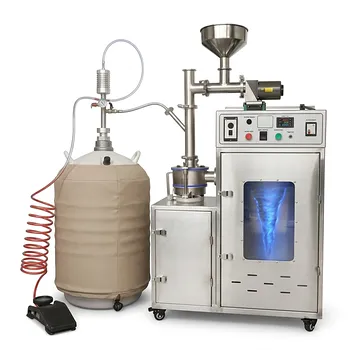
Small Liquid Nitrogen Cryogenic Grinder for Ultrafine Grinding of Heat-Sensitive Materials in Laboratories
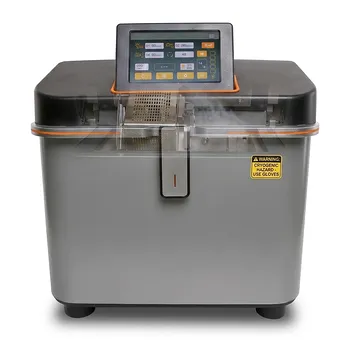
Cryogenic Liquid Nitrogen Grinder for DNA Analysis and Polymer Pulverization with Automatic Cooling and Electromagnetic Impact Technology
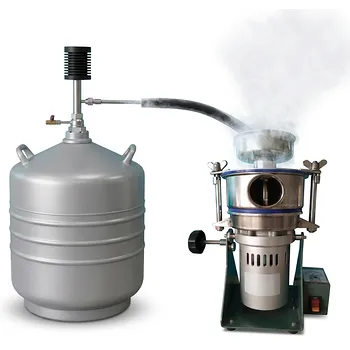
Cryogenic Liquid Nitrogen Grinder for Ultrafine Heat-Sensitive Powder Processing
Laboratory Cryogenic Grinder Liquid Nitrogen Low Temperature Ultrafine Grinding
Liquid Nitrogen Cryogenic Grinder for Plastic and Heat-Sensitive Materials
Small Liquid Nitrogen Cryogenic Grinder for Plastic and Heat-Sensitive Material Sample Preparation
Small Liquid Nitrogen Cryogenic Grinder with Vibratory Feeder for Laboratory Sample Preparation
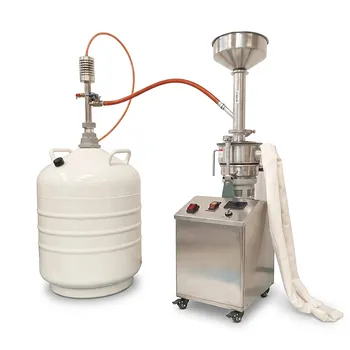
Laboratory Liquid Nitrogen Cryogenic Grinder for Polymer and Elastomer Materials
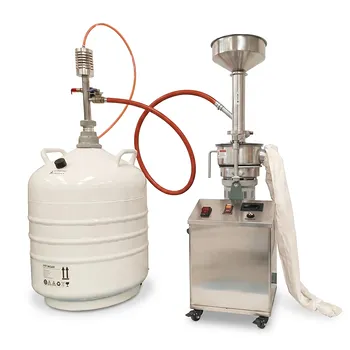
Laboratory Liquid Nitrogen Cryogenic Grinder Polymer Sample Preparation Pulverizer
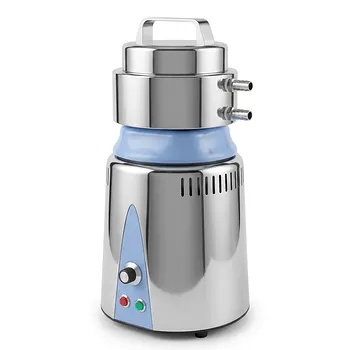
Low Temperature Laboratory Knife Mill Cryogenic Sample Grinder Material Science Powder Processing
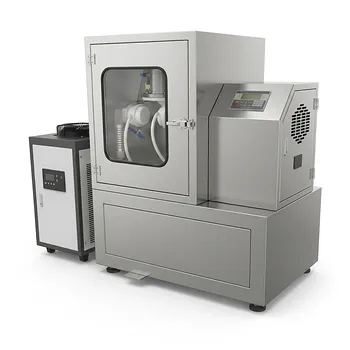
Vibratory Ultra-Low Temperature Ultrafine Grinder for Cryogenic Powder Processing
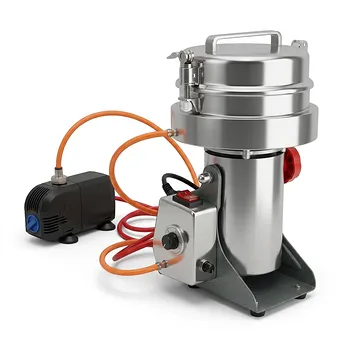
Water Cooled High Speed Grinder with Cryogenic Option for Laboratory Sample Preparation
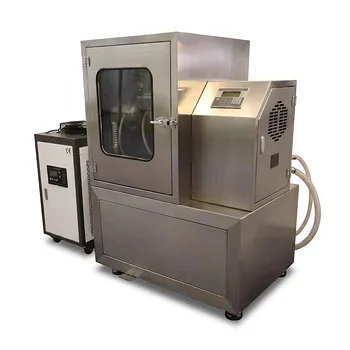
Ultra-Low Temperature Vibratory Mill for Ultrafine Grinding
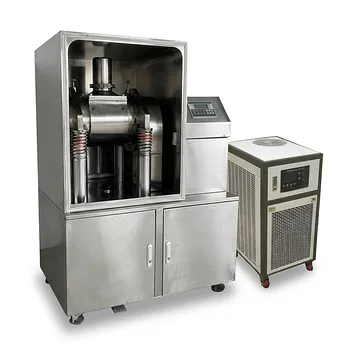
Water Cooled Cryogenic Ultra Fine Cell Wall Breaking Mill
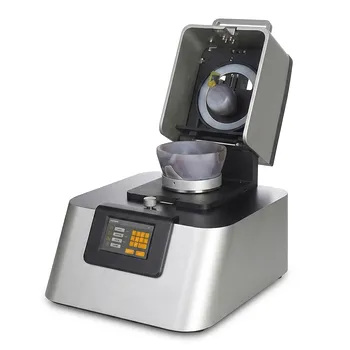
Laboratory Mortar Grinder for Sample Preparation and Cryogenic Powder Homogenization
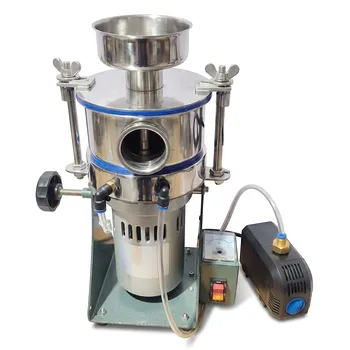
Water Cooled Airflow Ultra Fine Grinder for Low Temperature Material Processing
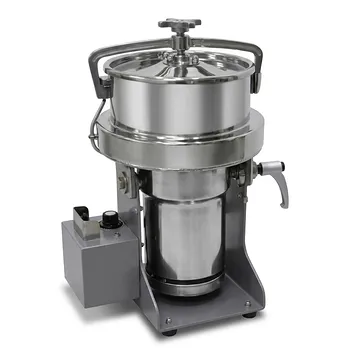
500g Capacity Water Cooled Low Temperature Grinder with Variable Speed and Safety Cover
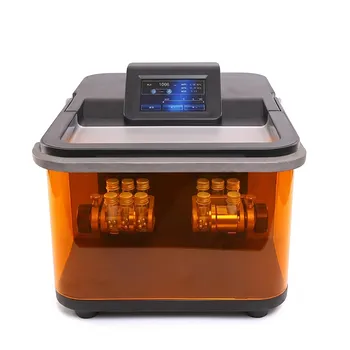
High Throughput Micro Ball Mill for Cryogenic Grinding and Laboratory Cell Disruption
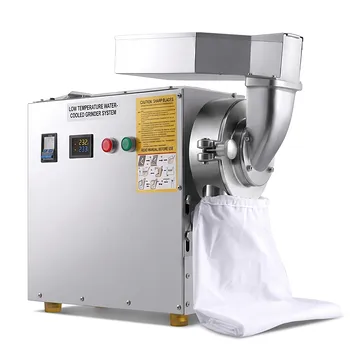
Low Temperature Water Cooled Continuous Feed Grinder Two Stage Coarse and Fine Grinding System