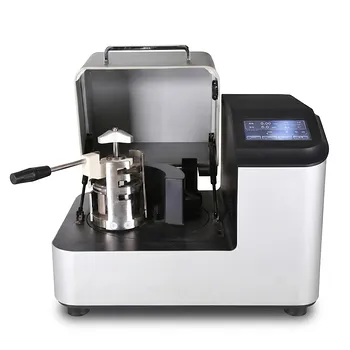
Why is cryogenic grinding technology utilized during the ball milling of rice straw? Preserve Cellulose Structure
Updated 5 months ago
Cryogenic grinding technology is utilized in rice straw ball milling primarily to manage the thermal and mechanical stresses that alter cellulose structure. By cooling grinding jars to extremely low temperatures using liquid nitrogen, the process increases the brittleness of the tough biomass and prevents thermal degradation caused by friction. This controlled environment slows the amorphization of cellulose, allowing researchers to precisely study the interaction between mechanical energy and biomass crystallinity.
Cryogenic grinding acts as a preservation and enhancement technique, ensuring that the physical and chemical integrity of rice straw is maintained by substituting heat-induced deformation with brittle fracture. This leads to a more controlled reduction in particle size and a clearer understanding of cellulose structural transitions.
The Role of Temperature in Mechanical Disruption
Enhancing Material Brittleness
Rice straw is naturally tough and elastic, which can make standard room-temperature milling inefficient. Liquid nitrogen cools the material below its glass transition point, effectively embrittling the fibers so they shatter upon impact rather than deforming.
Mitigating Thermal Degradation
The high-speed impact and friction of ball milling generate significant localized heat. Cryogenic cooling dissipates this thermal energy, preventing the rice straw from melting, smearing, or undergoing unwanted chemical changes that would compromise the sample's integrity.
Structural Preservation and Cellulose Crystallinity
Controlling the Amorphization Process
One of the primary scientific goals of cryogenic milling is to observe how cellulose transitions from a crystalline to an amorphous state. Low-temperature environments slow down this amorphization process, providing a stable window to investigate different energy states within the cellulose structure.
Optimizing Surface Area for Downstream Use
By facilitating a reduction to fine particle sizes—often as small as 75 microns—cryogenic milling significantly increases the specific surface area of the powder. This is critical for applications like biochar synthesis, where a higher surface area improves pyrolysis efficiency and the structural stability of the final product.
Understanding the Trade-offs
Operational Complexity and Cost
While cryogenic grinding offers superior structural control, it requires specialized equipment and a constant supply of liquid nitrogen. This increases the operational cost and safety requirements compared to standard dry or wet ball milling processes.
Sensitivity of Energy State Measurements
Because cryogenic milling prevents the natural thermal relaxation of the material, the resulting energy states are highly specific to the cold environment. Researchers must account for this "frozen" state when comparing results to biomass processed under ambient conditions, as the mechanical energy interactions differ significantly.
How to Apply This to Your Research or Production
If you are considering cryogenic grinding for biomass processing, your approach should depend on your specific material goals and downstream applications.
- If your primary focus is structural analysis: Utilize cryogenic milling to slow down amorphization, allowing for a precise mapping of how mechanical energy affects cellulose crystallinity without the interference of heat.
- If your primary focus is biochar or pyrolysis efficiency: Leverage the increased brittleness to achieve a consistent 75-micron particle size, which maximizes specific surface area and ensures a more stable final product.
- If your primary focus is chemical integrity: Choose cryogenic methods specifically to prevent thermal smearing and degradation, ensuring the chemical profile of the rice straw remains unchanged during the size-reduction phase.
Mastering the thermal environment during milling transforms a blunt mechanical process into a precision tool for biomass engineering.
Summary Table:
| Key Feature | Impact of Cryogenic Grinding | Benefit to Rice Straw Processing |
|---|---|---|
| Material State | Cools below glass transition point | Increases brittleness for easier fracturing |
| Thermal Control | Dissipates friction-generated heat | Prevents melting and chemical degradation |
| Crystallinity | Slows the amorphization process | Enables precise study of structural transitions |
| Particle Size | Facilitates reduction to 75 microns | Increases surface area for biochar efficiency |
Precision Sample Preparation for Advanced Material Science
Achieving consistent results in biomass engineering requires more than just standard milling—it requires precise control over thermal and mechanical variables. We provide complete laboratory sample preparation solutions tailored for material science, specializing in high-performance powder processing and compaction equipment.
Our extensive product line includes:
- Grinding & Milling: Liquid nitrogen cryogenic grinders, planetary ball mills, jet mills, and rotor mills for achieving perfect particle sizes.
- Crushing & Sizing: Jaw/roll crushers and vibratory sieve shakers for consistent feedstock preparation.
- Compaction & Pressing: A full spectrum of hydraulic presses, including Cold/Warm Isostatic Presses (CIP/WIP), vacuum hot presses, and XRF pellet presses.
- Mixing: Precision powder mixers and defoaming mixers for uniform sample blending.
Whether you are researching cellulose crystallinity or optimizing biochar production, our equipment ensures the physical and chemical integrity of your samples. Contact us today to find the perfect solution for your laboratory!
References
- Hlaing Hlaing Myint, Hirofumi Hinode. Dissolution Model of Ball Milled Rice Straw Particles in 1-Ethyl-3-Methyl Imidazolium Acetate at Elevated Temperature. DOI: 10.4172/2155-9821.1000260
Mentioned Products
- Ultra-Low Temperature Cryogenic High-Energy Vibratory Ball Mill
- High Throughput Micro Ball Mill for Cryogenic Grinding and Laboratory Cell Disruption
- Ultra-Low Temperature Vibratory Mill for Ultrafine Grinding
- Nanoscale High Energy Vibratory Ball Mill Low Temperature
- Vibratory Ultra-Low Temperature Ultrafine Grinder for Cryogenic Powder Processing
People Also Ask
- How does a high-energy vibratory ball mill improve the performance of MgH2? Optimize Hydrogen Storage Kinetics
- What is the function of a high-energy vibratory ball mill in Cu-Ta alloys? Achieve Precision Mechanical Alloying
- What is the function of high-energy ball milling in ZnO membrane slurry prep? Optimize Homogenization & Dispersion
- What is the Role of HEBM in High-Entropy H-SOFC Cathode Prep? Achieving Atomic-Level Homogenization
- What is the importance of using a high-purity argon atmosphere during the high-energy ball milling of ceramic particles?

Tech Team · PowderPreparation
Last updated on May 14, 2026
Related Products
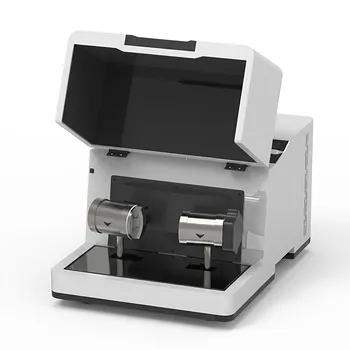
Ultra-Low Temperature Cryogenic High-Energy Vibratory Ball Mill
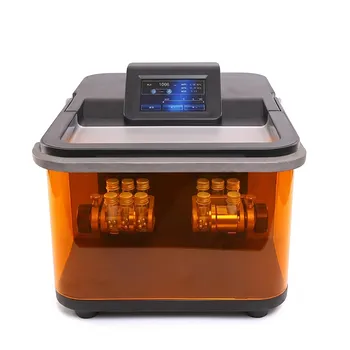
High Throughput Micro Ball Mill for Cryogenic Grinding and Laboratory Cell Disruption
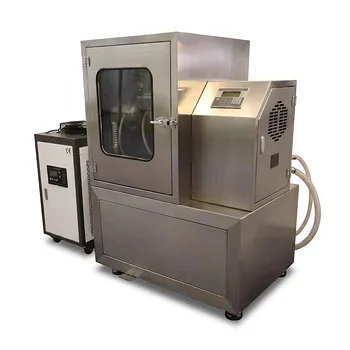
Ultra-Low Temperature Vibratory Mill for Ultrafine Grinding
Nanoscale High Energy Vibratory Ball Mill Low Temperature
Vibratory Ultra-Low Temperature Ultrafine Grinder for Cryogenic Powder Processing
Heating Temperature Controlled High Energy Vibratory Ball Mill

Low Temperature Laboratory Knife Mill Cryogenic Sample Grinder Material Science Powder Processing
Vertical Square Planetary Ball Mill for Laboratory Sample Preparation and Nanoscale Grinding
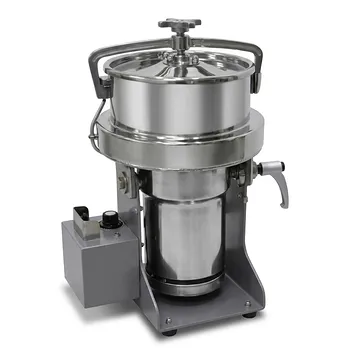
500g Capacity Water Cooled Low Temperature Grinder with Variable Speed and Safety Cover
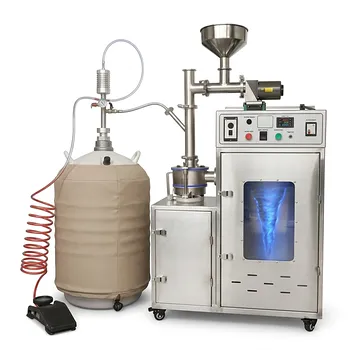
Small Liquid Nitrogen Cryogenic Grinder for Ultrafine Grinding of Heat-Sensitive Materials in Laboratories
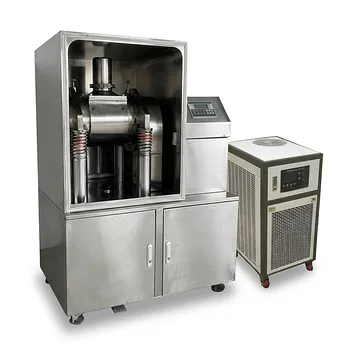
Water Cooled Cryogenic Ultra Fine Cell Wall Breaking Mill
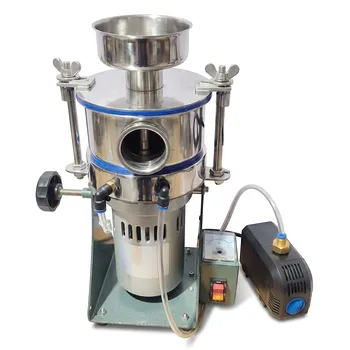
Water Cooled Airflow Ultra Fine Grinder for Low Temperature Material Processing
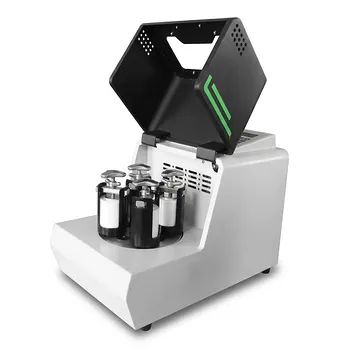
Miniature Planetary Ball Mill with Vacuum Grinding and High Efficiency for Laboratory Sample Preparation
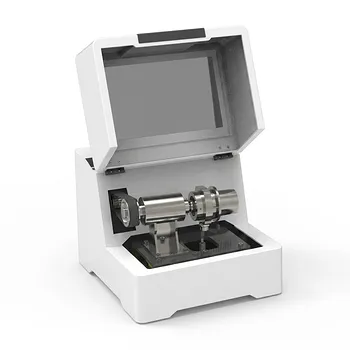
Single Tank High Energy Vibratory Ball Mill for Laboratory Grinding and Mixing

Vertical Production Planetary Ball Mill for High Throughput Powder Processing
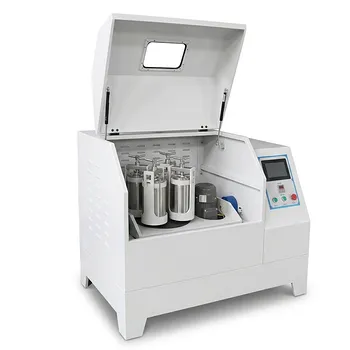
360° Rotating Omnidirectional Laboratory Planetary Ball Mill for Homogeneous Ultra-Fine Grinding and Mixing
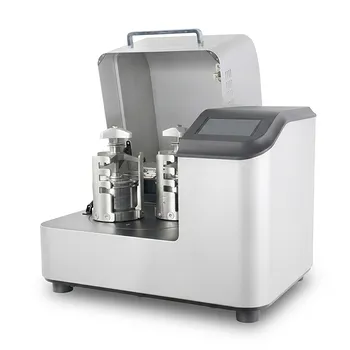
High Energy Planetary Ball Mill for Nano Scale Grinding and Mechanical Alloying
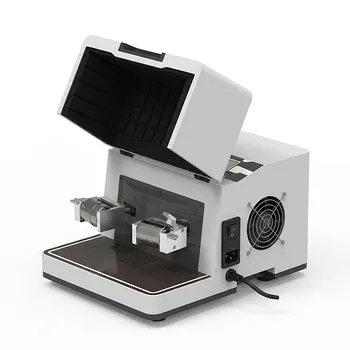
High Energy Hybrid Vibratory Ball Mill for Grinding Mixing and Cell Disruption

High Energy Omnidirectional Planetary Ball Mill 16L