Why use mixed-diameter balls for copper cryogenic milling? Achieve Superior Nanocrystalline Powder Refinement
Updated 4 months ago
Using mixed-diameter stainless steel grinding balls is essential to maximize the kinetic energy and collision frequency required to transform copper powder into a nanocrystalline state. Larger balls provide the high-impact energy necessary to crush and flatten coarse particles, while smaller balls offer a higher frequency of contact points to facilitate the continuous fracturing and cold welding required for ultra-fine refinement.
This "graded" approach to grinding media ensures that the milling process addresses both the initial reduction of bulk materials and the subsequent micro-scale refinement, ultimately producing a powder with a superior bimodal microstructure.
The Mechanics of Energy Transfer in Cryogenic Milling
The Role of Large Diameter Grinding Balls
Larger balls act as the primary energy source for initial particle crushing. Due to their greater mass, they generate significant kinetic energy during the milling cycle, which is necessary to overcome the initial structural integrity of micron-level copper particles (typically 5-50 μm).
These high-energy impacts drive the flattening and deformation of the copper powder. Without this initial force, the material would not reach the critical state of lattice strain required for further grain refinement.
The Role of Small Diameter Grinding Balls
Smaller balls compensate for the "gaps" between larger media by significantly increasing the collision frequency. While they carry less individual kinetic energy, their higher surface-area-to-volume ratio provides more contact points per unit of time.
This high-frequency impact is critical for the fracturing and cold welding stages. It ensures that the intermediate particles are subjected to constant shearing and attrition, which refines the grains into the sub-micron or nanocrystalline range.
Achieving a Bimodal Microstructure
The synergy between large and small diameters allows for the creation of a bimodal distribution in the copper powder. This specific structure, characterized by a mix of different grain sizes, is often sought after to balance strength and ductility in the final material.
The combination of different media sizes ensures that no "dead zones" exist within the grinding chamber. This leads to a more efficient energy distribution, accelerating the time it takes to reach the desired nanocrystalline state.
Why Stainless Steel is the Preferred Medium
High Strength and Hardness
Cryogenic milling occurs at extremely low temperatures where material behavior changes. Stainless steel is chosen because it maintains its high strength and hardness in these conditions, providing a rigid physical basis for breaking down copper grains.
Mass Density and Kinetic Energy
The high mass density of stainless steel is vital for generating the impact kinetic energy required to drive mechanical alloying. This density allows the media to transfer enough force to the copper particles to generate high-density dislocations and eventually form nanostructures.
Precise Control of Impurities
Using high-quality stainless steel helps manage the risk of media wear and contamination. By adjusting the ball-to-powder ratio (often around 30:1), engineers can balance the need for high-energy collisions with the necessity of maintaining the chemical purity of the copper powder.
Understanding the Trade-offs and Pitfalls
The Risk of Excessive Contamination
While increasing the number of small balls improves refinement, it also increases the total surface area of the media. This can lead to higher rates of elemental contamination from the grinding balls themselves as they wear down over long milling durations.
Challenges in Media Graduation
Finding the perfect "graduation" or ratio of ball sizes is a complex task. An incorrect ratio can lead to uneven energy distribution, where the powder is either insufficiently refined or over-processed, leading to unwanted cold welding into large clumps.
Complexity in Post-Processing
Using mixed diameters makes the separation of the grinding media from the powder more labor-intensive. In industrial settings, this requires specialized screening and recovery systems to ensure that all media sizes are accounted for and cleaned for the next cycle.
How to Apply These Principles to Your Milling Process
When designing a cryogenic milling protocol for copper or similar metallic powders, your choice of media should align with your specific material requirements and production goals.
- If your primary focus is rapid particle size reduction: Use a higher proportion of larger-diameter balls to maximize initial impact energy and break down coarse bulk materials quickly.
- If your primary focus is achieving a uniform nanocrystalline structure: Increase the ratio of smaller-diameter balls to ensure high collision frequency and more consistent shearing across the entire powder volume.
- If your primary focus is mimicking industrial-scale production: Utilize a graded selection of media (e.g., a mix of 5 mm, 10 mm, and 15 mm) to simulate the complex kinetic environment of large-scale mills.
Selecting the right mix of grinding diameters is not just a technical detail, but a fundamental requirement for mastering the high-energy physical environment needed for advanced powder metallurgy.
Summary Table:
| Media Size | Primary Function | Key Mechanism | Material Impact |
|---|---|---|---|
| Large Diameter | Initial Crushing | High Kinetic Energy Impact | Deformation & Lattice Strain |
| Small Diameter | Micro-Refinement | High Collision Frequency | Constant Shearing & Attrition |
| Mixed Ratio | Energy Optimization | Synergistic Processing | Bimodal Microstructure |
Elevate Your Powder Metallurgy with Precision Engineering
Achieving the perfect nanocrystalline structure requires more than just high-quality materials—it requires the right equipment. At Our Laboratory Solutions, we provide complete sample preparation systems designed for advanced material science.
From liquid nitrogen cryogenic grinders and planetary ball mills for ultra-fine grinding to Cold/Warm Isostatic Presses (CIP/WIP) and vacuum hot presses for high-density compaction, we offer the specialized tools you need to master copper powder processing.
Ready to optimize your milling efficiency? Contact our technical experts today to find the ideal equipment and media configuration for your research or production goals.
References
- Leila Ladani, Terry C. Lowe. Manufacturing of High Conductivity, High Strength Pure Copper with Ultrafine Grain Structure. DOI: 10.3390/jmmp7040137
Mentioned Products
- Water Cooled Cryogenic Ultra Fine Cell Wall Breaking Mill
- Ultra-Low Temperature Cryogenic High-Energy Vibratory Ball Mill
- Vibratory Ultra-Low Temperature Ultrafine Grinder for Cryogenic Powder Processing
- Ultra-Low Temperature Vibratory Mill for Ultrafine Grinding
- Cryogenic Liquid Nitrogen Grinder for DNA Analysis and Polymer Pulverization with Automatic Cooling and Electromagnetic Impact Technology
People Also Ask
- What is the primary role of the cryomilling process in the preparation of nanocrystalline copper powder? Refine Grains
- What are the advantages of using liquid nitrogen-driven cryomilling compared to room-temperature ball milling for high-entropy alloys?
- What is the role of a high-energy cryogenic grinder in Al-Gr nanocomposites? Optimize Refinement & Dispersion
- What is the function of cryogenic grinders in ASD pre-mixing? Achieve Superior API Homogeneity and Thermal Stability.
- What are the technical advantages of using a cryogenic grinder for cured epoxy resin? Preserve Sample Integrity.

Tech Team · PowderPreparation
Last updated on Jun 03, 2026
Related Products
Water Cooled Cryogenic Ultra Fine Cell Wall Breaking Mill
Ultra-Low Temperature Cryogenic High-Energy Vibratory Ball Mill
Vibratory Ultra-Low Temperature Ultrafine Grinder for Cryogenic Powder Processing
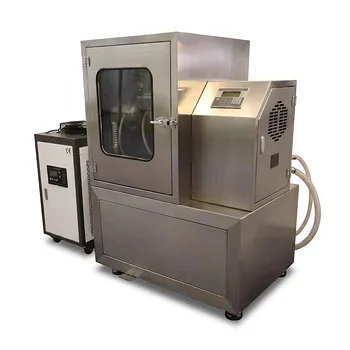
Ultra-Low Temperature Vibratory Mill for Ultrafine Grinding
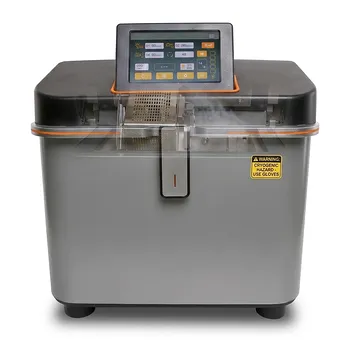
Cryogenic Liquid Nitrogen Grinder for DNA Analysis and Polymer Pulverization with Automatic Cooling and Electromagnetic Impact Technology

Low Temperature Laboratory Knife Mill Cryogenic Sample Grinder Material Science Powder Processing
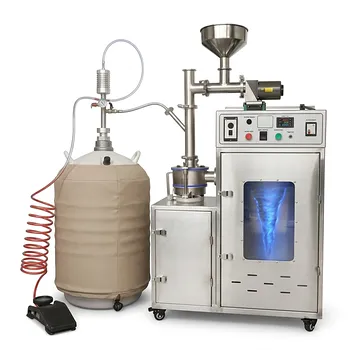
Small Liquid Nitrogen Cryogenic Grinder for Ultrafine Grinding of Heat-Sensitive Materials in Laboratories
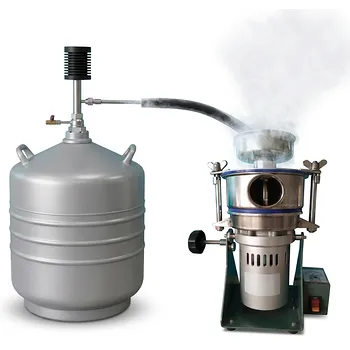
Cryogenic Liquid Nitrogen Grinder for Ultrafine Heat-Sensitive Powder Processing
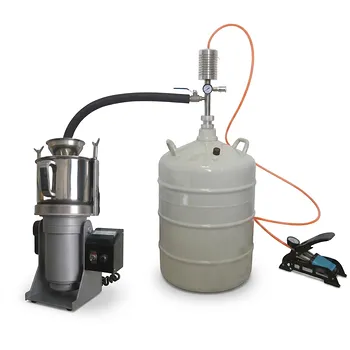
Liquid Nitrogen Cryogenic Grinder for Plastic and Heat-Sensitive Materials
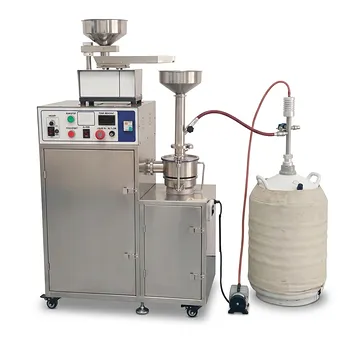
Small Liquid Nitrogen Cryogenic Grinder with Vibratory Feeder for Laboratory Sample Preparation
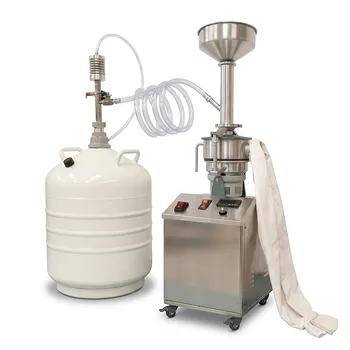
Laboratory Cryogenic Grinder Liquid Nitrogen Low Temperature Ultrafine Grinding
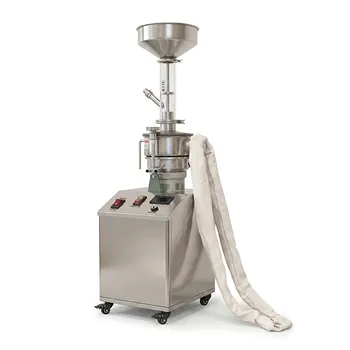
Small Liquid Nitrogen Cryogenic Grinder for Plastic and Heat-Sensitive Material Sample Preparation
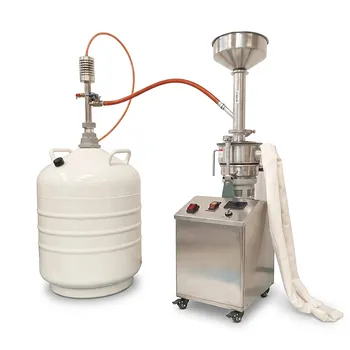
Laboratory Liquid Nitrogen Cryogenic Grinder for Polymer and Elastomer Materials
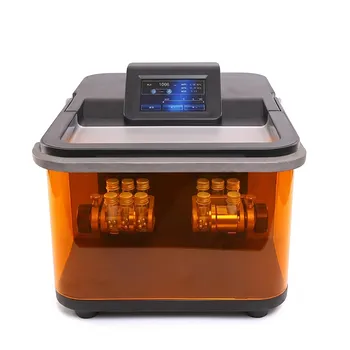
High Throughput Micro Ball Mill for Cryogenic Grinding and Laboratory Cell Disruption
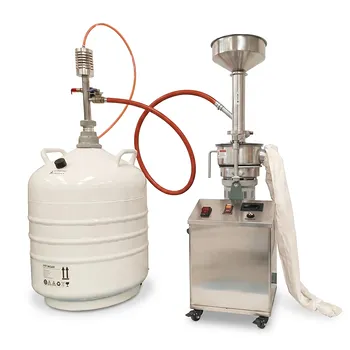
Laboratory Liquid Nitrogen Cryogenic Grinder Polymer Sample Preparation Pulverizer
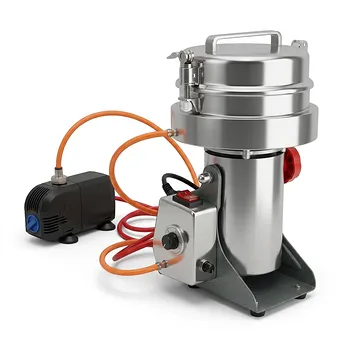
Water Cooled High Speed Grinder with Cryogenic Option for Laboratory Sample Preparation
Ultra-low Temperature Vibratory Mill Ultrafine Grinder
Nanoscale High Energy Vibratory Ball Mill Low Temperature
Heating Temperature Controlled High Energy Vibratory Ball Mill