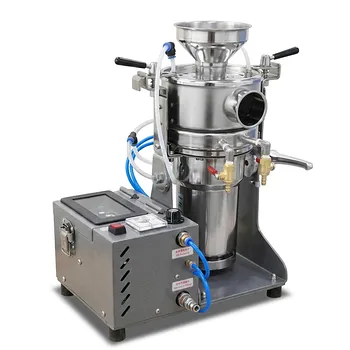
Why is it necessary to use a liquid nitrogen cryogenic grinder when preparing standard tire tread reference samples? Ensure Sample Integrity
Updated 4 months ago
The necessity of cryogenic grinding lies in its ability to transform elastic rubber into a brittle state. This process allows the material to be pulverized into a uniform fine powder while preventing the thermal degradation that occurs during conventional grinding. By utilizing liquid nitrogen, researchers ensure that the resulting reference sample remains chemically and physically identical to the original tire tread material.
Cryogenic grinding is the only reliable method for preparing tire tread reference samples because it uses ultra-low temperatures to induce cold embrittlement, enabling efficient micron-scale pulverization without altering the polymer's chemical composition or organic additives.
Overcoming the Elasticity of Rubber
The Challenge of Glass Transition
Tire rubber is designed to be highly elastic and durable at ambient temperatures. To grind it effectively, the material must be cooled below its glass transition temperature ($T_g$), transitioning it from an elastic, "rubbery" state to a hard, brittle state.
Inducing Cold Embrittlement
Liquid nitrogen provides the ultra-low temperatures (reaching as low as 77 K) required to induce cold embrittlement. In this brittle state, the rubber can be easily fractured by mechanical impact and shear forces rather than simply deforming or stretching.
Achieving Micron-Scale Precision
Once the rubber is embrittled, it can be efficiently ground into fine powders with specific particle size distributions. This precision is essential for creating standardized reference materials that require high consistency in morphology and size.
Preserving Chemical and Physical Integrity
Eliminating Frictional Heat
Conventional mechanical grinding generates significant frictional heat. For tire tread, this heat can cause the polymer to melt, deform, or undergo thermal degradation, which ruins the integrity of a reference sample.
Protecting Organic Additives
Tire treads contain complex organic additives and stabilizers that are sensitive to temperature. Cryogenic grinding ensures these components remain intact, preserving the chemical "fingerprint" of the original material for subsequent analysis.
Inhibiting Secondary Reactions
Ultra-low temperatures inhibit the quenching of mechanical radicals produced during the cleavage of the polymer backbone. This is critical for advanced testing, such as Electron Paramagnetic Resonance (ESR) spectroscopy, which identifies initial radical species.
Understanding the Trade-offs
Operational Complexity and Cost
The primary trade-off of this method is the high operational cost associated with the continuous consumption of liquid nitrogen. The equipment also requires specialized vacuum-insulated piping and safety protocols to manage the risks of asphyxiation and cryogenic burns.
Material Handling Challenges
While the process prevents thermal melting, the resulting fine powders can be highly hygroscopic once they return to room temperature. If not handled in a controlled environment, moisture condensation can contaminate the sample and affect the accuracy of the reference standard.
How to Apply This to Your Project
Selecting the Right Approach for Your Goal
When preparing tire-related reference materials, your choice of equipment should align with your specific analytical requirements.
- If your primary focus is chemical composition analysis: Cryogenic grinding is mandatory to ensure that organic additives and polymer chains do not degrade during preparation.
- If your primary focus is morphology and particle size: Utilize liquid nitrogen to achieve the brittle fracture necessary for creating uniform, micron-sized fragments without melting.
- If your primary focus is radical species identification: Maintain the sample at 77 K throughout the entire grinding and transfer process to prevent secondary reactions.
By prioritizing thermal control through liquid nitrogen cooling, you guarantee that your tire tread samples serve as a true and accurate reference for any scientific investigation.
Summary Table:
| Key Feature | Benefit | Purpose in Tire Reference Samples |
|---|---|---|
| Ultra-Low Temp (77 K) | Cold Embrittlement | Transforms elastic rubber into a brittle state for easy fracturing. |
| Thermal Control | Prevents Degradation | Eliminates frictional heat to protect sensitive organic additives. |
| Micron-Scale Grinding | Uniform Powder | Achieves high consistency in morphology and particle size distribution. |
| Radical Inhibition | Preserved Chemistry | Inhibits secondary reactions to allow accurate ESR spectroscopy. |
Elevate Your Material Research with Professional Sample Preparation
Achieving precise, uncontaminated results starts with the right equipment. We provide complete laboratory sample preparation solutions tailored for material science, specializing in advanced powder processing and compaction equipment.
Whether you are preparing tire tread reference samples or complex ceramics, our extensive product line supports your entire workflow:
- Advanced Grinding: Liquid nitrogen cryogenic grinders, planetary ball mills, jet mills, and rotor mills for achieving micron-scale precision.
- Material Processing: Jaw/roll crushers, sieve shakers, and high-efficiency powder/defoaming mixers.
- Precision Compaction: A full spectrum of hydraulic presses, including Cold/Warm Isostatic Presses (CIP/WIP), standard lab presses, XRF pellet presses, and vacuum hot presses.
Our expertise ensures that your materials maintain their chemical and physical integrity from raw state to final analysis. Contact our experts today to find the perfect solution for your laboratory's specific needs!
References
- Tae‐Woo Kang, H. Kim. An Experimental Study on the Component Analysis and Variation in Concentration of Tire and Road Wear Particles Collected from the Roadside. DOI: 10.3390/su151712815
Mentioned Products
- Liquid Nitrogen Cryogenic Grinder for Plastic and Heat-Sensitive Materials
- Small Liquid Nitrogen Cryogenic Grinder for Ultrafine Grinding of Heat-Sensitive Materials in Laboratories
- Cryogenic Liquid Nitrogen Grinder for DNA Analysis and Polymer Pulverization with Automatic Cooling and Electromagnetic Impact Technology
- Cryogenic Liquid Nitrogen Grinder for Ultrafine Heat-Sensitive Powder Processing
- Small Liquid Nitrogen Cryogenic Grinder with Vibratory Feeder for Laboratory Sample Preparation
People Also Ask
- Why is a liquid nitrogen cryogenic grinder required before DSC? Ensure Accurate Thermal Analysis & Sample Integrity.
- Why is a liquid nitrogen cryogenic grinder necessary for plastic pre-processing? Achieve Precise Co-Pyrolysis Results
- What role does liquid nitrogen cryogenic grinding play in the modification of CNTs? Optimize Nanomaterial Processing
- Why is a laboratory-grade liquid nitrogen cryogenic grinder essential for processing drug-loaded polymer nanofiber mats?
- What is the role of a liquid nitrogen cryogenic grinder in drug-polymer mixing? Achieve Superior Sample Homogeneity

Tech Team · PowderPreparation
Last updated on Jun 03, 2026
Related Products
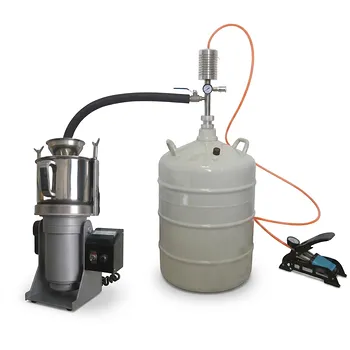
Liquid Nitrogen Cryogenic Grinder for Plastic and Heat-Sensitive Materials
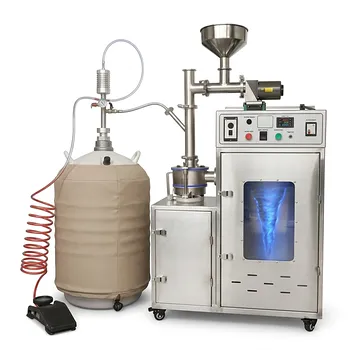
Small Liquid Nitrogen Cryogenic Grinder for Ultrafine Grinding of Heat-Sensitive Materials in Laboratories
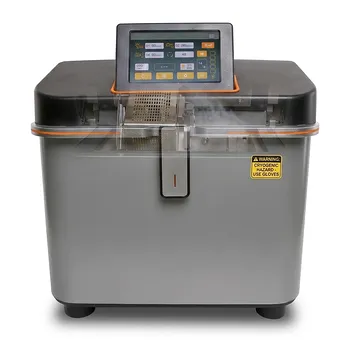
Cryogenic Liquid Nitrogen Grinder for DNA Analysis and Polymer Pulverization with Automatic Cooling and Electromagnetic Impact Technology
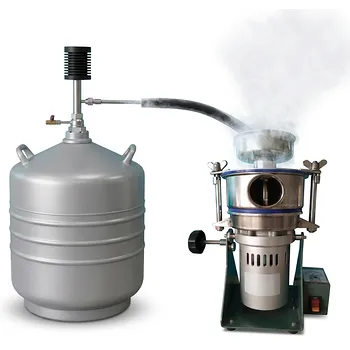
Cryogenic Liquid Nitrogen Grinder for Ultrafine Heat-Sensitive Powder Processing
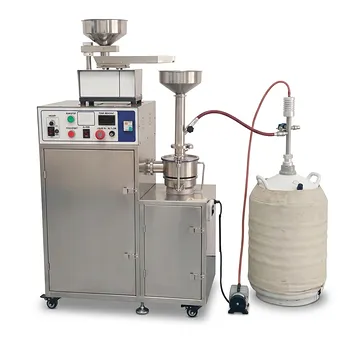
Small Liquid Nitrogen Cryogenic Grinder with Vibratory Feeder for Laboratory Sample Preparation
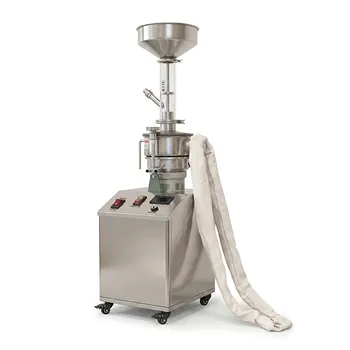
Small Liquid Nitrogen Cryogenic Grinder for Plastic and Heat-Sensitive Material Sample Preparation
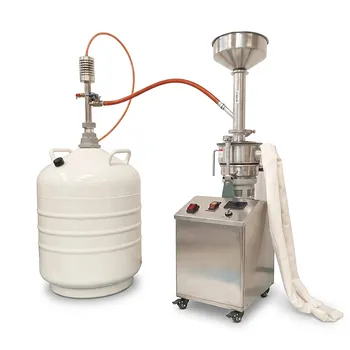
Laboratory Liquid Nitrogen Cryogenic Grinder for Polymer and Elastomer Materials
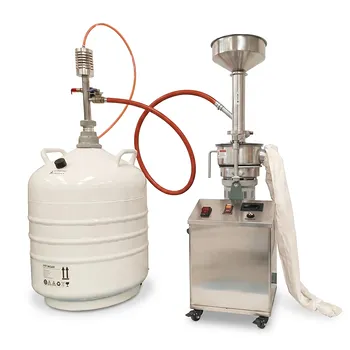
Laboratory Liquid Nitrogen Cryogenic Grinder Polymer Sample Preparation Pulverizer
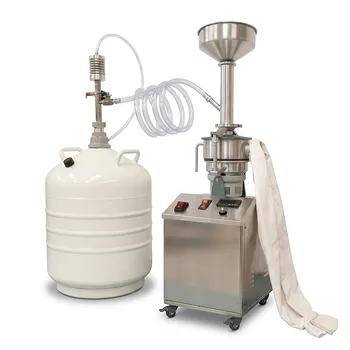
Laboratory Cryogenic Grinder Liquid Nitrogen Low Temperature Ultrafine Grinding
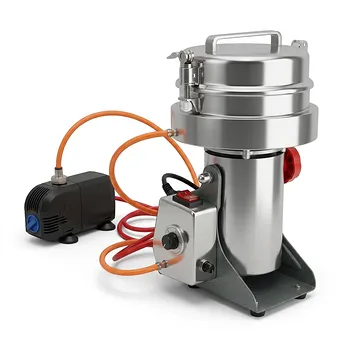
Water Cooled High Speed Grinder with Cryogenic Option for Laboratory Sample Preparation
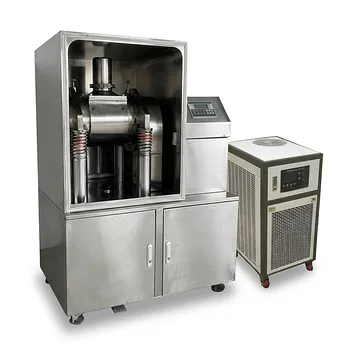
Water Cooled Cryogenic Ultra Fine Cell Wall Breaking Mill
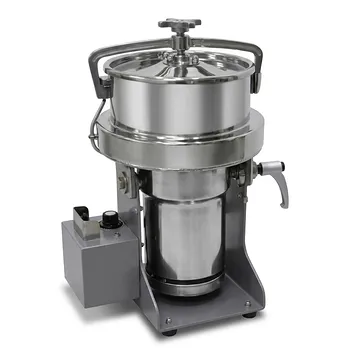
500g Capacity Water Cooled Low Temperature Grinder with Variable Speed and Safety Cover
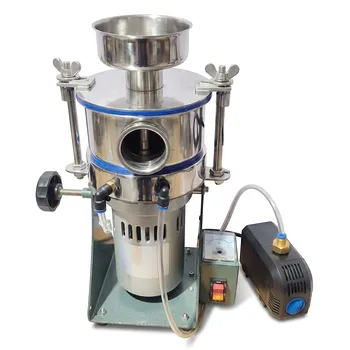
Water Cooled Airflow Ultra Fine Grinder for Low Temperature Material Processing
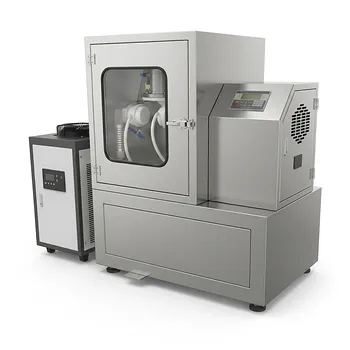
Vibratory Ultra-Low Temperature Ultrafine Grinder for Cryogenic Powder Processing
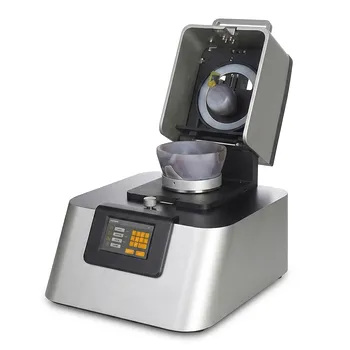
Laboratory Mortar Grinder for Sample Preparation and Cryogenic Powder Homogenization
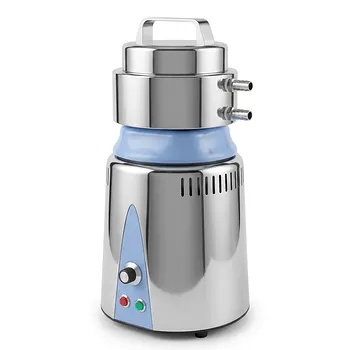
Low Temperature Laboratory Knife Mill Cryogenic Sample Grinder Material Science Powder Processing
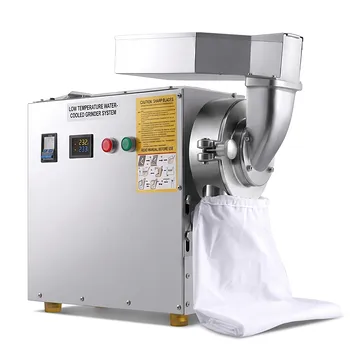
Low Temperature Water Cooled Continuous Feed Grinder Two Stage Coarse and Fine Grinding System
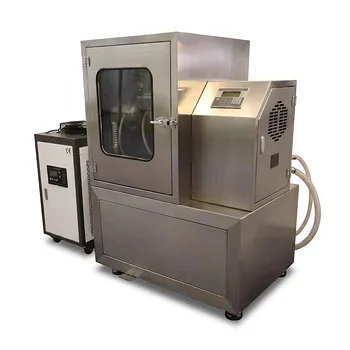
Ultra-Low Temperature Vibratory Mill for Ultrafine Grinding
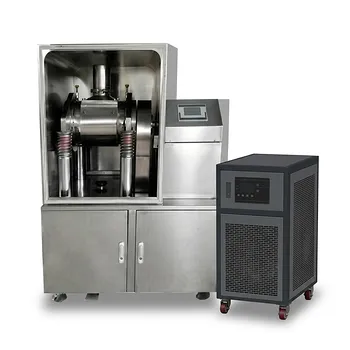
Ultra-low Temperature Vibratory Mill Ultrafine Grinder