What role do PCAs like stearic acid play in cryogenic ball milling? Prevent Cold Welding & Optimize Powder Yield
Updated 5 months ago
Process control agents (PCAs) like stearic acid are essential additives that prevent the fusion of powder particles during high-energy milling. In cryogenic ball milling, stearic acid acts as a surfactant that coats newly formed surfaces to inhibit "cold welding"—the process where ductile particles fuse together upon impact. By balancing the forces of fracturing and welding, PCAs ensure a higher powder yield, prevent material from sticking to the milling equipment, and allow for precise control over the final particle shape and size.
Core Takeaway: Stearic acid functions as a surface-active lubricant that maintains the separation of particles, transforming the milling process from a chaotic cycle of fusion into a controlled refinement of powder morphology and size.
Preventing Cold Welding and Agglomeration
Reducing Surface Energy
Stearic acid molecules adsorb onto the surfaces of newly fractured powder particles. This adsorption lowens the surface energy of the material, which naturally reduces the "stickiness" or attraction between individual particles.
The Mechanism of Surface Coating
By forming a thin, protective film, the PCA acts as a physical barrier. This barrier is critical when working with ductile metals (like titanium, aluminum, or copper) that would otherwise fuse into large, unusable chunks under the pressure of the grinding media.
Balancing Fracture and Welding
Ball milling is a constant competition between particles breaking apart (fracturing) and sticking back together (welding). Stearic acid shifts this equilibrium toward fracturing, allowing the energy of the mill to effectively reduce particle size rather than just moving mass around.
Optimizing Powder Yield and Equipment Efficiency
Eliminating Adhesion to Milling Media
Without a PCA, a significant portion of the powder often sticks to the grinding balls and the inner walls of the milling jar. Stearic acid acts as an anti-sticking agent, ensuring that the material remains in the "active" milling zone rather than becoming a coating on the equipment.
Maximizing Powder Recovery
By preventing the formation of large aggregates and wall-adhesion, PCAs dramatically increase the final yield. This is especially important in high-value applications where losing 20-30% of the material to "jar-caking" is economically unviable.
Improving Powder Flowability
Powders processed with stearic acid tend to be less prone to clumping after the milling is complete. This improved flowability makes the powder much easier to handle during subsequent steps, such as die filling or additive manufacturing.
Morphological Control and Particle Refinement
Shaping the Particles
The presence of a PCA influences the final geometry of the powder. In many ductile systems, stearic acid facilitates a shift from spherical shapes to flake-like or disc-like morphologies, which can be advantageous for specific industrial applications.
Achieving Uniform Size Distribution
Because the PCA prevents random agglomeration, the resulting powder features a narrower and more consistent size distribution. This uniformity is vital for ensuring predictable mechanical properties in the final sintered or 3D-printed part.
Refining Brittle and Ductile Materials
While most critical for ductile metals, PCAs are also used for ceramics like zirconia. Even in brittle materials, the reduction in surface energy helps prevent "strong agglomeration," ensuring the final product remains a fine, discrete powder.
Understanding the Trade-offs and Pitfalls
The Risk of Chemical Contamination
Stearic acid is an organic compound containing carbon, hydrogen, and oxygen. During high-energy milling, these elements can be incorporated into the powder lattice, potentially altering the chemical purity or the mechanical properties of the final component.
Impact on Subsequent Processing
Residual PCA on the powder surface can interfere with compaction and sintering. If the stearic acid is not properly "burned out" or removed, it can leave behind carbon residue or create porosity in the finished part.
Optimization of Concentration
Using too little PCA results in excessive cold welding and low yield. Conversely, excessive PCA can over-lubricate the system, reducing the friction required for effective fracturing and unnecessarily increasing the level of contamination.
How to Apply This to Your Project
Selecting a PCA Strategy
The use of stearic acid should be calibrated based on your specific material goals and purity requirements.
- If your primary focus is maximum particle refinement: Use a higher concentration of stearic acid (up to 2%) to aggressively inhibit welding and promote continuous fracturing.
- If your primary focus is chemical purity: Minimize the PCA concentration to the lowest effective level (often around 0.5%) and ensure a vacuum or inert atmosphere "de-binding" step is included in your post-processing.
- If your primary focus is powder yield: Focus on coating the jar and balls with the PCA-powder mix early in the process to prevent initial adhesion.
By strategically utilizing stearic acid, you can transform cryogenic ball milling from a high-loss process into a precision engineering tool for advanced material synthesis.
Summary Table:
| Feature | Function of Stearic acid (PCA) | Key Benefit for Powder Processing |
|---|---|---|
| Cold Welding | Inhibits ductile particles from fusing | Prevents formation of large, unusable aggregates |
| Surface Energy | Adsorbs onto newly fractured surfaces | Reduces particle stickiness and agglomeration |
| Equipment Adhesion | Acts as an anti-sticking lubricant | Maximizes yield by preventing "jar-caking" |
| Size Control | Shifts balance toward fracturing | Achieves a narrower, uniform size distribution |
| Morphology | Facilitates specific shape transitions | Allows for flake-like or disc-like particle shaping |
Elevate Your Material Synthesis with Precision Equipment
Achieving the perfect powder morphology requires more than just the right additives—it demands high-performance equipment. At [Your Brand Name], we provide complete laboratory sample preparation solutions tailored for material science and powder metallurgy.
Our extensive range includes:
- Advanced Milling: Liquid nitrogen cryogenic grinders, planetary ball mills, jet mills, and rotor mills for ultimate particle refinement.
- Compaction Excellence: A full spectrum of hydraulic presses, including Cold/Warm Isostatic Presses (CIP/WIP), vacuum hot presses, and XRF pellet presses.
- Processing Tools: Precision crushers, sieve shakers (vibratory/air-jet), and high-efficiency powder or defoaming mixers.
Whether you are refining ductile metals or advanced ceramics, our specialists are ready to help you optimize your workflow and maximize powder recovery.
Ready to upgrade your lab? Contact our experts today to find the perfect solution!
References
- Jiří Kozlík, Miloš Janeček. Microstructure and texture in cryomilled and spark plasma sintered Ti Grade 2. DOI: 10.1051/matecconf/202032112030
Mentioned Products
- Ultra-Low Temperature Cryogenic High-Energy Vibratory Ball Mill
- High Throughput Micro Ball Mill for Cryogenic Grinding and Laboratory Cell Disruption
- Ultra-Low Temperature Vibratory Mill for Ultrafine Grinding
- Heating Temperature Controlled High Energy Vibratory Ball Mill
- Nanoscale High Energy Vibratory Ball Mill Low Temperature
People Also Ask
- How does a high-energy vibratory ball mill improve the performance of MgH2? Optimize Hydrogen Storage Kinetics
- What is the function of a high-energy vibratory ball mill in Cu-Ta alloys? Achieve Precision Mechanical Alloying
- What is the function of high-energy ball milling in ZnO membrane slurry prep? Optimize Homogenization & Dispersion
- What is the Role of HEBM in High-Entropy H-SOFC Cathode Prep? Achieving Atomic-Level Homogenization
- What is the importance of using a high-purity argon atmosphere during the high-energy ball milling of ceramic particles?

Tech Team · PowderPreparation
Last updated on May 14, 2026
Related Products
Ultra-Low Temperature Cryogenic High-Energy Vibratory Ball Mill
High Throughput Micro Ball Mill for Cryogenic Grinding and Laboratory Cell Disruption
Ultra-Low Temperature Vibratory Mill for Ultrafine Grinding
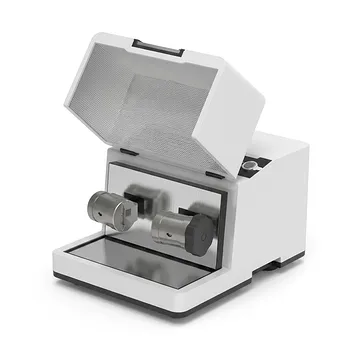
Heating Temperature Controlled High Energy Vibratory Ball Mill
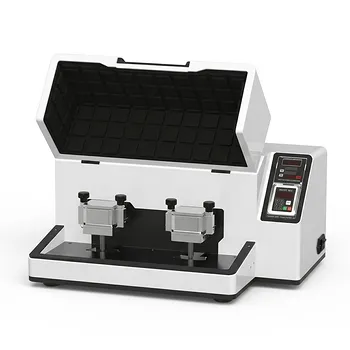
Nanoscale High Energy Vibratory Ball Mill Low Temperature
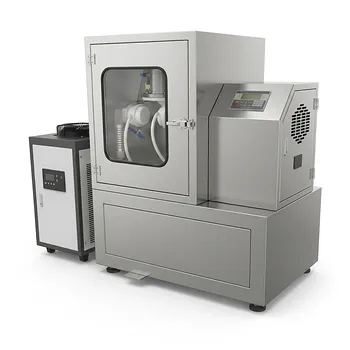
Vibratory Ultra-Low Temperature Ultrafine Grinder for Cryogenic Powder Processing
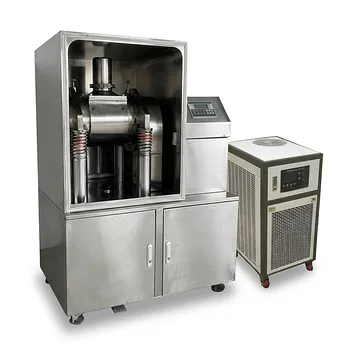
Water Cooled Cryogenic Ultra Fine Cell Wall Breaking Mill
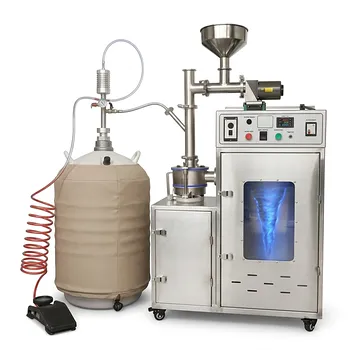
Small Liquid Nitrogen Cryogenic Grinder for Ultrafine Grinding of Heat-Sensitive Materials in Laboratories
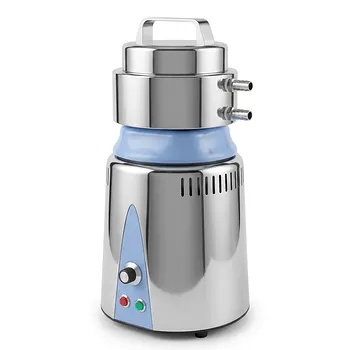
Low Temperature Laboratory Knife Mill Cryogenic Sample Grinder Material Science Powder Processing
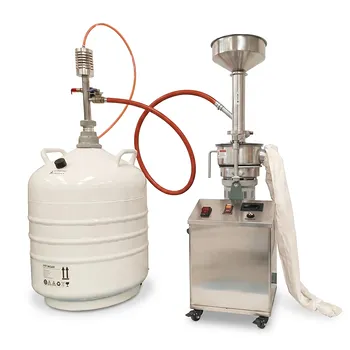
Laboratory Liquid Nitrogen Cryogenic Grinder Polymer Sample Preparation Pulverizer
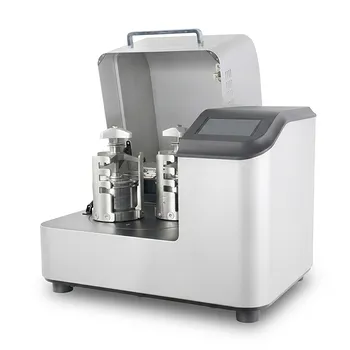
High Energy Planetary Ball Mill for Nano Scale Grinding and Mechanical Alloying
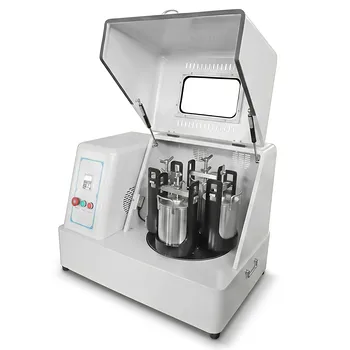
Vertical Square Planetary Ball Mill for Laboratory Sample Preparation and Nanoscale Grinding
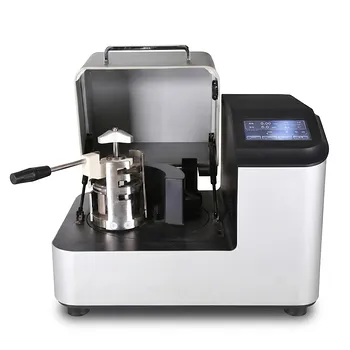
High Energy Laboratory Planetary Ball Mill for Nano Grinding and Material Science Sample Preparation
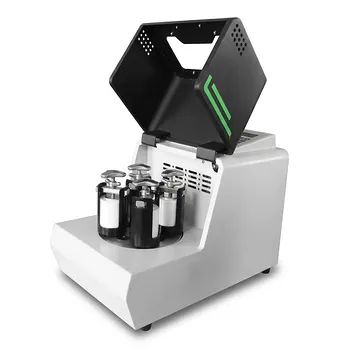
Miniature Planetary Ball Mill with Vacuum Grinding and High Efficiency for Laboratory Sample Preparation
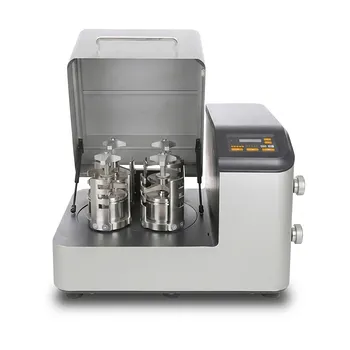
High Energy Planetary Ball Mill for Nano Scale Grinding and Colloidal Mixing in Material Science Research
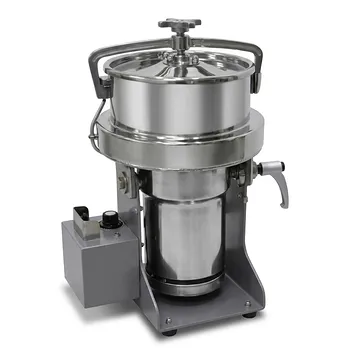
500g Capacity Water Cooled Low Temperature Grinder with Variable Speed and Safety Cover
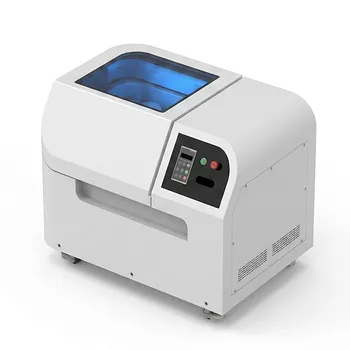
8L Planetary Ball Mill for Laboratory Grinding and Sample Preparation
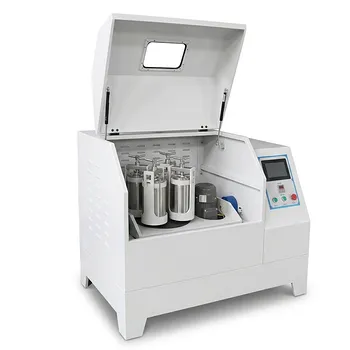
360° Rotating Omnidirectional Laboratory Planetary Ball Mill for Homogeneous Ultra-Fine Grinding and Mixing
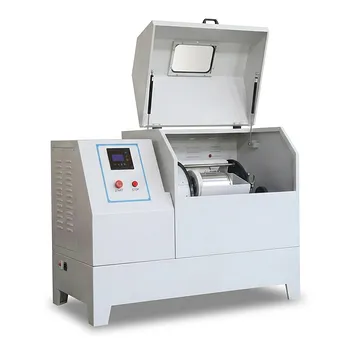
Heavy Duty Horizontal Planetary Ball Mill for Efficient Industrial Grinding and Sample Preparation