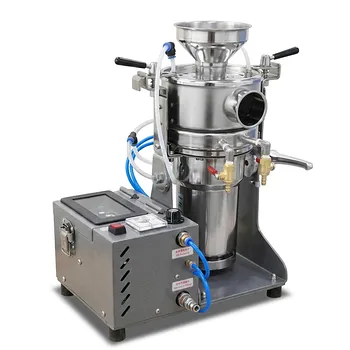
What are the technical advantages of using a cryogenic grinder for cured epoxy resin? Preserve Sample Integrity.
Updated 5 months ago
The primary technical advantage of using a cryogenic grinder is the absolute preservation of the material's chemical and physical integrity during pulverization. By using liquid nitrogen to induce a state of "cold embrittlement," the grinder prevents the frictional heat of mechanical milling from causing localized thermal degradation or structural alterations in the cured epoxy. This ensures that the resulting powder is a high-fidelity representation of the original resin block, which is essential for high-precision analytical testing.
Core Takeaway: Cryogenic grinding suppresses the heat-induced softening and chemical decomposition inherent in standard milling by cooling epoxy below its glass transition temperature. This process yields fine, uniform powders that maintain the original material's physicochemical properties, ensuring the accuracy of subsequent TGA and FTIR analyses.
Preventing Thermal and Chemical Alteration
Suppression of Frictional Heat
Cured epoxy resins are thermosetting polymers that naturally generate significant frictional heat during standard mechanical grinding. This heat can lead to localized "hot spots" where the temperature exceeds the material's decomposition threshold, leading to premature chemical breakdown.
Maintaining the Glass Transition State
A cryogenic grinder utilizes liquid nitrogen to cool the epoxy resin blocks well below their glass transition temperature ($T_g$). At these extreme low temperatures, the material loses its toughness and enters a highly brittle state, allowing it to be shattered into powder without absorbing damaging thermal energy.
Preservation of Chemical Signatures
By avoiding heat-induced alterations, the cryogenic process ensures that the chemical structure of the resin—including delicate flame retardant systems—remains intact. This is critical for techniques like Fourier-Transform Infrared Spectroscopy (FTIR), where even minor thermal changes can distort the spectral data.
Mechanical Efficiency and Particle Quality
Achieving Ultra-Fine Particle Size
Cryogenic grinding is capable of producing much finer and more uniform particles than room-temperature methods, often reaching median sizes between 5 and 10 micrometers. This high surface-area-to-volume ratio is vital for ensuring consistent results in thermal analysis.
Elimination of Material Softening and Clogging
Standard grinding often causes epoxy to soften or become "gummy," which leads to the clogging of screens and equipment. Cryogenic embrittlement prevents this elasticity, ensuring a fast, efficient pulverization process that maintains a narrow particle size distribution.
Inert Processing Environment
The use of liquid nitrogen provides an inert atmosphere during the grinding process. This suppresses potential oxidation or combustion that might occur if the resin were pulverized in the presence of atmospheric oxygen and mechanical sparks.
Impact on Downstream Analytical Accuracy
Precision in Thermogravimetric Analysis (TGA)
For Thermogravimetric Analysis (TGA), the sample must accurately reflect the flame retardant system's thermal decomposition process. If the sample is partially degraded during preparation, the TGA curves will provide a false baseline for the material’s actual thermal stability.
Improved Dispersibility for Additive Study
When epoxy resins contain nano-additives like graphene or liquid crystal elastomers, cryogenic grinding improves the dispersibility of these components within the powder. This allows researchers to study the original single-domain structures and mesogenic properties without the interference of physical deformation.
Understanding the Trade-offs
Operational Costs and Complexity
The most significant drawback is the cost and logistics of liquid nitrogen. Continuous consumption of cryogens requires specialized storage dewars, insulated piping, and strict safety protocols to prevent asphyxiation or cryogenic burns.
Material Sensitivity to Moisture
Samples processed at cryogenic temperatures are prone to moisture condensation once they are removed from the cold environment. If not handled in a controlled, dry atmosphere, the resulting water uptake can interfere with sensitive IR spectroscopy and TGA measurements.
Equipment Maintenance
The extreme temperature cycles—moving from ambient to -196°C—place significant thermal stress on the grinding hardware. This requires specialized materials for the grinding jars and impactors to prevent metal fatigue or cracking over time.
How to Apply This to Your Project
When deciding on a sample preparation method, consider the specific requirements of your analytical goals.
- If your primary focus is thermal stability (TGA): Use cryogenic grinding to ensure the "onset of degradation" temperature is not artificially lowered by heat damage during milling.
- If your primary focus is chemical bonding (FTIR): Choose cryogenic methods to avoid the shifting or loss of functional group peaks caused by frictional heat.
- If your primary focus is particle size uniformity: Utilize a cryo-mill to achieve the sub-10-micrometer powder necessary for high-resolution imaging or composite blending.
Cryogenic grinding is the definitive standard for transforming tough, cured epoxy into representative powder without compromising the scientific validity of your data.
Summary Table:
| Key Feature | Technical Advantage | Impact on Analysis |
|---|---|---|
| Cold Embrittlement | Prevents thermal degradation and material softening | Ensures accurate TGA/FTIR baselines |
| Ultra-Fine Milling | Achieves 5-10μm particle size uniformity | Enhances dispersibility for additive study |
| Inert Atmosphere | Liquid nitrogen suppresses oxidation/combustion | Preserves delicate chemical signatures |
| Structural Preservation | Maintains original physicochemical properties | Reliable data for high-precision testing |
Optimize Your Material Research with Expert Sample Preparation
Precision in analytical testing starts with high-quality sample preparation. We provide complete laboratory sample preparation solutions for material science, specializing in high-performance powder processing and compaction equipment.
Whether you need to preserve the chemical integrity of cured resins using our liquid nitrogen cryogenic grinders or require a full spectrum of crushers (jaw/roll), planetary ball mills, jet mills, and vibratory sieve shakers, we have the technology to ensure your data's accuracy. Furthermore, we offer industry-leading hydraulic presses, including Cold/Warm Isostatic Presses (CIP/WIP), hot presses, and vacuum hot presses, to help you achieve perfect compaction for every application.
Ready to enhance your lab’s capabilities? Contact us today to receive a tailored solution for your specific material processing needs!
References
- Alexander Battig, Bernhard Schartel. Hyperbranched Rigid Aromatic Phosphorus‐Containing Flame Retardants for Epoxy Resins. DOI: 10.1002/mame.202000731
Mentioned Products
- Small Liquid Nitrogen Cryogenic Grinder for Ultrafine Grinding of Heat-Sensitive Materials in Laboratories
- Cryogenic Liquid Nitrogen Grinder for DNA Analysis and Polymer Pulverization with Automatic Cooling and Electromagnetic Impact Technology
- Cryogenic Liquid Nitrogen Grinder for Ultrafine Heat-Sensitive Powder Processing
- Laboratory Cryogenic Grinder Liquid Nitrogen Low Temperature Ultrafine Grinding
- Liquid Nitrogen Cryogenic Grinder for Plastic and Heat-Sensitive Materials
People Also Ask
- What are the advantages of using liquid nitrogen Cryomilling? Achieve ultra-fine grains and high chemical purity.
- How does liquid nitrogen as a processing medium affect copper powder beyond cooling? Impacts on Purity & Sintering
- What is the function of liquid nitrogen cryogenic grinding in the initial preparation of PHBH polymer powder? Key Roles
- Why is liquid nitrogen cryogenic grinding used for coal and microbial experiments? Preserve Sample Integrity
- Why use liquid nitrogen cryogenic grinding for polymer degradation? Preserve sample integrity & prevent thermal damage

Tech Team · PowderPreparation
Last updated on May 14, 2026
Related Products
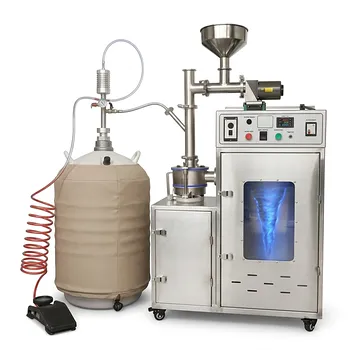
Small Liquid Nitrogen Cryogenic Grinder for Ultrafine Grinding of Heat-Sensitive Materials in Laboratories
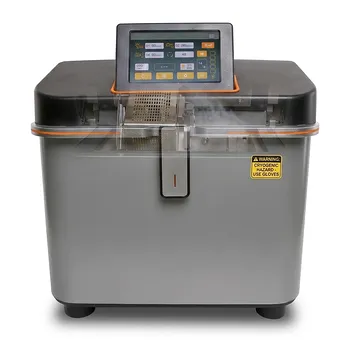
Cryogenic Liquid Nitrogen Grinder for DNA Analysis and Polymer Pulverization with Automatic Cooling and Electromagnetic Impact Technology
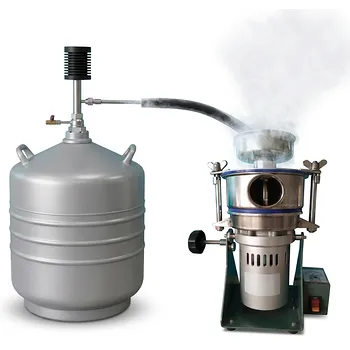
Cryogenic Liquid Nitrogen Grinder for Ultrafine Heat-Sensitive Powder Processing
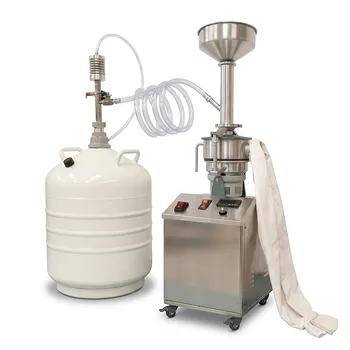
Laboratory Cryogenic Grinder Liquid Nitrogen Low Temperature Ultrafine Grinding
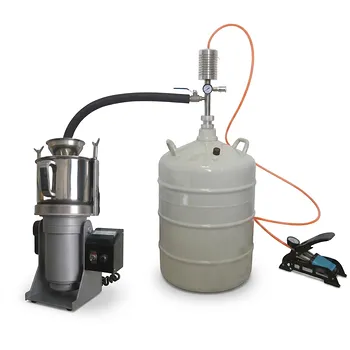
Liquid Nitrogen Cryogenic Grinder for Plastic and Heat-Sensitive Materials
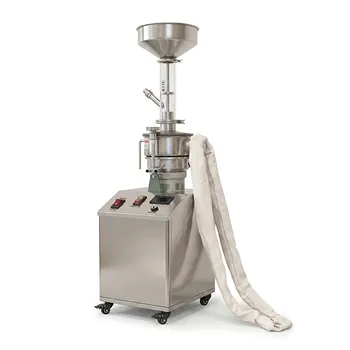
Small Liquid Nitrogen Cryogenic Grinder for Plastic and Heat-Sensitive Material Sample Preparation
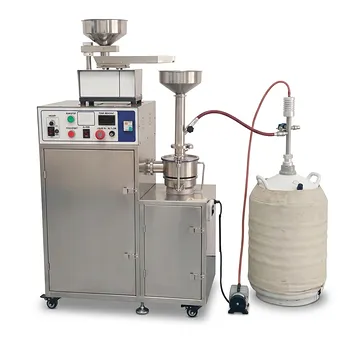
Small Liquid Nitrogen Cryogenic Grinder with Vibratory Feeder for Laboratory Sample Preparation
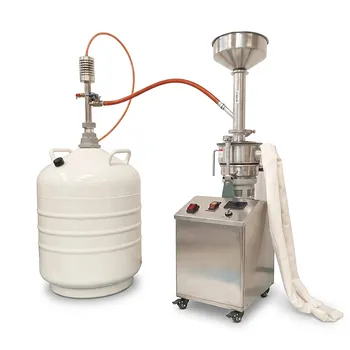
Laboratory Liquid Nitrogen Cryogenic Grinder for Polymer and Elastomer Materials
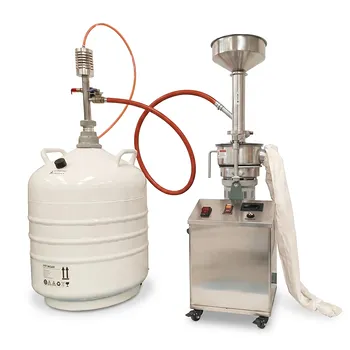
Laboratory Liquid Nitrogen Cryogenic Grinder Polymer Sample Preparation Pulverizer
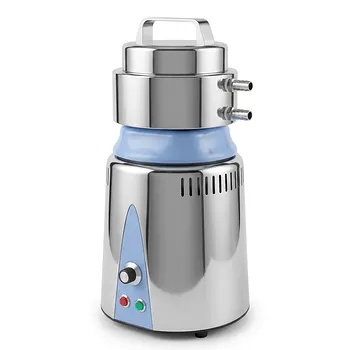
Low Temperature Laboratory Knife Mill Cryogenic Sample Grinder Material Science Powder Processing
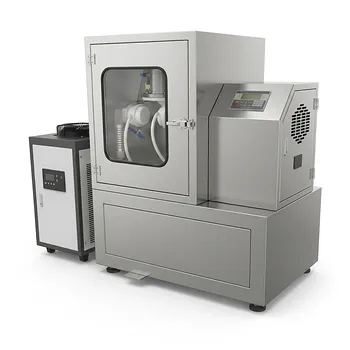
Vibratory Ultra-Low Temperature Ultrafine Grinder for Cryogenic Powder Processing
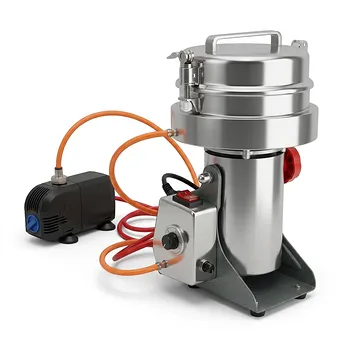
Water Cooled High Speed Grinder with Cryogenic Option for Laboratory Sample Preparation
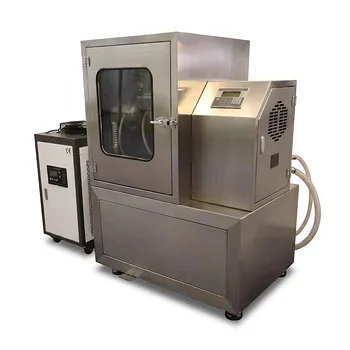
Ultra-Low Temperature Vibratory Mill for Ultrafine Grinding
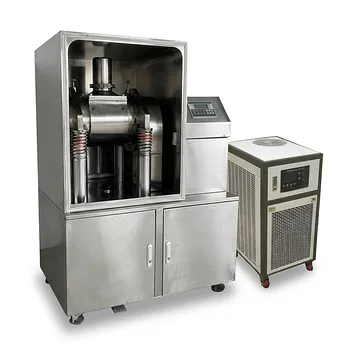
Water Cooled Cryogenic Ultra Fine Cell Wall Breaking Mill
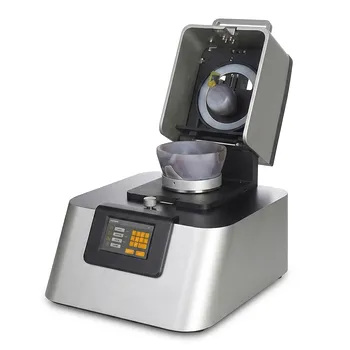
Laboratory Mortar Grinder for Sample Preparation and Cryogenic Powder Homogenization
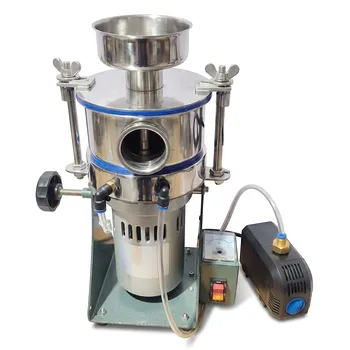
Water Cooled Airflow Ultra Fine Grinder for Low Temperature Material Processing
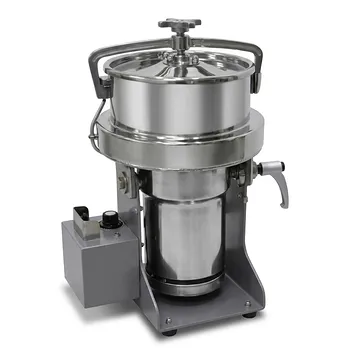
500g Capacity Water Cooled Low Temperature Grinder with Variable Speed and Safety Cover
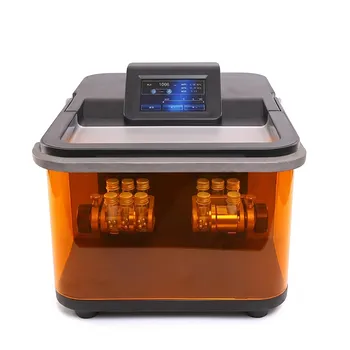
High Throughput Micro Ball Mill for Cryogenic Grinding and Laboratory Cell Disruption
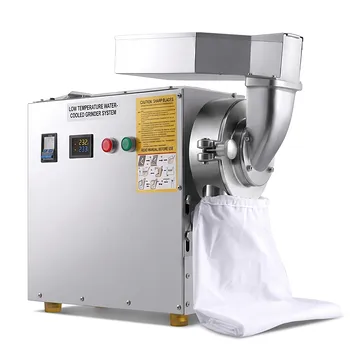
Low Temperature Water Cooled Continuous Feed Grinder Two Stage Coarse and Fine Grinding System