What is the function of a cryogenic grinder for GTR in SBR composites? Optimize Particle Activation & Bonding
Updated 4 months ago
The cryogenic grinder serves as a specialized processing unit that transforms elastic waste rubber into a chemically active, ultrafine filler by utilizing ultra-low temperatures and high-frequency impacts. By cooling ground tire rubber (GTR) below its glass transition temperature, the grinder achieves precise particle sizes without thermal degradation while simultaneously inducing partial devulcanization. This dual physical and chemical modification is essential for ensuring the GTR can successfully integrate into and strengthen a styrene-butadiene rubber (SBR) matrix.
The core function of a cryogenic grinder is to embrittle rubber for efficient pulverization while triggering partial devulcanization. This process preserves the rubber’s chemical integrity and releases active sulfur radicals, which are critical for establishing strong interfacial bonds in self-healing SBR composites.
The Physical Transformation: Embrittlement and Precision Pulverization
Achieving the Brittle State
The primary physical role of the grinder is to use liquid nitrogen to cool the rubber pieces below their glass transition temperature. In this state, the rubber loses its elasticity and becomes brittle, similar to glass.
This phase change allows mechanical forces to shatter the material rather than tear it. This efficiency is necessary to reach the micron-scale particle sizes required for high-performance composites.
Maximizing Specific Surface Area
By utilizing high-frequency cyclic impacts, the grinder produces ultrafine particles—often smaller than 140 microns—with uniform size distributions.
This drastic reduction in size significantly increases the specific surface area of the rubber powder. A higher surface area provides more contact points and active sites for subsequent chemical reactions or bonding within the SBR matrix.
The Chemical Advantage: Activation Without Degradation
Preventing Thermal Degradation
Standard grinding at room temperature generates significant heat, which can cause the rubber to oxidize or lose its original physicochemical characteristics.
The liquid nitrogen environment prevents this heat buildup, ensuring that organic additives and internal chemical components remain stable. This preservation ensures the recycled GTR maintains its reinforcing activity when added to new rubber.
Inducing Partial Devulcanization
Critically, the cryogenic process goes beyond simple size reduction by inducing partial devulcanization. The mechanical energy from high-frequency impacts breaks existing sulfur-sulfur (S-S) and sulfur-carbon (S-C) cross-links.
This breakage releases active sulfur radicals onto the surface of the GTR particles. These radicals act as chemical bridges, significantly strengthening the interfacial bonding between the recycled filler and the new SBR matrix.
Impact on Self-Healing SBR Composites
Enhancing Matrix Dispersion
Ultrafine particles produced via cryogenic grinding disperse much more effectively within the styrene-butadiene rubber (SBR) matrix.
Poor dispersion often leads to structural weak points, but the uniform size distribution achieved through cryogenic processing prevents clumping. This ensures the composite maintains consistent mechanical properties throughout the material.
Enabling Interfacial Strengthening
The self-healing and mechanical properties of SBR composites rely on the quality of the bond between the filler and the base polymer.
Because the cryogenic grinder "activates" the GTR surface through bond-breaking, the recycled rubber becomes more than just a filler; it becomes a chemically integrated component of the composite structure.
Understanding the Trade-offs
Operational Costs and Complexity
The most significant limitation of cryogenic grinding is the high cost of liquid nitrogen. Maintaining the ultra-low temperatures required for embrittlement adds substantial operational overhead compared to ambient grinding methods.
Equipment Wear and Throughput
While the process is efficient at creating fine powders, the extreme cold and high-frequency impacts require specialized machinery that can withstand thermal stress. Furthermore, the batch or continuous throughput speeds may be lower than traditional mechanical shredding, depending on the desired particle fineness.
Applying Cryogenic Processing to Your Project
When integrating ground tire rubber into SBR composites, your processing strategy should align with your specific performance requirements.
- If your primary focus is maximum mechanical strength: Prioritize cryogenic grinding to leverage partial devulcanization and active sulfur radicals for superior interfacial bonding.
- If your primary focus is chemical modification (e.g., silanization): Use cryogenic grinding to maximize specific surface area, providing the necessary active sites for subsequent chemical oxidation.
- If your primary focus is cost-sensitive aggregate production: Consider whether ambient grinding might suffice, as the high-energy benefits of cryogenic processing are most valuable for high-tech composite applications.
Properly utilizing a cryogenic grinder ensures that waste rubber is not merely recycled but is "upcycled" into a high-value, chemically active constituent for advanced SBR materials.
Summary Table:
| Feature | Cryogenic Processing Action | Impact on SBR Composites |
|---|---|---|
| Particle Size | High-frequency impact below Tg | Ultrafine micron-scale dispersion |
| Chemistry | Induced partial devulcanization | Active sulfur radicals for bonding |
| Temperature | Liquid nitrogen cooling | Prevents oxidation and degradation |
| Surface Area | Shattering brittle material | Increased active sites for reinforcement |
Elevate Your Material Research with Precision Sample Prep
Transform waste rubber into high-performance composites with professional-grade laboratory equipment. We provide complete laboratory sample preparation solutions for material science, specializing in high-efficiency powder processing and compaction.
Our extensive product lines are designed to meet the rigorous demands of material synthesis:
- Advanced Grinding: Liquid nitrogen cryogenic grinders, planetary ball mills, jet mills, and rotor mills for achieving ultrafine particle sizes.
- Sizing & Mixing: Vibratory/air-jet sieve shakers and high-precision powder or defoaming mixers.
- Compaction Excellence: A full spectrum of hydraulic presses, including Cold/Warm Isostatic Presses (CIP/WIP), vacuum hot presses, and XRF pellet presses.
Whether you are optimizing interfacial bonding in SBR or developing innovative powder mixtures, our equipment ensures chemical integrity and mechanical precision.
Ready to enhance your lab's efficiency? Contact our experts today for a tailored solution!
References
- Javier Araujo‐Morera, Miguel A. López‐Manchado. Giving a Second Opportunity to Tire Waste: An Alternative Path for the Development of Sustainable Self-Healing Styrene–Butadiene Rubber Compounds Overcoming the Magic Triangle of Tires. DOI: 10.3390/polym11122122
Mentioned Products
- Small Liquid Nitrogen Cryogenic Grinder for Ultrafine Grinding of Heat-Sensitive Materials in Laboratories
- Laboratory Cryogenic Grinder Liquid Nitrogen Low Temperature Ultrafine Grinding
- Cryogenic Liquid Nitrogen Grinder for DNA Analysis and Polymer Pulverization with Automatic Cooling and Electromagnetic Impact Technology
- Cryogenic Liquid Nitrogen Grinder for Ultrafine Heat-Sensitive Powder Processing
- Liquid Nitrogen Cryogenic Grinder for Plastic and Heat-Sensitive Materials
People Also Ask
- What are the advantages of using liquid nitrogen Cryomilling? Achieve ultra-fine grains and high chemical purity.
- How does liquid nitrogen as a processing medium affect copper powder beyond cooling? Impacts on Purity & Sintering
- What is the function of liquid nitrogen cryogenic grinding in the initial preparation of PHBH polymer powder? Key Roles
- Why is liquid nitrogen cryogenic grinding used for coal and microbial experiments? Preserve Sample Integrity
- Why use liquid nitrogen cryogenic grinding for polymer degradation? Preserve sample integrity & prevent thermal damage

Tech Team · PowderPreparation
Last updated on Jun 03, 2026
Related Products
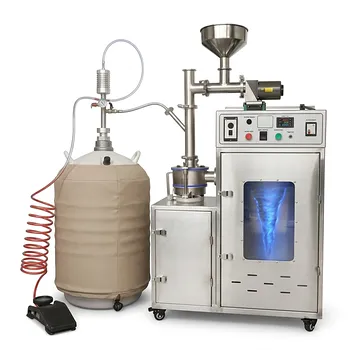
Small Liquid Nitrogen Cryogenic Grinder for Ultrafine Grinding of Heat-Sensitive Materials in Laboratories
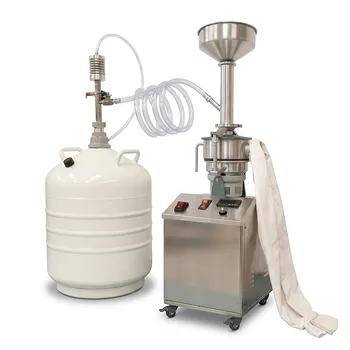
Laboratory Cryogenic Grinder Liquid Nitrogen Low Temperature Ultrafine Grinding
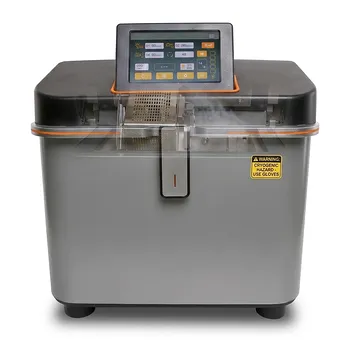
Cryogenic Liquid Nitrogen Grinder for DNA Analysis and Polymer Pulverization with Automatic Cooling and Electromagnetic Impact Technology
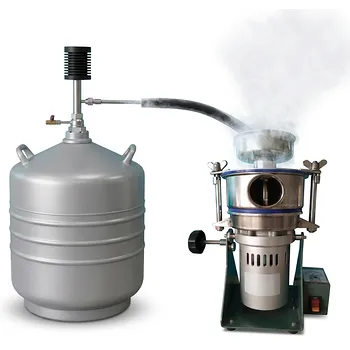
Cryogenic Liquid Nitrogen Grinder for Ultrafine Heat-Sensitive Powder Processing
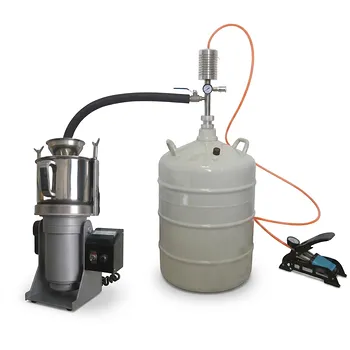
Liquid Nitrogen Cryogenic Grinder for Plastic and Heat-Sensitive Materials
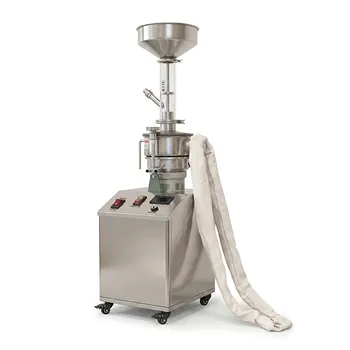
Small Liquid Nitrogen Cryogenic Grinder for Plastic and Heat-Sensitive Material Sample Preparation
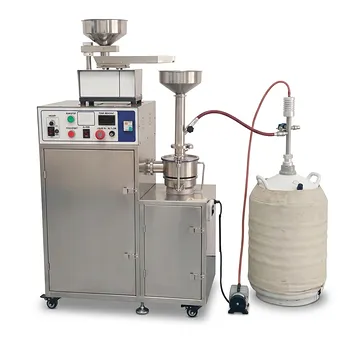
Small Liquid Nitrogen Cryogenic Grinder with Vibratory Feeder for Laboratory Sample Preparation
Laboratory Liquid Nitrogen Cryogenic Grinder for Polymer and Elastomer Materials
Laboratory Liquid Nitrogen Cryogenic Grinder Polymer Sample Preparation Pulverizer
Low Temperature Laboratory Knife Mill Cryogenic Sample Grinder Material Science Powder Processing
Vibratory Ultra-Low Temperature Ultrafine Grinder for Cryogenic Powder Processing
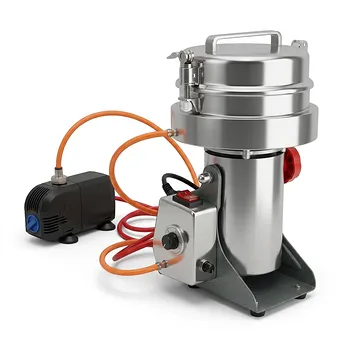
Water Cooled High Speed Grinder with Cryogenic Option for Laboratory Sample Preparation
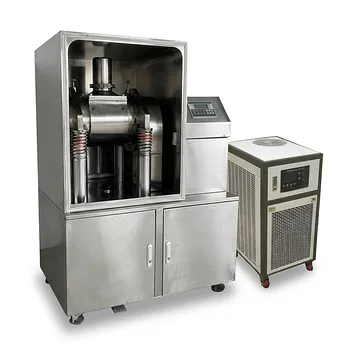
Water Cooled Cryogenic Ultra Fine Cell Wall Breaking Mill
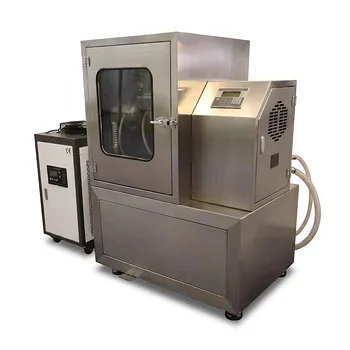
Ultra-Low Temperature Vibratory Mill for Ultrafine Grinding
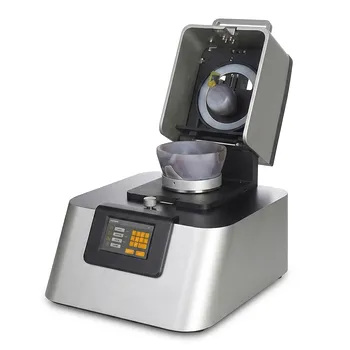
Laboratory Mortar Grinder for Sample Preparation and Cryogenic Powder Homogenization
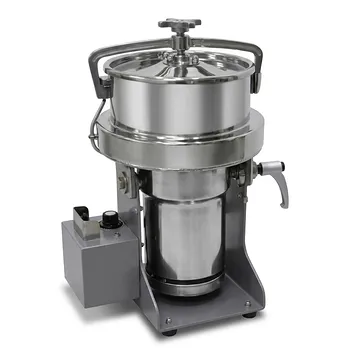
500g Capacity Water Cooled Low Temperature Grinder with Variable Speed and Safety Cover
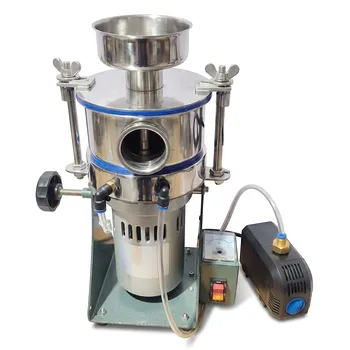
Water Cooled Airflow Ultra Fine Grinder for Low Temperature Material Processing
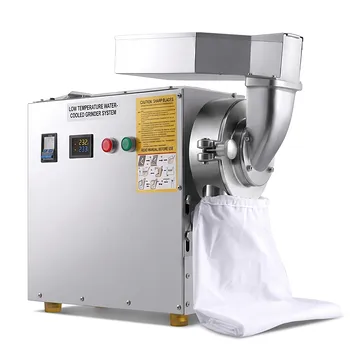
Low Temperature Water Cooled Continuous Feed Grinder Two Stage Coarse and Fine Grinding System
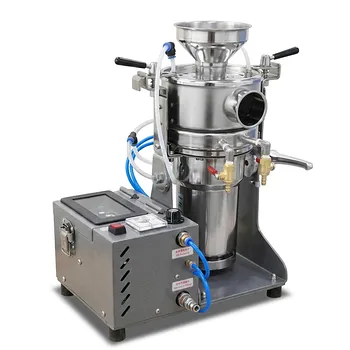
Water Cooled Pulse Jet Ultrafine Grinder