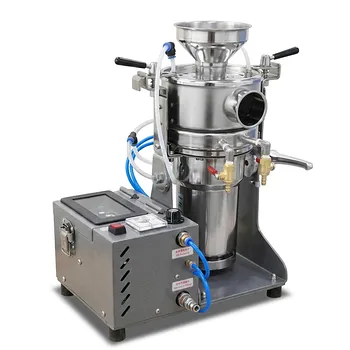
What are the advantages of a cryogenic grinder (Cryomill) for nanopowders? Faster, Purer Material Refinement
Updated 4 months ago
The primary advantage of a cryogenic grinder lies in its ability to suppress thermal recovery and recrystallization during the milling process. By maintaining temperatures near -196°C using liquid nitrogen, cryomilling promotes the rapid accumulation of dislocations and increases material brittleness. This allows for significantly faster refinement of nanopowders while preventing oxidation and preserving the integrity of heat-sensitive compounds.
Cryogenic milling transforms the mechanical alloying process by using extreme cold to inhibit dislocation annihilation, resulting in faster nanostructure formation and higher chemical purity than traditional room-temperature methods.
Accelerated Nanoscale Refinement
High Dislocation Density Accumulation
Traditional room-temperature milling generates significant frictional heat, which allows dislocations to move, recover, and "annihilate" each other. Cryomilling effectively inhibits this recovery, forcing a much higher density of dislocations to accumulate within the crystal lattice.
This high dislocation density is the driving force for rapid grain refinement. It allows researchers to reach the nanometer scale (less than 100 nm) in a fraction of the time required by conventional ball mills.
Enhanced Material Brittleness
Many materials, particularly polymers and certain metals, become significantly more brittle at extremely low temperatures. This cryogenic embrittlement allows high-energy impacts to shatter particles rather than deforming them plastically.
By forcing the material into a brittle state, the mill can achieve a finer and more uniform particle size distribution. This is especially effective for materials that are otherwise "sticky" or elastic at room temperature.
Superior Purity and Structural Stability
Suppression of Oxidation and Nitridation
The liquid nitrogen or argon environment provides a naturally inert atmosphere during the grinding process. This prevents metal and ceramic powders from reacting with oxygen or nitrogen, which is a common source of contamination in room-temperature environments.
Maintaining low temperatures also limits the kinetic energy available for unwanted chemical reactions. This ensures that the final nanopowder retains its intended chemical composition without the formation of unwanted oxides.
Minimal Need for Process Control Agents (PCAs)
In traditional milling, surfactants or PCAs are often added to prevent powders from cold-welding to the milling media or the container walls. Cryomilling reduces the "stickiness" of the powder, often eliminating the need for these chemical additives.
The reduction of PCAs results in a higher purity final product. This is critical for applications in electronics, aerospace, and pharmaceuticals where trace chemical contaminants can compromise performance.
Preservation of Delicate Properties
Protection of Volatiles and Functional Groups
High-energy milling generates localized heat that can evaporate volatile compounds or destroy delicate functional groups. Cryomilling protects these elements, making it the preferred choice for preserving essential oils, flavors, and biochar structures.
For biochar applications, the low-temperature environment prevents the collapse of micropores caused by mechanical heat. This ensures the material maintains its original surface area and structural integrity.
Enhanced Amorphization of Pharmaceuticals
Cryomilling is highly effective for preparing co-amorphous drug systems, reaching complete amorphization much faster than room-temperature methods. For example, some drug mixtures can achieve homogeneity in 60 minutes via cryomilling compared to 110 minutes or more in conventional mills.
This process can alter the crystalline structure of drugs to form kinetically stable polymorphs. These structural changes significantly improve the solubility, dissolution rate, and overall bioavailability of the medication.
Understanding the Trade-offs
Operational Complexity and Cost
The primary drawback of cryogenic grinding is the continuous consumption of liquid nitrogen, which increases operational costs. The system also requires specialized vacuum-insulated piping and safety sensors to manage the risk of asphyxiation in enclosed spaces.
Material-Specific Limitations
While embrittlement helps with many materials, the extreme cold can make some components too brittle, leading to excessive wear on the grinding jars and balls. Additionally, users must implement a careful warming cycle to prevent moisture condensation on the cold powders when they are removed from the mill.
How to Apply This to Your Project
- If your primary focus is Maximum Purity: Utilize cryomilling to eliminate the need for process control agents and to provide an inert environment that prevents oxidation.
- If your primary focus is Heat-Sensitive Materials: Choose cryogenic grinding to preserve volatile organic compounds or to protect the delicate microporous structures of biochar and polymers.
- If your primary focus is Rapid Grain Refinement: Opt for a cryomill to bypass the thermal recovery phase, allowing you to reach nanoscale particle sizes in significantly less time than room-temperature milling.
By leveraging extreme cold to control material behavior, cryogenic grinding offers a level of precision and purity that traditional mechanical milling cannot match.
Summary Table:
| Feature | Traditional Ball Milling | Cryogenic Grinding (Cryomill) |
|---|---|---|
| Operating Temp | Ambient (with frictional heat) | Ultra-low (Liquid Nitrogen, -196°C) |
| Refinement Speed | Slower (due to thermal recovery) | Rapid (inhibits dislocation recovery) |
| Material State | Plastically deforms ductile materials | Induces brittleness (Easy shattering) |
| Chemical Purity | Risk of oxidation & PCA contamination | Inert atmosphere; often no PCAs needed |
| Structural Integrity | Risk of melting or pore collapse | Preserves volatiles and micropores |
Elevate Your Material Research with Precision Grinding
Achieve unmatched purity and nanoscale precision with [Your Brand Name]’s comprehensive laboratory sample preparation solutions. We specialize in high-performance powder processing equipment designed for material science, including liquid nitrogen cryogenic grinders, planetary ball mills, jet mills, and rotor mills.
From initial crushing (jaw/roll) to final compaction using our full spectrum of Hydraulic Presses (CIP/WIP, Hot Press, XRF Pellet Press), we provide the tools necessary for superior results. Whether you need to preserve heat-sensitive compounds or accelerate grain refinement, our expertise in sieve shakers, powder mixers, and specialized milling media ensures your workflow is optimized for excellence.
Ready to optimize your sample preparation? Contact our experts today to find the perfect solution for your lab!
References
- C.C. Koch, Enrique J. Lavernia. Bulk Nanostructured Materials. DOI: 10.1007/s11661-017-4298-0
Mentioned Products
- Small Liquid Nitrogen Cryogenic Grinder for Ultrafine Grinding of Heat-Sensitive Materials in Laboratories
- Cryogenic Liquid Nitrogen Grinder for DNA Analysis and Polymer Pulverization with Automatic Cooling and Electromagnetic Impact Technology
- Cryogenic Liquid Nitrogen Grinder for Ultrafine Heat-Sensitive Powder Processing
- Laboratory Cryogenic Grinder Liquid Nitrogen Low Temperature Ultrafine Grinding
- Liquid Nitrogen Cryogenic Grinder for Plastic and Heat-Sensitive Materials
People Also Ask
- What are the advantages of using liquid nitrogen Cryomilling? Achieve ultra-fine grains and high chemical purity.
- How does liquid nitrogen as a processing medium affect copper powder beyond cooling? Impacts on Purity & Sintering
- What is the function of liquid nitrogen cryogenic grinding in the initial preparation of PHBH polymer powder? Key Roles
- Why is liquid nitrogen cryogenic grinding used for coal and microbial experiments? Preserve Sample Integrity
- Why use liquid nitrogen cryogenic grinding for polymer degradation? Preserve sample integrity & prevent thermal damage

Tech Team · PowderPreparation
Last updated on Jun 03, 2026
Related Products
Small Liquid Nitrogen Cryogenic Grinder for Ultrafine Grinding of Heat-Sensitive Materials in Laboratories
Cryogenic Liquid Nitrogen Grinder for DNA Analysis and Polymer Pulverization with Automatic Cooling and Electromagnetic Impact Technology
Cryogenic Liquid Nitrogen Grinder for Ultrafine Heat-Sensitive Powder Processing
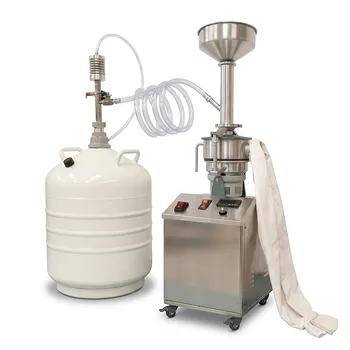
Laboratory Cryogenic Grinder Liquid Nitrogen Low Temperature Ultrafine Grinding
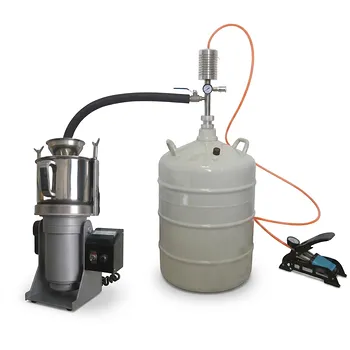
Liquid Nitrogen Cryogenic Grinder for Plastic and Heat-Sensitive Materials
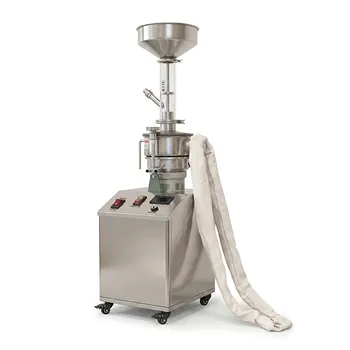
Small Liquid Nitrogen Cryogenic Grinder for Plastic and Heat-Sensitive Material Sample Preparation
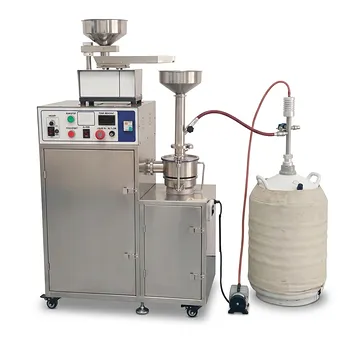
Small Liquid Nitrogen Cryogenic Grinder with Vibratory Feeder for Laboratory Sample Preparation
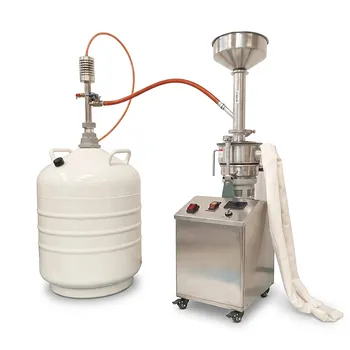
Laboratory Liquid Nitrogen Cryogenic Grinder for Polymer and Elastomer Materials
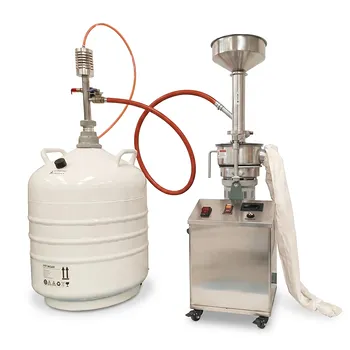
Laboratory Liquid Nitrogen Cryogenic Grinder Polymer Sample Preparation Pulverizer
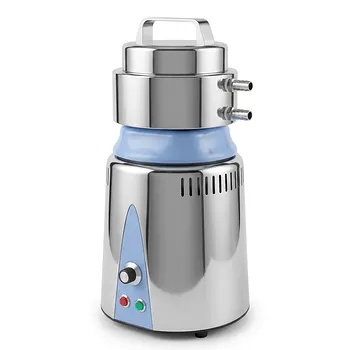
Low Temperature Laboratory Knife Mill Cryogenic Sample Grinder Material Science Powder Processing
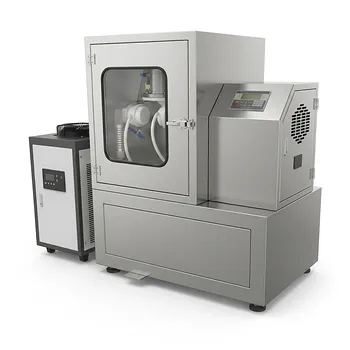
Vibratory Ultra-Low Temperature Ultrafine Grinder for Cryogenic Powder Processing
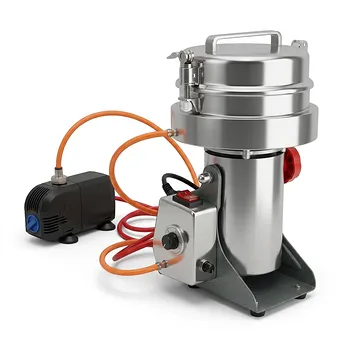
Water Cooled High Speed Grinder with Cryogenic Option for Laboratory Sample Preparation
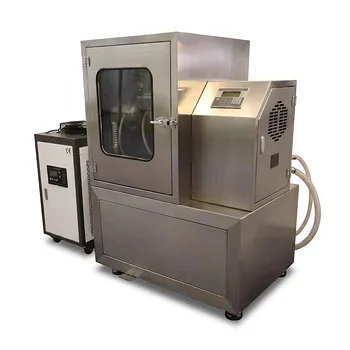
Ultra-Low Temperature Vibratory Mill for Ultrafine Grinding
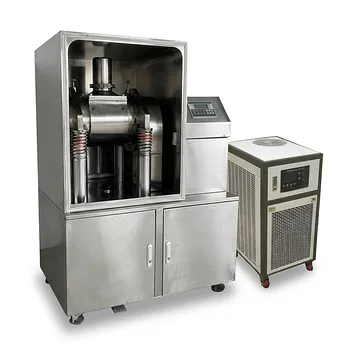
Water Cooled Cryogenic Ultra Fine Cell Wall Breaking Mill
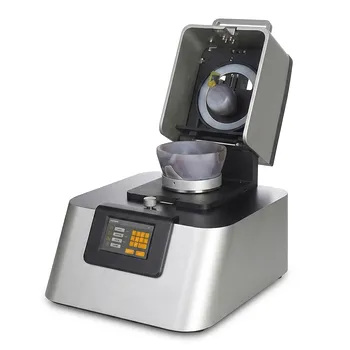
Laboratory Mortar Grinder for Sample Preparation and Cryogenic Powder Homogenization
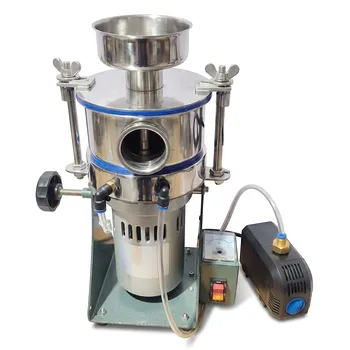
Water Cooled Airflow Ultra Fine Grinder for Low Temperature Material Processing
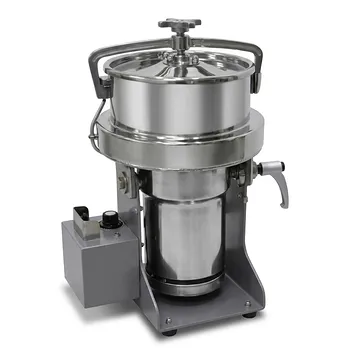
500g Capacity Water Cooled Low Temperature Grinder with Variable Speed and Safety Cover
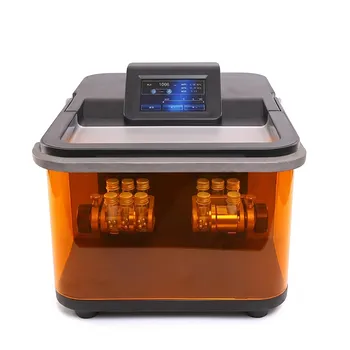
High Throughput Micro Ball Mill for Cryogenic Grinding and Laboratory Cell Disruption
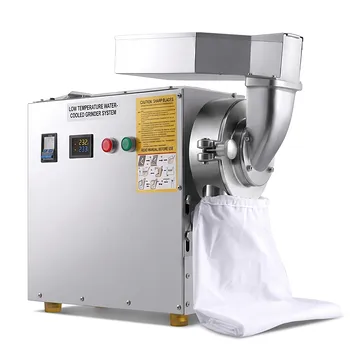
Low Temperature Water Cooled Continuous Feed Grinder Two Stage Coarse and Fine Grinding System