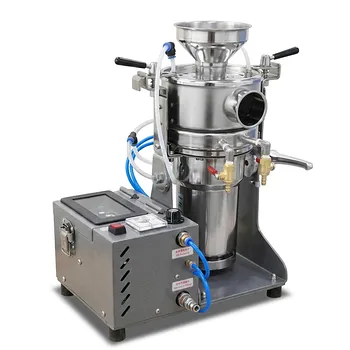
Why is cryogenic grinding necessary for CNF/PA6 PBF powders? Achieve Superior 3D Printing Results
Updated 3 months ago
Liquid nitrogen cryogenic grinding is the essential catalyst for success in producing Cellulose Nanofiber (CNF)/Polyamide 6 (PA6) composite powders because it induces a state of cold brittleness at approximately -90°C. This extreme cooling prevents the polymer from melting due to mechanical heat, stops the CNF fibers from entangling or agglomerating, and ensures the resulting powder achieves the fine particle size and high flowability required for successful Powder Bed Fusion (PBF) 3D printing.
To produce 3D-printable composite powders, one must overcome the natural elasticity and heat sensitivity of polymers. Cryogenic grinding uses liquid nitrogen to transform these materials into a brittle state, allowing for precise pulverization while preserving the chemical and structural integrity of both the resin and the reinforcing nanofibers.
Overcoming the Viscoelastic Barriers of Polymers
The Challenge of Mechanical Heat
During standard room-temperature grinding, the friction generated by mechanical impact creates significant heat. For semi-crystalline thermoplastics like Polyamide 6 (PA6), this heat often causes the material to soften, melt, or undergo elastic deformation rather than fracturing.
Preventing Equipment Clogging
When polymers reach their softening point during grinding, they become tacky and adhere to the internal components of the mill. This lead to equipment clogging and prevents the achievement of the micron-scale particle sizes necessary for the thin layers used in PBF printing.
Inducing the Brittle State
By utilizing liquid nitrogen, the material is cooled well below its glass transition temperature ($T_g$). At these ultra-low temperatures (often near -90°C), the PA6 resin loses its viscoelasticity and becomes highly brittle, allowing it to shatter efficiently under high-energy impact forces.
Preserving the Integrity of CNF Composites
Preventing Fiber Entanglement
Cellulose Nanofibers (CNF) have a high aspect ratio and a tendency to entangle or form clumps when processed at room temperature. Cryogenic grinding ensures that the CNF/PA6 masterbatch is pulverized uniformly, preventing the "bird's nest" effect of fiber agglomeration and ensuring a homogenous composite powder.
Ensuring Powder Flowability
For Powder Bed Fusion to work, the powder must be spread in thin, uniform layers by a roller or blade. Cryogenic processing produces spherical or near-spherical particles with high flowability, which is a direct requirement for maintaining the structural resolution of the 3D-printed part.
Safeguarding Chemical and Thermal Properties
High temperatures during grinding can cause premature thermal degradation or change the crystalline structure of the polymer. Maintaining an ultra-low temperature environment ensures that the reaction enthalpy and chemical properties remain stable, providing a consistent foundation for the subsequent laser sintering process.
Understanding the Trade-offs and Challenges
Operational Costs and Complexity
The primary drawback of cryogenic grinding is the increased operational cost associated with the continuous consumption of liquid nitrogen. Specialized equipment capable of handling cryogenic fluids safely is also required, which involves a higher initial capital investment than standard milling setups.
Moisture Management
Processing materials at -90°C creates a high risk of atmospheric moisture condensation once the powder returns to room temperature. If the powder absorbs moisture, it can negatively impact the flowability and the quality of the 3D print, requiring strict humidity control during the post-grinding stages.
Material Specificity
While highly effective for PA6 and CNF, the specific grinding parameters (such as feed rate and nitrogen flow) must be precisely calibrated for each composite. Over-grinding can lead to particles that are too fine, which may create dusting issues or impede the flow within the 3D printer’s hopper system.
How to Apply This to Your Project
Recommendations Based on Your Production Goals
- If your primary focus is maximizing mechanical strength: Prioritize cryogenic grinding to ensure a uniform distribution of CNF within the PA6 matrix, as this prevents weak points caused by fiber clumping.
- If your primary focus is 3D printing surface finish: Utilize liquid nitrogen to achieve a particle size consistently below 100 microns, which directly translates to smoother layer transitions and finer detail.
- If your primary focus is material stability and analysis: Use cryogenic methods to prevent frictional heat from altering the polymer's degree of cure, ensuring that your DSC data accurately reflects the raw material's properties.
By mastering the cryogenic transition of your composite materials, you bridge the gap between raw masterbatch and high-performance, 3D-printable feedstock.
Summary Table:
| Feature | Room Temperature Grinding | Cryogenic Grinding (-90°C) | Benefit for PBF 3D Printing |
|---|---|---|---|
| Material State | Viscoelastic/Soft | Cold Brittle | Efficient pulverization into fine powders |
| Heat Control | Friction causes melting | Liquid N2 absorbs heat | Prevents clogging and thermal degradation |
| Fiber Distribution | Entanglement/Clumping | Uniform Dispersion | Ensures consistent mechanical strength |
| Powder Flow | Low (irregular/tacky) | High (spherical particles) | Smooth layer spreading for high resolution |
Elevate Your Material Research with Expert Sample Prep Solutions
Producing high-performance CNF/PA6 composite powders requires precision and the right technology to overcome polymer elasticity. We provide complete laboratory sample preparation solutions tailored for material science, specializing in the equipment you need to bridge the gap from raw material to 3D-printable feedstock.
Our extensive product line includes:
- Advanced Grinding: Liquid nitrogen cryogenic grinders, planetary ball mills, jet mills, and rotor mills for achieving sub-micron particle sizes.
- Powder Processing: Sieve shakers (vibratory/air-jet), powder mixers, and defoaming mixers for perfect homogeneity.
- Material Compaction: A full spectrum of hydraulic presses, including Cold/Warm Isostatic Presses (CIP/WIP), vacuum hot presses, and XRF pellet presses.
Whether you are a researcher developing new composites or a distributor looking for reliable OEM/ODM support, we deliver the tools to ensure your success. Contact us today to find your ideal equipment solution!
References
- Ryota Inoue, Takashi Date. Characteristics of CNF-reinforced PA6 for PBF 3D Printers. DOI: 10.2524/jtappij.78.236
Mentioned Products
- Liquid Nitrogen Cryogenic Grinder for Plastic and Heat-Sensitive Materials
- Small Liquid Nitrogen Cryogenic Grinder for Ultrafine Grinding of Heat-Sensitive Materials in Laboratories
- Cryogenic Liquid Nitrogen Grinder for DNA Analysis and Polymer Pulverization with Automatic Cooling and Electromagnetic Impact Technology
- Cryogenic Liquid Nitrogen Grinder for Ultrafine Heat-Sensitive Powder Processing
- Small Liquid Nitrogen Cryogenic Grinder with Vibratory Feeder for Laboratory Sample Preparation
People Also Ask
- Why is a liquid nitrogen cryogenic grinder required before DSC? Ensure Accurate Thermal Analysis & Sample Integrity.
- Why is a liquid nitrogen cryogenic grinder necessary for plastic pre-processing? Achieve Precise Co-Pyrolysis Results
- What role does liquid nitrogen cryogenic grinding play in the modification of CNTs? Optimize Nanomaterial Processing
- Why is a laboratory-grade liquid nitrogen cryogenic grinder essential for processing drug-loaded polymer nanofiber mats?
- What is the role of a liquid nitrogen cryogenic grinder in drug-polymer mixing? Achieve Superior Sample Homogeneity

Tech Team · PowderPreparation
Last updated on Jun 03, 2026
Related Products
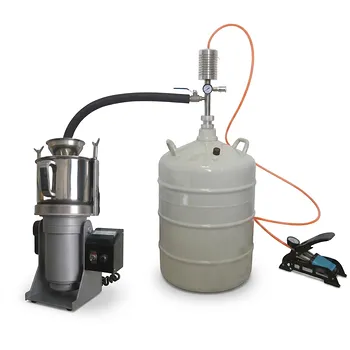
Liquid Nitrogen Cryogenic Grinder for Plastic and Heat-Sensitive Materials
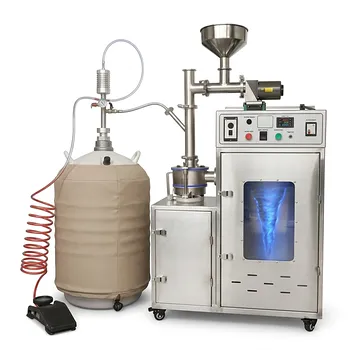
Small Liquid Nitrogen Cryogenic Grinder for Ultrafine Grinding of Heat-Sensitive Materials in Laboratories
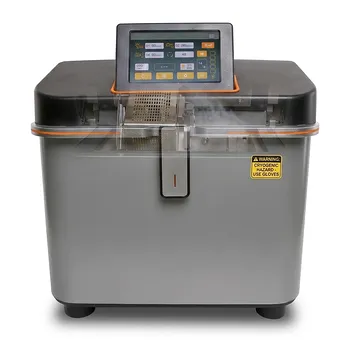
Cryogenic Liquid Nitrogen Grinder for DNA Analysis and Polymer Pulverization with Automatic Cooling and Electromagnetic Impact Technology
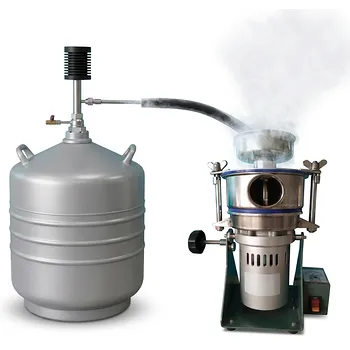
Cryogenic Liquid Nitrogen Grinder for Ultrafine Heat-Sensitive Powder Processing
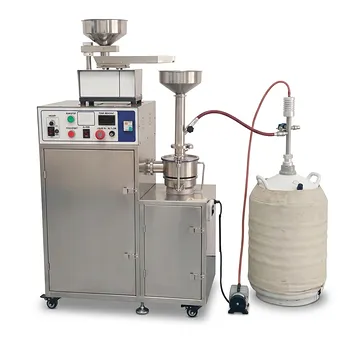
Small Liquid Nitrogen Cryogenic Grinder with Vibratory Feeder for Laboratory Sample Preparation
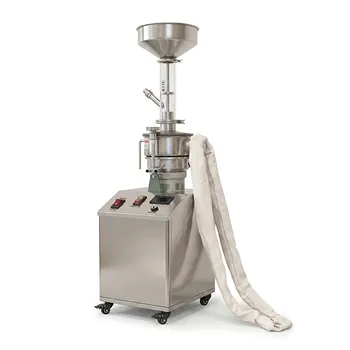
Small Liquid Nitrogen Cryogenic Grinder for Plastic and Heat-Sensitive Material Sample Preparation
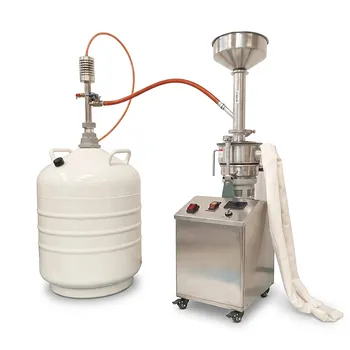
Laboratory Liquid Nitrogen Cryogenic Grinder for Polymer and Elastomer Materials
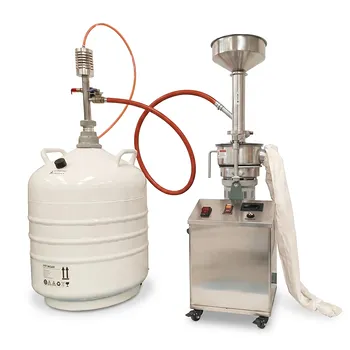
Laboratory Liquid Nitrogen Cryogenic Grinder Polymer Sample Preparation Pulverizer
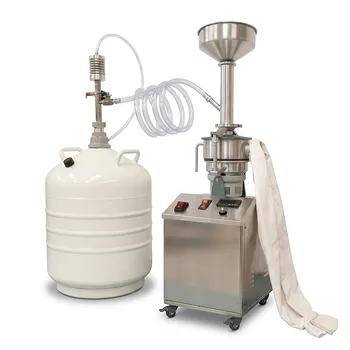
Laboratory Cryogenic Grinder Liquid Nitrogen Low Temperature Ultrafine Grinding
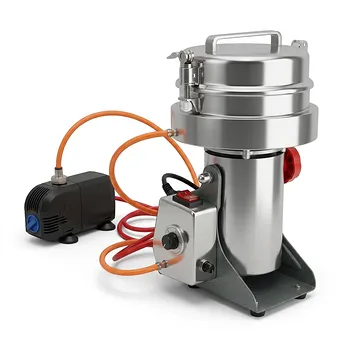
Water Cooled High Speed Grinder with Cryogenic Option for Laboratory Sample Preparation
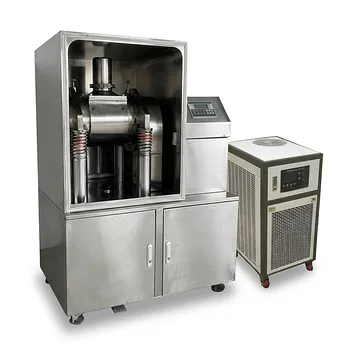
Water Cooled Cryogenic Ultra Fine Cell Wall Breaking Mill
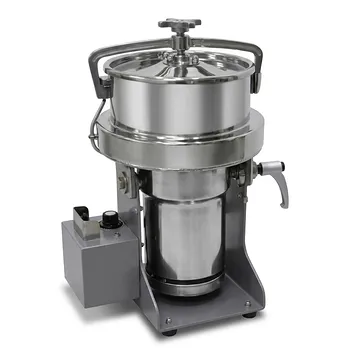
500g Capacity Water Cooled Low Temperature Grinder with Variable Speed and Safety Cover
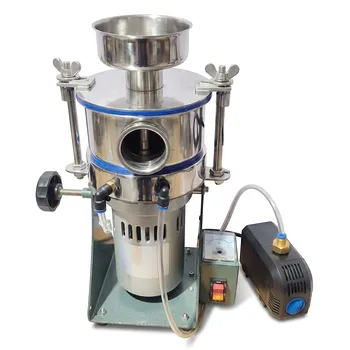
Water Cooled Airflow Ultra Fine Grinder for Low Temperature Material Processing
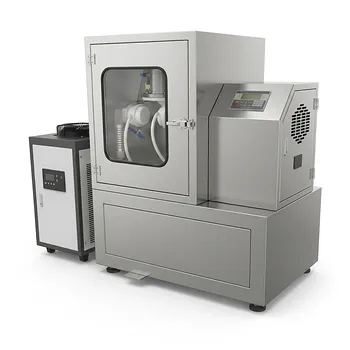
Vibratory Ultra-Low Temperature Ultrafine Grinder for Cryogenic Powder Processing
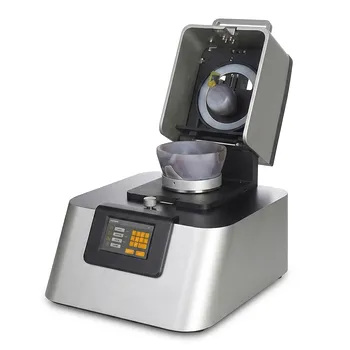
Laboratory Mortar Grinder for Sample Preparation and Cryogenic Powder Homogenization
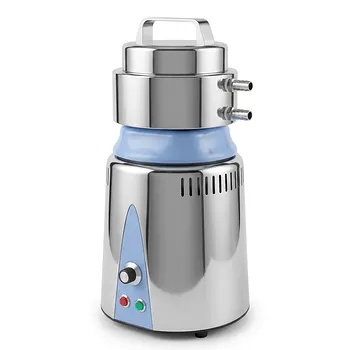
Low Temperature Laboratory Knife Mill Cryogenic Sample Grinder Material Science Powder Processing
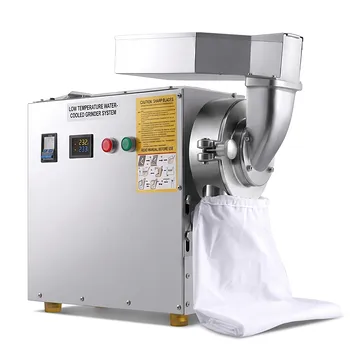
Low Temperature Water Cooled Continuous Feed Grinder Two Stage Coarse and Fine Grinding System
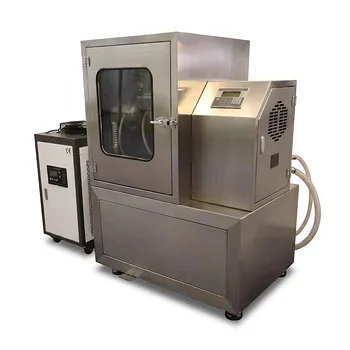
Ultra-Low Temperature Vibratory Mill for Ultrafine Grinding
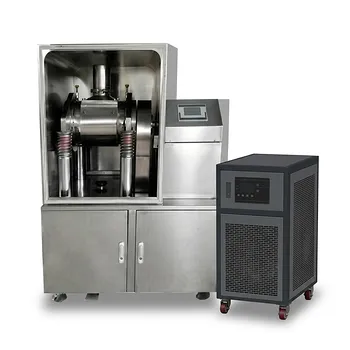
Ultra-low Temperature Vibratory Mill Ultrafine Grinder