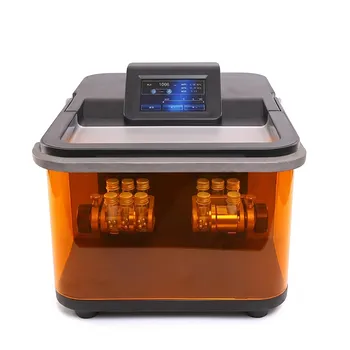
What is the function of liquid nitrogen cryogenic pre-crushing for bioethanol? Maximize your biomass conversion yields.
Updated 5 months ago
Liquid nitrogen cryogenic pre-crushing serves as a critical pretreatment step that embrittles woody biomass to enable ultra-fine pulverization and cellular-level disruption. By cooling wood chips to ultra-low temperatures—typically -100°C or below—the process transforms tough, elastic fibers into a brittle state that fractures easily. This results in a uniform powder with an average particle size of approximately 40μm, significantly increasing the surface area and accessibility for the enzymes required in the bioethanol conversion process.
The core function of cryogenic pre-crushing is to overcome the natural structural recalcitrance of woody biomass through thermomechanical embrittlement. This ensures the preservation of the material’s chemical integrity while creating a high-surface-area substrate that maximizes enzymatic hydrolysis efficiency.
The Mechanics of Thermomechanical Embrittlement
Reaching the Ductile-to-Brittle Transition Point
Woody biomass is naturally elastic and tough, making it difficult to grind using conventional mechanical methods. Liquid nitrogen cools the material below its ductile-to-brittle transition temperature (DBTT), where molecular mobility is suppressed.
In this state, the biomass loses its ability to deform plastically and instead fractures cleanly upon impact. This allows for the production of ultra-fine powders that would be impossible to achieve at room temperature.
Cellular-Level Component Separation
The ultra-low temperature treatment allows for the separation of wood components at the cellular level. Unlike standard milling, which may simply shred fibers, cryogenic crushing shatters the rigid cell wall structure.
This deep structural disruption is essential for releasing the sugars locked within the lignocellulosic matrix. It creates the optimal feed conditions necessary for subsequent fine grinding and biochemical processing.
Enhancing Downstream Conversion Efficiency
Maximizing Specific Surface Area
Reducing the biomass to an average size of 40μm dramatically increases the specific surface area available for chemical and biological reactions. This increased area provides more "attack points" for enzymes during the hydrolysis phase.
Higher surface area leads to faster reaction kinetics and more complete conversion of cellulose into fermentable sugars. This efficiency is a primary driver in making bioethanol production economically viable.
Improving Enzymatic Hydrolysis Yields
The primary bottleneck in bioethanol production is the difficulty enzymes have in accessing cellulose. By disrupting the rigid cell wall, cryogenic pre-crushing removes physical barriers to enzyme penetration.
This pretreatment ensures that the subsequent enzymatic hydrolysis is both faster and more thorough. The result is a higher yield of bioethanol from the same volume of raw woody feedstock.
Protection of Chemical and Organic Integrity
Dissipating Frictional Heat
Mechanical grinding generates significant frictional heat, which can reach temperatures high enough to denature organic components. Liquid nitrogen acts as a powerful coolant that immediately dissipates this energy.
This prevents the thermal degradation of the biomass, ensuring that the chemical profile of the wood remains stable. Maintaining this integrity is vital for consistent results in downstream fermentation.
Creating an Inert Processing Atmosphere
The evaporation of liquid nitrogen into gas creates an inert nitrogen atmosphere within the grinding chamber. This displacement of oxygen prevents the oxidation or combustion of volatile substances during processing.
Preserving these volatile organic compounds and preventing oxidation ensures that the raw material’s chemical properties are accurately maintained. This is particularly important when the biomass is also being used for compositional analysis.
Understanding the Trade-offs
High Operational Costs
The primary disadvantage of this process is the high cost of liquid nitrogen and the specialized cryogenic equipment required. The energy required to produce and transport liquid nitrogen can impact the overall carbon footprint of the bioethanol produced.
Equipment and Maintenance Complexity
Cryogenic grinders must be constructed from specialized materials capable of withstanding extreme thermal cycles without becoming brittle themselves. This increases the initial capital expenditure and requires specialized maintenance protocols compared to standard ambient mills.
How to Apply This to Your Project
Making the Right Choice for Your Goal
- If your primary focus is maximizing bioethanol yield: Cryogenic pre-crushing is highly recommended to ensure maximum enzymatic access to the cellulose matrix.
- If your primary focus is preserving chemical integrity for analysis: Utilize liquid nitrogen grinding to prevent the loss of volatile substances and avoid heat-induced denaturation of organic matter.
- If your primary focus is minimizing operational expenditure: Evaluate whether the increased yield from cryogenic treatment offsets the high cost of liquid nitrogen consumption compared to traditional mechanical pretreatment.
Cryogenic pre-crushing is the definitive solution for transforming recalcitrant woody biomass into a highly reactive, chemically preserved substrate for efficient bioethanol conversion.
Summary Table:
| Feature | Mechanism | Impact on Bioethanol Production |
|---|---|---|
| Embrittlement | Cooling to below -100°C | Transforms tough fibers into brittle solids for clean fracturing. |
| Ultra-fine Grinding | Particle reduction to ~40μm | Maximizes specific surface area for enzymatic attack. |
| Thermal Protection | Liquid N2 heat dissipation | Prevents denaturation and maintains chemical integrity of biomass. |
| Inert Atmosphere | Oxygen displacement by N2 gas | Prevents oxidation and combustion of volatile organic compounds. |
Optimize Your Biomass Research with Precision Sample Prep
At the forefront of material science, we provide complete laboratory sample preparation solutions designed to handle the most recalcitrant materials. Whether you are scaling up bioethanol production or performing delicate compositional analysis, our equipment ensures consistent, high-quality results.
Our specialized product range includes:
- Cryogenic & Ultra-fine Grinding: Liquid nitrogen cryogenic grinders, planetary ball mills, jet mills, and rotor mills for achieving sub-micron particle sizes.
- Primary Crushing & Sizing: Heavy-duty jaw/roll crushers and precision sieve shakers (vibratory/air-jet).
- Advanced Compaction & Forming: A full spectrum of hydraulic presses, including Cold/Warm Isostatic Presses (CIP/WIP), vacuum hot presses, and XRF pellet presses.
- Mixing Solutions: High-efficiency powder mixers and vacuum defoaming mixers.
Ready to enhance your lab's efficiency and conversion yields? Contact our technical experts today to find the ideal equipment configuration for your specific material science applications.
References
- Arata Ito, Yukio ENDA. A Study on Milling Pretreatment for Ethyl Alcohol Production from Cellulosic Woody Biomass. DOI: 10.2473/journalofmmij.123.413
Mentioned Products
- Liquid Nitrogen Cryogenic Grinder for Plastic and Heat-Sensitive Materials
- Small Liquid Nitrogen Cryogenic Grinder for Ultrafine Grinding of Heat-Sensitive Materials in Laboratories
- Cryogenic Liquid Nitrogen Grinder for Ultrafine Heat-Sensitive Powder Processing
- Small Liquid Nitrogen Cryogenic Grinder with Vibratory Feeder for Laboratory Sample Preparation
- Cryogenic Liquid Nitrogen Grinder for DNA Analysis and Polymer Pulverization with Automatic Cooling and Electromagnetic Impact Technology
People Also Ask
- Why is a liquid nitrogen cryogenic grinder required before DSC? Ensure Accurate Thermal Analysis & Sample Integrity.
- Why is a liquid nitrogen cryogenic grinder necessary for plastic pre-processing? Achieve Precise Co-Pyrolysis Results
- What role does liquid nitrogen cryogenic grinding play in the modification of CNTs? Optimize Nanomaterial Processing
- Why is a laboratory-grade liquid nitrogen cryogenic grinder essential for processing drug-loaded polymer nanofiber mats?
- What is the role of a liquid nitrogen cryogenic grinder in drug-polymer mixing? Achieve Superior Sample Homogeneity

Tech Team · PowderPreparation
Last updated on May 14, 2026
Related Products
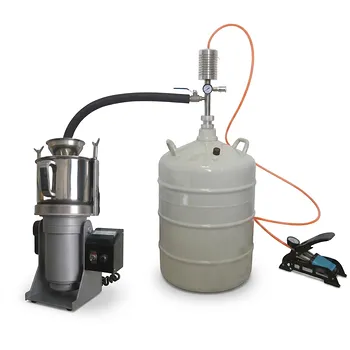
Liquid Nitrogen Cryogenic Grinder for Plastic and Heat-Sensitive Materials
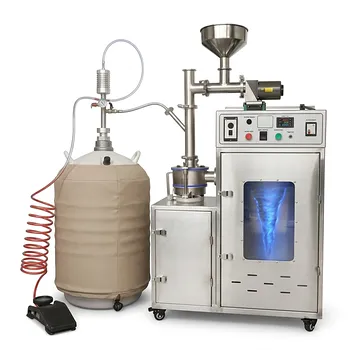
Small Liquid Nitrogen Cryogenic Grinder for Ultrafine Grinding of Heat-Sensitive Materials in Laboratories
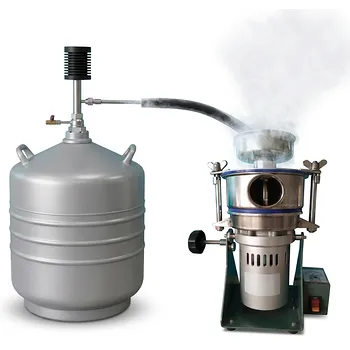
Cryogenic Liquid Nitrogen Grinder for Ultrafine Heat-Sensitive Powder Processing
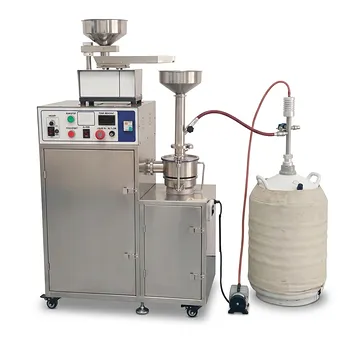
Small Liquid Nitrogen Cryogenic Grinder with Vibratory Feeder for Laboratory Sample Preparation
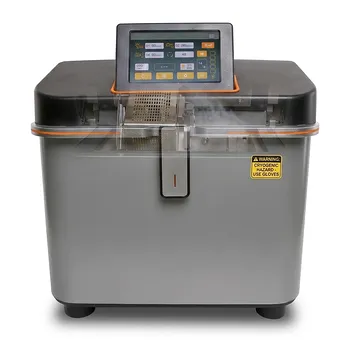
Cryogenic Liquid Nitrogen Grinder for DNA Analysis and Polymer Pulverization with Automatic Cooling and Electromagnetic Impact Technology
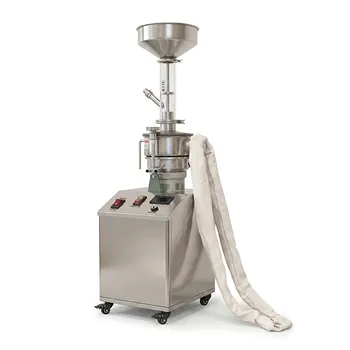
Small Liquid Nitrogen Cryogenic Grinder for Plastic and Heat-Sensitive Material Sample Preparation
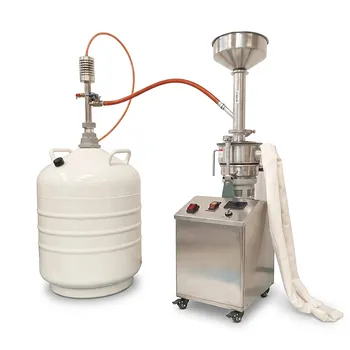
Laboratory Liquid Nitrogen Cryogenic Grinder for Polymer and Elastomer Materials
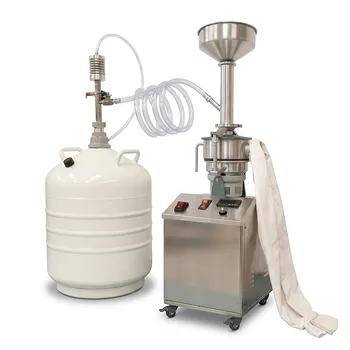
Laboratory Cryogenic Grinder Liquid Nitrogen Low Temperature Ultrafine Grinding
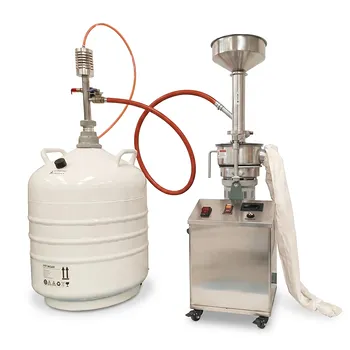
Laboratory Liquid Nitrogen Cryogenic Grinder Polymer Sample Preparation Pulverizer
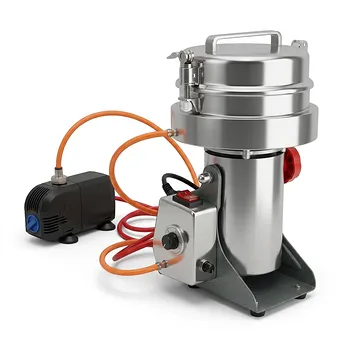
Water Cooled High Speed Grinder with Cryogenic Option for Laboratory Sample Preparation
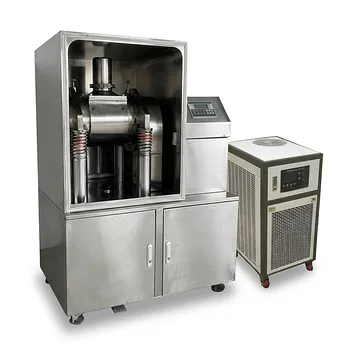
Water Cooled Cryogenic Ultra Fine Cell Wall Breaking Mill
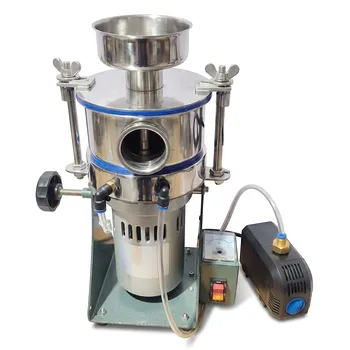
Water Cooled Airflow Ultra Fine Grinder for Low Temperature Material Processing