What is the function of high-energy cryogenic grinding equipment for polystyrene microplastics? Prep Pure Fragments.
Updated 5 months ago
High-energy cryogenic grinding equipment is the primary tool for converting bulk polystyrene into irregular microplastic fragments while preserving their original chemical and physical integrity. By utilizing liquid nitrogen to cool materials to their embrittlement point, the equipment allows high-intensity mechanical forces to shatter the plastic into micron-scale particles. This process prevents the frictional heat generated during grinding from melting or thermally degrading the polymer, ensuring the resulting fragments accurately simulate secondary microplastics found in the environment.
Core Takeaway: High-energy cryogenic grinding leverages ultra-low temperatures to induce brittleness in polystyrene, enabling the production of chemically stable, irregularly shaped microplastic fragments that maintain the original material's properties for scientific research.
The Mechanism of Cryogenic Embrittlement
Achieving the Embrittlement Point
Polystyrene and other polymers can be ductile or semi-rigid at room temperature, making them difficult to pulverize into fine powders. Liquid nitrogen is used to pre-cool the material until it reaches its embrittlement point, a state where the polymer chains can no longer slide past each other. This transition allows the material to fracture like glass when subjected to mechanical impact.
Overcoming Thermal Friction
High-energy grinding generates significant heat through friction and mechanical impact. Without active cooling, this heat would quickly cause polystyrene to reach its glass transition temperature, leading to melting, clumping, or thermal degradation. Cryogenic systems dissipate this heat instantly, maintaining a stable, low-temperature environment throughout the pulverization process.
Utilizing High-Intensity Impact
Once the material is brittle, the equipment employs hydraulic power or high-frequency oscillation to deliver intense mechanical energy. This energy effectively breaks the bulk plastic into fragments smaller than 100 micrometers. The result is a high-yield production of micro- and nano-scale particles that are physically stable.
Structural and Morphological Integrity
Simulating Environmental Weathering
Researchers require particles that mimic the heterogeneous shapes of "secondary microplastics"—fragments created by the breakdown of larger plastic waste in nature. Cryogenic grinding produces irregular, jagged morphologies rather than the uniform spheres found in primary microplastics. This realistic shape is critical for studying how microplastics interact with biological organisms and environmental surfaces.
Controlling Particle Size Distribution
The equipment allows for precise control over the final particle size classification. By adjusting the grinding time and energy intensity, technicians can produce samples with specific size distributions. This uniformity in sizing, despite the irregular shapes, is essential for creating reproducible experimental conditions.
Preserving Chemical Signatures
Because the process avoids high temperatures, the resulting microplastics retain their original surface chemical properties. There is no uncontrolled oxidation or chemical alteration that typically occurs during standard mechanical milling. This ensures that any subsequent artificial aging or chemical testing performed by researchers begins with a "clean" and accurate baseline.
Understanding the Trade-offs
High Operational Costs
The primary drawback of cryogenic grinding is the continuous consumption of liquid nitrogen. This adds a significant operational cost compared to room-temperature milling. Additionally, the equipment itself is often more complex and expensive to maintain due to the specialized seals and materials required for ultra-low temperature operation.
Throughput and Scalability
While highly effective for laboratory-scale research, high-energy cryogenic grinding can be slower for industrial-scale production. The need for pre-cooling stages and the maintenance of a cryogenic atmosphere limits the speed of material throughput. Users must balance the need for high-quality, irregular fragments with the time required to process large volumes of bulk plastic.
Optimizing Your Microplastic Preparation
How to Apply This to Your Project
When preparing polystyrene microplastics, your choice of grinding parameters should align with your specific research objectives.
- If your primary focus is environmental realism: Prioritize cryogenic grinding to achieve the heterogeneous, jagged morphologies typical of weathered secondary microplastics.
- If your primary focus is chemical purity: Ensure a continuous supply of liquid nitrogen to completely eliminate the risk of thermal degradation and oxidation.
- If your primary focus is nano-scale research: Utilize high-frequency impact settings to push the material beyond the micron level into sub-micron and nanometer scales.
By mastering the balance between cryogenic cooling and mechanical energy, you can produce high-quality microplastic fragments that serve as a definitive foundation for environmental impact studies.
Summary Table:
| Feature | Mechanism | Research Benefit |
|---|---|---|
| Cryogenic Cooling | Liquid nitrogen reaches embrittlement point | Prevents melting; enables brittle fracturing |
| Thermal Friction Control | Instant heat dissipation | Preserves original chemical & physical integrity |
| High-Intensity Impact | Hydraulic/Oscillatory mechanical force | High-yield production of <100μm particles |
| Morphology Control | Mechanical shattering | Simulates realistic "weathered" irregular shapes |
Ready to Elevate Your Microplastic Research?
Achieving precise, chemically pure microplastic fragments requires high-performance equipment that balances thermal control with mechanical power. At Our Material Science Solutions, we provide complete laboratory sample preparation solutions tailored for advanced material research.
Our expertise in powder processing and compaction ensures you get the exact morphology and size distribution your study demands. Our extensive product line includes:
- Grinding & Milling: Liquid nitrogen cryogenic grinders, planetary ball mills, jet mills, and disc mills.
- Material Preparation: Jaw/roll crushers, sieve shakers (vibratory/air-jet), and high-efficiency powder mixers.
- Sample Compaction: A full spectrum of hydraulic presses, including Cold/Warm Isostatic Presses (CIP/WIP), standard lab presses, and vacuum hot presses.
Whether you are simulating environmental weathering or conducting nano-scale polymer research, we help you maintain baseline accuracy from sample preparation to final analysis.
Contact our technical experts today to find the perfect equipment for your lab!
References
- Sang‐Ah Lee, Young‐Jun Kim. Assessing the acute differential toxicity of polystyrene microplastic particles and comparing the impacts of bead-shaped versus fragmented particles on Daphnia magna. DOI: 10.1186/s13765-025-01012-x
Mentioned Products
- Ultra-Low Temperature Cryogenic High-Energy Vibratory Ball Mill
- Nanoscale High Energy Vibratory Ball Mill Low Temperature
- High Throughput Micro Ball Mill for Cryogenic Grinding and Laboratory Cell Disruption
- Water Cooled High Speed Grinder with Cryogenic Option for Laboratory Sample Preparation
- Small Liquid Nitrogen Cryogenic Grinder for Ultrafine Grinding of Heat-Sensitive Materials in Laboratories
People Also Ask
- How does a high-energy vibratory ball mill improve the performance of MgH2? Optimize Hydrogen Storage Kinetics
- What is the function of a high-energy vibratory ball mill in Cu-Ta alloys? Achieve Precision Mechanical Alloying
- What is the function of high-energy ball milling in ZnO membrane slurry prep? Optimize Homogenization & Dispersion
- What is the Role of HEBM in High-Entropy H-SOFC Cathode Prep? Achieving Atomic-Level Homogenization
- What is the importance of using a high-purity argon atmosphere during the high-energy ball milling of ceramic particles?

Tech Team · PowderPreparation
Last updated on May 14, 2026
Related Products
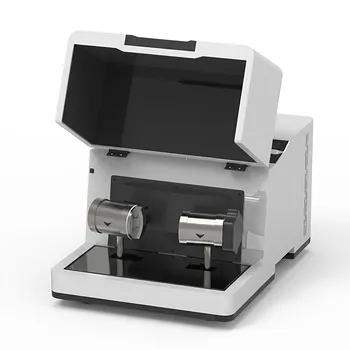
Ultra-Low Temperature Cryogenic High-Energy Vibratory Ball Mill
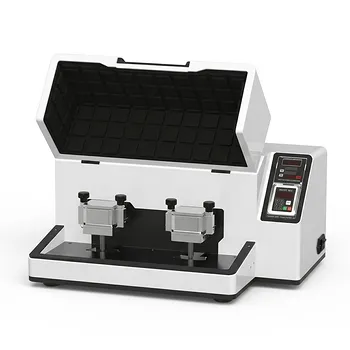
Nanoscale High Energy Vibratory Ball Mill Low Temperature
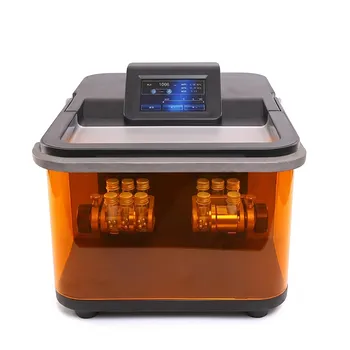
High Throughput Micro Ball Mill for Cryogenic Grinding and Laboratory Cell Disruption
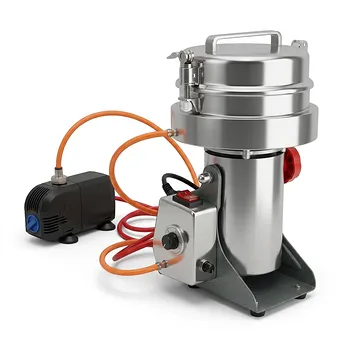
Water Cooled High Speed Grinder with Cryogenic Option for Laboratory Sample Preparation
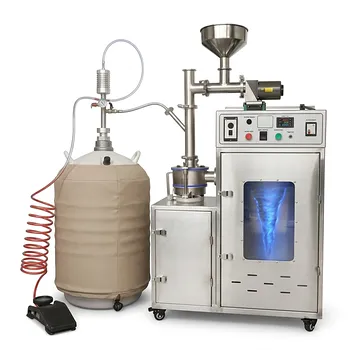
Small Liquid Nitrogen Cryogenic Grinder for Ultrafine Grinding of Heat-Sensitive Materials in Laboratories
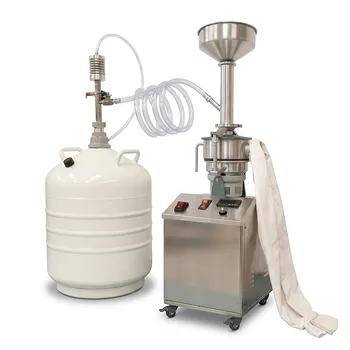
Laboratory Cryogenic Grinder Liquid Nitrogen Low Temperature Ultrafine Grinding
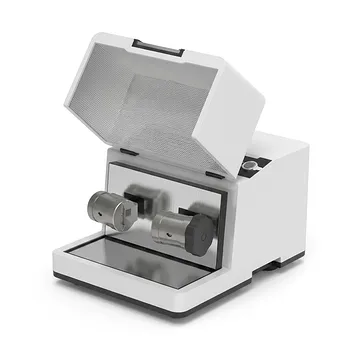
Heating Temperature Controlled High Energy Vibratory Ball Mill
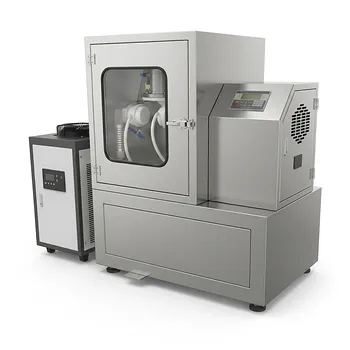
Vibratory Ultra-Low Temperature Ultrafine Grinder for Cryogenic Powder Processing
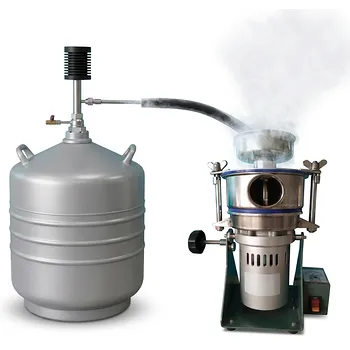
Cryogenic Liquid Nitrogen Grinder for Ultrafine Heat-Sensitive Powder Processing
High Energy Laboratory Planetary Ball Mill for Nano Grinding and Material Science Sample Preparation
Ultra-Low Temperature Vibratory Mill for Ultrafine Grinding
Water Cooled Cryogenic Ultra Fine Cell Wall Breaking Mill
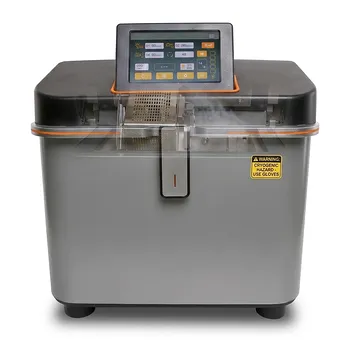
Cryogenic Liquid Nitrogen Grinder for DNA Analysis and Polymer Pulverization with Automatic Cooling and Electromagnetic Impact Technology
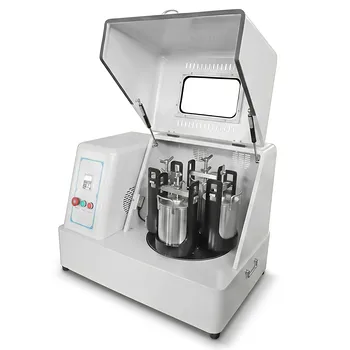
Vertical Square Planetary Ball Mill for Laboratory Sample Preparation and Nanoscale Grinding
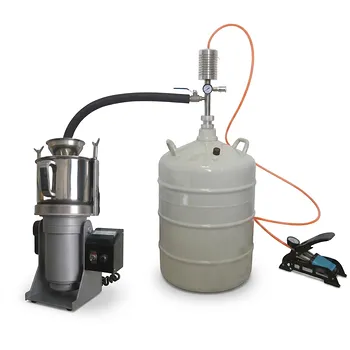
Liquid Nitrogen Cryogenic Grinder for Plastic and Heat-Sensitive Materials
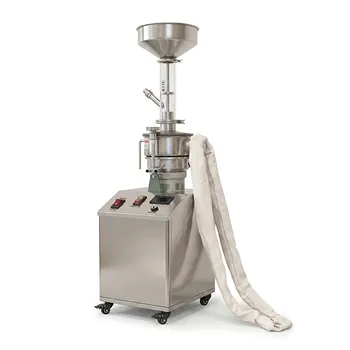
Small Liquid Nitrogen Cryogenic Grinder for Plastic and Heat-Sensitive Material Sample Preparation
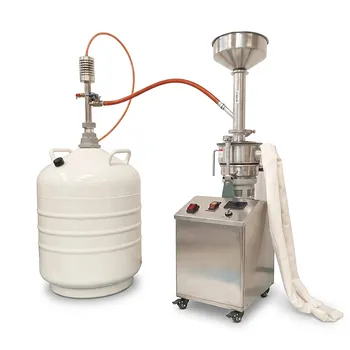
Laboratory Liquid Nitrogen Cryogenic Grinder for Polymer and Elastomer Materials
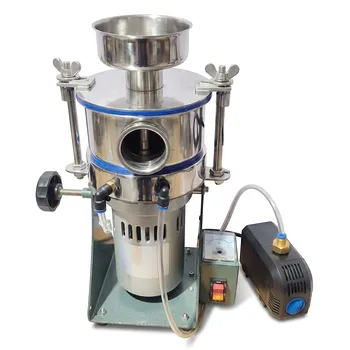
Water Cooled Airflow Ultra Fine Grinder for Low Temperature Material Processing
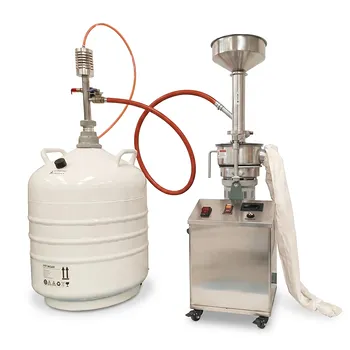
Laboratory Liquid Nitrogen Cryogenic Grinder Polymer Sample Preparation Pulverizer