Why is a cryogenic ball mill necessary for preparing bimodal-structured aluminum alloys? Master Nanoscale Refinement
Updated 5 months ago
Cryogenic ball milling is the critical mechanism for achieving grain refinement in aluminum alloys. By operating in a liquid nitrogen environment, the process suppresses the thermal energy that typically allows ductile aluminum to "heal" itself during deformation. This suppression enables the accumulation of massive dislocation densities, which is the fundamental requirement for creating the nanocrystalline powders used in high-strength bimodal structures.
Core Takeaway: Cryogenic ball milling is necessary because it overcomes aluminum's inherent ductility and thermal recovery. It allows for the production of stable nanocrystalline powders by inducing low-temperature embrittlement and preventing the oxidation or recrystallization that would occur at room temperature.
Overcoming Thermal Recovery and Recrystallization
Suppressing Dynamic Recovery
At room temperature, aluminum's high stacking fault energy allows dislocations to move and annihilate easily, a process known as dynamic recovery. Cryogenic temperatures effectively "freeze" these dislocations in place, allowing them to accumulate to the levels required for grain refinement.
Halting Recrystallization
The heat generated by high-energy impacts in a standard mill often triggers recrystallization, where new, larger grains form and replace the refined structure. Liquid nitrogen absorbs this thermal energy, ensuring the grains remain at the nanometer scale (often as small as 21 nm) rather than coarsening.
Facilitating Severe Plastic Deformation
By maintaining ultra-low temperatures, the mill allows the powder to reach higher strain levels with less total mechanical energy. This efficiency is vital for transforming a standard alloy into the ultra-fine-grained (UFG) matrix needed for bimodal materials.
Managing Aluminum's Physical and Chemical Properties
Inducing Low-Temperature Embrittlement
Aluminum is naturally soft and prone to sticking to milling media and container walls at room temperature. The cryogenic environment induces low-temperature embrittlement, making the alloy ribbons or powders easier to fracture into fine particles under mechanical impact.
Preventing Excessive Cold Welding
During ball milling, powders undergo a cycle of fracturing and cold welding. Without cryogenic cooling, aluminum's high ductility leads to excessive cold welding, which results in large, unusable agglomerates rather than a refined powder.
Inhibiting Severe Oxidation
High-activity aluminum powder reacts quickly with oxygen, especially when heated by mechanical friction. The liquid nitrogen atmosphere provides a protective environment that prevents oxidation, ensuring the high purity of the resulting nanostructured raw materials.
Understanding the Trade-offs
Equipment Complexity and Cost
Implementing a cryogenic system requires specialized high-energy milling equipment capable of handling liquid nitrogen. This significantly increases the operational costs and maintenance requirements compared to standard planetary ball mills.
Material Handling Challenges
The resulting nanocrystalline powders are characterized by a high specific surface area and extreme reactive activity. These powders must be handled with care post-milling to prevent rapid oxidation or spontaneous combustion when returned to room temperature.
Energy Efficiency Limits
While cryomilling is efficient for grain refinement, it requires a high ball-to-powder weight ratio to deliver sufficient impact energy. This means the process is often restricted to small-batch production rather than high-volume industrial throughput.
How to Apply This to Your Project
Cryogenic ball milling is a specialized tool that should be used when specific mechanical properties are required in the final aluminum component.
- If your primary focus is Maximum Tensile Strength: Use cryogenic milling to produce the finest possible nanocrystalline grains for your matrix, as this maximizes the Hall-Petch strengthening effect.
- If your primary focus is Balancing Strength and Ductility: Use cryomilled powders as a master batch to be blended with coarse-grained powders, creating the bimodal structure necessary to prevent premature brittle failure.
- If your primary focus is Chemical Purity: Prioritize cryomilling in a fully sealed liquid nitrogen cycle to prevent the formation of aluminum oxides that can embrittle the grain boundaries.
By strategically suppressing thermal recovery and oxidation, cryogenic ball milling serves as the indispensable foundation for engineering next-generation, high-performance aluminum alloys.
Summary Table:
| Feature | Room Temperature Milling | Cryogenic Ball Milling | Impact on Aluminum Alloys |
|---|---|---|---|
| Dislocation Density | Low (Dynamic recovery occurs) | Extremely High (Dislocations "frozen") | Essential for nanocrystalline formation |
| Particle Size | Coarse/Agglomerated | Ultra-fine (Nanoscale < 25nm) | Maximizes Hall-Petch strengthening |
| Morphology | Heavy cold welding/sticking | Controlled fracturing (Embrittlement) | Prevents unusable powder agglomeration |
| Purity | Risk of high-temp oxidation | Nitrogen-shielded cooling | Maintains chemical purity of the matrix |
| Structure | Unimodal/Coarse | Nano-grained matrix potential | Enables high-strength bimodal structures |
Elevate Your Material Research with Precision Powder Solutions
Achieving the perfect bimodal structure requires equipment that can handle the extreme demands of low-temperature processing and high-energy refinement. At [Your Brand Name], we provide complete laboratory sample preparation solutions tailored for material science, specializing in high-performance powder processing and compaction.
Our extensive range includes specialized liquid nitrogen cryogenic grinders and planetary ball mills designed to prevent thermal recovery and oxidation in reactive metals like aluminum. To complete your workflow, we offer:
- Advanced Milling: Jet mills, sand/bead mills, and rotor mills for diverse particle size requirements.
- Preparation & Sizing: Jaw/roll crushers and vibratory/air-jet sieve shakers for precise quality control.
- Mixing & De-airing: High-efficiency powder mixers and vacuum defoaming mixers.
- Compaction Excellence: A full spectrum of hydraulic presses, including Cold/Warm Isostatic Presses (CIP/WIP), standard lab presses, and vacuum hot presses for sintering.
Ready to optimize your alloy development? Contact our technical experts today to find the ideal equipment configuration for your specific powder metallurgy goals.
References
- D.I. Sadykov, T. S. Orlova. Enhanced Ductility of High-Strength Ultrafine-Grained Aluminum Alloys at Ambient Temperature (Review). DOI: 10.17586/2687-0568-2022-4-2-1-14
Mentioned Products
- Ultra-Low Temperature Cryogenic High-Energy Vibratory Ball Mill
- High Throughput Micro Ball Mill for Cryogenic Grinding and Laboratory Cell Disruption
- Ultra-Low Temperature Vibratory Mill for Ultrafine Grinding
- Heating Temperature Controlled High Energy Vibratory Ball Mill
- Nanoscale High Energy Vibratory Ball Mill Low Temperature
People Also Ask
- How does a high-energy vibratory ball mill improve the performance of MgH2? Optimize Hydrogen Storage Kinetics
- What is the function of a high-energy vibratory ball mill in Cu-Ta alloys? Achieve Precision Mechanical Alloying
- What is the function of high-energy ball milling in ZnO membrane slurry prep? Optimize Homogenization & Dispersion
- What is the Role of HEBM in High-Entropy H-SOFC Cathode Prep? Achieving Atomic-Level Homogenization
- What is the importance of using a high-purity argon atmosphere during the high-energy ball milling of ceramic particles?

Tech Team · PowderPreparation
Last updated on May 14, 2026
Related Products
Ultra-Low Temperature Cryogenic High-Energy Vibratory Ball Mill
High Throughput Micro Ball Mill for Cryogenic Grinding and Laboratory Cell Disruption
Ultra-Low Temperature Vibratory Mill for Ultrafine Grinding
Heating Temperature Controlled High Energy Vibratory Ball Mill
Nanoscale High Energy Vibratory Ball Mill Low Temperature
Water Cooled Cryogenic Ultra Fine Cell Wall Breaking Mill
Vibratory Ultra-Low Temperature Ultrafine Grinder for Cryogenic Powder Processing
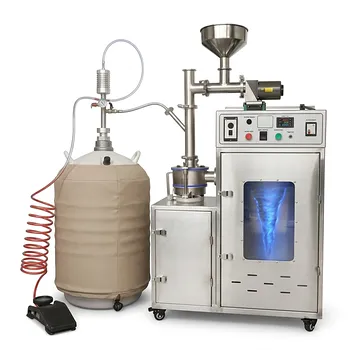
Small Liquid Nitrogen Cryogenic Grinder for Ultrafine Grinding of Heat-Sensitive Materials in Laboratories
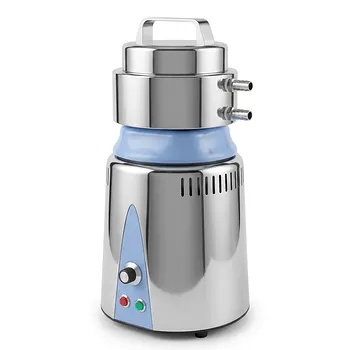
Low Temperature Laboratory Knife Mill Cryogenic Sample Grinder Material Science Powder Processing
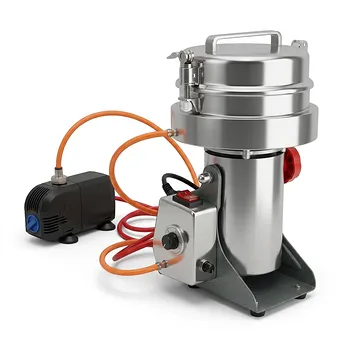
Water Cooled High Speed Grinder with Cryogenic Option for Laboratory Sample Preparation
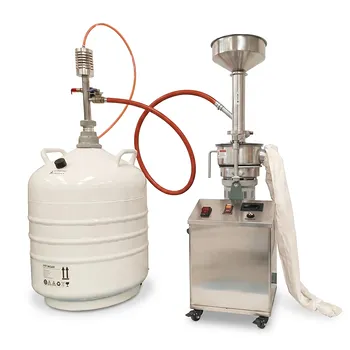
Laboratory Liquid Nitrogen Cryogenic Grinder Polymer Sample Preparation Pulverizer
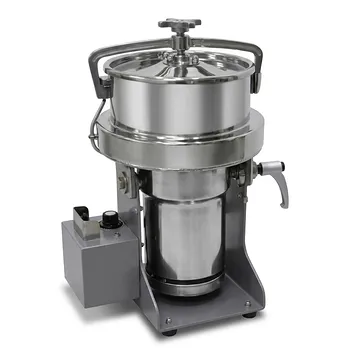
500g Capacity Water Cooled Low Temperature Grinder with Variable Speed and Safety Cover
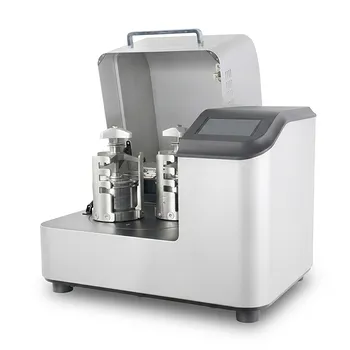
High Energy Planetary Ball Mill for Nano Scale Grinding and Mechanical Alloying
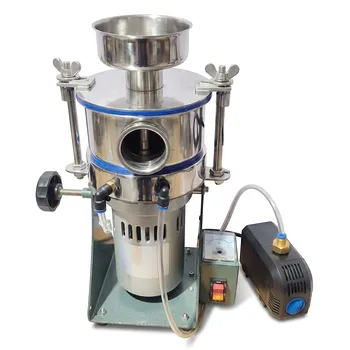
Water Cooled Airflow Ultra Fine Grinder for Low Temperature Material Processing
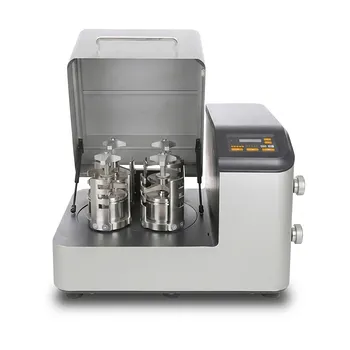
High Energy Planetary Ball Mill for Nano Scale Grinding and Colloidal Mixing in Material Science Research
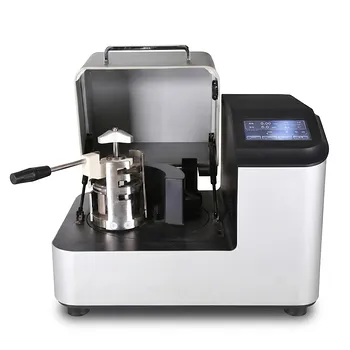
High Energy Laboratory Planetary Ball Mill for Nano Grinding and Material Science Sample Preparation
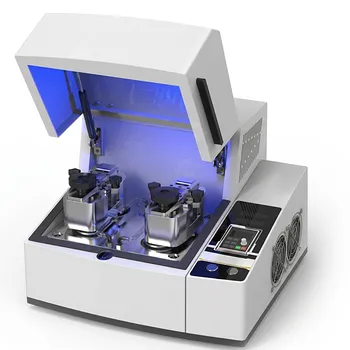
Laboratory Nano High Energy Ball Mill Ultrafine Grinding Mechanical Alloying
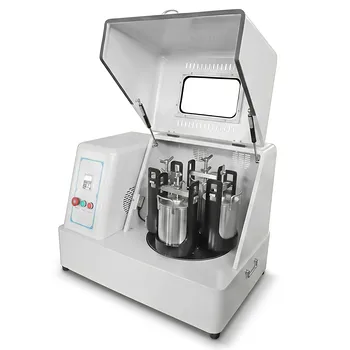
Vertical Square Planetary Ball Mill for Laboratory Sample Preparation and Nanoscale Grinding
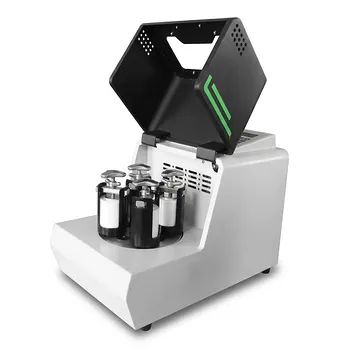
Miniature Planetary Ball Mill with Vacuum Grinding and High Efficiency for Laboratory Sample Preparation