What Precautions for Grinding Low Tg Plastics like Polyethylene? Master Cryogenic Milling for Perfect Powders
Updated 4 months ago
Successful grinding of low glass transition temperature plastics requires rigorous thermal management. To prevent Polyethylene (PE) from softening, sticking, or discoloring, the grinding process must utilize extended liquid nitrogen pre-cooling and multiple intermediate cooling stages. These precautions ensure the material remains below its glass transition temperature ($T_g$), allowing for brittle fracture rather than elastic deformation.
To grind plastics like Polyethylene effectively, you must maintain a cryogenic environment that compensates for the friction-induced heat of the mill. This transformation from a rubbery to a brittle state is the only way to achieve fine particle sizes without compromising the polymer's chemical integrity.
The Challenge of Low Glass Transition Temperatures
Understanding the Thermal Sensitivity of Polyethylene
Polyethylene possesses an exceptionally low glass transition temperature, typically ranging from -100°C to -70°C. Above this narrow window, the polymer chains move freely, causing the material to behave like a tough, rubbery solid that resists clean fracturing.
The Risks of Heat Generation during Milling
Mechanical grinding inherently generates significant friction and kinetic heat. For PE, even a slight temperature rise can lead to oxidative discoloration or cause the material to soften and adhere to the grinding elements.
The Problem of "Smearing" vs. Fracturing
When the temperature exceeds the $T_g$, the plastic will "smear" or deform elastically instead of breaking. This results in irregular particle shapes, clogged machinery, and a complete failure to reach the desired mesh size.
Essential Cooling Precautions
Extended Liquid Nitrogen Pre-cooling
Standard cooling durations are insufficient for materials with such low $T_g$ values. The process must begin with extended pre-cooling using liquid nitrogen to ensure the core temperature of the plastic pellets is uniform and well below the brittle point.
Multiple Intermediate Cooling Stages
Cooling is not a "one-and-done" step; the heat generated during the actual impact of the mill must be neutralized immediately. Implementing multiple intermediate cooling stages throughout the grinding cycle prevents the cumulative heat from triggering a phase change in the plastic.
Maintaining the Brittle Fracture State
The primary goal of these cooling protocols is to maintain the "brittle fracture" condition. By keeping the environment cryogenic, the PE behaves like glass, allowing the mill to shatter the material into fine, consistent powders with minimal energy loss.
Understanding the Trade-offs and Pitfalls
Resource Intensity and Operating Costs
The most significant trade-off in cryogenic grinding is the high consumption of liquid nitrogen. Achieving the necessary temperatures for PE is expensive and requires specialized, insulated equipment that can withstand extreme thermal cycling.
Risk of Moisture Contamination
When working with cryogenic temperatures, atmospheric moisture can quickly condense on the cold material once it exits the mill. If not managed in a controlled, dry environment, this can lead to clumping or degradation during subsequent storage or processing.
Equipment Embrittlement
Not all grinding mills are rated for temperatures as low as -100°C. Standard carbon steel components can become dangerously brittle and shatter under impact; therefore, only specialized cryogenic-grade alloys should be used for the grinding chamber and rotors.
How to Apply These Precautions to Your Project
Before beginning the milling process, evaluate your specific material grade and your final application requirements to determine the level of cooling intensity needed.
- If your primary focus is high-purity powder: Prioritize a closed-loop liquid nitrogen system to prevent any oxidative discoloration and ensure zero thermal degradation.
- If your primary focus is maximum throughput: Implement automated intermediate cooling sensors that trigger nitrogen injection only when the internal mill temperature approaches the -70°C threshold.
- If your primary focus is cost-efficiency: Focus on optimizing the pre-cooling dwell time to ensure the material is "deep-frozen" before entering the mill, which can reduce the need for excessive nitrogen during the active grinding phase.
By strictly controlling the thermal environment, you can transform Polyethylene from a resilient elastomer into a grindable medium, ensuring high-quality results and equipment longevity.
Summary Table:
| Key Aspect | Challenge (Above $T_g$) | Cryogenic Solution (Below $T_g$) |
|---|---|---|
| Material State | Rubbery, elastic, and tough | Brittle, glass-like state |
| Milling Result | Smearing, clogging, and melting | Fine, consistent brittle fracture |
| Thermal Management | Friction heat causes degradation | Liquid nitrogen pre-cooling & stages |
| Powder Quality | Irregular shapes & discoloration | High purity & uniform particle size |
| Hardware Requirement | Standard components may fail | Cryogenic-grade alloys & insulation |
Optimize Your Material Processing with Expert Cryogenic Solutions
Achieving the perfect particle size for challenging polymers like Polyethylene requires more than just a mill—it requires a complete thermal management strategy. At [Company Name], we provide comprehensive laboratory sample preparation solutions tailored for material science professionals.
Whether you are dealing with low glass transition temperatures or high-purity requirements, our extensive equipment line ensures precision and reliability:
- Advanced Grinding: Liquid nitrogen cryogenic grinders, planetary ball mills, jet mills, and rotor mills.
- Sample Refinement: Vibratory and air-jet sieve shakers with high-precision test sieves.
- Powder Processing: Specialized powder mixers and vacuum defoaming mixers.
- Compaction Excellence: A full spectrum of hydraulic presses, including Cold/Warm Isostatic Presses (CIP/WIP), hot presses, and XRF pellet presses.
Ready to elevate your lab's efficiency and output quality? Our specialists are here to help you select the right configuration for your specific material needs.
Contact Us Today to Get a Tailored Solution
References
- Urška Šunta, Mojca Bavcon Kralj. Insights into Microplastics: from Physical and Chemical Characterisation to its Potential as a Vector.. DOI: 10.55295/psl.2022.d13
Mentioned Products
- Small Liquid Nitrogen Cryogenic Grinder for Ultrafine Grinding of Heat-Sensitive Materials in Laboratories
- Laboratory Cryogenic Grinder Liquid Nitrogen Low Temperature Ultrafine Grinding
- Cryogenic Liquid Nitrogen Grinder for DNA Analysis and Polymer Pulverization with Automatic Cooling and Electromagnetic Impact Technology
- Cryogenic Liquid Nitrogen Grinder for Ultrafine Heat-Sensitive Powder Processing
- Liquid Nitrogen Cryogenic Grinder for Plastic and Heat-Sensitive Materials
People Also Ask
- What are the advantages of using liquid nitrogen Cryomilling? Achieve ultra-fine grains and high chemical purity.
- How does liquid nitrogen as a processing medium affect copper powder beyond cooling? Impacts on Purity & Sintering
- What is the function of liquid nitrogen cryogenic grinding in the initial preparation of PHBH polymer powder? Key Roles
- Why is liquid nitrogen cryogenic grinding used for coal and microbial experiments? Preserve Sample Integrity
- Why use liquid nitrogen cryogenic grinding for polymer degradation? Preserve sample integrity & prevent thermal damage

Tech Team · PowderPreparation
Last updated on Jun 03, 2026
Related Products
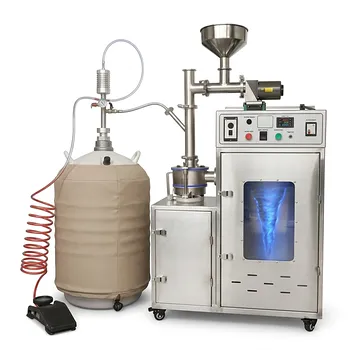
Small Liquid Nitrogen Cryogenic Grinder for Ultrafine Grinding of Heat-Sensitive Materials in Laboratories
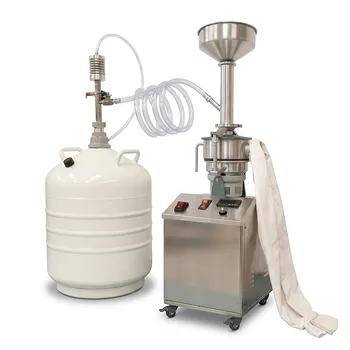
Laboratory Cryogenic Grinder Liquid Nitrogen Low Temperature Ultrafine Grinding
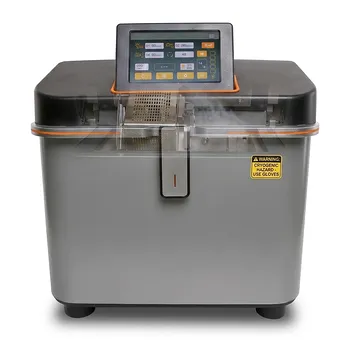
Cryogenic Liquid Nitrogen Grinder for DNA Analysis and Polymer Pulverization with Automatic Cooling and Electromagnetic Impact Technology
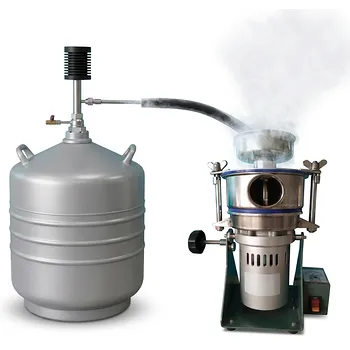
Cryogenic Liquid Nitrogen Grinder for Ultrafine Heat-Sensitive Powder Processing
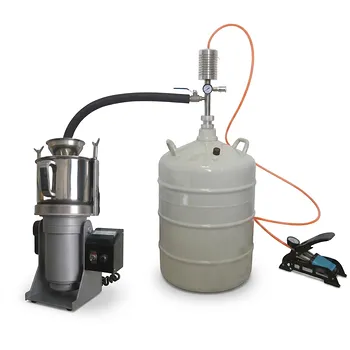
Liquid Nitrogen Cryogenic Grinder for Plastic and Heat-Sensitive Materials
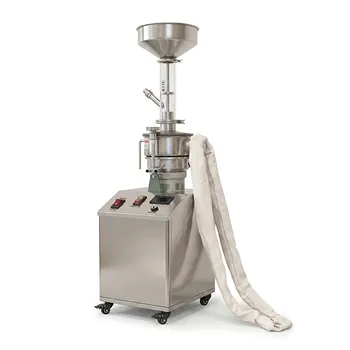
Small Liquid Nitrogen Cryogenic Grinder for Plastic and Heat-Sensitive Material Sample Preparation
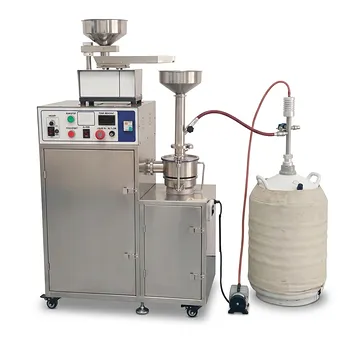
Small Liquid Nitrogen Cryogenic Grinder with Vibratory Feeder for Laboratory Sample Preparation
Laboratory Liquid Nitrogen Cryogenic Grinder for Polymer and Elastomer Materials
Laboratory Liquid Nitrogen Cryogenic Grinder Polymer Sample Preparation Pulverizer
Low Temperature Laboratory Knife Mill Cryogenic Sample Grinder Material Science Powder Processing
Vibratory Ultra-Low Temperature Ultrafine Grinder for Cryogenic Powder Processing
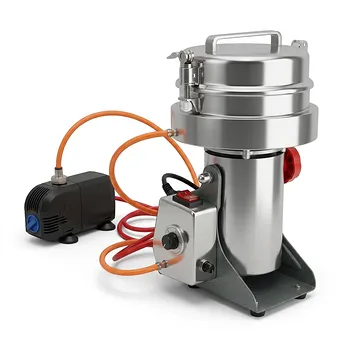
Water Cooled High Speed Grinder with Cryogenic Option for Laboratory Sample Preparation
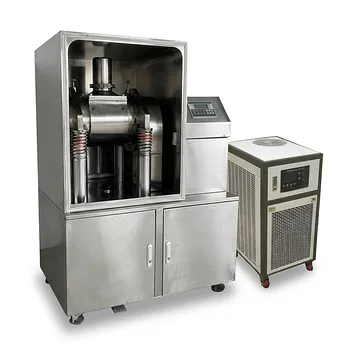
Water Cooled Cryogenic Ultra Fine Cell Wall Breaking Mill
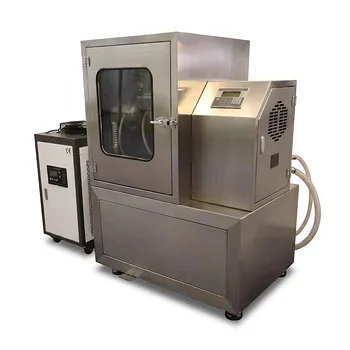
Ultra-Low Temperature Vibratory Mill for Ultrafine Grinding
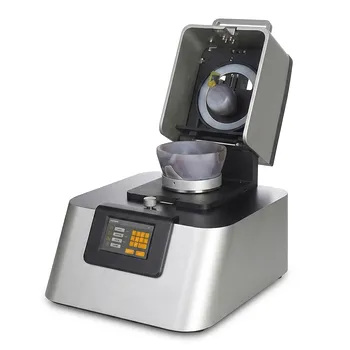
Laboratory Mortar Grinder for Sample Preparation and Cryogenic Powder Homogenization
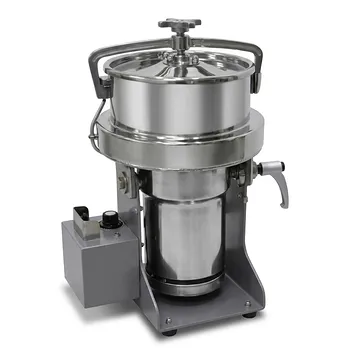
500g Capacity Water Cooled Low Temperature Grinder with Variable Speed and Safety Cover
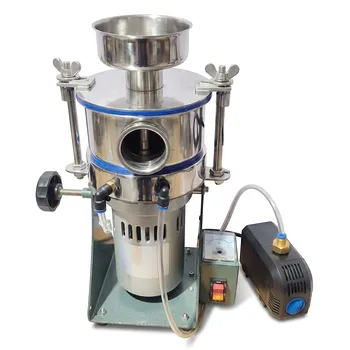
Water Cooled Airflow Ultra Fine Grinder for Low Temperature Material Processing
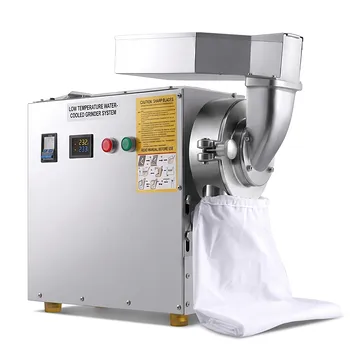
Low Temperature Water Cooled Continuous Feed Grinder Two Stage Coarse and Fine Grinding System
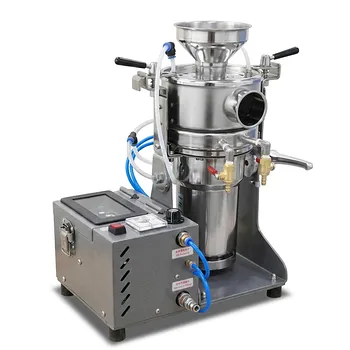
Water Cooled Pulse Jet Ultrafine Grinder