Why is liquid nitrogen cryogenic grinding used for coal and microbial experiments? Preserve Sample Integrity
Updated 4 months ago
The use of liquid nitrogen cryogenic grinding is essential for preserving the chemical and structural integrity of sensitive precursors. This technique utilizes ultra-low temperatures (typically -196°C) to instantly deep-freeze coal and microbial samples, effectively neutralizing the friction-induced heat generated during mechanical crushing. By maintaining this cryogenic environment, researchers prevent the oxidative degradation of organic matter and ensure that microbial nutrients—such as fats and sugars—remain biochemically intact for reliable fermentation data.
Cryogenic grinding ensures that coal and microbial samples are pulverized into a fine powder without thermal or chemical alteration. This method maintains the original biochemical activity and physical morphology necessary for accurate and reproducible co-fermentation experiments.
Preventing Thermal Degradation and Oxidation
Neutralizing Frictional Heat
Mechanical grinding naturally generates significant heat through friction and impact. In coal and microbial co-fermentation, this heat can trigger premature chemical reactions or the degradation of organic components.
Cryogenic grinding utilizes the ultra-low boiling point of liquid nitrogen to dissipate this heat instantly. This prevents the "smearing" or melting of heat-sensitive materials, ensuring the sample remains a stable powder rather than a fused mass.
Creating an Inert Atmosphere
As liquid nitrogen vaporizes, it displaces oxygen, creating an inert nitrogen atmosphere. This is critical for coal samples, which are susceptible to oxidative degradation when exposed to air and heat.
By eliminating oxygen during the pulverization process, the method ensures that the organic structure of the coal and the microbial cells are not chemically altered. This preservation is vital for the authenticity and reliability of downstream experimental results.
Enhancing Mechanical Grindability
Reaching the Embrittlement Point
Many biological tissues and certain organic components in coal exhibit viscoelastic properties, making them tough or elastic at room temperature. These materials tend to deform or "clog" traditional mills rather than breaking into fine particles.
Liquid nitrogen cools these materials below their glass transition temperature or embrittlement point. At -196°C, even elastic microbial membranes become brittle and fragile, allowing them to fracture cleanly under mechanical force.
Maximizing Specific Surface Area
Efficient co-fermentation requires a high degree of contact between the coal substrate and the microbial agents. Cryogenic grinding produces fine, irregular micron-sized fragments that are difficult to achieve through standard milling.
These fine powders possess a high specific surface area, which creates ideal kinetic conditions for subsequent reactions. This increased surface area allows microbes to interact more effectively with the coal matrix during the fermentation process.
Preserving Microbial and Chemical Viability
Protecting Labile Organic Components
Microbial samples contain heat-labile components like fats, sugars, proteins, and nucleic acids. Traditional grinding can cause protein denaturation or the breakdown of essential lipids.
Cryogenic treatment ensures that these nutritional and biochemical components do not undergo chemical changes. This allows researchers to study the true interaction between the living microbes and the coal source without interference from processing artifacts.
Ensuring Representative Experimental Samples
To achieve reproducible data, the starting material must be a representative homogenized powder. Cryogenic grinding prevents the loss of volatile compounds that might otherwise escape during a high-temperature milling process.
By locking the chemical state of the sample in place, the resulting powder provides a stable and reproducible source for fermentation. This ensures that any observed biological activity is a result of the experiment itself, not the preparation method.
Understanding the Trade-offs
Operational Complexity and Cost
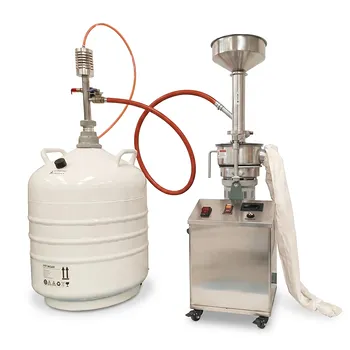
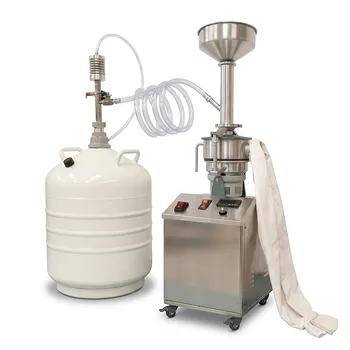
Implementing cryogenic grinding requires specialized equipment, such as liquid nitrogen injection systems and insulated grinding chambers. The continuous consumption of liquid nitrogen significantly increases the operational cost per sample compared to dry or wet ambient milling.
Safety and Handling Risks
Working with liquid nitrogen introduces specific safety hazards, including the risk of cryogenic burns and oxygen displacement leading to asphyxiation in poorly ventilated areas. Facilities must be equipped with proper monitoring and personal protective equipment (PPE) to manage these risks.
Potential for Moisture Contamination
If the system is not properly sealed or purged, atmospheric moisture can condense on the ultra-cold samples. This residual moisture can interfere with the precision of dry weight measurements or affect the initial water activity in a fermentation broth.
Applying This to Your Project
Recommendations for Implementation
- If your primary focus is analytical precision: Use cryogenic grinding to prevent the denaturation of fats and sugars, ensuring your baseline chemical profile is 100% accurate.
- If your primary focus is kinetic efficiency: Utilize liquid nitrogen to achieve the smallest possible particle size, thereby maximizing the surface area available for microbial colonization.
- If your primary focus is volatile preservation: Ensure the grinding chamber remains fully submerged or continuously flushed with nitrogen gas to prevent the loss of light organic compounds.
Cryogenic grinding stands as the definitive preparation method for researchers who prioritize the chemical authenticity and physical reactivity of coal-microbial substrates.
Summary Table:
| Feature | Benefit of Cryogenic Grinding | Impact on Co-Fermentation |
|---|---|---|
| Temperature Control | Neutralizes frictional heat (at -196°C) | Prevents thermal degradation of fats and sugars |
| Atmospheric Purity | Creates an inert nitrogen environment | Eliminates oxidative degradation of organic matter |
| Material State | Reaches the embrittlement point | Allows elastic microbial membranes to fracture cleanly |
| Particle Size | Produces fine, micron-sized fragments | Maximizes surface area for microbial interaction |
| Chemical Stability | Locks biochemical and volatile states | Ensures representative and reproducible lab data |
Elevate Your Material Science Research with Precision Sample Prep
Achieving reliable results in coal and microbial co-fermentation requires specialized equipment that preserves the delicate chemical balance of your precursors. At our facility, we provide complete laboratory sample preparation solutions tailored for material science and powder processing.
Whether you need to achieve ultra-fine particle sizes or maintain cryogenic stability, our extensive product line has you covered:
- Grinding & Milling: Liquid nitrogen cryogenic grinders, planetary ball mills, jet mills, and rotor mills.
- Powder Processing: Sieve shakers (vibratory/air-jet), powder mixers, and defoaming mixers.
- Compaction & Pressing: A full spectrum of hydraulic presses, including Cold/Warm Isostatic Presses (CIP/WIP), hot presses, and vacuum hot presses.
Ready to enhance your lab's efficiency and data accuracy? Contact our experts today to find the perfect solution for your specific application!
References
- Liu Zhu, Yi Liu. Substrate Composition Effects on the Microbial Enhancement of Biogenic Methane Production from Coal. DOI: 10.3390/su17114953
Mentioned Products
- Liquid Nitrogen Cryogenic Grinder for Plastic and Heat-Sensitive Materials
- Small Liquid Nitrogen Cryogenic Grinder for Ultrafine Grinding of Heat-Sensitive Materials in Laboratories
- Cryogenic Liquid Nitrogen Grinder for DNA Analysis and Polymer Pulverization with Automatic Cooling and Electromagnetic Impact Technology
- Cryogenic Liquid Nitrogen Grinder for Ultrafine Heat-Sensitive Powder Processing
- Small Liquid Nitrogen Cryogenic Grinder with Vibratory Feeder for Laboratory Sample Preparation
People Also Ask
- Why is a liquid nitrogen cryogenic grinder required before DSC? Ensure Accurate Thermal Analysis & Sample Integrity.
- Why is a liquid nitrogen cryogenic grinder necessary for plastic pre-processing? Achieve Precise Co-Pyrolysis Results
- What role does liquid nitrogen cryogenic grinding play in the modification of CNTs? Optimize Nanomaterial Processing
- Why is a laboratory-grade liquid nitrogen cryogenic grinder essential for processing drug-loaded polymer nanofiber mats?
- What is the role of a liquid nitrogen cryogenic grinder in drug-polymer mixing? Achieve Superior Sample Homogeneity

Tech Team · PowderPreparation
Last updated on Jun 03, 2026
Related Products
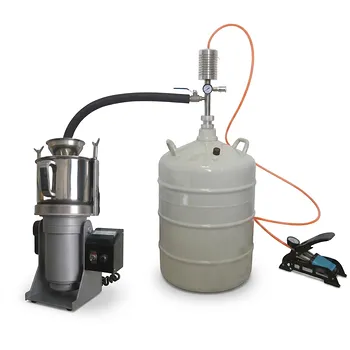
Liquid Nitrogen Cryogenic Grinder for Plastic and Heat-Sensitive Materials
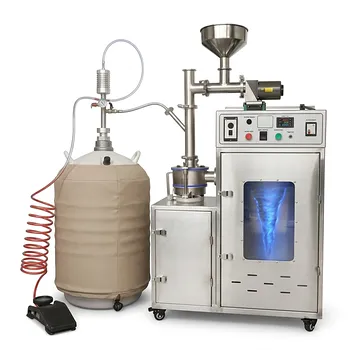
Small Liquid Nitrogen Cryogenic Grinder for Ultrafine Grinding of Heat-Sensitive Materials in Laboratories
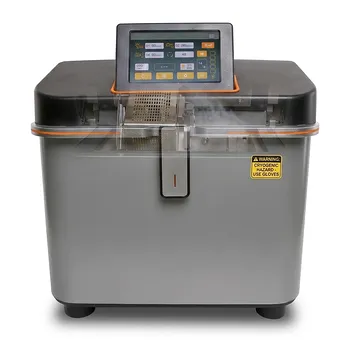
Cryogenic Liquid Nitrogen Grinder for DNA Analysis and Polymer Pulverization with Automatic Cooling and Electromagnetic Impact Technology
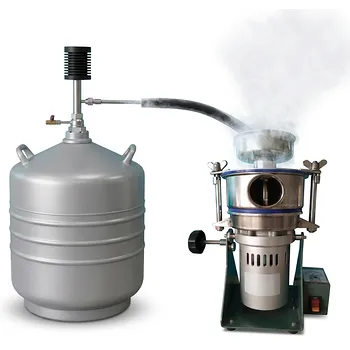
Cryogenic Liquid Nitrogen Grinder for Ultrafine Heat-Sensitive Powder Processing
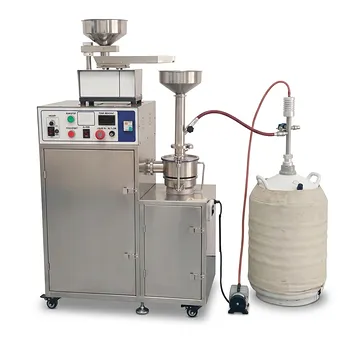
Small Liquid Nitrogen Cryogenic Grinder with Vibratory Feeder for Laboratory Sample Preparation
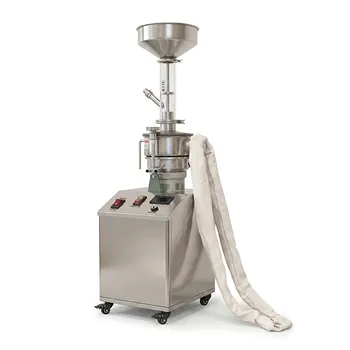
Small Liquid Nitrogen Cryogenic Grinder for Plastic and Heat-Sensitive Material Sample Preparation
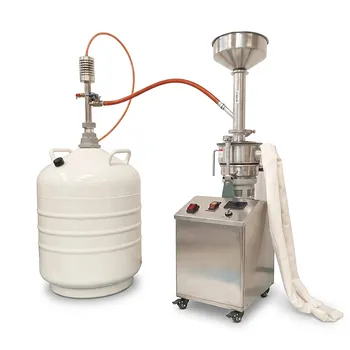
Laboratory Liquid Nitrogen Cryogenic Grinder for Polymer and Elastomer Materials
Laboratory Liquid Nitrogen Cryogenic Grinder Polymer Sample Preparation Pulverizer
Laboratory Cryogenic Grinder Liquid Nitrogen Low Temperature Ultrafine Grinding
Water Cooled High Speed Grinder with Cryogenic Option for Laboratory Sample Preparation
Water Cooled Cryogenic Ultra Fine Cell Wall Breaking Mill
500g Capacity Water Cooled Low Temperature Grinder with Variable Speed and Safety Cover
Water Cooled Airflow Ultra Fine Grinder for Low Temperature Material Processing
Vibratory Ultra-Low Temperature Ultrafine Grinder for Cryogenic Powder Processing
Laboratory Mortar Grinder for Sample Preparation and Cryogenic Powder Homogenization
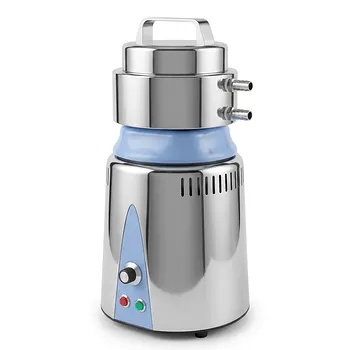
Low Temperature Laboratory Knife Mill Cryogenic Sample Grinder Material Science Powder Processing
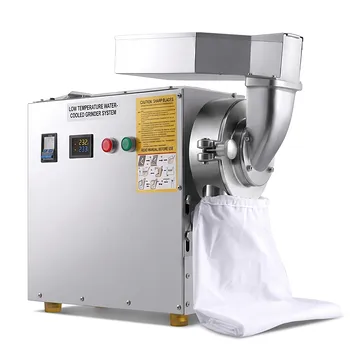
Low Temperature Water Cooled Continuous Feed Grinder Two Stage Coarse and Fine Grinding System
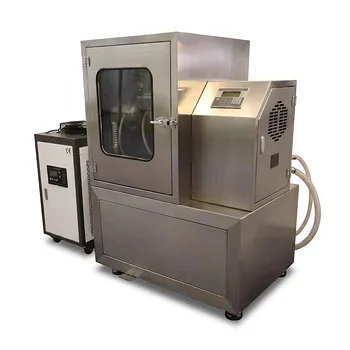
Ultra-Low Temperature Vibratory Mill for Ultrafine Grinding
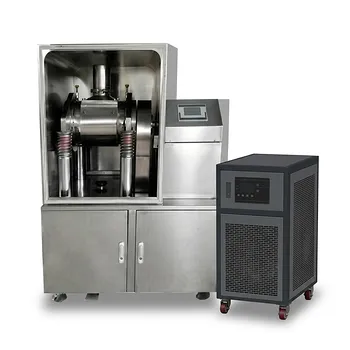
Ultra-low Temperature Vibratory Mill Ultrafine Grinder