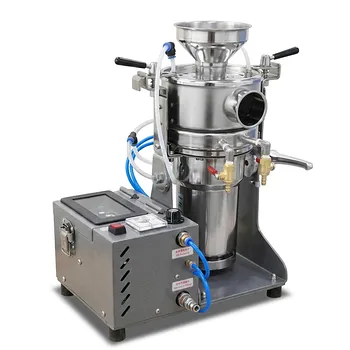
What is the critical role of a liquid nitrogen cryogenic grinder in NIF/PVP? Enhance Mixing & Prevent Degradation
Updated 5 months ago
The critical role of a liquid nitrogen cryogenic grinder in preparing Nifedipine and Polyvinylpyrrolidone (NIF/PVP) mixtures is to prevent thermal degradation while ensuring high-level mixing uniformity. By maintaining the materials in a brittle state at ultra-low temperatures, the grinder avoids premature phase transitions and provides high-quality starting materials for the subsequent production of amorphous solid dispersions.
The liquid nitrogen cryogenic grinder serves as a foundational tool that utilizes thermomechanical embrittlement to transform ductile raw materials into fine powders. This process ensures the chemical integrity of the drug-polymer mixture and creates a highly uniform dispersion necessary for advanced pharmaceutical processing.
Maintaining Material Integrity Through Thermal Control
Prevention of Thermal Degradation
The grinding process naturally generates significant mechanical heat which can lead to the thermal degradation of sensitive drugs like Nifedipine. By using a liquid nitrogen cooling environment, the grinder effectively absorbs this heat, keeping the temperature far below the threshold for chemical breakdown.
Avoiding Premature Phase Transitions
NIF/PVP mixtures are often destined for the production of amorphous solid dispersions via melt-quenching. The cryogenic environment prevents the components from undergoing premature phase transitions or melting during the preparation stage, which would otherwise compromise the experimental results.
Suppressing Molecular Mobility
At approximately -196°C, the ultra-low temperature effectively reduces molecular mobility. This suppression prevents the recrystallization of the drug during the high-energy impacts of the grinding process, ensuring the mixture remains stable.
Achieving High-Level Mixing Uniformity
Utilizing High-Frequency Impact
The grinder uses high-frequency impact energy to pulverize materials into extremely fine particles. This mechanical action is superior to standard grinding for achieving a consistent and intimate blend between the pharmaceutical active ingredient and the polymer matrix.
Enhancing Dissolution Kinetics
By reducing particles to a micronized scale, the grinder significantly decreases diffusion distances between the drug and the polymer. This results in enhanced drug dissolution kinetics, which is vital for the performance of the final pharmaceutical product.
Optimizing Subsequent Analysis
A highly uniform physical mixture shortens the experimental time required for thermal analysis. For instance, it allows for more accurate and rapid determination of dissolution temperatures during Differential Scanning Calorimetry (DSC) testing.
The Principle of Thermomechanical Embrittlement
Transitioning from Ductile to Brittle
Most polymers like PVP are ductile or elastic at room temperature, making them difficult to grind efficiently. The liquid nitrogen induces cold brittleness by dropping the material's temperature below its glass transition temperature (Tg) or ductile-to-brittle transition temperature (DBTT).
Efficient Particle Size Reduction
Once in a brittle state, materials fracture easily upon impact rather than deforming plastically. This allows the equipment to produce irregular, fine powders with high efficiency, which is essential for creating a homogenous precursor for melt-processing.
Facilitating Forced Mixing
The combination of brittleness and high-energy impact enables forced mixing at the molecular level. This is a prerequisite for forming single-phase co-amorphous systems, where the drug must be perfectly dispersed within the polymer carrier.
Understanding the Trade-offs
Operational Costs and Complexity
The continuous use of liquid nitrogen significantly increases the operational cost per batch compared to ambient grinding. Additionally, the equipment requires specialized handling and safety protocols to manage the risks associated with cryogenic fluids.
Moisture Management
A common pitfall is the condensation of atmospheric moisture on the cold powder once it is removed from the grinder. If not managed in a controlled-humidity environment, this moisture can trigger the recrystallization of the drug or affect the stability of the PVP.
Material Specificity
While excellent for NIF/PVP, not all materials require such extreme cooling. For some substances, the high-energy impact may still cause localized surface melting if the cooling flow is not perfectly maintained, leading to inconsistent particle morphology.
How to Apply This to Your Project
When preparing pharmaceutical physical mixtures, the choice of grinding method should align with your final stability and uniformity requirements.
- If your primary focus is preventing drug degradation: Use cryogenic grinding to ensure the temperature never approaches the drug’s melting or decomposition point.
- If your primary focus is preparing for melt-quenching: Utilize the high-frequency impact of the cryogenic grinder to ensure the NIF is perfectly distributed within the PVP before heating.
- If your primary focus is accelerating thermal analysis: Prioritize achieving the smallest possible particle size through embrittlement to reduce diffusion lag in DSC measurements.
By leveraging cryogenic technology, you ensure that your NIF/PVP starting materials are of the highest possible quality for advanced drug delivery applications.
Summary Table:
| Feature | Benefit | Impact on NIF/PVP |
|---|---|---|
| Ultra-low Temp (-196°C) | Prevents thermal degradation | Maintains chemical integrity of Nifedipine |
| Cold Embrittlement | Transitions ductile PVP to brittle | Enables efficient, ultra-fine pulverization |
| High-frequency Impact | Achieve micron-scale particles | Ensures molecular-level mixing uniformity |
| Mobility Suppression | Reduces molecular mobility | Prevents drug recrystallization during grinding |
Optimize Your Material Preparation with Precision Solutions
Achieve superior uniformity and maintain material integrity with expert-grade equipment. At [Brand Name], we provide complete laboratory sample preparation solutions for material science, specializing in advanced powder processing and compaction.
Our extensive range includes:
- Grinding & Milling: Liquid nitrogen cryogenic grinders, planetary ball mills, jet mills, and rotor mills.
- Crushing & Sieving: Jaw/roll crushers and vibratory/air-jet sieve shakers.
- Compaction Excellence: A full spectrum of hydraulic presses, including Cold/Warm Isostatic Presses (CIP/WIP), vacuum hot presses, and XRF pellet presses.
- Mixing: Powder mixers and high-efficiency defoaming mixers.
Whether you are working with sensitive pharmaceutical mixtures like NIF/PVP or advanced industrial ceramics, our solutions are designed to eliminate thermal degradation and maximize dissolution kinetics.
Ready to elevate your research results? Contact us today for a tailored consultation and equipment quote!
References
- Sichen Song, Ronald A. Siegel. Miscibility of amorphous solid dispersions: A rheological and solid-state NMR spectroscopy study. DOI: 10.1016/j.xphs.2024.05.017
Mentioned Products
- Liquid Nitrogen Cryogenic Grinder for Plastic and Heat-Sensitive Materials
- Small Liquid Nitrogen Cryogenic Grinder for Ultrafine Grinding of Heat-Sensitive Materials in Laboratories
- Cryogenic Liquid Nitrogen Grinder for DNA Analysis and Polymer Pulverization with Automatic Cooling and Electromagnetic Impact Technology
- Cryogenic Liquid Nitrogen Grinder for Ultrafine Heat-Sensitive Powder Processing
- Small Liquid Nitrogen Cryogenic Grinder with Vibratory Feeder for Laboratory Sample Preparation
People Also Ask
- Why is a liquid nitrogen cryogenic grinder required before DSC? Ensure Accurate Thermal Analysis & Sample Integrity.
- Why is a liquid nitrogen cryogenic grinder necessary for plastic pre-processing? Achieve Precise Co-Pyrolysis Results
- What role does liquid nitrogen cryogenic grinding play in the modification of CNTs? Optimize Nanomaterial Processing
- Why is a laboratory-grade liquid nitrogen cryogenic grinder essential for processing drug-loaded polymer nanofiber mats?
- What is the role of a liquid nitrogen cryogenic grinder in drug-polymer mixing? Achieve Superior Sample Homogeneity

Tech Team · PowderPreparation
Last updated on May 14, 2026
Related Products
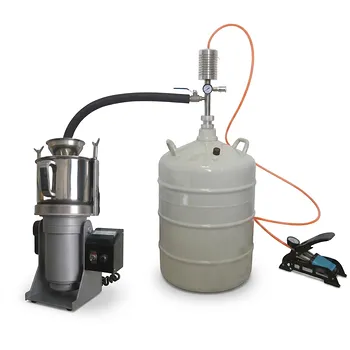
Liquid Nitrogen Cryogenic Grinder for Plastic and Heat-Sensitive Materials
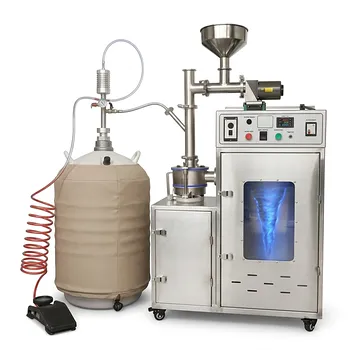
Small Liquid Nitrogen Cryogenic Grinder for Ultrafine Grinding of Heat-Sensitive Materials in Laboratories
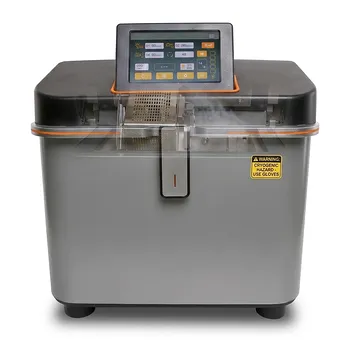
Cryogenic Liquid Nitrogen Grinder for DNA Analysis and Polymer Pulverization with Automatic Cooling and Electromagnetic Impact Technology
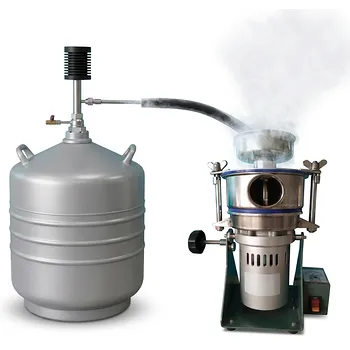
Cryogenic Liquid Nitrogen Grinder for Ultrafine Heat-Sensitive Powder Processing
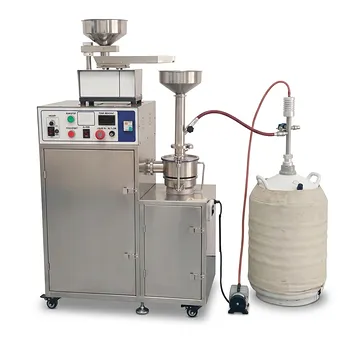
Small Liquid Nitrogen Cryogenic Grinder with Vibratory Feeder for Laboratory Sample Preparation
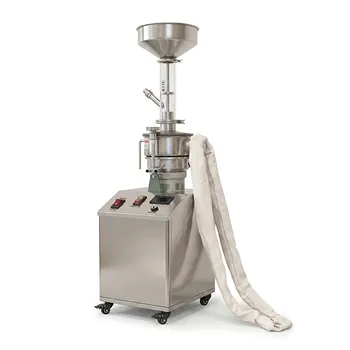
Small Liquid Nitrogen Cryogenic Grinder for Plastic and Heat-Sensitive Material Sample Preparation
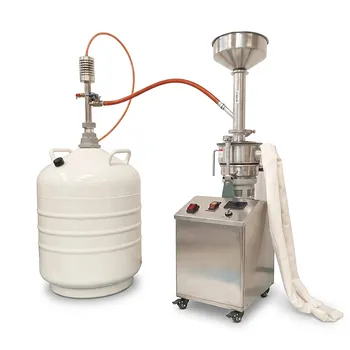
Laboratory Liquid Nitrogen Cryogenic Grinder for Polymer and Elastomer Materials
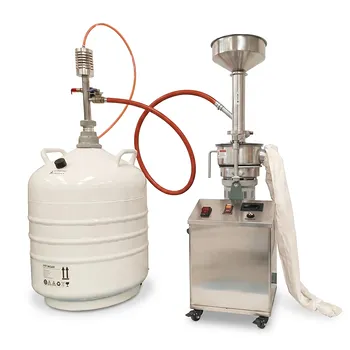
Laboratory Liquid Nitrogen Cryogenic Grinder Polymer Sample Preparation Pulverizer
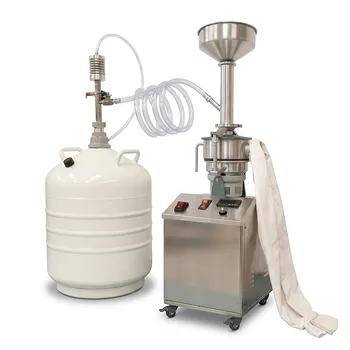
Laboratory Cryogenic Grinder Liquid Nitrogen Low Temperature Ultrafine Grinding
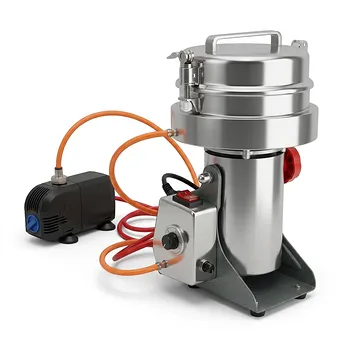
Water Cooled High Speed Grinder with Cryogenic Option for Laboratory Sample Preparation
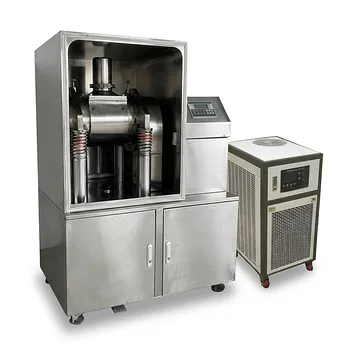
Water Cooled Cryogenic Ultra Fine Cell Wall Breaking Mill
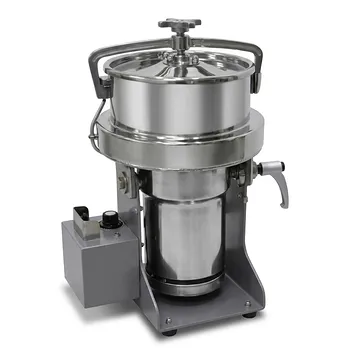
500g Capacity Water Cooled Low Temperature Grinder with Variable Speed and Safety Cover
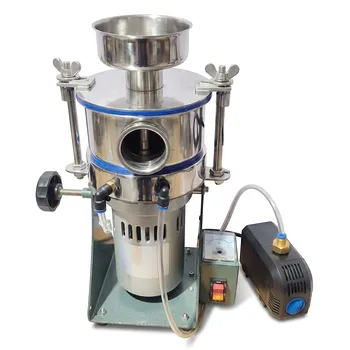
Water Cooled Airflow Ultra Fine Grinder for Low Temperature Material Processing
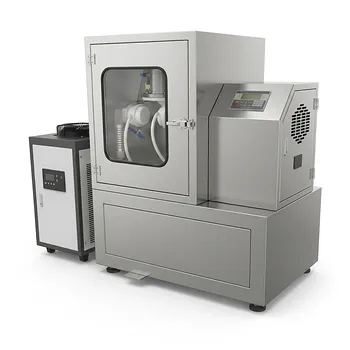
Vibratory Ultra-Low Temperature Ultrafine Grinder for Cryogenic Powder Processing
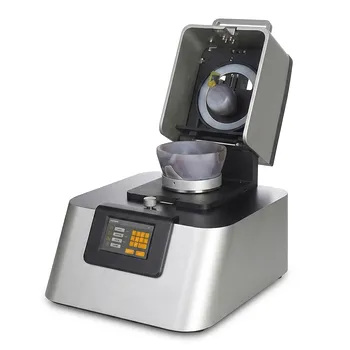
Laboratory Mortar Grinder for Sample Preparation and Cryogenic Powder Homogenization
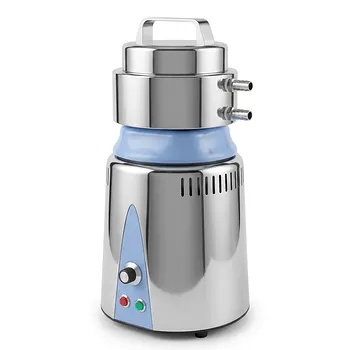
Low Temperature Laboratory Knife Mill Cryogenic Sample Grinder Material Science Powder Processing
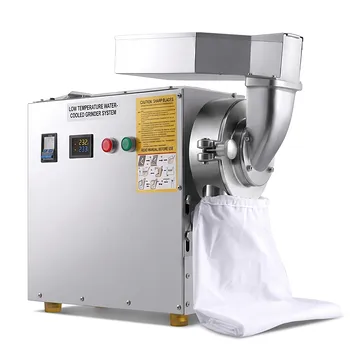
Low Temperature Water Cooled Continuous Feed Grinder Two Stage Coarse and Fine Grinding System
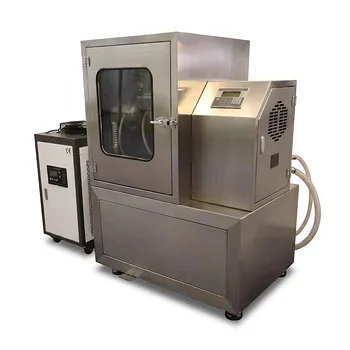
Ultra-Low Temperature Vibratory Mill for Ultrafine Grinding
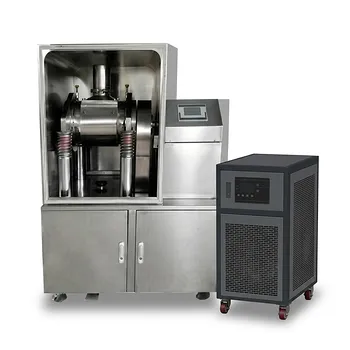
Ultra-low Temperature Vibratory Mill Ultrafine Grinder