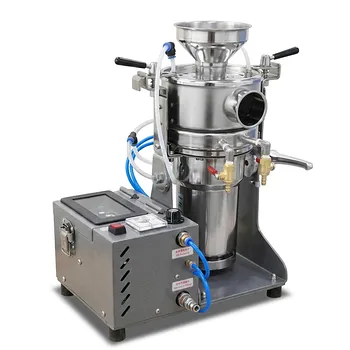
How can liquid nitrogen cryogenic treatment assist in processing difficult-to-spheronize pellet wet masses? Expert Guide
Updated 5 months ago
Liquid nitrogen cryogenic treatment enables the processing of difficult-to-spheronize pellet wet masses by rapidly modifying their physical properties. This technology addresses high viscosity and surface stickiness by increasing material brittleness through ultra-low temperature exposure. By transforming a "gummy" mass into a workable state, it allows materials to break into uniform segments and form spheres more effectively, particularly in formulations with high liquid loads.
Cryogenic treatment provides a critical mechanical advantage by suppressing adhesion and managing thermal stress, ensuring that even the most viscous wet masses can be processed into high-quality, uniform pellets without structural degradation.
Overcoming Viscosity and Adhesion Challenges
Increasing Material Brittleness
For pellet wet masses that are overly viscous, liquid nitrogen acts as a rapid cooling agent that increases the brittleness of the material. This physical transition is essential for the initial stages of spheronization, where the extruded mass must break cleanly into small segments. Without this increased brittleness, high-liquid loads often result in "snaking" or elongated extrudates that fail to round into spheres.
Reducing Surface Stickiness
The application of liquid nitrogen significantly reduces surface stickiness (tackiness) of the wet mass. By minimizing the adhesive forces on the particle surface, the equipment prevents individual pellets from agglomerating into larger, irregular clumps during the spheronization process. This allows for a much higher production success rate for formulations that are traditionally considered too "wet" for standard processing.
Enhancing Structural Integrity and Heat Management
Suppressing Thermal Damage
Liquid nitrogen cooling systems deliver ultra-low temperature refrigerants directly to the processing zone, providing superior heat exchange compared to traditional fluids. This suppresses local high temperatures that can cause surface cracking or subsurface thermal damage. By managing this thermal stress, the equipment ensures the final workpiece maintains its metamorphic layer thickness and overall surface integrity.
Preserving Fragile Structures
In applications requiring rapid deep-freeze quenching, such as iron ore or sensitive pharmaceutical granulation, liquid nitrogen "locks" the pellet structure instantly. This prevents particle breakage and protects fragile outer adhesion layers during subsequent handling or measurement. It is an essential tool for accurately capturing the true particle size distribution as it exists in the processing bed.
Understanding the Trade-offs
Infrastructure and Operating Costs
Implementing liquid nitrogen systems requires specialized insulated storage tanks and vacuum-jacketed delivery lines. These capital expenditures, combined with the ongoing cost of the nitrogen itself, make cryogenic treatment more expensive than traditional air or water cooling.
Material Over-Freezing
There is a risk of "over-freezing" the wet mass, which can make the material too brittle. If the temperature is not precisely controlled, the mass may shatter into excessive fines or dust rather than forming spheres. Achieving the "sweet spot" between plasticity and brittleness requires careful calibration of the liquid nitrogen flow rates.
How to Apply This to Your Project
When integrating cryogenic treatment into your pelletization workflow, consider your primary objective to determine the optimal delivery method:
- If your primary focus is processing high-liquid formulations: Use liquid nitrogen to rapidly chill the wet mass post-extrusion to ensure it breaks into uniform segments during spheronization.
- If your primary focus is protecting heat-sensitive ingredients: Deploy a continuous cryogenic cooling system to the machining zone to suppress thermal stress and prevent surface degradation.
- If your primary focus is structural analysis and sampling: Utilize rapid quenching to instantly freeze the "green" pellets, preserving their fragile outer layers for accurate size measurement.
By strategically leveraging the ultra-low temperatures of liquid nitrogen, you can transform unworkable wet masses into high-precision, uniform spherical pellets.
Summary Table:
| Challenge | Cryogenic Solution | Key Benefit |
|---|---|---|
| High Viscosity | Increases material brittleness | Cleanly breaks extrudates into uniform segments |
| Surface Stickiness | Reduces adhesive forces | Prevents pellet agglomeration and clumping |
| Thermal Damage | Rapid heat exchange | Suppresses surface cracking and preserves integrity |
| Fragile Structures | Deep-freeze quenching | Locks structure for accurate sampling and analysis |
Optimize Your Material Processing with Professional Lab Solutions
Are you struggling with unworkable wet masses or heat-sensitive material formulations? Contact our technical experts today to discover how the right equipment can transform your results.
At our core, we provide complete laboratory sample preparation solutions for material science, specializing in high-performance powder processing and compaction equipment. Our extensive product lines include:
- Grinding & Milling: Liquid nitrogen cryogenic grinders, planetary ball mills, jet mills, sand/bead mills, and rotor mills.
- Crushing & Sizing: Jaw/roll crushers and vibratory/air-jet sieve shakers with precision test sieves.
- Mixing: Advanced powder mixers and defoaming mixers.
- Compaction & Pressing: A full spectrum of hydraulic presses, including Cold/Warm Isostatic Presses (CIP/WIP), vacuum hot presses, and XRF pellet presses.
Whether you are refining a pharmaceutical formulation or developing new advanced materials, we have the tools to ensure your success. Get a Quote and Expert Consultation.
References
- Matthew Lam, Ali Nokhodchi. Factors affecting performance and manufacturability of naproxen Liqui-Pellet. DOI: 10.1007/s40199-020-00362-9
Mentioned Products
- Liquid Nitrogen Cryogenic Grinder for Plastic and Heat-Sensitive Materials
- Small Liquid Nitrogen Cryogenic Grinder for Ultrafine Grinding of Heat-Sensitive Materials in Laboratories
- Cryogenic Liquid Nitrogen Grinder for DNA Analysis and Polymer Pulverization with Automatic Cooling and Electromagnetic Impact Technology
- Cryogenic Liquid Nitrogen Grinder for Ultrafine Heat-Sensitive Powder Processing
- Small Liquid Nitrogen Cryogenic Grinder with Vibratory Feeder for Laboratory Sample Preparation
People Also Ask
- Why is a liquid nitrogen cryogenic grinder required before DSC? Ensure Accurate Thermal Analysis & Sample Integrity.
- Why is a liquid nitrogen cryogenic grinder necessary for plastic pre-processing? Achieve Precise Co-Pyrolysis Results
- What role does liquid nitrogen cryogenic grinding play in the modification of CNTs? Optimize Nanomaterial Processing
- Why is a laboratory-grade liquid nitrogen cryogenic grinder essential for processing drug-loaded polymer nanofiber mats?
- What is the role of a liquid nitrogen cryogenic grinder in drug-polymer mixing? Achieve Superior Sample Homogeneity

Tech Team · PowderPreparation
Last updated on May 14, 2026
Related Products
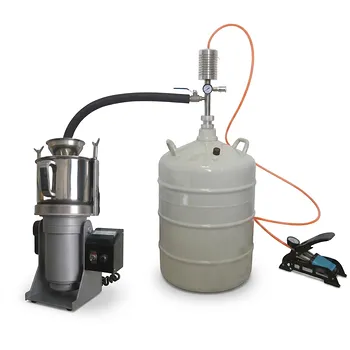
Liquid Nitrogen Cryogenic Grinder for Plastic and Heat-Sensitive Materials
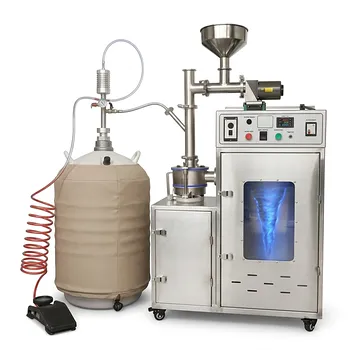
Small Liquid Nitrogen Cryogenic Grinder for Ultrafine Grinding of Heat-Sensitive Materials in Laboratories
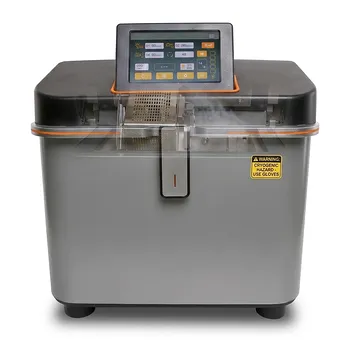
Cryogenic Liquid Nitrogen Grinder for DNA Analysis and Polymer Pulverization with Automatic Cooling and Electromagnetic Impact Technology
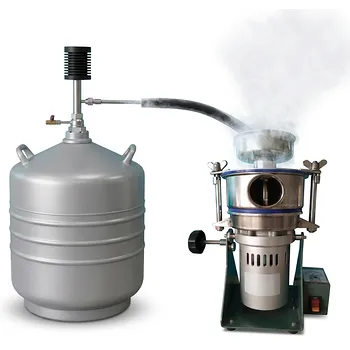
Cryogenic Liquid Nitrogen Grinder for Ultrafine Heat-Sensitive Powder Processing
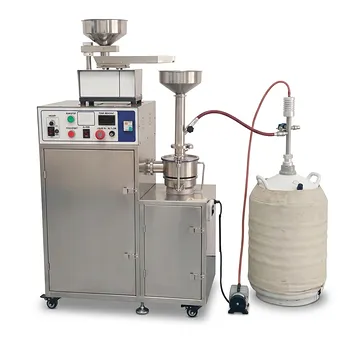
Small Liquid Nitrogen Cryogenic Grinder with Vibratory Feeder for Laboratory Sample Preparation
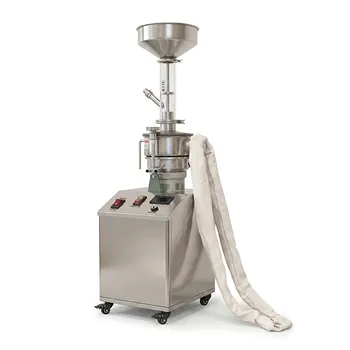
Small Liquid Nitrogen Cryogenic Grinder for Plastic and Heat-Sensitive Material Sample Preparation
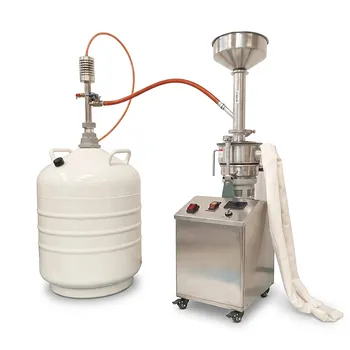
Laboratory Liquid Nitrogen Cryogenic Grinder for Polymer and Elastomer Materials
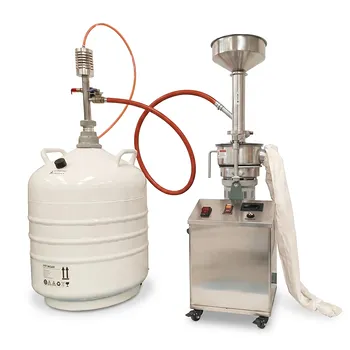
Laboratory Liquid Nitrogen Cryogenic Grinder Polymer Sample Preparation Pulverizer
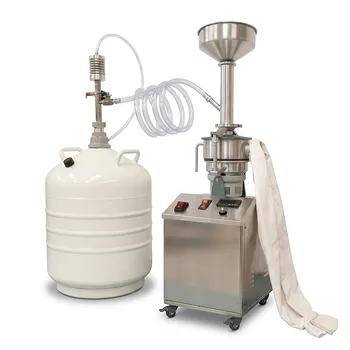
Laboratory Cryogenic Grinder Liquid Nitrogen Low Temperature Ultrafine Grinding
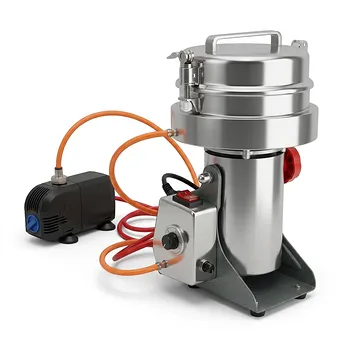
Water Cooled High Speed Grinder with Cryogenic Option for Laboratory Sample Preparation
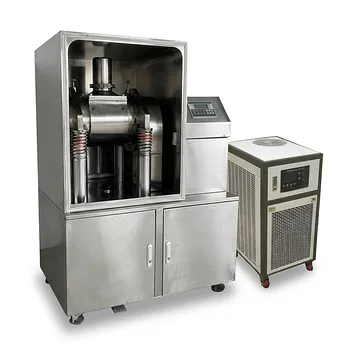
Water Cooled Cryogenic Ultra Fine Cell Wall Breaking Mill
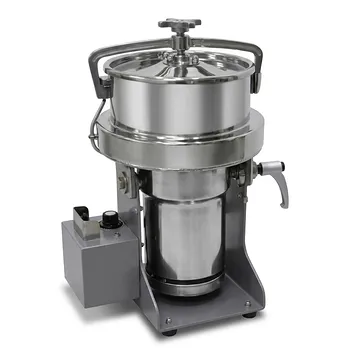
500g Capacity Water Cooled Low Temperature Grinder with Variable Speed and Safety Cover
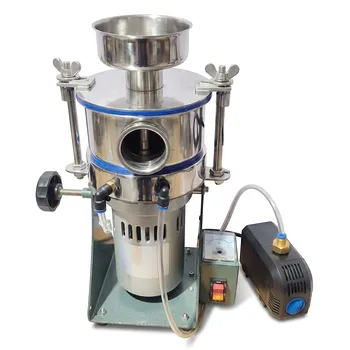
Water Cooled Airflow Ultra Fine Grinder for Low Temperature Material Processing
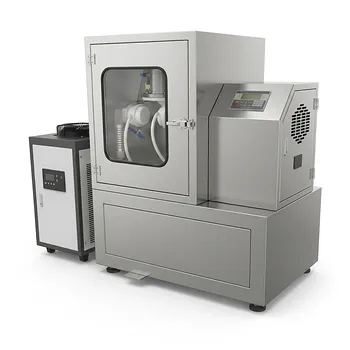
Vibratory Ultra-Low Temperature Ultrafine Grinder for Cryogenic Powder Processing
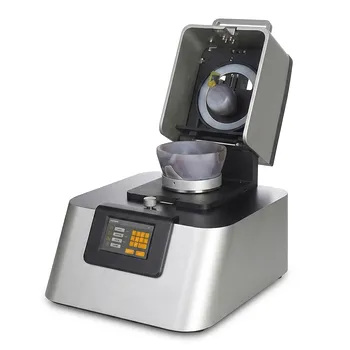
Laboratory Mortar Grinder for Sample Preparation and Cryogenic Powder Homogenization
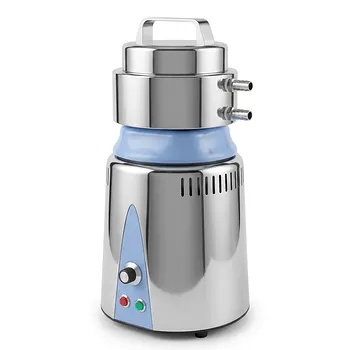
Low Temperature Laboratory Knife Mill Cryogenic Sample Grinder Material Science Powder Processing
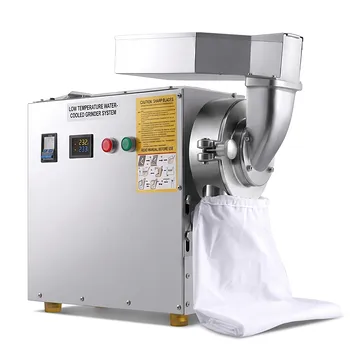
Low Temperature Water Cooled Continuous Feed Grinder Two Stage Coarse and Fine Grinding System
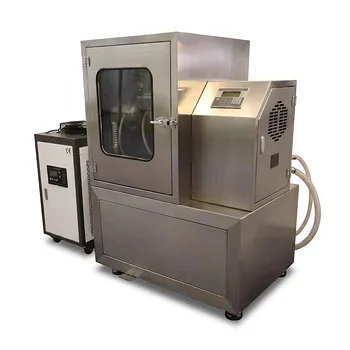
Ultra-Low Temperature Vibratory Mill for Ultrafine Grinding
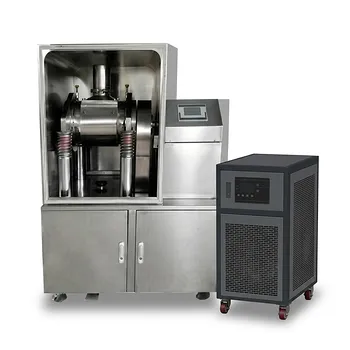
Ultra-low Temperature Vibratory Mill Ultrafine Grinder