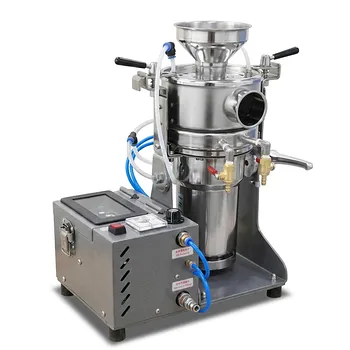
What is the function of liquid nitrogen cryogenic grinding in the initial preparation of PHBH polymer powder? Key Roles
Updated 4 months ago
Liquid nitrogen cryogenic grinding transforms PHBH particles into a brittle state to enable efficient mechanical fracturing. This process serves two primary functions: inducing cold embrittlement to facilitate crushing into coarse powder and dissipating mechanical heat to prevent polymer melting or thermal degradation. It ensures the material is preconditioned for subsequent fine micronization without altering its fundamental chemical profile.
Core Takeaway: Cryogenic grinding is a critical pretreatment step for PHBH that utilizes ultra-low temperatures to convert ductile polymers into brittle solids. This allows for high-efficiency powder production while safeguarding the material's physical and chemical integrity against the heat generated by mechanical friction.
Inducing Cold Embrittlement for Mechanical Fracturing
Overcoming Ductility in PHBH
PHBH (Polyhydroxyalkanoate) polymers are often ductile or resilient at room temperature, making them difficult to grind using standard mechanical methods. Liquid nitrogen lowers the material's temperature below its embrittlement point, causing it to lose its flexibility.
Enhancing Crushing Efficiency
Once the PHBH has reached a state of cold brittleness, it behaves more like glass than plastic. This transition allows high-intensity mechanical impact forces to easily shatter the bulk material into a coarse powder, significantly reducing the energy required for initial size reduction.
Thermal Management and Structural Preservation
Preventing Frictional Melting
The mechanical action of grinding generates substantial frictional heat, which can quickly reach the melting point of sensitive polymers. Liquid nitrogen acts as a continuous cooling medium, absorbing this heat and ensuring the PHBH remains in a solid, brittle state throughout the process.
Preserving Chemical and Physical Integrity
By maintaining ultra-low temperatures, cryogenic grinding prevents thermal degradation and oxidative reactions that can occur when polymers are overheated. This preservation is vital for ensuring the resulting powder retains the original chemical structure and surface properties of the polymer.
Supporting High-Precision Analysis
Maintaining the polymer at extremely low temperatures (such as 77 K) inhibits the quenching of mechanical radicals produced during backbone cleavage. This stability is essential for accurate downstream characterization, such as identifying radical species via Electron Paramagnetic Resonance (ESR) spectroscopy.
Preparing for Downstream Processing
Facilitating Fine Micronization
The coarse powder produced during the cryogenic stage serves as the ideal feedstock for subsequent fine micronization. This staged approach allows for more uniform particle size distribution and easier handling in the final stages of powder preparation.
Optimizing Material Dispersion
In applications involving composite materials, cryogenic pretreatment helps achieve a highly uniform dispersion of additives or drug crystals within the polymer matrix. This uniformity reduces diffusion distances and enhances dissolution kinetics, which can shorten the time required for thermal analysis like Differential Scanning Calorimetry (DSC).
Understanding the Trade-offs
Operational Complexity and Cost
Implementing a cryogenic grinding system requires a specialized infrastructure to handle, store, and circulate liquid nitrogen. The continuous consumption of nitrogen and the need for insulated equipment result in higher operational costs compared to room-temperature grinding.
Moisture and Condensation Risks
The ultra-low temperatures involved can cause atmospheric moisture to condense and freeze on the equipment or the polymer powder. If not strictly managed in a dry or inert environment, this moisture can contaminate the PHBH powder or lead to clumping during storage.
How to Apply This to Your Project
Recommendations for Implementation
- If your primary focus is Analytical Integrity: Prioritize cryogenic grinding to prevent the quenching of mechanical radicals and ensure the chemical structure remains unchanged for ESR or DSC testing.
- If your primary focus is Processing Efficiency: Use liquid nitrogen to induce brittleness in ductile PHBH grades, allowing for faster reduction to coarse powder with less mechanical wear on equipment.
- If your primary focus is Composite Development: Utilize cryogenic grinding to ensure uniform dispersion of secondary phases, which improves the dissolution and kinetic properties of the final composite.
By strategically utilizing liquid nitrogen, you can bypass the inherent limitations of polymer ductility and thermal sensitivity to produce high-quality PHBH powder.
Summary Table:
| Key Function | Primary Mechanism | Major Benefit |
|---|---|---|
| Cold Embrittlement | Lowers temp below embrittlement point | Transforms ductile PHBH into easy-to-shatter brittle solid |
| Thermal Management | Absorbs frictional heat with $LN_2$ | Prevents polymer melting, thermal degradation, and oxidation |
| Structural Preservation | Maintains ultra-low temperatures (77 K) | Preserves chemical integrity and stabilizes mechanical radicals |
| Process Optimization | Staged size reduction | Produces uniform coarse powder ready for fine micronization |
Elevate Your Material Research with Precision Powder Solutions
Achieving the perfect PHBH powder requires more than just cooling—it requires professional-grade equipment designed for material integrity. At [Brand Name], we provide complete laboratory sample preparation solutions for material science, specializing in high-performance powder processing and compaction.
Whether you are performing initial size reduction or advanced structural analysis, our extensive equipment line supports your entire workflow:
- Grinding & Milling: Liquid nitrogen cryogenic grinders, planetary ball mills, jet mills, and rotor mills for achieving precise micronization.
- Crushing & Sieve Analysis: Heavy-duty jaw/roll crushers and vibratory/air-jet sieve shakers for consistent particle distribution.
- Advanced Compaction: A full spectrum of hydraulic presses, including Cold/Warm Isostatic Presses (CIP/WIP), vacuum hot presses, and XRF pellet presses.
- Mixing: High-efficiency powder and defoaming mixers for uniform composite development.
Ready to optimize your lab's efficiency and sample quality?
Contact our technical experts today to find the ideal solution for your specific polymer processing needs!
References
- Alberto Giubilini, Paolo Minetola. High‐Pressure Homogenization: An Industrially Scalable Method for Producing PHBH Powders for Selective Laser Sintering. DOI: 10.1002/admt.202500049
Mentioned Products
- Liquid Nitrogen Cryogenic Grinder for Plastic and Heat-Sensitive Materials
- Small Liquid Nitrogen Cryogenic Grinder for Ultrafine Grinding of Heat-Sensitive Materials in Laboratories
- Cryogenic Liquid Nitrogen Grinder for DNA Analysis and Polymer Pulverization with Automatic Cooling and Electromagnetic Impact Technology
- Cryogenic Liquid Nitrogen Grinder for Ultrafine Heat-Sensitive Powder Processing
- Small Liquid Nitrogen Cryogenic Grinder with Vibratory Feeder for Laboratory Sample Preparation
People Also Ask
- Why is a liquid nitrogen cryogenic grinder required before DSC? Ensure Accurate Thermal Analysis & Sample Integrity.
- Why is a liquid nitrogen cryogenic grinder necessary for plastic pre-processing? Achieve Precise Co-Pyrolysis Results
- What role does liquid nitrogen cryogenic grinding play in the modification of CNTs? Optimize Nanomaterial Processing
- Why is a laboratory-grade liquid nitrogen cryogenic grinder essential for processing drug-loaded polymer nanofiber mats?
- What is the role of a liquid nitrogen cryogenic grinder in drug-polymer mixing? Achieve Superior Sample Homogeneity

Tech Team · PowderPreparation
Last updated on Jun 03, 2026
Related Products
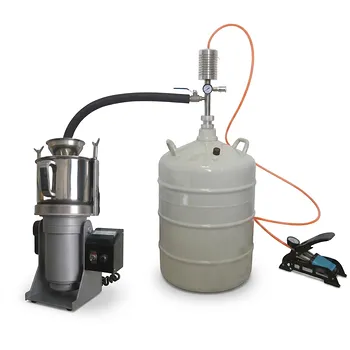
Liquid Nitrogen Cryogenic Grinder for Plastic and Heat-Sensitive Materials
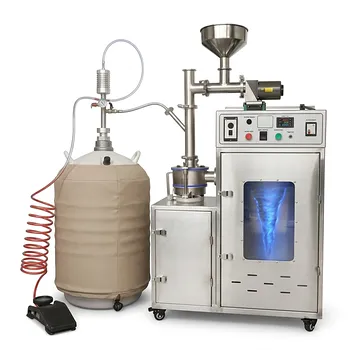
Small Liquid Nitrogen Cryogenic Grinder for Ultrafine Grinding of Heat-Sensitive Materials in Laboratories
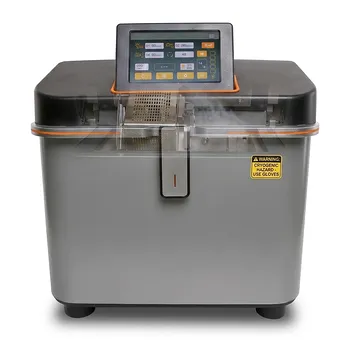
Cryogenic Liquid Nitrogen Grinder for DNA Analysis and Polymer Pulverization with Automatic Cooling and Electromagnetic Impact Technology
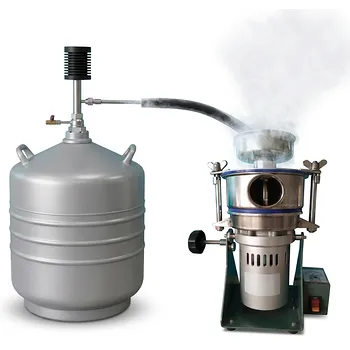
Cryogenic Liquid Nitrogen Grinder for Ultrafine Heat-Sensitive Powder Processing
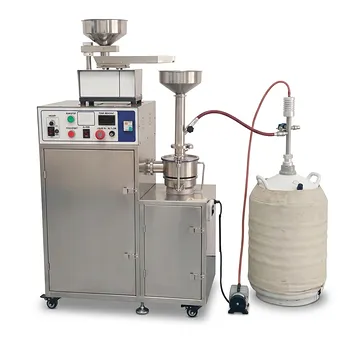
Small Liquid Nitrogen Cryogenic Grinder with Vibratory Feeder for Laboratory Sample Preparation
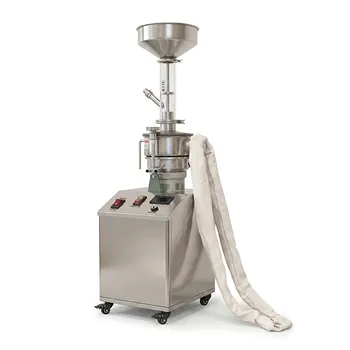
Small Liquid Nitrogen Cryogenic Grinder for Plastic and Heat-Sensitive Material Sample Preparation
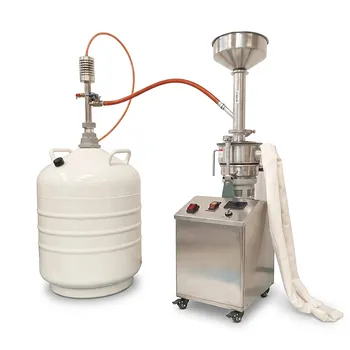
Laboratory Liquid Nitrogen Cryogenic Grinder for Polymer and Elastomer Materials
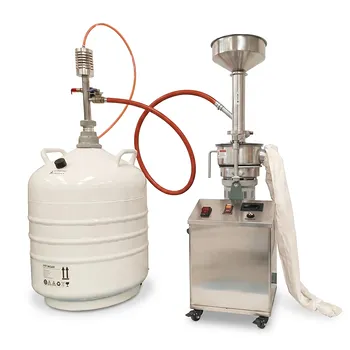
Laboratory Liquid Nitrogen Cryogenic Grinder Polymer Sample Preparation Pulverizer
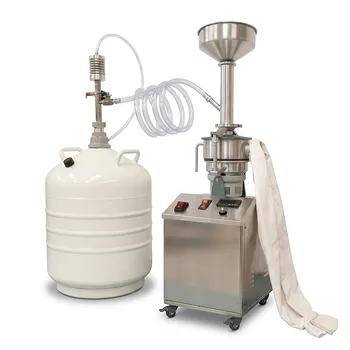
Laboratory Cryogenic Grinder Liquid Nitrogen Low Temperature Ultrafine Grinding
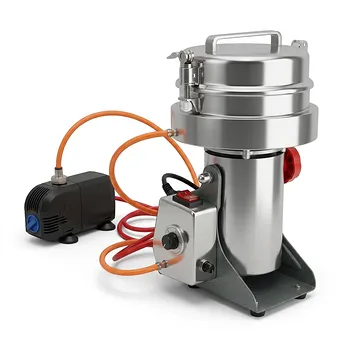
Water Cooled High Speed Grinder with Cryogenic Option for Laboratory Sample Preparation
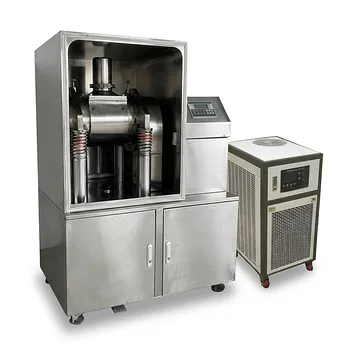
Water Cooled Cryogenic Ultra Fine Cell Wall Breaking Mill
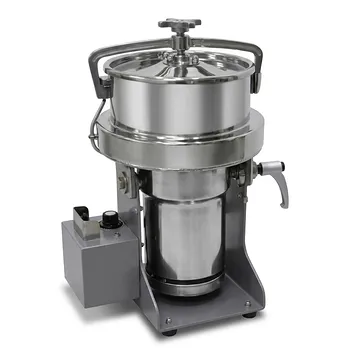
500g Capacity Water Cooled Low Temperature Grinder with Variable Speed and Safety Cover
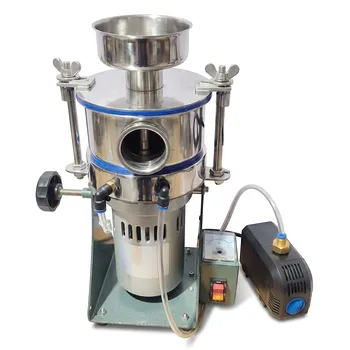
Water Cooled Airflow Ultra Fine Grinder for Low Temperature Material Processing
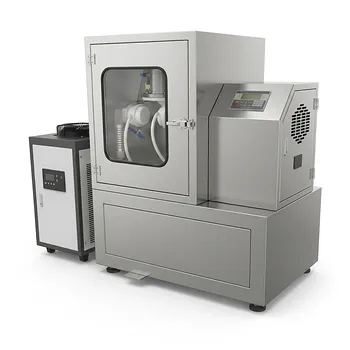
Vibratory Ultra-Low Temperature Ultrafine Grinder for Cryogenic Powder Processing
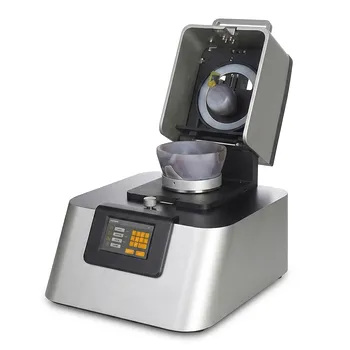
Laboratory Mortar Grinder for Sample Preparation and Cryogenic Powder Homogenization
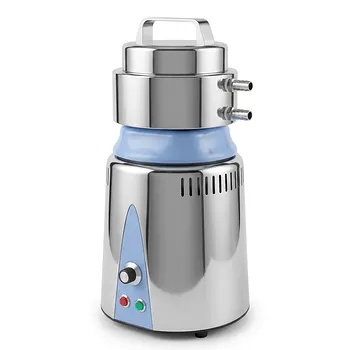
Low Temperature Laboratory Knife Mill Cryogenic Sample Grinder Material Science Powder Processing
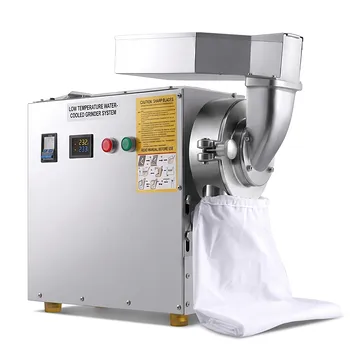
Low Temperature Water Cooled Continuous Feed Grinder Two Stage Coarse and Fine Grinding System
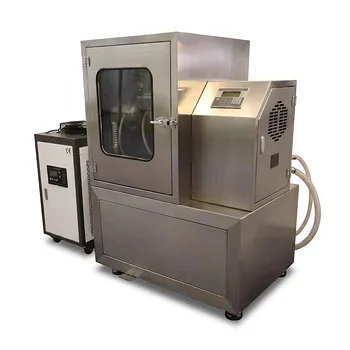
Ultra-Low Temperature Vibratory Mill for Ultrafine Grinding
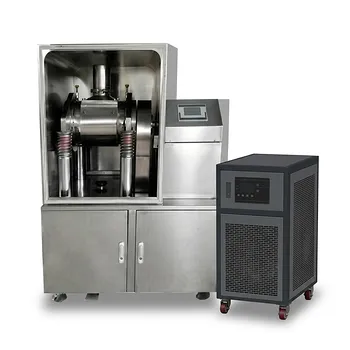
Ultra-low Temperature Vibratory Mill Ultrafine Grinder