How does cryogenic milling affect the dispersion and structural integrity of graphene in polymer nanocomposites? Guide.
Updated 5 months ago
Cryogenic milling enhances graphene dispersion by transitioning polymers into a brittle state for cleaner mechanical fracture, but it can compromise structural integrity through lattice damage if overextended.
Cryogenic milling, or cryomilling, utilizes liquid nitrogen to cool high-viscoelasticity materials below their brittle temperature. This process allows for the production of ultrafine powders with superior dispersion while avoiding the heat-induced degradation common in ambient grinding. While physically effective, the process is limited by a lack of chemical reactivity and the potential for structural defects in the graphene sheets.
Core Takeaway: Cryogenic milling is a premier physical modification technique for achieving uniform graphene dispersion and micron-level particle sizes without thermal degradation. However, it is a purely mechanical process that risks damaging the graphene lattice and does not facilitate the chemical bonding often required for high-performance nanocomposites.
Mechanical Mechanisms of Cryogenic Milling
The Transition to a Brittle State
The primary advantage of cryomilling is its ability to suppress molecular chain mobility in polymers and dislocation motion in materials. By using liquid nitrogen, materials like rubber or fluoroplastics are cooled until they reach a pseudo-brittle state.
This state ensures that when mechanical force is applied, the particles shatter cleanly upon impact. This avoids the "smearing" or flattening that typically occurs during ambient grinding of ductile polymers.
Achieving Ultrafine Dispersion
Because the material fractures rather than deforms, the process achieves a log-normal particle size distribution. This results in powders as fine as 2 microns, which significantly improves the surface area available for graphene interaction.
The low-temperature environment also prevents material degradation caused by grinding heat. This preservation of the polymer's inherent properties leads to a nanocomposite with more predictable physical and mechanical characteristics.
Impact on Graphene Structural Integrity
The Risk of Lattice Damage
While cryomilling is an effective physical modifier, it is a high-energy process. Prolonged milling can cause physical defects in the graphene, effectively damaging the graphite structure of the sheets.
This structural degradation can diminish the electrical and mechanical benefits that graphene is intended to provide to the polymer matrix. Operators must find a balance between the time required for dispersion and the preservation of the crystalline lattice.
Limitations in Interfacial Activity
Cryogenic milling is strictly a physical modification technique. It does not enhance the interfacial reaction activity between the graphene flakes and the polymer matrix.
Without chemical modification, the bond between the filler and the matrix remains mechanical. For applications where high-strength chemical bonding is necessary, cryomilling alone is often insufficient.
Understanding the Trade-offs and Pitfalls
Energy Efficiency vs. Structural Health
One of the most significant trade-offs in cryomilling is the balance of energy consumption and material health. While cryomilling reduces the energy required to grind tough polymers, the mechanical stress remains high for the graphene itself.
Physical Dispersion vs. Chemical Functionalization
A common pitfall is assuming that superior dispersion via cryomilling equates to superior interfacial adhesion. If the composite requires covalent bonds to transfer stress effectively, physical milling cannot replace chemical processes.
Methods such as chemical oxidation or silanization are often necessary to introduce functional groups. These groups create the chemical "bridge" between the graphene and the polymer that cryomilling cannot provide.
How to Apply This to Your Project
When integrating graphene into polymer nanocomposites, your processing choice should align with the specific performance requirements of the final product.
- If your primary focus is achieving maximum dispersion with minimal heat: Use cryogenic milling to reach the micron level while preventing thermal degradation of the polymer matrix.
- If your primary focus is preserving the pristine graphite structure: Limit the duration of the cryomilling cycle to avoid mechanical fracturing of the graphene sheets.
- If your primary focus is high-strength chemical bonding: Supplement or replace cryomilling with chemical functionalization techniques like silanization to ensure robust interfacial activity.
By carefully balancing mechanical shattering with structural preservation, engineers can leverage cryogenic milling to create highly uniform, high-performance graphene nanocomposites.
Summary Table:
| Feature | Effect of Cryogenic Milling | Material Impact |
|---|---|---|
| Dispersion | Transition to brittle state allows for clean fracture | Achieves ultrafine powders (down to 2 microns) |
| Structural Integrity | High-energy mechanical stress | Risk of lattice damage and graphite structure defects |
| Thermal Stability | Liquid nitrogen cooling suppresses heat | Prevents polymer degradation and "smearing" |
| Interfacial Activity | Purely physical modification | No chemical bonding; may require secondary functionalization |
Precision Solutions for Your Advanced Material Research
Elevate your nanocomposite development with [Brand Name]. We provide complete laboratory sample preparation solutions tailored for material science, specializing in high-performance powder processing and compaction equipment.
Whether you are aiming to achieve superior graphene dispersion using our liquid nitrogen cryogenic grinders and planetary ball mills, or requiring precise material density through our full spectrum of hydraulic presses—including Cold/Warm Isostatic Presses (CIP/WIP), vacuum hot presses, and XRF pellet presses—we have the expertise to support your workflow.
Don't compromise on structural integrity. Contact our technical team today to discover how our crushers, sieve shakers, and advanced mixers can optimize your lab's efficiency and material performance.
References
- Dae Kim, Soo‐Jin Park. Study on the Effect of Silanization and Improvement in the Tensile Behavior of Graphene-Chitosan-Composite. DOI: 10.3390/polym7030527
Mentioned Products
- Small Liquid Nitrogen Cryogenic Grinder for Ultrafine Grinding of Heat-Sensitive Materials in Laboratories
- Cryogenic Liquid Nitrogen Grinder for DNA Analysis and Polymer Pulverization with Automatic Cooling and Electromagnetic Impact Technology
- Cryogenic Liquid Nitrogen Grinder for Ultrafine Heat-Sensitive Powder Processing
- Laboratory Cryogenic Grinder Liquid Nitrogen Low Temperature Ultrafine Grinding
- Liquid Nitrogen Cryogenic Grinder for Plastic and Heat-Sensitive Materials
People Also Ask
- What are the advantages of using liquid nitrogen Cryomilling? Achieve ultra-fine grains and high chemical purity.
- How does liquid nitrogen as a processing medium affect copper powder beyond cooling? Impacts on Purity & Sintering
- What is the function of liquid nitrogen cryogenic grinding in the initial preparation of PHBH polymer powder? Key Roles
- Why is liquid nitrogen cryogenic grinding used for coal and microbial experiments? Preserve Sample Integrity
- Why use liquid nitrogen cryogenic grinding for polymer degradation? Preserve sample integrity & prevent thermal damage

Tech Team · PowderPreparation
Last updated on May 14, 2026
Related Products
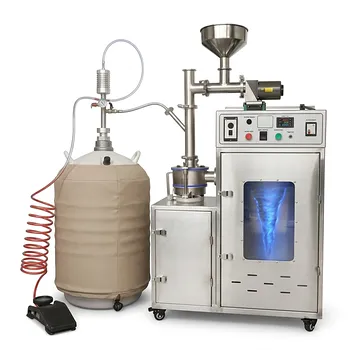
Small Liquid Nitrogen Cryogenic Grinder for Ultrafine Grinding of Heat-Sensitive Materials in Laboratories
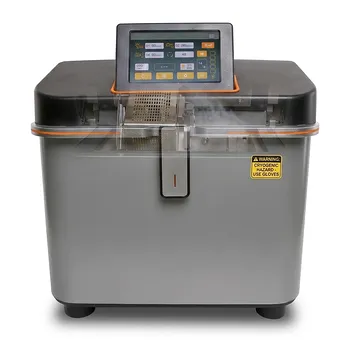
Cryogenic Liquid Nitrogen Grinder for DNA Analysis and Polymer Pulverization with Automatic Cooling and Electromagnetic Impact Technology
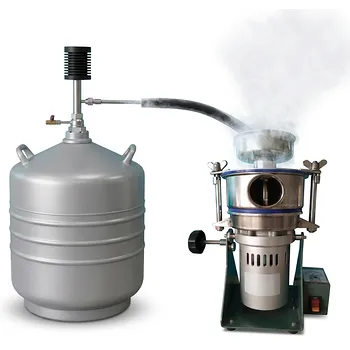
Cryogenic Liquid Nitrogen Grinder for Ultrafine Heat-Sensitive Powder Processing
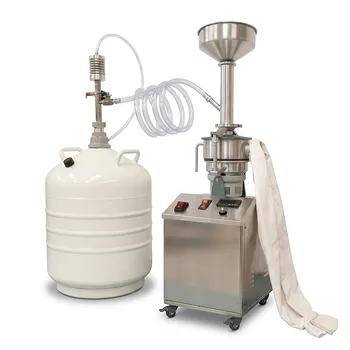
Laboratory Cryogenic Grinder Liquid Nitrogen Low Temperature Ultrafine Grinding
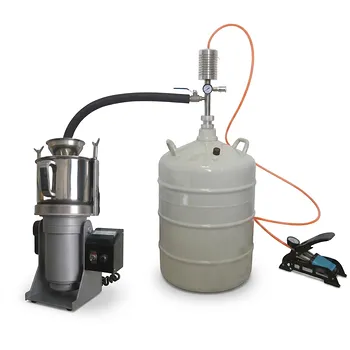
Liquid Nitrogen Cryogenic Grinder for Plastic and Heat-Sensitive Materials
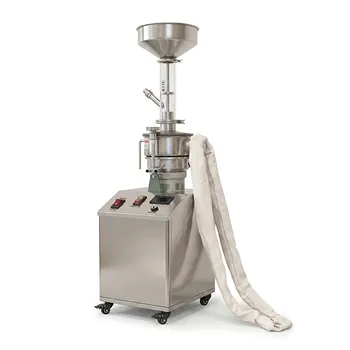
Small Liquid Nitrogen Cryogenic Grinder for Plastic and Heat-Sensitive Material Sample Preparation
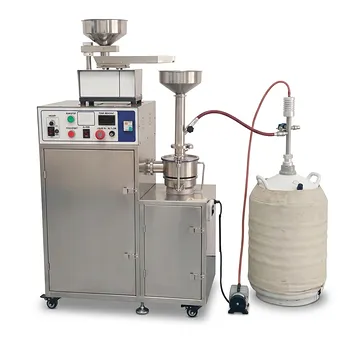
Small Liquid Nitrogen Cryogenic Grinder with Vibratory Feeder for Laboratory Sample Preparation
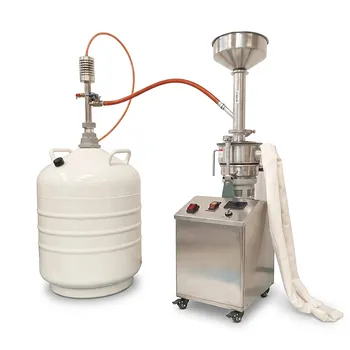
Laboratory Liquid Nitrogen Cryogenic Grinder for Polymer and Elastomer Materials
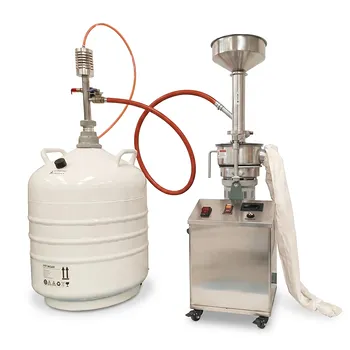
Laboratory Liquid Nitrogen Cryogenic Grinder Polymer Sample Preparation Pulverizer
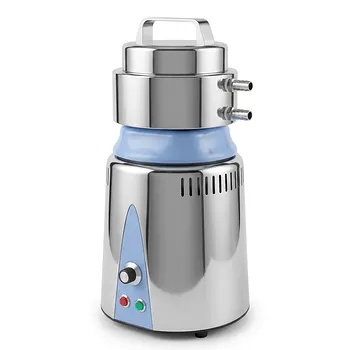
Low Temperature Laboratory Knife Mill Cryogenic Sample Grinder Material Science Powder Processing
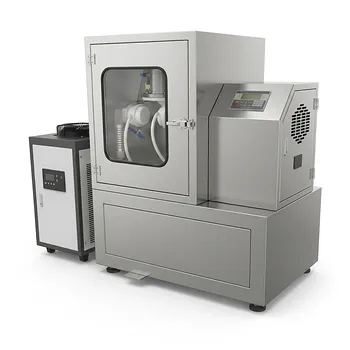
Vibratory Ultra-Low Temperature Ultrafine Grinder for Cryogenic Powder Processing
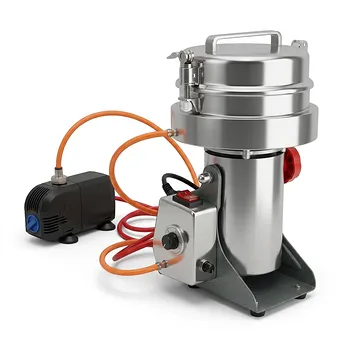
Water Cooled High Speed Grinder with Cryogenic Option for Laboratory Sample Preparation
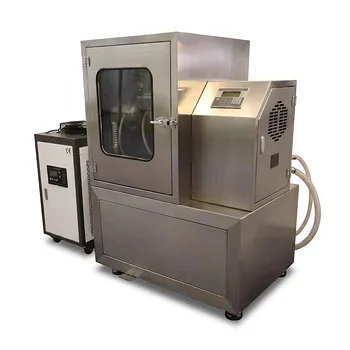
Ultra-Low Temperature Vibratory Mill for Ultrafine Grinding
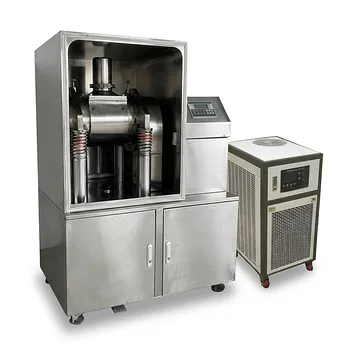
Water Cooled Cryogenic Ultra Fine Cell Wall Breaking Mill
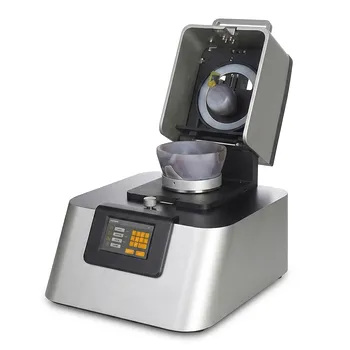
Laboratory Mortar Grinder for Sample Preparation and Cryogenic Powder Homogenization
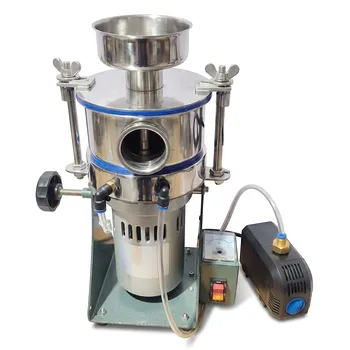
Water Cooled Airflow Ultra Fine Grinder for Low Temperature Material Processing
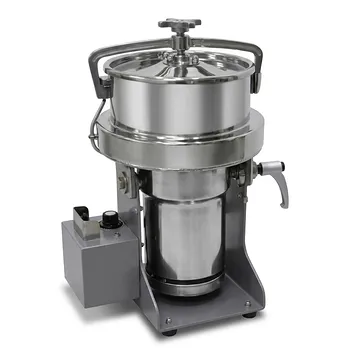
500g Capacity Water Cooled Low Temperature Grinder with Variable Speed and Safety Cover
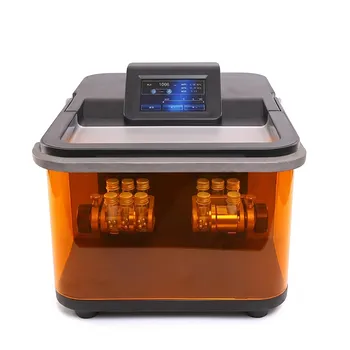
High Throughput Micro Ball Mill for Cryogenic Grinding and Laboratory Cell Disruption
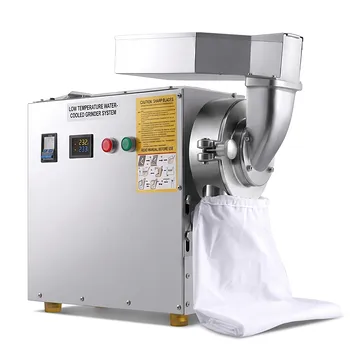
Low Temperature Water Cooled Continuous Feed Grinder Two Stage Coarse and Fine Grinding System