How do horizontal oscillation and stainless steel media work in cryogenic ball milling of CNTs? Optimize Dispersion.
Updated 3 months ago
The synergy between high-frequency horizontal oscillation and stainless steel grinding media is the engine of cryogenic ball milling. This mechanical partnership transforms the physical state of carbon nanotubes (CNTs) by converting kinetic energy into high-energy impacts and shear forces. In the presence of liquid nitrogen, these forces effectively peel, compress, and shorten embrittled CNT bundles, turning them into the dispersed, low-entanglement structures required for high-performance composites.
Cryogenic ball milling utilizes horizontal motion to drive high-density media, creating a high-energy environment that overcomes the natural toughness of carbon nanotubes. This process relies on material embrittlement and precise mechanical energy transfer to achieve uniform structural refinement.
The Mechanics of Energy Transfer
Horizontal Oscillation as the Kinetic Driver
High-frequency horizontal oscillation creates a controlled, reciprocal motion that acts as the primary power source for the milling jar. This rapid back-and-forth movement forces the internal grinding media into a state of constant, high-speed collision.
The frequency of these oscillations directly determines the rate of energy input into the system. By adjusting this speed, operators can control the intensity of the collisions and the resulting structural changes in the material.
Stainless Steel Media as the Force Multiplier
Stainless steel is selected for grinding balls and spindles due to its high mass density and hardness. These physical properties ensure that the kinetic energy generated by the oscillation is efficiently converted into significant impact force.
During operation, the high density of the steel balls allows them to maintain momentum, providing the physical basis for breaking down grains and generating high-density dislocations. This intense energy transfer is critical for overcoming the van der Waals forces that cause CNTs to bundle together.
Structural Transformation of Carbon Nanotubes
Embrittlement via Cryogenic Conditions
Carbon nanotubes are naturally flexible and tough, making them difficult to process at room temperature. Liquid nitrogen lowers the temperature of the milling jar, reaching a point where the CNTs and any surrounding polymers become embrittled.
In this brittle state, the material loses its ability to deform plastically and instead fractures under stress. This allows the mechanical energy from the stainless steel media to be much more effective at refining the material’s dimensions.
Peeling, Shearing, and Exfoliation
As the stainless steel balls collide with the embrittled CNTs, they exert a combination of compression and shear forces. These forces act to continuously peel the tube walls and break long, entangled bundles into shorter dimensions.
This mechanical action transforms the material into a low-entanglement or even exfoliated structure. Achieving this structural change is a fundamental requirement for ensuring the CNTs can be uniformly distributed within a composite matrix.
Understanding the Trade-offs
The Risk of Impurity Introduction
While the hardness of stainless steel is necessary for energy transfer, it also presents a risk of wear-related contamination. Frequent high-energy impacts can cause microscopic shedding from the grinding balls and jar walls.
To mitigate this, the ball-to-powder ratio must be precisely managed. A higher ratio increases grinding efficiency and energy transfer but simultaneously raises the likelihood of introducing metallic impurities into the final product.
Balancing Structural Integrity and Dispersion
There is a fine line between dispersing CNT bundles and destroying the inherent properties of the nanotubes. Excessive milling time or intensity can lead to over-shortening or damage to the tube's lattice structure, which may degrade the electrical or mechanical performance of the resulting composite.
Using stainless steel media provides the high-energy collision environment needed for mechanical alloying. However, the process must be carefully timed to ensure the tubes are refined without being pulverized into amorphous carbon.
Applying This to Your Material Goals
Optimizing Your Cryogenic Milling Process
Success in cryogenic ball milling depends on aligning your equipment settings with your specific material requirements. The interaction between the oscillation and the media must be tuned to reach the desired particle size distribution.
- If your primary focus is maximizing CNT dispersion: Use a high ball-to-powder ratio (such as 30:1) and high-frequency oscillation to ensure intense shear forces that fully peel and exfoliate tube bundles.
- If your primary focus is preserving the magnetic or chemical purity of the composite: Utilize wear-resistant stainless steel chambers and moderate the milling duration to minimize the introduction of metallic wear-related impurities.
- If your primary focus is creating dense lamellar composites: Focus on a high-energy physical collision environment that promotes repeated rolling and cold welding between the CNTs and the matrix powder.
Precise control over the mechanical energy input allows for the engineered refinement of carbon nanotubes into highly functional, dispersible structures.
Summary Table:
| Component | Role in Milling | Impact on Carbon Nanotubes (CNTs) |
|---|---|---|
| Horizontal Oscillation | Kinetic Energy Driver | Provides high-frequency, reciprocal motion for collisions. |
| Stainless Steel Media | Force Multiplier | High mass/hardness converts energy into intense shear forces. |
| Liquid Nitrogen | Cooling Agent | Induces embrittlement, allowing tubes to fracture and disperse. |
| Synergistic Action | Mechanical Exfoliation | Peels and shortens bundles into uniform, low-entanglement structures. |
Optimize Your Material Research with Precision Sample Prep Solutions
Achieving the perfect dispersion of carbon nanotubes requires a balance of high-energy mechanical force and precise temperature control. At [Brand Name], we provide complete laboratory sample preparation solutions for material science, specializing in high-performance powder processing and compaction equipment.
Our extensive product lines are designed to help you achieve superior results:
- Advanced Milling: Including cryogenic grinders, planetary ball mills, jet mills, and rotor mills for fine structural refinement.
- Size Reduction & Classification: High-durability jaw/roll crushers and vibratory or air-jet sieve shakers.
- Mixing Solutions: High-efficiency powder mixers and vacuum defoaming mixers.
- Compaction Equipment: A full spectrum of hydraulic presses, including Cold/Warm Isostatic Presses (CIP/WIP), hot presses, and vacuum hot presses for high-density materials.
Whether you are developing high-performance composites or advanced nanomaterials, our technical experts are ready to assist you in selecting the right equipment to maximize your lab's efficiency.
Contact our specialists today to find your solution!
References
- Garima Mittal, Soo‐Jin Park. The Effects of Cryomilling CNTs on the Thermal and Electrical Properties of CNT/PMMA Composites. DOI: 10.3390/polym8050169
Mentioned Products
- Ultra-Low Temperature Cryogenic High-Energy Vibratory Ball Mill
- High Throughput Micro Ball Mill for Cryogenic Grinding and Laboratory Cell Disruption
- Ultra-Low Temperature Vibratory Mill for Ultrafine Grinding
- Heating Temperature Controlled High Energy Vibratory Ball Mill
- Nanoscale High Energy Vibratory Ball Mill Low Temperature
People Also Ask
- How does a high-energy vibratory ball mill improve the performance of MgH2? Optimize Hydrogen Storage Kinetics
- What is the function of a high-energy vibratory ball mill in Cu-Ta alloys? Achieve Precision Mechanical Alloying
- What is the function of high-energy ball milling in ZnO membrane slurry prep? Optimize Homogenization & Dispersion
- What is the Role of HEBM in High-Entropy H-SOFC Cathode Prep? Achieving Atomic-Level Homogenization
- What is the importance of using a high-purity argon atmosphere during the high-energy ball milling of ceramic particles?

Tech Team · PowderPreparation
Last updated on Jun 03, 2026
Related Products
Ultra-Low Temperature Cryogenic High-Energy Vibratory Ball Mill

High Throughput Micro Ball Mill for Cryogenic Grinding and Laboratory Cell Disruption
Ultra-Low Temperature Vibratory Mill for Ultrafine Grinding
Heating Temperature Controlled High Energy Vibratory Ball Mill
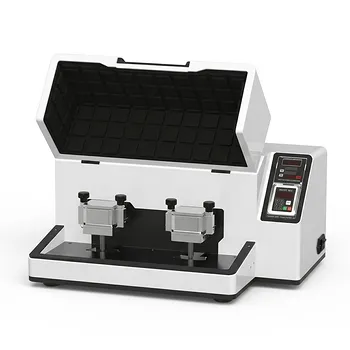
Nanoscale High Energy Vibratory Ball Mill Low Temperature
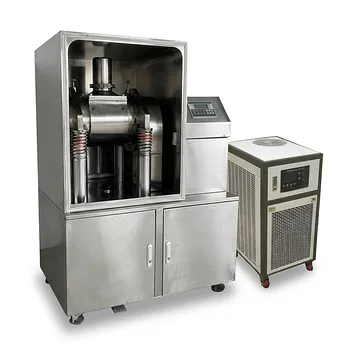
Water Cooled Cryogenic Ultra Fine Cell Wall Breaking Mill
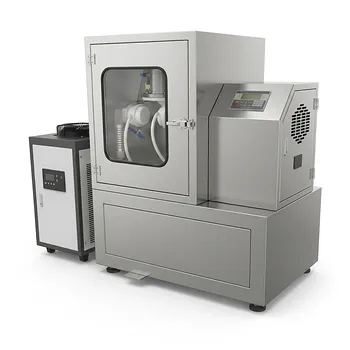
Vibratory Ultra-Low Temperature Ultrafine Grinder for Cryogenic Powder Processing
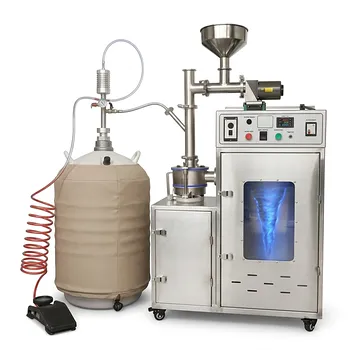
Small Liquid Nitrogen Cryogenic Grinder for Ultrafine Grinding of Heat-Sensitive Materials in Laboratories

Low Temperature Laboratory Knife Mill Cryogenic Sample Grinder Material Science Powder Processing
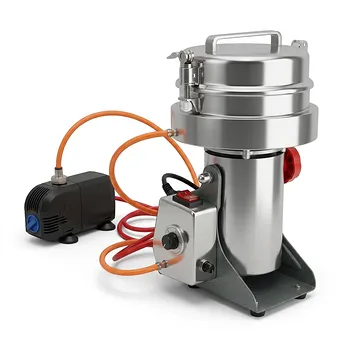
Water Cooled High Speed Grinder with Cryogenic Option for Laboratory Sample Preparation
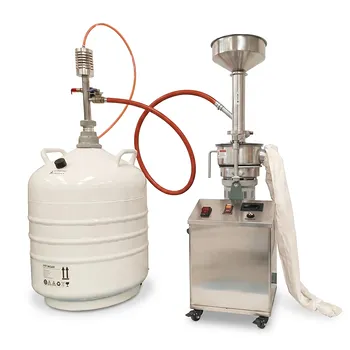
Laboratory Liquid Nitrogen Cryogenic Grinder Polymer Sample Preparation Pulverizer
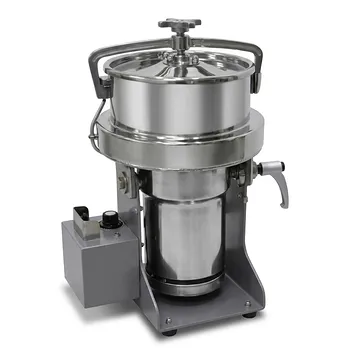
500g Capacity Water Cooled Low Temperature Grinder with Variable Speed and Safety Cover
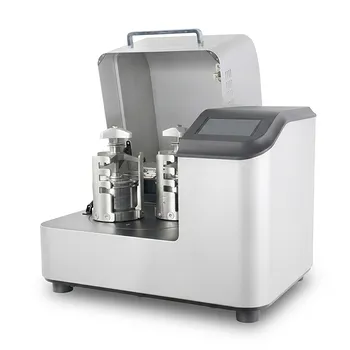
High Energy Planetary Ball Mill for Nano Scale Grinding and Mechanical Alloying
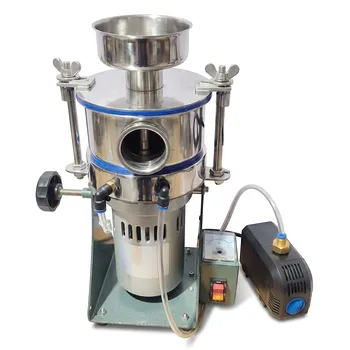
Water Cooled Airflow Ultra Fine Grinder for Low Temperature Material Processing
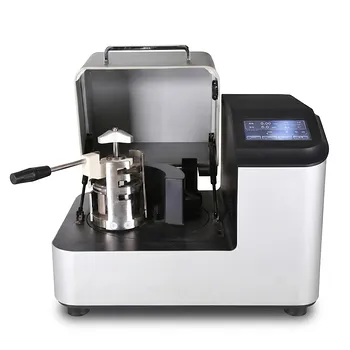
High Energy Laboratory Planetary Ball Mill for Nano Grinding and Material Science Sample Preparation
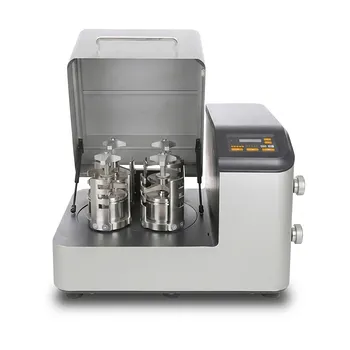
High Energy Planetary Ball Mill for Nano Scale Grinding and Colloidal Mixing in Material Science Research
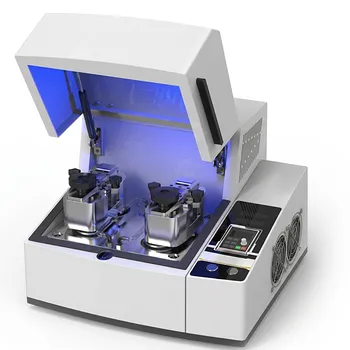
Laboratory Nano High Energy Ball Mill Ultrafine Grinding Mechanical Alloying
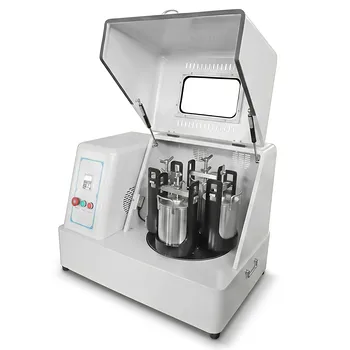
Vertical Square Planetary Ball Mill for Laboratory Sample Preparation and Nanoscale Grinding
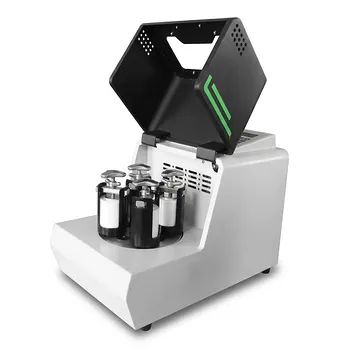
Miniature Planetary Ball Mill with Vacuum Grinding and High Efficiency for Laboratory Sample Preparation