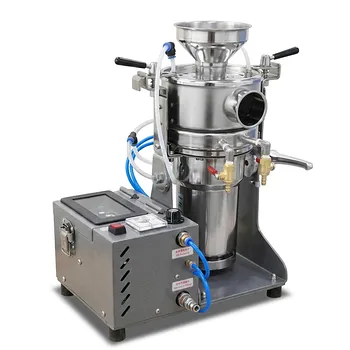
What is the role of liquid nitrogen cryogenic grinding in the preparation of microplastic reference materials?
Updated 4 months ago
Liquid nitrogen cryogenic grinding is the definitive method for producing microplastic reference materials because it embrittles polymers to allow for precise fragmentation without thermal damage. By cooling plastics below their glass transition point, this process enables the mechanical reduction of tough polymers into micron-sized particles that retain their original chemical and physical properties.
Core Takeaway: This specialized grinding technique uses ultra-low temperatures to prevent plastic melting and degradation, ensuring the resulting microplastic particles accurately represent the morphology and chemical signature of environmental debris.
Achieving Material Embrittlement through Ultra-Low Temperatures
Cooling Below the Glass Transition Point
The primary role of liquid nitrogen is to lower the temperature of polymers like PE, PET, and HDPE below their embrittlement point. At these ultra-low temperatures, plastics lose their elasticity and become highly brittle, similar to glass.
Facilitating Efficient Size Reduction
Once the material is embrittled, high-frequency impact and shear forces can easily pulverize large plastic blocks or recycled resins. This allows for the creation of particles in the micron range, typically spanning from sub-micron levels up to 1000 µm.
Maintaining Brittle States during Processing
Continuous circulation of liquid nitrogen ensures the environment remains stable throughout the grinding cycle. This prevents the plastic from "warming up" and regaining its resilience, which would otherwise stall the pulverization process.
Preservation of Chemical and Physical Integrity
Eliminating Frictional Heat Damage
Mechanical grinding inherently generates significant frictional heat. Without cryogenic cooling, this heat would cause polymer melting or thermal degradation, fundamentally altering the material's structure.
Ensuring Chemical Consistency
By suppressing thermal reactions, cryogenic grinding ensures that the resulting microplastics maintain the exact chemical characteristics of the source material. This is vital for reference materials used in sensitive analytical detection and spectroscopy.
Stabilizing Thermal Properties
The process preserves the internal thermal properties and crystallinity of the polymer. This consistency is critical for standardized experimental use, where researchers need predictable behavior from their reference samples.
Simulating Environmental Realism
Producing Irregular Morphologies
Unlike engineered plastic spheres, cryogenic grinding produces irregular fragments. These shapes more accurately simulate the "secondary microplastics" created by natural weathering and fragmentation in the environment.
Wide Particle Size Distribution
The technique allows for the preparation of suspensions with a wide size distribution. This variability is essential for researchers aiming to model how plastic debris of different sizes interacts with ecosystems.
Handling Specialized Materials
Cryogenic grinding is effective for processing metal-tagged polymer blocks and weathered field samples. It allows for the creation of traceable reference materials that behave like real-world pollutants.
Understanding the Trade-offs
Equipment and Resource Intensity
The reliance on a constant supply of liquid nitrogen increases the operational complexity of the preparation process. Specialized cryogenic grinders are required to handle the extreme temperatures safely and effectively.
Risk of Atmospheric Contamination
Because the process involves ultra-low temperatures, moisture from the air can easily condense on the sample if the system is not properly sealed. This requires careful handling to ensure the purity of the final powder.
Energy and Material Throughput
While highly effective for quality, the process can be slower than room-temperature grinding for certain soft materials. The balance between energy consumption and the desired particle fineness must be carefully managed.
How to Apply This to Your Project
Selecting a Preparation Path
Depending on your research goals, the application of cryogenic grinding should be tailored to the specific polymer and desired outcome.
- If your primary focus is analytical validation: Use cryogenic grinding to ensure the chemical fingerprint of your reference material perfectly matches the source resin.
- If your primary focus is toxicological modeling: Prioritize this method to create irregular, "natural-looking" fragments that better simulate environmental exposure than smooth spheres.
- If your primary focus is high-volume production: Evaluate the liquid nitrogen consumption rates to balance the cost of ultra-fine particle production against your project budget.
Cryogenic grinding remains the gold standard for producing microplastic reference materials that are both chemically accurate and physically representative of environmental pollutants.
Summary Table:
| Key Feature | Role in Microplastic Preparation | Benefit to Research |
|---|---|---|
| Cryogenic Embrittlement | Cools polymers below glass transition point | Allows precise fragmentation of tough plastics |
| Thermal Protection | Eliminates frictional heat during processing | Prevents melting and maintains chemical signatures |
| Morphology Control | Produces irregular, non-spherical particles | Simulates real-world environmental weathering |
| High-Fineness Output | Enables micron-level size reduction | Provides accurate reference for analytical detection |
Precision Sample Preparation for Advanced Material Science
Achieving accurate research results starts with the integrity of your samples. At [Your Brand Name], we provide complete laboratory sample preparation solutions tailored for the most demanding applications in material science.
We specialize in high-performance powder processing and compaction equipment, including our industry-leading liquid nitrogen cryogenic grinders specifically designed to handle tough polymers without thermal degradation. Our comprehensive product line includes:
- Grinding & Milling: Planetary ball mills, jet mills, rotor mills, and disc mills.
- Size Reduction & Analysis: Jaw/roll crushers and vibratory/air-jet sieve shakers with precision test sieves.
- Mixing Solutions: Powder mixers and advanced defoaming mixers.
- Hydraulic Presses: A full spectrum including Cold/Warm Isostatic Presses (CIP/WIP), XRF pellet presses, and vacuum hot presses.
Whether you are a researcher developing microplastic standards or a distributor looking for reliable OEM/ODM support, we deliver the reliability and precision your projects deserve.
Ready to elevate your lab's capabilities? Contact us today to discuss your requirements!
References
- Daneshvar Hoda, Bettie Cormier. Are we really producing environmentally relevant reference materials for microplastic studies?. DOI: 10.5281/zenodo.18387689
Mentioned Products
- Liquid Nitrogen Cryogenic Grinder for Plastic and Heat-Sensitive Materials
- Small Liquid Nitrogen Cryogenic Grinder for Ultrafine Grinding of Heat-Sensitive Materials in Laboratories
- Cryogenic Liquid Nitrogen Grinder for DNA Analysis and Polymer Pulverization with Automatic Cooling and Electromagnetic Impact Technology
- Cryogenic Liquid Nitrogen Grinder for Ultrafine Heat-Sensitive Powder Processing
- Small Liquid Nitrogen Cryogenic Grinder with Vibratory Feeder for Laboratory Sample Preparation
People Also Ask
- Why is a liquid nitrogen cryogenic grinder required before DSC? Ensure Accurate Thermal Analysis & Sample Integrity.
- Why is a liquid nitrogen cryogenic grinder necessary for plastic pre-processing? Achieve Precise Co-Pyrolysis Results
- What role does liquid nitrogen cryogenic grinding play in the modification of CNTs? Optimize Nanomaterial Processing
- Why is a laboratory-grade liquid nitrogen cryogenic grinder essential for processing drug-loaded polymer nanofiber mats?
- What is the role of a liquid nitrogen cryogenic grinder in drug-polymer mixing? Achieve Superior Sample Homogeneity

Tech Team · PowderPreparation
Last updated on Jun 03, 2026
Related Products
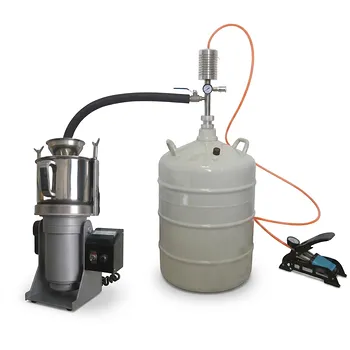
Liquid Nitrogen Cryogenic Grinder for Plastic and Heat-Sensitive Materials
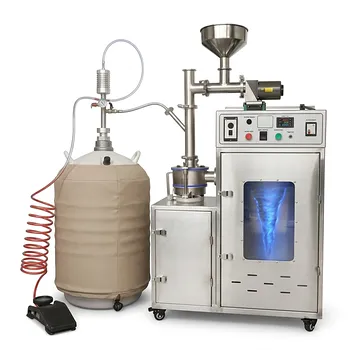
Small Liquid Nitrogen Cryogenic Grinder for Ultrafine Grinding of Heat-Sensitive Materials in Laboratories
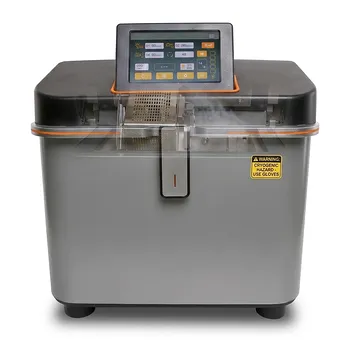
Cryogenic Liquid Nitrogen Grinder for DNA Analysis and Polymer Pulverization with Automatic Cooling and Electromagnetic Impact Technology
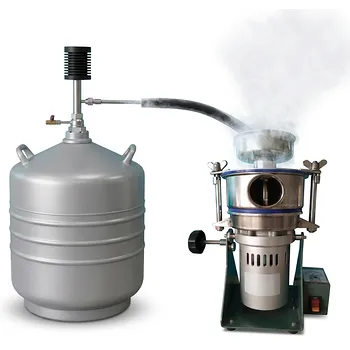
Cryogenic Liquid Nitrogen Grinder for Ultrafine Heat-Sensitive Powder Processing
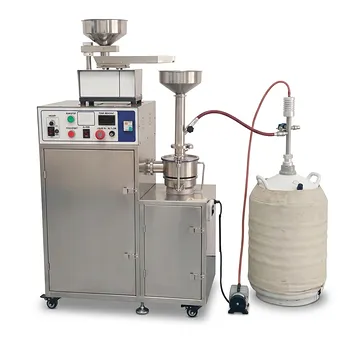
Small Liquid Nitrogen Cryogenic Grinder with Vibratory Feeder for Laboratory Sample Preparation
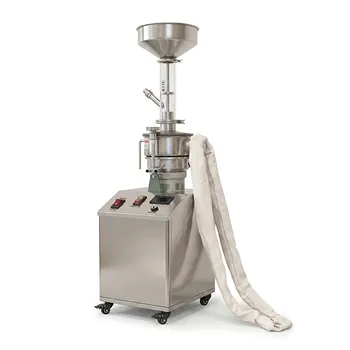
Small Liquid Nitrogen Cryogenic Grinder for Plastic and Heat-Sensitive Material Sample Preparation
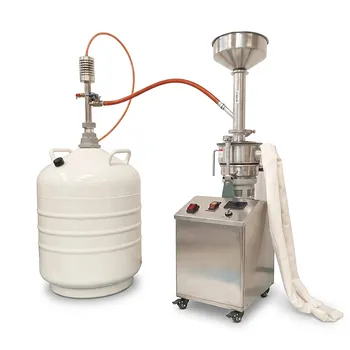
Laboratory Liquid Nitrogen Cryogenic Grinder for Polymer and Elastomer Materials
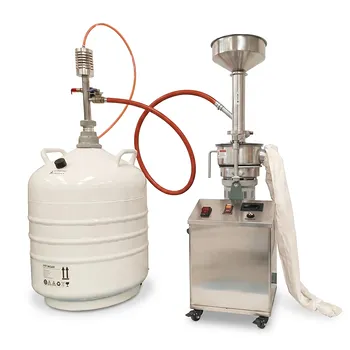
Laboratory Liquid Nitrogen Cryogenic Grinder Polymer Sample Preparation Pulverizer
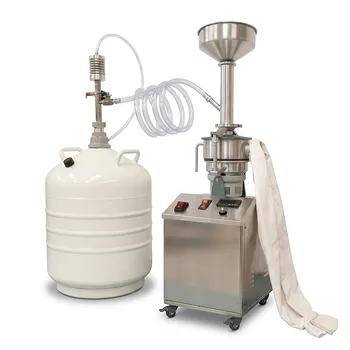
Laboratory Cryogenic Grinder Liquid Nitrogen Low Temperature Ultrafine Grinding
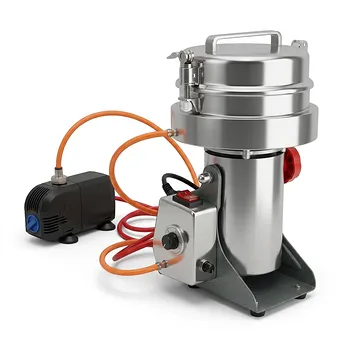
Water Cooled High Speed Grinder with Cryogenic Option for Laboratory Sample Preparation
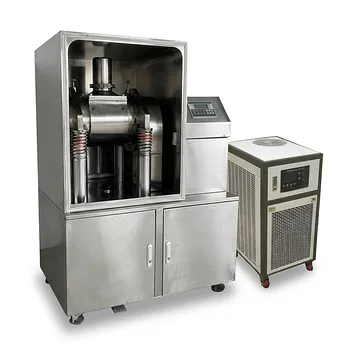
Water Cooled Cryogenic Ultra Fine Cell Wall Breaking Mill
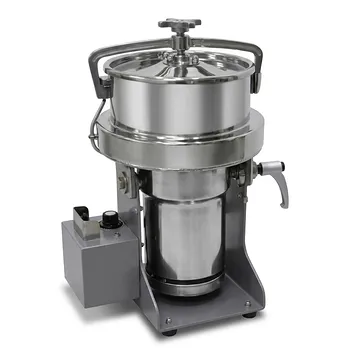
500g Capacity Water Cooled Low Temperature Grinder with Variable Speed and Safety Cover
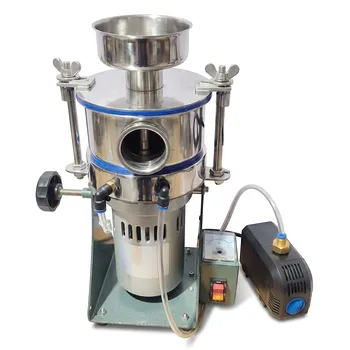
Water Cooled Airflow Ultra Fine Grinder for Low Temperature Material Processing
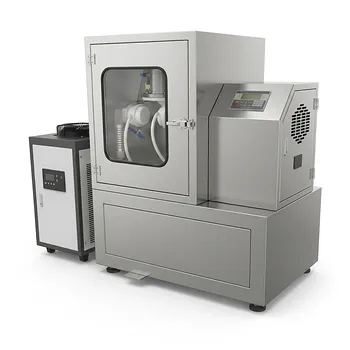
Vibratory Ultra-Low Temperature Ultrafine Grinder for Cryogenic Powder Processing
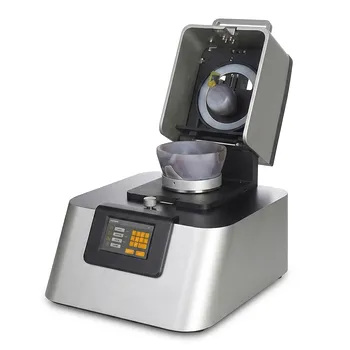
Laboratory Mortar Grinder for Sample Preparation and Cryogenic Powder Homogenization
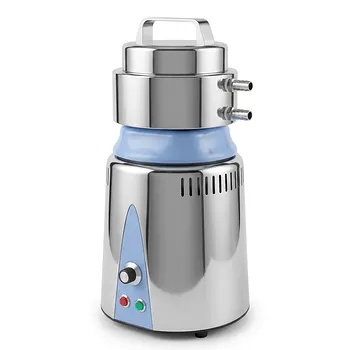
Low Temperature Laboratory Knife Mill Cryogenic Sample Grinder Material Science Powder Processing
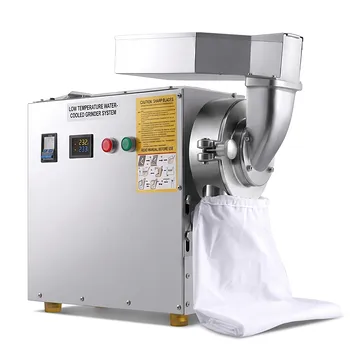
Low Temperature Water Cooled Continuous Feed Grinder Two Stage Coarse and Fine Grinding System
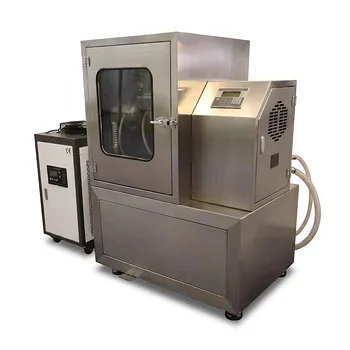
Ultra-Low Temperature Vibratory Mill for Ultrafine Grinding
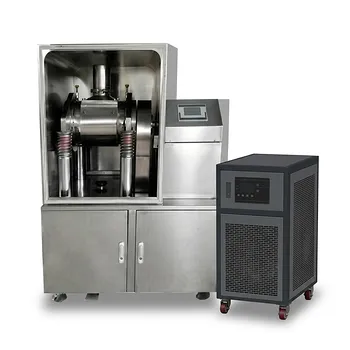
Ultra-low Temperature Vibratory Mill Ultrafine Grinder