What is the role of a liquid nitrogen cryogenic grinder in biomass pretreatment? Optimize Your Activated Carbon Quality
Updated 5 months ago
The liquid nitrogen cryogenic grinder acts as a critical preservation and refining tool in biomass pretreatment. By utilizing ultra-low temperatures to induce thermomechanical embrittlement, it allows tough or fibrous biomass to be pulverized into uniform, ultra-fine powders. This process specifically prevents the frictional heat generated during conventional grinding from degrading organic components, ensuring the raw material’s chemical integrity remains intact for subsequent carbonization and activation.
Core Takeaway: Cryogenic grinding transforms biomass into a brittle state to achieve high-surface-area powders without thermal damage. This precision ensures that the resulting activated carbon possesses consistent chemical properties and optimized pore structures.
The Mechanism of Thermomechanical Embrittlement
Inducing Cold Brittleness
Biomass materials, such as spent grains or wood, often possess high elasticity or fibrous structures that resist standard grinding. Liquid nitrogen cools these materials to approximately -196°C, pushing them below their ductile-to-brittle transition temperature (DBTT) or glass transition temperature (Tg).
High-Frequency Pulverization
Once the material is rendered brittle, it can no longer deform plastically under stress. Instead, it fractures easily when subjected to high-frequency impact or vibration, allowing it to be reduced to micron-level particles in a very short time.
Achieving Uniform Particle Distribution
This method produces a powder with a highly uniform particle size distribution. Consistency at this stage is vital because it ensures that heat and activating agents penetrate the material evenly during the later stages of production.
Preservation of Chemical and Volatile Integrity
Eliminating Frictional Heat
Conventional grinding generates significant mechanical heat, which can lead to the thermal denaturation of sensitive organic compounds. Cryogenic grinding absorbs this energy, maintaining a stable, ultra-low temperature environment throughout the process.
Preventing Loss of Volatiles
Biomass often contains volatile substances that are essential to the final quality of the activated carbon. By suppressing molecular mobility, cryogenic grinding prevents these volatiles from escaping, ensuring the elemental analysis (CHNSO) of the precursor is accurate.
Maintaining Chemical Stability
Because the material does not undergo localized heating, its chemical properties remain stable. This reliability allows researchers and manufacturers to predict exactly how the material will behave during the high-heat hydrothermal carbonization process.
Impact on Subsequent Activation Kinetics
Increasing Specific Surface Area
The ability to produce ultra-fine powders significantly increases the specific surface area of the biomass. A higher surface area provides more "active sites" for the chemical reactions required during activation.
Optimizing Reaction Conditions
Fine powders create ideal kinetic conditions for downstream processing. Whether the goal is hydrogenation or chemical activation, the increased surface-to-volume ratio allows for faster, more efficient, and more complete reactions.
Enhanced Dispersion and Mixing
For advanced applications, such as creating carbon-based composites, the micron-sized powder produced by cryogenic grinding allows for superior solid-state mixing. This ensures the carbon source is perfectly distributed within a polymer matrix or other substrate.
Understanding the Trade-offs and Limitations
Operational Costs and Logistics
The primary drawback of this method is the continuous consumption of liquid nitrogen, which increases operational costs compared to ambient grinding. Facilities must also manage the specialized logistics and storage required for cryogenic liquids.
Safety and Handling Requirements
Working at -196°C requires specialized equipment and stringent safety protocols to prevent cold burns and oxygen deficiency in confined spaces. This necessitates a higher level of operator training and more robust maintenance schedules.
Material Specificity
While highly effective for tough, oily, or heat-sensitive biomass, cryogenic grinding may be over-engineered for brittle, dry materials that can be processed at room temperature without degradation. A cost-benefit analysis is necessary to determine if the material’s sensitivity justifies the cryogen expense.
How to Apply This to Your Project
When integrating a liquid nitrogen cryogenic grinder into your biomass pretreatment workflow, consider your primary objective to determine the appropriate settings.
- If your primary focus is analytical accuracy: Use cryogenic grinding to ensure that your industrial analysis results (CHNSO) represent the true composition of the raw biomass without the loss of volatiles.
- If your primary focus is high-performance activation: Prioritize achieving the smallest possible particle size to maximize specific surface area, which will enhance the porosity of the final activated carbon.
- If your primary focus is cost-efficiency: Reserve cryogenic grinding specifically for the most resilient or "tough" biomass varieties, while using conventional methods for materials with high natural brittleness.
By leveraging the power of ultra-low temperatures, you secure the chemical purity and physical uniformity necessary to produce superior activated carbon materials.
Summary Table:
| Feature/Mechanism | Effect on Biomass | Value for Activated Carbon |
|---|---|---|
| Thermomechanical Embrittlement | Transforms tough fibers into brittle state | Enables ultra-fine, uniform particle size |
| Cryogenic Cooling (-196°C) | Eliminates frictional heat | Prevents thermal degradation of organics |
| Volatile Preservation | Suppresses molecular mobility | Maintains chemical integrity & accurate CHNSO |
| Surface Area Maximization | Increases particle surface-to-volume ratio | Optimizes activation kinetics & pore structure |
| Enhanced Dispersion | Improves solid-state mixing | Facilitates high-quality carbon-based composites |
Elevate Your Material Research with Expert Sample Preparation
At [Company Name], we provide complete laboratory sample preparation solutions for material science, specializing in advanced powder processing and compaction equipment. Whether you are refining biomass for activated carbon or developing high-performance ceramics, our equipment ensures the chemical purity and physical precision your project demands.
Our extensive product lines include:
- Precision Grinding: Liquid nitrogen cryogenic grinders, planetary ball mills, jet mills, and disc/rotor mills.
- Material Refining: Jaw/roll crushers and vibratory/air-jet sieve shakers with specialized meshes.
- Advanced Compaction: A full spectrum of hydraulic presses, including Cold/Warm Isostatic Presses (CIP/WIP), vacuum hot presses, and XRF pellet presses.
- Mixing Solutions: High-efficiency powder mixers and vacuum defoaming mixers.
Ready to optimize your workflow? Contact us today to discuss your specific application and discover how our specialized equipment can enhance your research outcomes and production efficiency.
References
- Francisco Javier Fernández González, Mario Hoyos. ‘In-Situ’ Preparation of Carbonaceous Conductive Composite Materials Based on PEDOT and Biowaste for Flexible Pseudocapacitor Application. DOI: 10.3390/jcs4030087
Mentioned Products
- Liquid Nitrogen Cryogenic Grinder for Plastic and Heat-Sensitive Materials
- Small Liquid Nitrogen Cryogenic Grinder for Ultrafine Grinding of Heat-Sensitive Materials in Laboratories
- Cryogenic Liquid Nitrogen Grinder for DNA Analysis and Polymer Pulverization with Automatic Cooling and Electromagnetic Impact Technology
- Small Liquid Nitrogen Cryogenic Grinder with Vibratory Feeder for Laboratory Sample Preparation
- Cryogenic Liquid Nitrogen Grinder for Ultrafine Heat-Sensitive Powder Processing
People Also Ask
- Why is a liquid nitrogen cryogenic grinder required before DSC? Ensure Accurate Thermal Analysis & Sample Integrity.
- Why is a liquid nitrogen cryogenic grinder necessary for plastic pre-processing? Achieve Precise Co-Pyrolysis Results
- What role does liquid nitrogen cryogenic grinding play in the modification of CNTs? Optimize Nanomaterial Processing
- Why is a laboratory-grade liquid nitrogen cryogenic grinder essential for processing drug-loaded polymer nanofiber mats?
- What is the role of a liquid nitrogen cryogenic grinder in drug-polymer mixing? Achieve Superior Sample Homogeneity

Tech Team · PowderPreparation
Last updated on May 14, 2026
Related Products
Liquid Nitrogen Cryogenic Grinder for Plastic and Heat-Sensitive Materials
Small Liquid Nitrogen Cryogenic Grinder for Ultrafine Grinding of Heat-Sensitive Materials in Laboratories
Cryogenic Liquid Nitrogen Grinder for DNA Analysis and Polymer Pulverization with Automatic Cooling and Electromagnetic Impact Technology
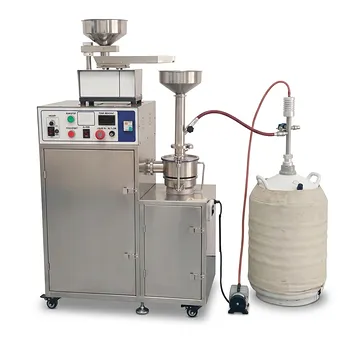
Small Liquid Nitrogen Cryogenic Grinder with Vibratory Feeder for Laboratory Sample Preparation
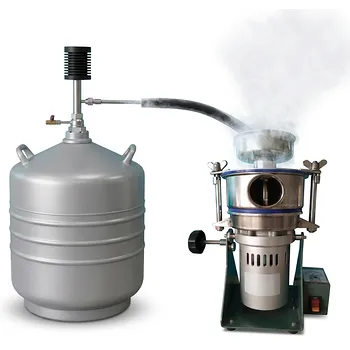
Cryogenic Liquid Nitrogen Grinder for Ultrafine Heat-Sensitive Powder Processing
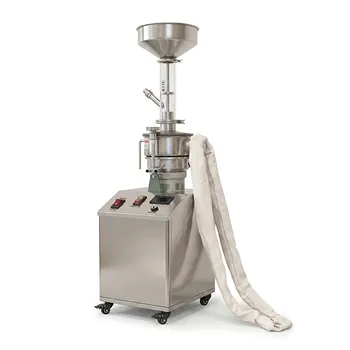
Small Liquid Nitrogen Cryogenic Grinder for Plastic and Heat-Sensitive Material Sample Preparation
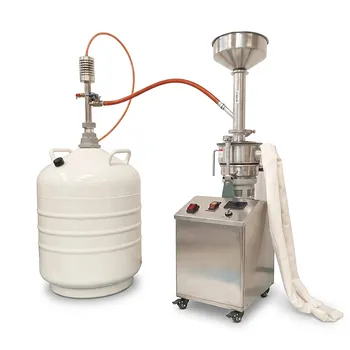
Laboratory Liquid Nitrogen Cryogenic Grinder for Polymer and Elastomer Materials
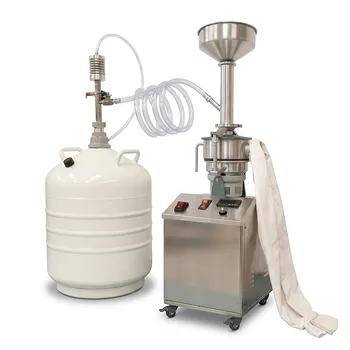
Laboratory Cryogenic Grinder Liquid Nitrogen Low Temperature Ultrafine Grinding
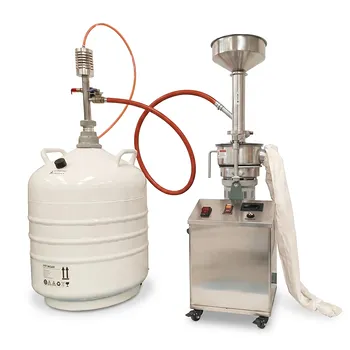
Laboratory Liquid Nitrogen Cryogenic Grinder Polymer Sample Preparation Pulverizer
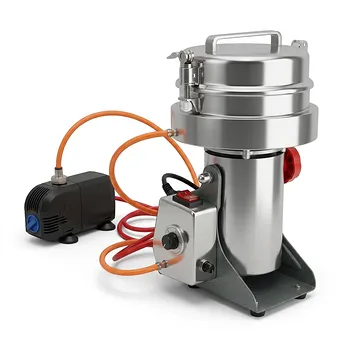
Water Cooled High Speed Grinder with Cryogenic Option for Laboratory Sample Preparation
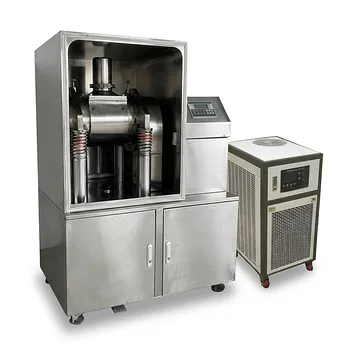
Water Cooled Cryogenic Ultra Fine Cell Wall Breaking Mill
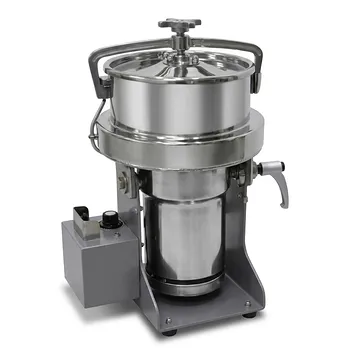
500g Capacity Water Cooled Low Temperature Grinder with Variable Speed and Safety Cover
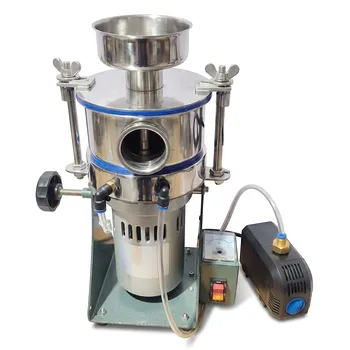
Water Cooled Airflow Ultra Fine Grinder for Low Temperature Material Processing
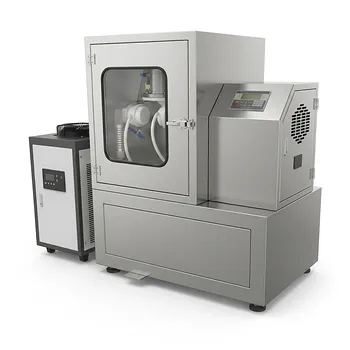
Vibratory Ultra-Low Temperature Ultrafine Grinder for Cryogenic Powder Processing
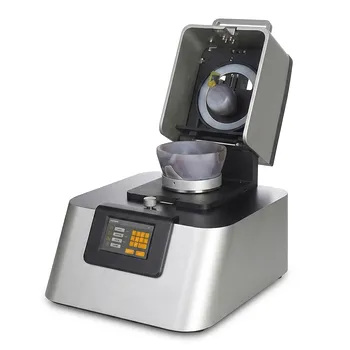
Laboratory Mortar Grinder for Sample Preparation and Cryogenic Powder Homogenization
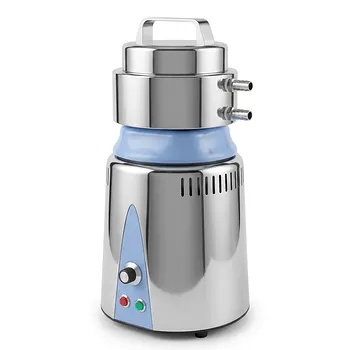
Low Temperature Laboratory Knife Mill Cryogenic Sample Grinder Material Science Powder Processing
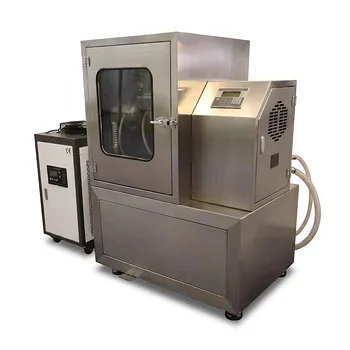
Ultra-Low Temperature Vibratory Mill for Ultrafine Grinding
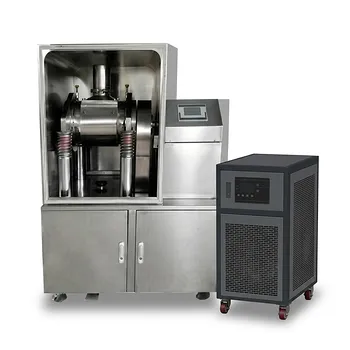
Ultra-low Temperature Vibratory Mill Ultrafine Grinder
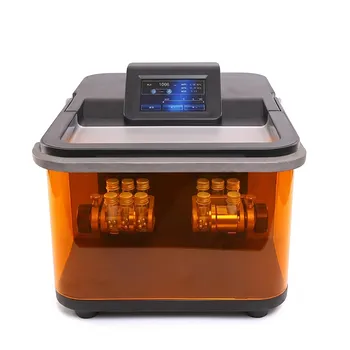
High Throughput Micro Ball Mill for Cryogenic Grinding and Laboratory Cell Disruption