What is the impact of grinding time on drug-loaded powders in cryogenic grinding? Optimize Morphology & Performance
Updated 5 months ago
Grinding time is the primary determinant of a drug-loaded powder’s final morphology and aerodynamic performance. In a cryogenic process, the duration of milling dictates whether nanofiber mats are successfully converted into micron-scale particles or if they are over-processed into dense, low-porosity solids. Precise timing is essential to ensure that the structural integrity of the drug carrier is maintained while achieving the target particle size.
Optimization of cryogenic grinding time requires balancing the mechanical energy needed for particle size reduction against the risk of destroying the microscopic porosity that is critical for drug delivery efficiency.
The Evolution of Particle Morphology During Grinding
Initial Size Reduction: From Mats to Particles
The grinding process begins by breaking down nanofiber mats into smaller, manageable units. If the grinding time is insufficient, the process fails to fully reduce these mats into the micron-scale particles required for inhalation or specialized delivery.
The Loss of Microscopic Porosity
As grinding continues beyond the optimal point, the material is subjected to prolonged mechanical stress. This stress can lead to the collapse of the porous microscopic structure, fundamentally altering how the powder behaves in a biological or mechanical system.
Density and Aerodynamic Performance
When the internal pores of a particle are destroyed by over-grinding, the particle density increases significantly. This densification negatively affects the aerodynamic performance, making it harder for the drug to reach the deep lungs or remain suspended in a carrier gas.
The Impact of Energy Dose on Powder Characteristics
Impact Frequency and Energy Transfer
The impact frequency of the cryogenic equipment determines how much mechanical energy is delivered to the sample per second. A higher frequency accelerates the reduction of the material but also increases the risk of reaching the activation energy barrier for unwanted changes.
Amorphization and Chemical Stability
Extended grinding times, especially at high frequencies, can accelerate the amorphization of the drug, such as Furosemide. While cryogenic temperatures are maintained, the concentrated mechanical energy can still trigger chemical bond breakages and degradation if the process is not strictly timed.
Understanding the Trade-offs: Size vs. Structure
Balancing Size and Porosity
The core challenge of cryogenic grinding is that the goal of size reduction often conflicts with the goal of porosity retention. While longer times ensure smaller particles, they simultaneously threaten the high-porosity state that maximizes the fine particle fraction (FPF).
Mechanical Stress and Material Fatigue
Excessive grinding time does not just change the shape; it introduces material fatigue. This can lead to a powder that is too dense and lacks the surface area necessary for rapid dissolution or efficient aerosolization.
How to Apply This to Your Process
Achieving the ideal morphology requires a data-driven approach to timing that accounts for both the physical dimensions and the internal structure of the powder.
- If your primary focus is maximizing aerosolization efficiency: Prioritize shorter grinding times that achieve the target micron size without collapsing the internal pores.
- If your primary focus is achieving a specific amorphous state: Utilize higher impact frequencies but strictly limit the total grinding duration to prevent chemical degradation.
- If your primary focus is reducing bulk volume: Incremental increases in grinding time can be used to increase particle density, though this will sacrifice porosity.
Careful calibration of the grinding duration ensures that the drug-loaded powder retains the structural characteristics necessary for its specific therapeutic application.
Summary Table:
Impact of Grinding Duration on Powder Characteristics
| Grinding Stage | Morphological State | Porosity & Density | Performance Outcome |
|---|---|---|---|
| Insufficient | Residual nanofiber mats | High porosity; non-uniform | Poor aerosolization; large particle size |
| Optimal | Micron-scale particles | Preserved porosity; low density | Maximum FPF; efficient drug delivery |
| Excessive | Dense, collapsed solids | Loss of pores; high density | Reduced efficacy; risk of amorphization |
| Over-processed | Deformed/Fused particles | Structural fatigue | Chemical degradation; poor solubility |
Master Your Powder Morphology with Precision Cryogenic Solutions
Achieving the perfect drug-loaded powder requires more than just grinding—it requires controlled precision to preserve critical microscopic structures. At [Company Name], we provide complete laboratory sample preparation solutions specifically designed for material science and pharmaceutical research.
Our extensive equipment line includes specialized liquid nitrogen cryogenic grinders, jet mills, and planetary ball mills that allow for precise control over energy delivery and grinding duration. Whether you are scaling down nanofiber mats or optimizing Fine Particle Fraction (FPF), our tools ensure structural integrity and porosity retention.
Beyond grinding, we offer a full spectrum of processing equipment:
- Powder Compaction: Cold/Warm Isostatic Presses (CIP/WIP), XRF pellet presses, and vacuum hot presses.
- Analysis & Mixing: Sieve shakers (vibratory/air-jet), powder mixers, and defoaming mixers.
- Size Reduction: Jaw/roll crushers and rotor mills.
Ready to optimize your material processing workflow?
Contact our technical experts today to find the ideal equipment configuration for your specific therapeutic or material application.
References
- Takaaki Ito, Kohei Tahara. Dry Powder Inhalers for Proteins Using Cryo-Milled Electrospun Polyvinyl Alcohol Nanofiber Mats. DOI: 10.3390/molecules27165158
Mentioned Products
- Small Liquid Nitrogen Cryogenic Grinder for Ultrafine Grinding of Heat-Sensitive Materials in Laboratories
- Cryogenic Liquid Nitrogen Grinder for DNA Analysis and Polymer Pulverization with Automatic Cooling and Electromagnetic Impact Technology
- Cryogenic Liquid Nitrogen Grinder for Ultrafine Heat-Sensitive Powder Processing
- Laboratory Cryogenic Grinder Liquid Nitrogen Low Temperature Ultrafine Grinding
- Liquid Nitrogen Cryogenic Grinder for Plastic and Heat-Sensitive Materials
People Also Ask
- What are the advantages of using liquid nitrogen Cryomilling? Achieve ultra-fine grains and high chemical purity.
- How does liquid nitrogen as a processing medium affect copper powder beyond cooling? Impacts on Purity & Sintering
- What is the function of liquid nitrogen cryogenic grinding in the initial preparation of PHBH polymer powder? Key Roles
- Why is liquid nitrogen cryogenic grinding used for coal and microbial experiments? Preserve Sample Integrity
- Why use liquid nitrogen cryogenic grinding for polymer degradation? Preserve sample integrity & prevent thermal damage

Tech Team · PowderPreparation
Last updated on May 14, 2026
Related Products
Small Liquid Nitrogen Cryogenic Grinder for Ultrafine Grinding of Heat-Sensitive Materials in Laboratories
Cryogenic Liquid Nitrogen Grinder for DNA Analysis and Polymer Pulverization with Automatic Cooling and Electromagnetic Impact Technology
Cryogenic Liquid Nitrogen Grinder for Ultrafine Heat-Sensitive Powder Processing
Laboratory Cryogenic Grinder Liquid Nitrogen Low Temperature Ultrafine Grinding
Liquid Nitrogen Cryogenic Grinder for Plastic and Heat-Sensitive Materials
Small Liquid Nitrogen Cryogenic Grinder with Vibratory Feeder for Laboratory Sample Preparation
Small Liquid Nitrogen Cryogenic Grinder for Plastic and Heat-Sensitive Material Sample Preparation
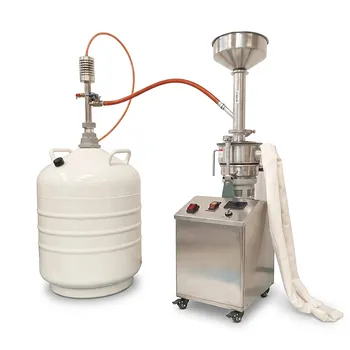
Laboratory Liquid Nitrogen Cryogenic Grinder for Polymer and Elastomer Materials
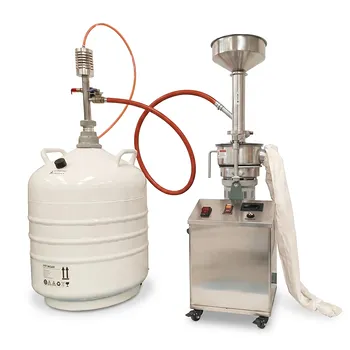
Laboratory Liquid Nitrogen Cryogenic Grinder Polymer Sample Preparation Pulverizer
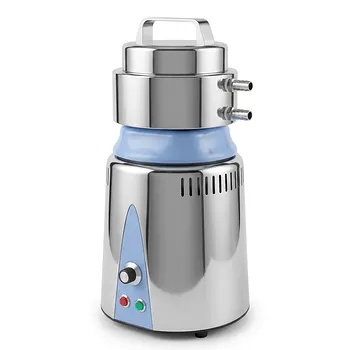
Low Temperature Laboratory Knife Mill Cryogenic Sample Grinder Material Science Powder Processing
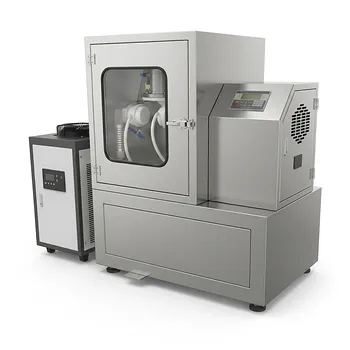
Vibratory Ultra-Low Temperature Ultrafine Grinder for Cryogenic Powder Processing
Water Cooled High Speed Grinder with Cryogenic Option for Laboratory Sample Preparation
Ultra-Low Temperature Vibratory Mill for Ultrafine Grinding
Water Cooled Cryogenic Ultra Fine Cell Wall Breaking Mill
Laboratory Mortar Grinder for Sample Preparation and Cryogenic Powder Homogenization
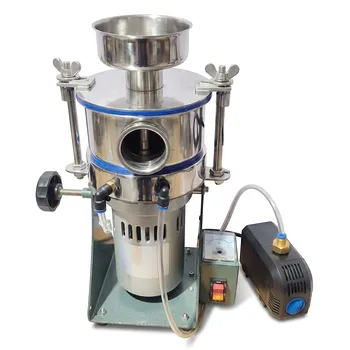
Water Cooled Airflow Ultra Fine Grinder for Low Temperature Material Processing
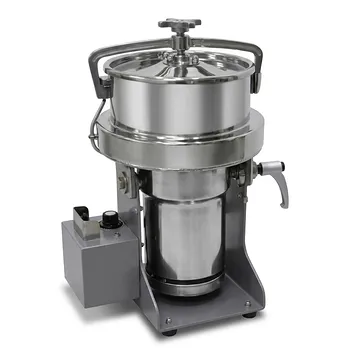
500g Capacity Water Cooled Low Temperature Grinder with Variable Speed and Safety Cover
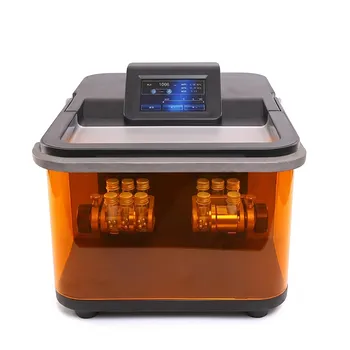
High Throughput Micro Ball Mill for Cryogenic Grinding and Laboratory Cell Disruption
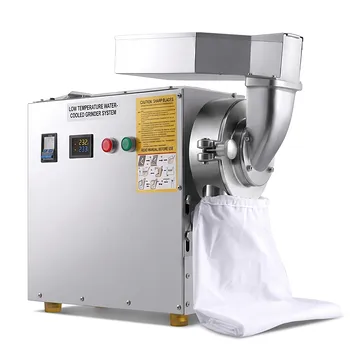
Low Temperature Water Cooled Continuous Feed Grinder Two Stage Coarse and Fine Grinding System