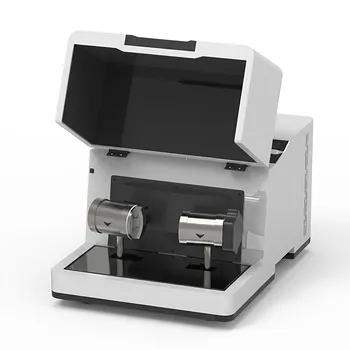
How does a liquid nitrogen cryogenic grinder facilitate the analysis of cured epoxy resins? Preserve Sample Integrity
Updated 5 months ago
A liquid nitrogen cryogenic grinder enables the precise analysis of cured epoxy resins by inducing cold embrittlement to prevent thermal degradation. By utilizing the ultra-low temperatures of liquid nitrogen, the grinder cools the tough thermosetting polymer below its glass transition temperature. This allows the material to be pulverized into a fine, uniform powder without generating the frictional heat that typically leads to melting or chemical alteration.
Cryogenic grinding is the only reliable method for preparing cured epoxy samples because it preserves the material’s original chemical structure. By neutralizing mechanical heat, it ensures that subsequent analytical data truly reflects the bulk material rather than a thermally damaged byproduct.
Overcoming the Resilience of Thermoset Polymers
Cooling Below the Glass Transition Temperature
Cured epoxy resins are highly stable, cross-linked polymers that do not easily break down at room temperature. A cryogenic grinder uses liquid nitrogen to drop the sample temperature well below its glass transition temperature ($T_g$). At this point, the resin loses its tough, slightly elastic properties and becomes extremely brittle.
Achieving Physical Embrittlement
Once the material reaches a state of cold embrittlement, it can no longer deform plastically under stress. Instead of bending or smearing, the resin shatters upon impact. This physical transition is what allows the grinder to transform hard blocks of resin into a micrometer-scale powder with minimal mechanical effort.
Neutralizing Frictional Heat
Standard grinding methods generate significant friction, which translates into localized heat. In thermosets like epoxy, this heat can cause the material to soften or undergo localized thermal degradation. Cryogenic cooling acts as a continuous heat sink, ensuring the sample remains stable throughout the pulverization process.
Preserving Analytical Integrity
Ensuring Accurate Spectroscopic Results
For techniques like Fourier-Transform Infrared Spectroscopy (FTIR), the sample must be a fine powder to ensure proper light transmission or reflectance. Cryogenic grinding produces a uniform particle size without introducing chemical artifacts. This ensures the resulting spectra accurately represent the flame retardant systems or polymer backbones being studied.
Validating Thermal Decomposition Data
In Thermogravimetric Analysis (TGA), researchers measure how a material decomposes as heat is applied. If the sample is pre-heated or degraded during the grinding phase, the TGA results will be skewed. Cryogenic preparation ensures the "start point" of the analysis is the original, unaltered state of the cured resin.
Improving Particle Uniformity for DSC
Uniform dispersion of components within the resin matrix is critical for Differential Scanning Calorimetry (DSC). A cryogenic grinder achieves a level of particle consistency that manual or room-temperature grinding cannot match. This high uniformity reduces diffusion distances, leading to clearer data regarding dissolution kinetics and phase transitions.
Understanding the Trade-offs
Equipment and Operational Costs
The primary drawback of cryogenic grinding is the increased cost of operation. Utilizing liquid nitrogen requires specialized storage dewars, safety equipment, and a consistent supply chain. These overhead costs are significantly higher than those associated with standard mechanical milling.
Risks of Moisture Contamination
When samples are removed from the ultra-low temperature environment, they are prone to atmospheric moisture condensation. If the powder is not handled or sealed correctly, water absorption can interfere with IR spectra or TGA weight loss curves. Analysts must allow samples to return to room temperature in a desiccated environment to avoid this pitfall.
Material Loss and Recovery
Due to the fine nature of the powder produced, some material loss is inevitable during the recovery from the grinding vial. While the process is highly efficient for creating fine particles, it may not be ideal for researchers working with extremely limited sample volumes.
How to Apply This to Your Project
Making the Right Choice for Your Goal
To achieve the best results from your epoxy resin analysis, tailor your grinding parameters to your specific analytical needs.
- If your primary focus is Chemical Mapping (FTIR): Prioritize achieving the smallest possible particle size to ensure high-resolution spectra without scattering.
- If your primary focus is Thermal Stability (TGA/DSC): Focus on maintaining a constant cryogenic temperature to prevent any pre-analytical thermal loading or degradation.
- If your primary focus is Flame Retardant Efficiency: Use cryogenic grinding to ensure the additive dispersion remains identical to the bulk material for precise decomposition tracking.
By leveraging the power of cold embrittlement, you transform a difficult thermoset into a high-fidelity powder ready for rigorous scientific scrutiny.
Summary Table:
| Feature | Mechanism | Analytical Impact |
|---|---|---|
| Cryogenic Cooling | Drops temperature below $T_g$ | Prevents thermal degradation & melting |
| Cold Embrittlement | Converts tough polymer to brittle state | Enables uniform micron-scale pulverization |
| Heat Neutralization | Acts as a continuous heat sink | Preserves chemical structure for FTIR & TGA |
| Particle Consistency | High-impact mechanical milling | Improves DSC data & dissolution kinetics |
Elevate Your Material Science Research with Expert Solutions
Precise analysis starts with perfect sample preparation. We provide complete laboratory sample preparation solutions tailored for material science, specializing in advanced powder processing and compaction equipment.
Our extensive product line includes:
- Grinding & Milling: Liquid nitrogen cryogenic grinders, planetary ball mills, jet mills, and disc mills.
- Sieving & Mixing: Sieve shakers, powder mixers, and defoaming mixers.
- Compaction: A full spectrum of hydraulic presses, including Cold/Warm Isostatic Presses (CIP/WIP), vacuum hot presses, and XRF pellet presses.
Whether you are analyzing cured resins, ceramics, or advanced alloys, our equipment ensures maximum sample integrity and repeatable results.
Contact our technical team today to find the ideal solution for your laboratory needs!
References
- Alexander Battig, Bernhard Schartel. Hyperbranched phosphorus flame retardants: multifunctional additives for epoxy resins. DOI: 10.1039/c9py00737g
Mentioned Products
- Liquid Nitrogen Cryogenic Grinder for Plastic and Heat-Sensitive Materials
- Small Liquid Nitrogen Cryogenic Grinder for Ultrafine Grinding of Heat-Sensitive Materials in Laboratories
- Cryogenic Liquid Nitrogen Grinder for DNA Analysis and Polymer Pulverization with Automatic Cooling and Electromagnetic Impact Technology
- Small Liquid Nitrogen Cryogenic Grinder with Vibratory Feeder for Laboratory Sample Preparation
- Cryogenic Liquid Nitrogen Grinder for Ultrafine Heat-Sensitive Powder Processing
People Also Ask
- Why is a liquid nitrogen cryogenic grinder required before DSC? Ensure Accurate Thermal Analysis & Sample Integrity.
- Why is a liquid nitrogen cryogenic grinder necessary for plastic pre-processing? Achieve Precise Co-Pyrolysis Results
- What role does liquid nitrogen cryogenic grinding play in the modification of CNTs? Optimize Nanomaterial Processing
- Why is a laboratory-grade liquid nitrogen cryogenic grinder essential for processing drug-loaded polymer nanofiber mats?
- What is the role of a liquid nitrogen cryogenic grinder in drug-polymer mixing? Achieve Superior Sample Homogeneity

Tech Team · PowderPreparation
Last updated on May 14, 2026
Related Products
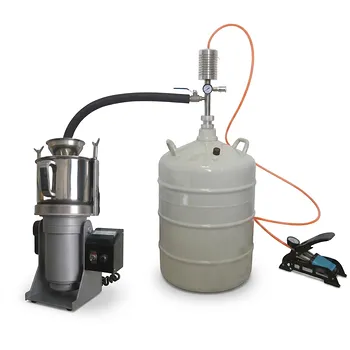
Liquid Nitrogen Cryogenic Grinder for Plastic and Heat-Sensitive Materials
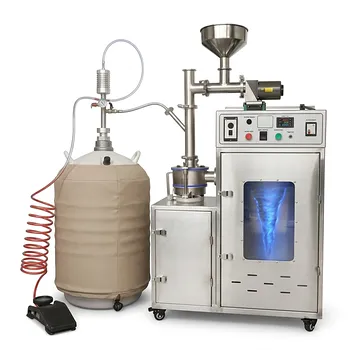
Small Liquid Nitrogen Cryogenic Grinder for Ultrafine Grinding of Heat-Sensitive Materials in Laboratories
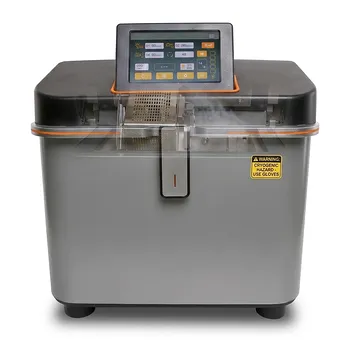
Cryogenic Liquid Nitrogen Grinder for DNA Analysis and Polymer Pulverization with Automatic Cooling and Electromagnetic Impact Technology
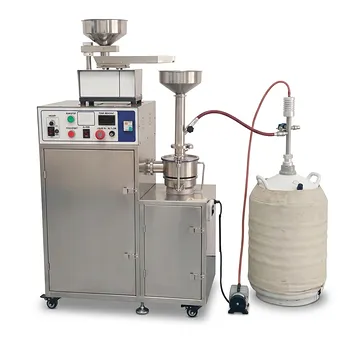
Small Liquid Nitrogen Cryogenic Grinder with Vibratory Feeder for Laboratory Sample Preparation
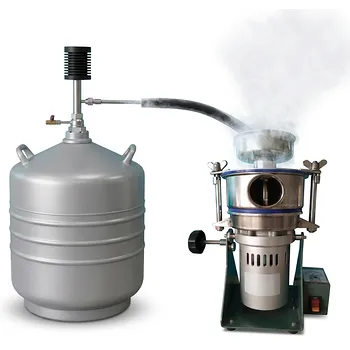
Cryogenic Liquid Nitrogen Grinder for Ultrafine Heat-Sensitive Powder Processing
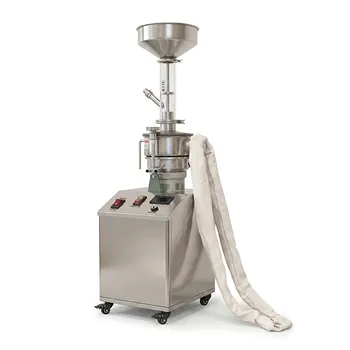
Small Liquid Nitrogen Cryogenic Grinder for Plastic and Heat-Sensitive Material Sample Preparation
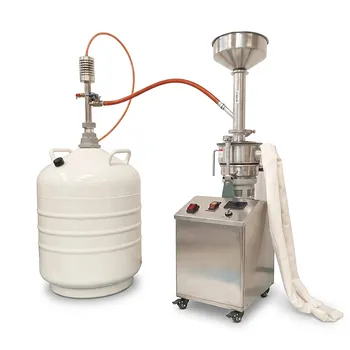
Laboratory Liquid Nitrogen Cryogenic Grinder for Polymer and Elastomer Materials
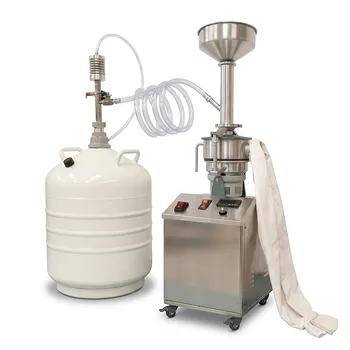
Laboratory Cryogenic Grinder Liquid Nitrogen Low Temperature Ultrafine Grinding
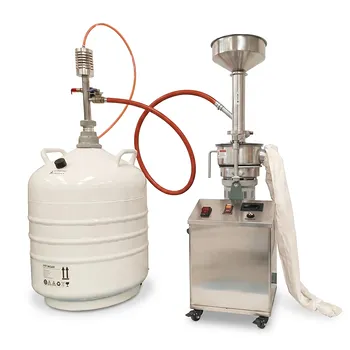
Laboratory Liquid Nitrogen Cryogenic Grinder Polymer Sample Preparation Pulverizer
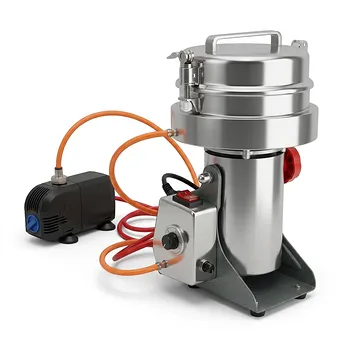
Water Cooled High Speed Grinder with Cryogenic Option for Laboratory Sample Preparation
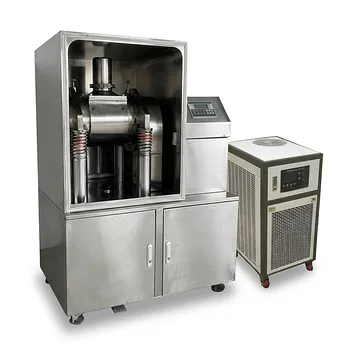
Water Cooled Cryogenic Ultra Fine Cell Wall Breaking Mill
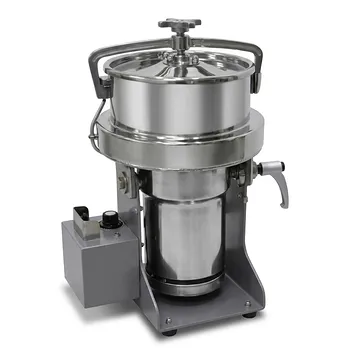
500g Capacity Water Cooled Low Temperature Grinder with Variable Speed and Safety Cover
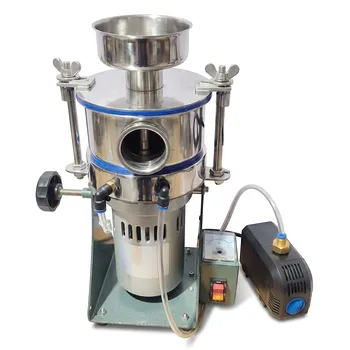
Water Cooled Airflow Ultra Fine Grinder for Low Temperature Material Processing
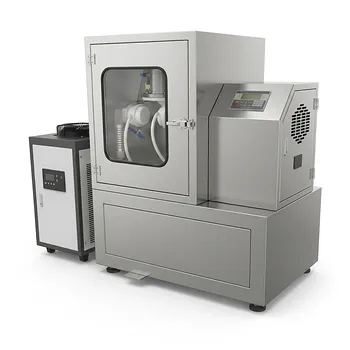
Vibratory Ultra-Low Temperature Ultrafine Grinder for Cryogenic Powder Processing
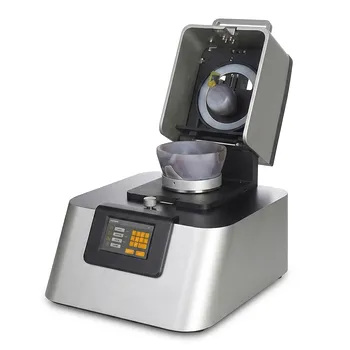
Laboratory Mortar Grinder for Sample Preparation and Cryogenic Powder Homogenization
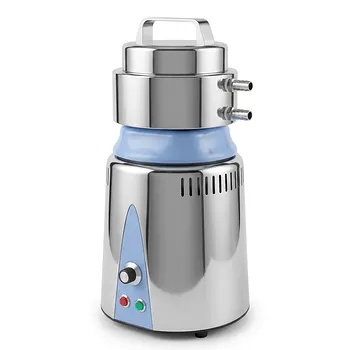
Low Temperature Laboratory Knife Mill Cryogenic Sample Grinder Material Science Powder Processing
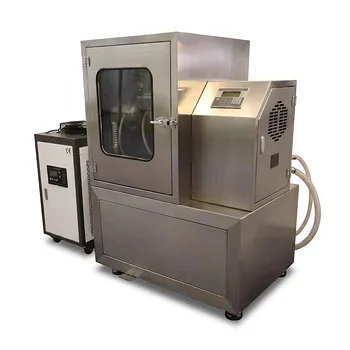
Ultra-Low Temperature Vibratory Mill for Ultrafine Grinding
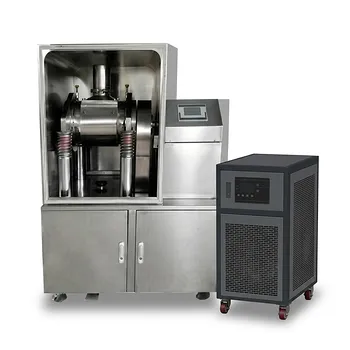
Ultra-low Temperature Vibratory Mill Ultrafine Grinder
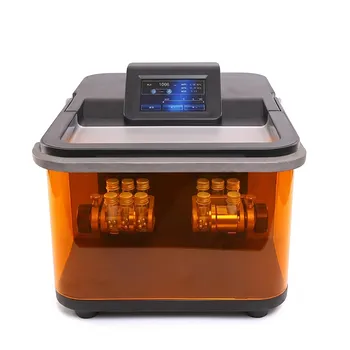
High Throughput Micro Ball Mill for Cryogenic Grinding and Laboratory Cell Disruption