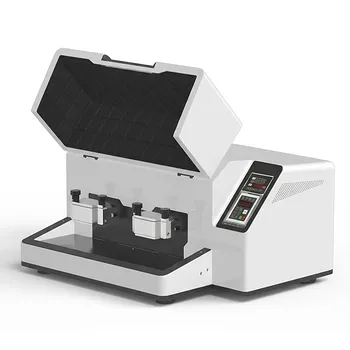
Advantages of cryogenic ball milling vs traditional mixing for powders? Achieve superior dispersion & refinement.
Updated 4 months ago
Cryogenic ball milling provides a decisive processing advantage by utilizing liquid nitrogen to transition ductile polymers into a brittle state, enabling the high-energy embedding of metal particles directly into the polymer matrix. This method achieves superior dispersion uniformity and nanoscale grain refinement while preventing the thermal degradation and oxidation that typically plague traditional mechanical mixing.
Core Takeaway: Cryogenic ball milling transforms the material processing environment from one of thermal stress and poor dispersion to one of controlled brittleness and high-energy intercalation. This allows for the creation of ultrafine, high-purity metal-polymer composites with enhanced physical properties and superior deposition efficiency.
Leveraging Material Transformation for Efficiency
Achieving Pseudo-Brittleness in Polymers
Traditional mechanical mixing often fails with polymers like PEEK or fluoroplastics because their high viscoelasticity causes them to soften or smear under frictional heat. Cryogenic milling uses liquid nitrogen to cool these materials below their brittle temperature, inducing a pseudo-brittle state. This allows mechanical impact forces to efficiently shatter the material into powders as fine as 2 microns.
Reduced Energy Consumption and Clogging
Because materials are processed in a brittle state, the energy required to achieve fine particle sizes is significantly lower than in room-temperature milling. This environment prevents the components from becoming tacky, which eliminates the common issue of clogging the mill or adhering to the milling media.
Superior Structural and Chemical Integrity
High-Energy Physical Intercalation
Unlike simple mechanical mixing, which relies on surface-level blending, cryogenic ball milling forces physical intercalation. Metal particles, such as copper flakes, are effectively embedded into the surface of the polymer matrix. This creates micron-sized metallic domains that ensure dispersion uniformity throughout the composite.
Inhibition of Oxidation and Thermal Degradation
The extremely low-temperature environment effectively suppresses the local temperature spikes generated during high-energy impacts. This prevents material degradation caused by grinding heat and minimizes oxidation reactions in metal powders. The result is a higher-purity final product that retains its original chemical characteristics.
Accelerated Grain Refinement
Cryogenic temperatures inhibit the recovery and annihilation of dislocations within the material's crystalline structure. This leads to a rapid accumulation of dislocation density, which significantly shortens the time required to achieve nanoscale grain refinement. In many cases, cryogenic processing can reach homogeneity in nearly half the time required by conventional methods.
Understanding the Trade-offs
Operational Costs and Complexity
The primary drawback of cryogenic ball milling is the continuous requirement for liquid nitrogen or argon, which increases operational costs. The equipment is also more complex than standard mixers, requiring specialized seals and vacuum-jacketed components to handle extreme temperature gradients.
Post-Processing Handling
Materials exiting a cryogenic mill are susceptible to moisture condensation as they return to room temperature if not handled in a controlled atmosphere. Additionally, while the process prevents thermal reactions, the high-energy nature of the mill can still induce mechanical alloying that might be undesirable for certain specific material pairings.
Making the Right Choice for Your Goal
How to Apply This to Your Project
- If your primary focus is maximizing dispersion uniformity: Use cryogenic ball milling to physically embed metal particles into the polymer surface, creating a more stable and homogenous composite than manual mixing.
- If your primary focus is processing heat-sensitive polymers: Utilize the "brittle state" advantage of cryomilling to prevent polymer softening, smearing, and thermal degradation.
- If your primary focus is achieving nanoscale structures quickly: Choose cryogenic milling to leverage inhibited dislocation annihilation, which accelerates grain refinement and reduces total processing time.
By shifting the processing environment to cryogenic temperatures, you move beyond simple blending to a sophisticated mechanical alloying process that yields superior composite performance.
Summary Table:
| Feature | Traditional Mechanical Mixing | Cryogenic Ball Milling |
|---|---|---|
| Material State | Viscoelastic (Soft/Smearing) | Pseudo-Brittle State |
| Particle Size | Coarser / Non-uniform | Ultrafine (down to 2 microns) |
| Dispersion | Surface-level blending | High-energy physical intercalation |
| Thermal Risk | High (Degradation/Oxidation) | Low (Liquid nitrogen cooled) |
| Processing Speed | Standard | Fast (Accelerated grain refinement) |
Elevate Your Material Research with Expert Sample Prep
Achieving the perfect metal-polymer composite requires more than just mixing; it requires precision engineering. At our facility, we provide complete laboratory sample preparation solutions tailored for material science.
We specialize in high-performance powder processing and compaction equipment, ensuring your research transitions from theory to high-purity results. Our extensive product line includes:
- Advanced Milling: Planetary ball mills, jet mills, and specialized liquid nitrogen cryogenic grinders.
- Sizing & Mixing: Sieve shakers (vibratory/air-jet), powder mixers, and defoaming mixers.
- Precision Compaction: A full spectrum of hydraulic presses, including Cold/Warm Isostatic Presses (CIP/WIP), hot presses, and XRF pellet presses.
Whether you are looking to eliminate thermal degradation or achieve nanoscale grain refinement, our equipment is designed to meet the most rigorous lab standards. Contact us today to discuss your specific application and find the ideal solution for your workflow!
References
- Matthew S. Schwenger, Joseph F. Stanzione. Mixed-Material Feedstocks for Cold Spray Additive Manufacturing of Metal–Polymer Composites. DOI: 10.1007/s11666-024-01752-0
Mentioned Products
- Ultra-Low Temperature Cryogenic High-Energy Vibratory Ball Mill
- High Throughput Micro Ball Mill for Cryogenic Grinding and Laboratory Cell Disruption
- Ultra-Low Temperature Vibratory Mill for Ultrafine Grinding
- Heating Temperature Controlled High Energy Vibratory Ball Mill
- Nanoscale High Energy Vibratory Ball Mill Low Temperature
People Also Ask
- How does a high-energy vibratory ball mill improve the performance of MgH2? Optimize Hydrogen Storage Kinetics
- What is the function of a high-energy vibratory ball mill in Cu-Ta alloys? Achieve Precision Mechanical Alloying
- What is the function of high-energy ball milling in ZnO membrane slurry prep? Optimize Homogenization & Dispersion
- What is the Role of HEBM in High-Entropy H-SOFC Cathode Prep? Achieving Atomic-Level Homogenization
- What is the importance of using a high-purity argon atmosphere during the high-energy ball milling of ceramic particles?

Tech Team · PowderPreparation
Last updated on Jun 03, 2026
Related Products
Ultra-Low Temperature Cryogenic High-Energy Vibratory Ball Mill
High Throughput Micro Ball Mill for Cryogenic Grinding and Laboratory Cell Disruption
Ultra-Low Temperature Vibratory Mill for Ultrafine Grinding
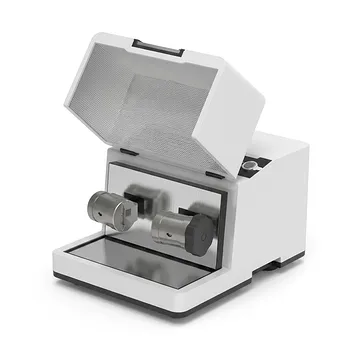
Heating Temperature Controlled High Energy Vibratory Ball Mill
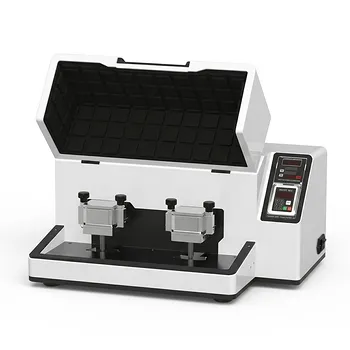
Nanoscale High Energy Vibratory Ball Mill Low Temperature
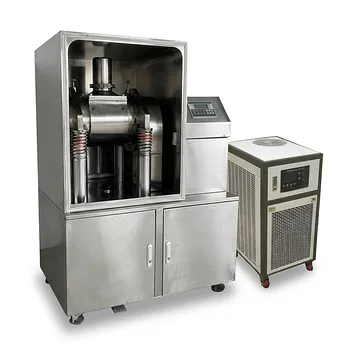
Water Cooled Cryogenic Ultra Fine Cell Wall Breaking Mill
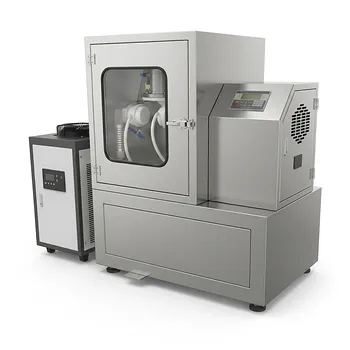
Vibratory Ultra-Low Temperature Ultrafine Grinder for Cryogenic Powder Processing
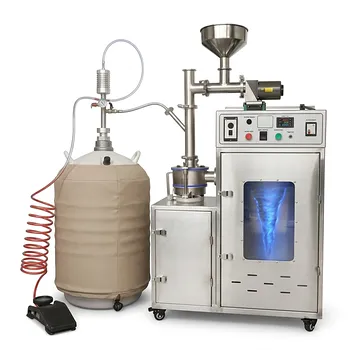
Small Liquid Nitrogen Cryogenic Grinder for Ultrafine Grinding of Heat-Sensitive Materials in Laboratories

Low Temperature Laboratory Knife Mill Cryogenic Sample Grinder Material Science Powder Processing
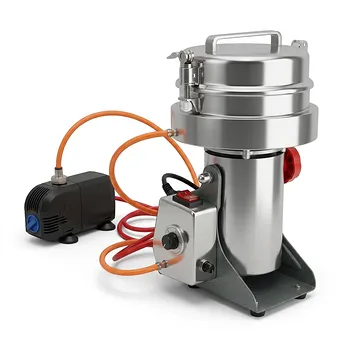
Water Cooled High Speed Grinder with Cryogenic Option for Laboratory Sample Preparation
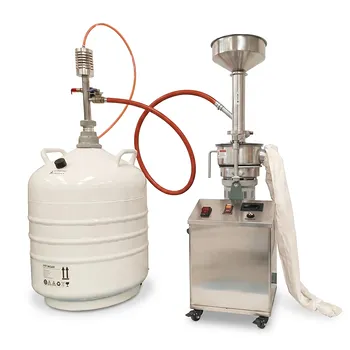
Laboratory Liquid Nitrogen Cryogenic Grinder Polymer Sample Preparation Pulverizer
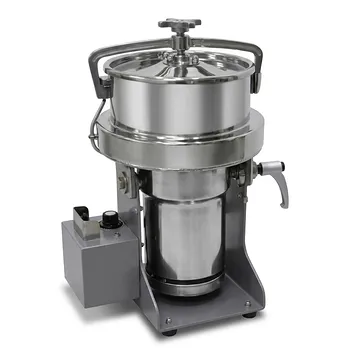
500g Capacity Water Cooled Low Temperature Grinder with Variable Speed and Safety Cover

High Energy Planetary Ball Mill for Nano Scale Grinding and Mechanical Alloying
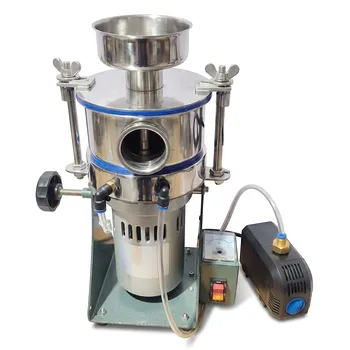
Water Cooled Airflow Ultra Fine Grinder for Low Temperature Material Processing
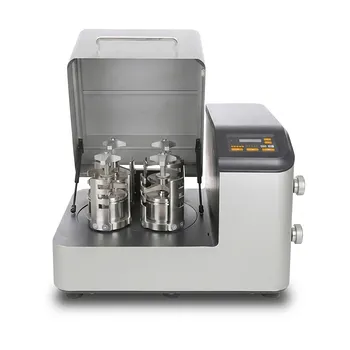
High Energy Planetary Ball Mill for Nano Scale Grinding and Colloidal Mixing in Material Science Research

High Energy Laboratory Planetary Ball Mill for Nano Grinding and Material Science Sample Preparation
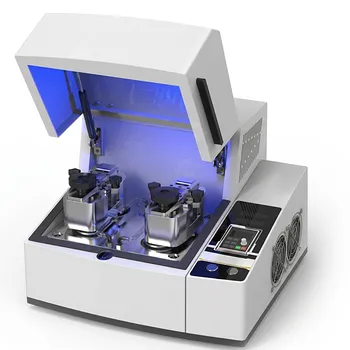
Laboratory Nano High Energy Ball Mill Ultrafine Grinding Mechanical Alloying

Vertical Square Planetary Ball Mill for Laboratory Sample Preparation and Nanoscale Grinding

Miniature Planetary Ball Mill with Vacuum Grinding and High Efficiency for Laboratory Sample Preparation