Besides cooling, what roles does liquid nitrogen play within the grinding jar? Unlock advanced material engineering.
Updated 4 months ago
Beyond its role as a coolant, liquid nitrogen acts as a multifaceted chemical and atmospheric agent that preserves material integrity and enables nanostructural engineering. During cryomilling, it functions as an inert shield to prevent oxidation, a kinetic inhibitor to stop grain growth, and a reactive medium that can introduce beneficial secondary phases into the alloy matrix.
While primarily recognized for achieving ultra-low temperatures, liquid nitrogen is essential for creating a controlled environment that dictates the chemical purity, phase stability, and safety of the milling process.
Atmospheric Protection and Chemical Purity
Prevention of Surface Oxidation
Liquid nitrogen vaporizes into inert nitrogen gas, effectively excluding oxygen from the grinding jar. This is critical when processing highly reactive nanometals, such as aluminum or boron, where the formation of oxide layers like $B_2O_3$ would otherwise degrade material performance or hinder subsequent reactions.
Maintaining Phase Consistency
By providing an oxygen-deficient environment, liquid nitrogen ensures that the chemical and phase composition of the sample remains unchanged. This allows for high-quality characterization of materials that would otherwise undergo phase changes or chemical deterioration due to the frictional heat generated during high-energy grinding.
Protecting Heat-Labile Components
In biological and polymer applications, the nitrogen atmosphere protects heat-sensitive components from degradation. This preservation is vital for maintaining the biological activity or molecular weight of polymers that might otherwise break down under standard atmospheric milling conditions.
Structural and Kinetic Stabilization
Suppression of Grain Growth
Liquid nitrogen maintains an environment that significantly lowers thermal activation energy. This suppression prevents the processes of dynamic recovery and recrystallization, allowing materials like nanocrystalline copper to accumulate high dislocation densities and achieve grain refinement down to the nanometer scale.
Enhancing Material Brittleness
The extreme cold (boiling point of -196°C) brings most polymers, elastomers, and biological tissues below their embrittlement point. This physical transformation allows for more thorough fragmentation and ultrafine pulverization, which is often impossible at room temperature where materials would simply deform plastically.
Chemical Interaction and Phase Engineering
Formation of Dispersoid Phases
In specific materials like aluminum alloys, the nitrogen environment can promote the formation of nitrogen-containing dispersoid phases. These phases act as internal reinforcements, significantly enhancing the thermal stability of the material once it is consolidated into a bulk form.
Intentional Surface Adsorption
In certain metallic powders, nitrogen and trace oxygen can be adsorbed onto high-activity surfaces. While sometimes considered a contaminant, this interaction can be leveraged to influence the surface chemistry and subsequent reactivity of the powder in specialized downstream processes.
Safety and Hazard Mitigation
Preventing Electrolyte Combustion
In the recycling of batteries, liquid nitrogen provides an inert protective atmosphere that prevents safety hazards. By displacing oxygen and suppressing heat, it prevents the combustion of electrolytes that can be triggered by frictional sparks during the crushing process.
Eliminating Chemical Residues
Unlike liquid or solid additives used in other grinding processes, liquid nitrogen is an ideal medium because it vaporizes completely. It leaves no chemical residues on the processed powder, ensuring that the final product remains pure and uncontaminated by processing aids.
Understanding the Trade-offs
While liquid nitrogen offers significant benefits, it can introduce unintended challenges in specific material systems. For instance, in the milling of copper powders, the formation of thermally unstable compounds like copper nitride can occur.
These impurities can negatively impact Spark Plasma Sintering (SPS) or other densification processes. The presence of these compounds often leads to the formation of residual pores within the consolidated bulk material, potentially compromising the structural integrity of the final product.
Applying Cryomilling Strategies to Your Project
Recommendations Based on Your Goal
- If your primary focus is Nanostructural Refinement: Utilize continuous liquid nitrogen flow to maximize dislocation density and prevent grain growth through total suppression of thermal recovery.
- If your primary focus is Chemical Purity: Ensure a hermetically sealed jar environment where the nitrogen displacement of oxygen is absolute to prevent the formation of deleterious oxide layers.
- If your primary focus is Safety in Battery Recycling: Focus on maintaining a stable liquid level and rapid pre-cooling to ensure electrolytes remain below their flash point throughout the mechanical impact phase.
- If your primary focus is Polymer Pulverization: Optimize the immersion time to ensure the material is cooled well below its glass transition temperature before high-energy impact begins.
By treating liquid nitrogen as a reactive and atmospheric tool rather than just a temperature regulator, you can achieve unprecedented control over your material's final properties.
Summary Table:
| Role of Liquid Nitrogen | Key Benefit to Material Processing |
|---|---|
| Inert Atmosphere | Excludes oxygen to prevent oxidation of reactive nanometals. |
| Kinetic Inhibitor | Suppresses grain growth to achieve nanometer-scale refinement. |
| Embrittlement Agent | Lowers materials below glass transition for easier pulverization. |
| Safety Buffer | Prevents electrolyte combustion during battery recycling processes. |
| Residue-Free Medium | Vaporizes completely, ensuring zero chemical contamination. |
Elevate Your Material Research with Precision Engineering
Achieving the perfect nanostructure requires more than just cooling—it demands the right equipment and expertise. At [Brand Name], we provide complete laboratory sample preparation solutions tailored for material science. Whether you are focusing on nanostructural refinement or high-purity chemical processing, our specialized equipment ensures consistent, high-quality results.
Our extensive product line includes:
- Advanced Milling: Liquid nitrogen cryogenic grinders, planetary ball mills, jet mills, and rotor mills.
- Crushing & Sizing: Jaw/roll crushers and vibratory/air-jet sieve shakers.
- Mixing & De-aeration: Powder mixers and vacuum defoaming mixers.
- Precision Pressing: A full spectrum of hydraulic presses, including Cold/Warm Isostatic Presses (CIP/WIP), XRF pellet presses, and vacuum hot presses.
Ready to optimize your cryomilling workflow? Our experts are here to help you select the ideal tools for your specific application. Contact us today to discuss your project!
References
- C.C. Koch, Enrique J. Lavernia. Bulk Nanostructured Materials. DOI: 10.1007/s11661-017-4298-0
Mentioned Products
- Small Liquid Nitrogen Cryogenic Grinder for Ultrafine Grinding of Heat-Sensitive Materials in Laboratories
- Laboratory Cryogenic Grinder Liquid Nitrogen Low Temperature Ultrafine Grinding
- Cryogenic Liquid Nitrogen Grinder for DNA Analysis and Polymer Pulverization with Automatic Cooling and Electromagnetic Impact Technology
- Cryogenic Liquid Nitrogen Grinder for Ultrafine Heat-Sensitive Powder Processing
- Liquid Nitrogen Cryogenic Grinder for Plastic and Heat-Sensitive Materials
People Also Ask
- What are the advantages of using liquid nitrogen Cryomilling? Achieve ultra-fine grains and high chemical purity.
- How does liquid nitrogen as a processing medium affect copper powder beyond cooling? Impacts on Purity & Sintering
- What is the function of liquid nitrogen cryogenic grinding in the initial preparation of PHBH polymer powder? Key Roles
- Why is liquid nitrogen cryogenic grinding used for coal and microbial experiments? Preserve Sample Integrity
- Why use liquid nitrogen cryogenic grinding for polymer degradation? Preserve sample integrity & prevent thermal damage

Tech Team · PowderPreparation
Last updated on Jun 03, 2026
Related Products
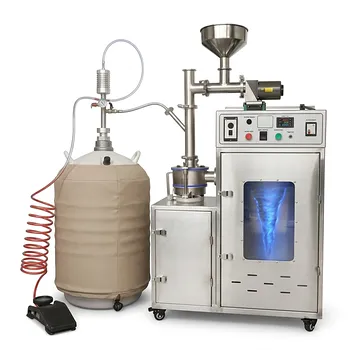
Small Liquid Nitrogen Cryogenic Grinder for Ultrafine Grinding of Heat-Sensitive Materials in Laboratories
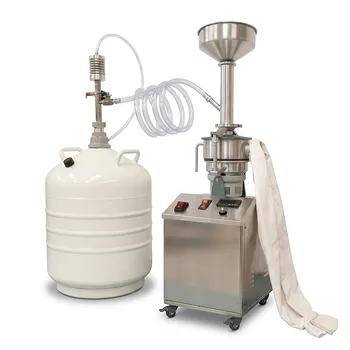
Laboratory Cryogenic Grinder Liquid Nitrogen Low Temperature Ultrafine Grinding
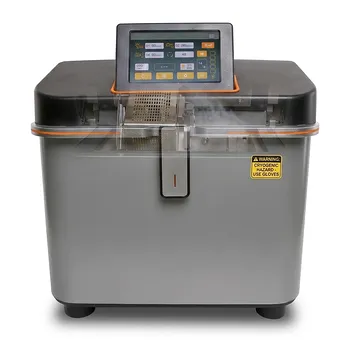
Cryogenic Liquid Nitrogen Grinder for DNA Analysis and Polymer Pulverization with Automatic Cooling and Electromagnetic Impact Technology
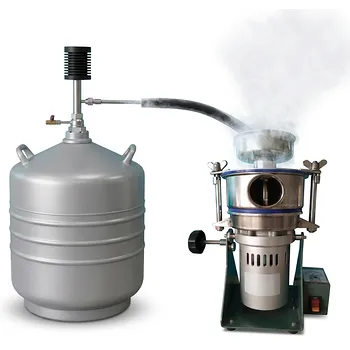
Cryogenic Liquid Nitrogen Grinder for Ultrafine Heat-Sensitive Powder Processing
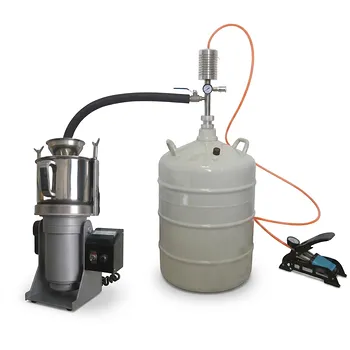
Liquid Nitrogen Cryogenic Grinder for Plastic and Heat-Sensitive Materials
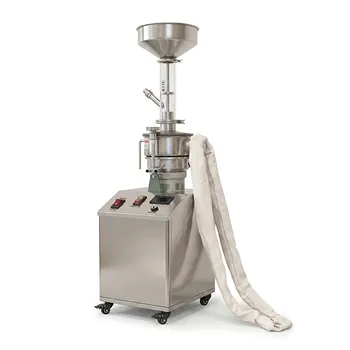
Small Liquid Nitrogen Cryogenic Grinder for Plastic and Heat-Sensitive Material Sample Preparation
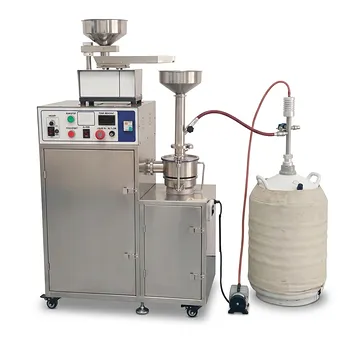
Small Liquid Nitrogen Cryogenic Grinder with Vibratory Feeder for Laboratory Sample Preparation
Laboratory Liquid Nitrogen Cryogenic Grinder for Polymer and Elastomer Materials
Laboratory Liquid Nitrogen Cryogenic Grinder Polymer Sample Preparation Pulverizer
Low Temperature Laboratory Knife Mill Cryogenic Sample Grinder Material Science Powder Processing
Vibratory Ultra-Low Temperature Ultrafine Grinder for Cryogenic Powder Processing
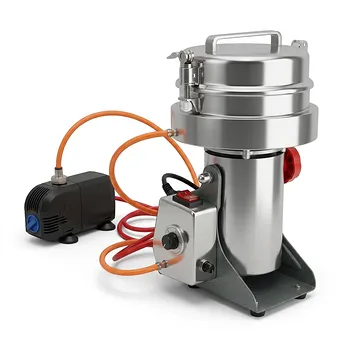
Water Cooled High Speed Grinder with Cryogenic Option for Laboratory Sample Preparation
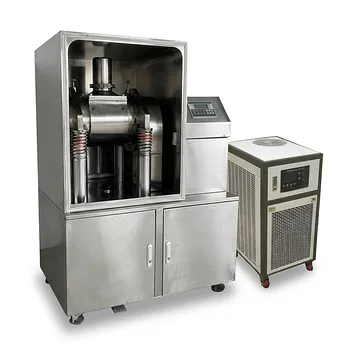
Water Cooled Cryogenic Ultra Fine Cell Wall Breaking Mill
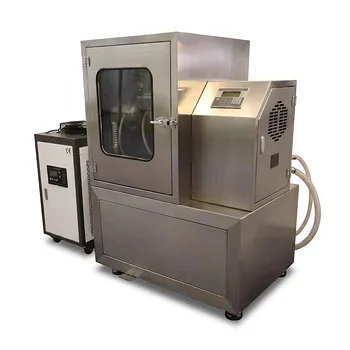
Ultra-Low Temperature Vibratory Mill for Ultrafine Grinding
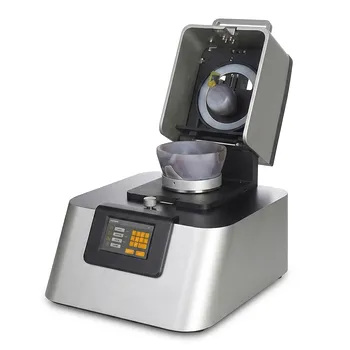
Laboratory Mortar Grinder for Sample Preparation and Cryogenic Powder Homogenization
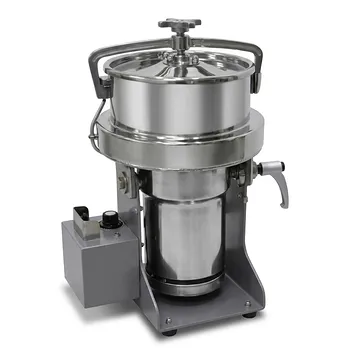
500g Capacity Water Cooled Low Temperature Grinder with Variable Speed and Safety Cover
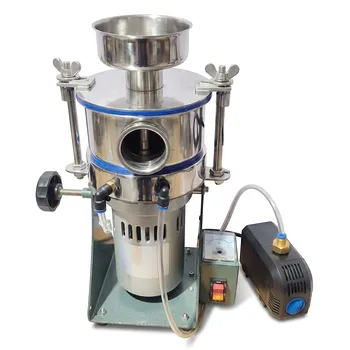
Water Cooled Airflow Ultra Fine Grinder for Low Temperature Material Processing
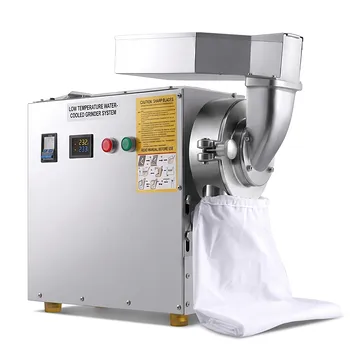
Low Temperature Water Cooled Continuous Feed Grinder Two Stage Coarse and Fine Grinding System
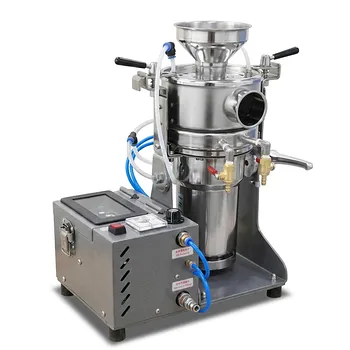
Water Cooled Pulse Jet Ultrafine Grinder