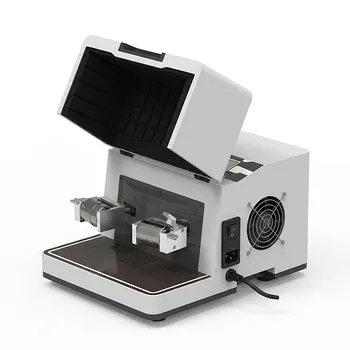
Why grind lime-pozzolan specimens for TG/DTA for 3 mins? Master sample prep for high-precision thermal analysis.
Updated 5 months ago
Proper sample preparation is the cornerstone of reliable thermal analysis. Grinding hardened lime-pozzolan specimens for exactly three minutes in a planetary ball mill ensures the material is chemically representative and reaches the ultrafine powder consistency required for high-precision thermogravimetric analysis (TG/DTA). This specific duration balances the need for extreme homogeneity with the critical requirement to preserve the sample's original chemical state.
The Central Takeaway: Precision grinding ensures that the small amount of sample used in TG/DTA—typically around 300mg—is a uniform representation of the bulk specimen, leading to sharper thermal curves and accurate quantification of calcium hydroxide (CH) content.
Achieving Representative Sampling and Homogeneity
Overcoming Material Heterogeneity
Hardened lime-pozzolan specimens are inherently non-uniform, consisting of various hydration products and unreacted particles. The planetary ball mill uses high-energy impact and friction to rapidly convert these bulk specimens into a uniform fine powder.
Ensuring Chemical Uniformity
High-speed rotation ensures that the chemical reaction products are evenly distributed throughout the sample. This uniformity is vital because TG/DTA relies on a very small input mass to represent the properties of the entire material.
Meeting Instrument Specifications
Analytical instruments like TG/DTA require specific powder fineness to function correctly. Grinding ensures the powder meets the 300mg input requirement, allowing for a stable and predictable thermal response during the test.
Optimizing the TG/DTA Signal
Improving Thermal Curve Clarity
A finely ground powder increases the surface area exposed to the furnace atmosphere. This leads to clearer, more distinct thermal decomposition curves, which are easier for researchers to interpret and analyze.
Enhancing Quantitative Accuracy
The primary goal of many TG/DTA tests is to calculate the calcium hydroxide (CH) content within the system. Grinding removes physical barriers to decomposition, allowing for more precise calculations of mass loss during the heating cycle.
Standardizing Particle Size
Consistent particle size across different samples ensures that results are comparable. By standardizing the grinding time to three minutes, researchers can eliminate particle size variation as a variable in their thermal data.
Understanding the Trade-offs and Risks
Avoiding Mechanochemical Activation
While grinding is necessary, excessive duration can lead to mechanochemical activation, where the mechanical energy alters the minerals' chemical structure. The three-minute limit is designed to achieve fineness without triggering these unintended chemical shifts.
Managing Heat Accumulation
High-energy grinding generates significant heat and pressure within the mill jars. Prolonged grinding without pauses can cause samples like bentonite or lime-pozzolan to undergo physical-chemical changes or damage the mill jar seals.
Preventing Sample Contamination
Longer grinding times increase the wear on the grinding media and jars. Keeping the process to a efficient three-minute window minimizes the risk of introducing foreign particles from the mill itself into the specimen.
How to Apply This to Your Laboratory Workflow
Effective sample preparation requires a balance between mechanical force and chemical preservation.
- If your primary focus is quantitative precision: Strictly adhere to the three-minute grinding window to ensure the most accurate calcium hydroxide (CH) measurements.
- If your primary focus is preventing chemical alteration: Monitor the temperature of the grinding jars and implement cooling pauses if processing multiple batches consecutively.
- If your primary focus is instrument safety: Ensure the sample is dry before grinding to prevent the powder from caking, which can cause imbalances in the planetary mill.
Precision in the preparation phase is the only way to ensure the integrity of your thermal analysis results.
Summary Table:
| Aspect | Requirement | Impact on TG/DTA Results |
|---|---|---|
| Homogeneity | Uniform fine powder | Ensures 300mg sample represents bulk material |
| Particle Size | Ultrafine consistency | Sharper thermal curves and clearer decomposition peaks |
| CH Accuracy | Barrier-free decomposition | Precise calculation of Calcium Hydroxide mass loss |
| Time Limit | Exactly 3 minutes | Prevents mechanochemical activation & heat damage |
| Safety | Dry sample state | Prevents caking and mechanical imbalance in the mill |
Elevate Your Material Research with Precision Sample Prep
Reliable thermal analysis begins with impeccable sample preparation. At our company, we provide complete laboratory sample preparation solutions tailored for material science and powder processing.
Whether you are refining lime-pozzolan specimens or developing advanced ceramics, our extensive equipment line ensures your samples are perfectly prepared every time:
- Advanced Milling: Planetary ball mills, jet mills, and cryogenic grinders for ultrafine homogeneity.
- Crushing & Sieving: Jaw/roll crushers and vibratory sieve shakers for precise size control.
- Advanced Compaction: A full spectrum of hydraulic presses, including Cold/Warm Isostatic Presses (CIP/WIP), vacuum hot presses, and XRF pellet presses.
- Mixing Technology: Specialized powder and defoaming mixers for uniform material distribution.
Don't let poor preparation compromise your TG/DTA data. Contact our technical experts today to find the ideal equipment for your laboratory workflow!
References
- Martin Vyšvařil. Monitoring the reactivity of pozzolans by thermogravimetric method. DOI: 10.14311/app.2025.53.0102
Mentioned Products
- Vertical Semi Circular Planetary Ball Mill for Laboratory Precision Grinding
- High Energy Planetary Ball Mill for Nano Scale Grinding and Mechanical Alloying
- Heavy Duty Horizontal Planetary Ball Mill for Efficient Industrial Grinding and Sample Preparation
- Vertical Production Planetary Ball Mill for High Throughput Powder Processing
- 360° Rotating Omnidirectional Laboratory Planetary Ball Mill for Homogeneous Ultra-Fine Grinding and Mixing
People Also Ask
- What role does a planetary ball mill play in the synthesis of Li6PS5Cl (LPSCl)? Unlock High Ionic Conductivity
- Why is a planetary ball mill essential for SiBCN-rGO wet-spinning? Achieve Superior Dispersion and Spinnability
- Why is an intermittent grinding process required for perovskites in a planetary ball mill? Ensure Stability & Purity
- Why is a planetary ball mill required for PET micronization? Ensure Accurate Chemical Analysis of Reprocessed PET
- How does mechanized planetary ball milling compare to manual agate grinding? Optimize sulfide standard material precision.

Tech Team · PowderPreparation
Last updated on May 14, 2026
Related Products
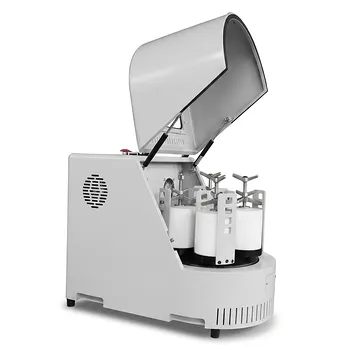
Vertical Semi Circular Planetary Ball Mill for Laboratory Precision Grinding

High Energy Planetary Ball Mill for Nano Scale Grinding and Mechanical Alloying

Heavy Duty Horizontal Planetary Ball Mill for Efficient Industrial Grinding and Sample Preparation

Vertical Production Planetary Ball Mill for High Throughput Powder Processing

360° Rotating Omnidirectional Laboratory Planetary Ball Mill for Homogeneous Ultra-Fine Grinding and Mixing

Vertical Square Planetary Ball Mill for Laboratory Sample Preparation and Nanoscale Grinding

Miniature Planetary Ball Mill with Vacuum Grinding and High Efficiency for Laboratory Sample Preparation

High Energy Omnidirectional Planetary Ball Mill 16L

High Energy Laboratory Planetary Ball Mill for Nano Grinding and Material Science Sample Preparation
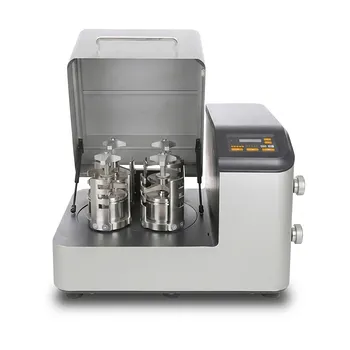
High Energy Planetary Ball Mill for Nano Scale Grinding and Colloidal Mixing in Material Science Research
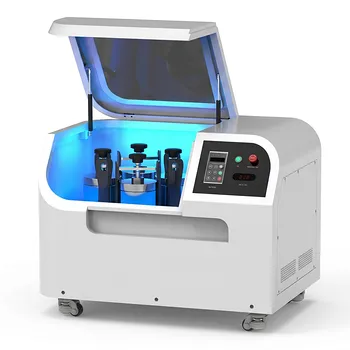
Planetary Ball Mill 12L
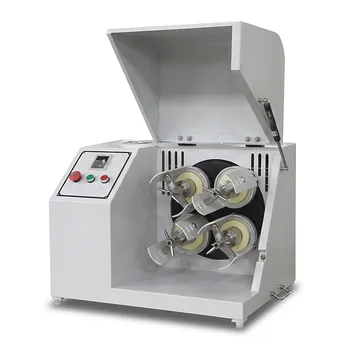
Horizontal Light Duty Planetary Ball Mill for Laboratory Sample Preparation

High Energy Omnidirectional Planetary Ball Mill 20L
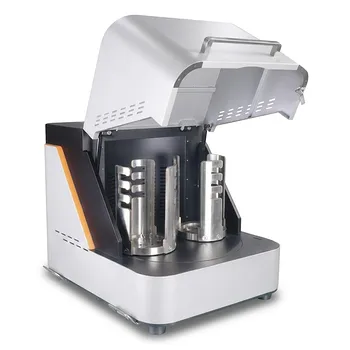
High Energy Laboratory Planetary Ball Mill for Nano Grinding and Colloidal Mixing of Hard and Brittle Materials
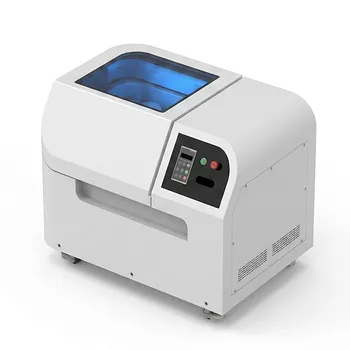
8L Planetary Ball Mill for Laboratory Grinding and Sample Preparation
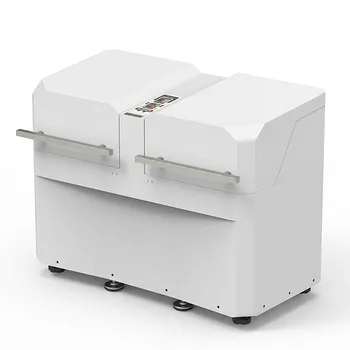
Dual Station Planetary Ball Mill 24L
Multi-Platform Nanoscale High-Energy Vibratory Ball Mill
Nano High Energy Vibratory Ball Mill for Laboratory Sample Preparation
Dual Jar High Energy Vibratory Ball Mill