Why are silicon carbide grinding balls typically selected as the grinding media? Ensure Purity & Efficient Milling
Updated 4 months ago
The selection of silicon carbide (SiC) grinding balls is primarily driven by the "identical material" principle. Using SiC media to mill SiC powder ensures that any inevitable wear debris from the balls is chemically identical to the powder itself. This eliminates the risk of introducing foreign contaminants that would otherwise degrade the high purity and microstructural integrity of the final sintered ceramic.
Silicon carbide grinding balls are chosen because their extreme hardness provides the kinetic energy needed to pulverize SiC particles while their chemical composition ensures that any wear debris is self-contaminating rather than foreign. This strategy is essential for maintaining the material purity required for high-performance ceramic applications.
The Principle of Material Homogenization
Eliminating Heterogeneous Impurities
Silicon carbide is a high-purity material used in demanding environments where even trace amounts of foreign atoms can cause failure. By using SiC grinding balls, any material lost from the media during the high-energy collision process is compositionally identical to the matrix powder. This "homogenization" prevents the introduction of iron, alumina, or other metallic impurities that would alter the chemical profile of the final product.
Maintaining Microstructural Stability
Foreign impurities can create localized defects or unwanted phases during the sintering process. Using identical materials ensures that the microstructural stability of the pressureless sintered ceramic remains intact. This consistency is vital for achieving the specific mechanical and thermal properties expected of high-grade silicon carbide components.
Mechanical Requirements for Milling Hard Ceramics
Matching Hardness for Effective Energy Transfer
Silicon carbide is one of the hardest materials available, making it difficult to pulverize with softer media. High-hardness SiC balls provide the necessary mechanical impact and shear force to break down raw particles into sub-micron sizes. Without this hardness match, the grinding media would wear down rapidly without effectively refining the target powder.
Optimizing Particle Refinement
The goal of ball milling is to achieve a specific particle size distribution to improve sintering density. SiC media possess the structural rigidity to transfer kinetic energy efficiently through the slurry or powder bed. This results in a more uniform and finely ground powder, which is a prerequisite for high-performance ceramic manufacturing.
Chemical Stability and Longevity
In addition to hardness, silicon carbide exhibits exceptional chemical stability, meaning it does not react with the milling environment or processing fluids. This inert nature ensures that the media remains effective over long milling cycles without degrading or leaching unwanted ions into the mixture. In some cases, trace SiC wear can even act as a sintering aid, further assisting in the densification of the final ceramic part.
Understanding the Trade-offs
Density vs. Impact Energy
While SiC is hard, it is significantly less dense than alternative media like tungsten carbide. Because kinetic energy is a function of mass, tungsten carbide balls can sometimes achieve faster particle reduction; however, they introduce heavy metal impurities that SiC media avoid.
Brittleness and Chipping
As a ceramic, SiC media is more brittle than steel or other metallic grinding options. Under extreme high-energy milling conditions, there is a risk of the balls chipping or fracturing if the mill speed is not properly calibrated.
Initial Procurement Costs
The cost of high-quality silicon carbide grinding balls is generally higher than that of alumina or steel media. However, this higher upfront investment is typically offset by the increased purity and performance of the final sintered product, which is often a non-negotiable requirement in advanced technical ceramics.
How to Apply This to Your Process
Choosing the Right Strategy
- If your primary focus is maximum chemical purity: You must use silicon carbide grinding balls to adhere to the principle of using identical materials.
- If your primary focus is rapid particle size reduction: Consider using tungsten carbide media for its higher density, provided your application can tolerate trace tungsten contamination.
- If your primary focus is uniform powder distribution: Utilize a mixed ratio of large (e.g., 10mm) and small (e.g., 3mm) SiC balls to combine high impact energy with increased contact points for shear.
- If your primary focus is cost-effective sintering aids: Monitor the wear rate of your SiC media, as the trace additions can occasionally improve the final densification of the ceramic matrix.
Selecting the appropriate grinding media is the most critical step in ensuring the chemical and physical integrity of high-performance silicon carbide ceramics.
Summary Table:
| Feature | Advantage | Impact on Final Product |
|---|---|---|
| Material Identicality | Eliminates foreign chemical contamination | Maintains high-purity chemical profile |
| Extreme Hardness | Efficient energy transfer & particle reduction | Achieves sub-micron particle distribution |
| Chemical Stability | Inert reaction with processing fluids | Ensures long-term media longevity |
| Microstructural Control | Prevents unwanted phases during sintering | Guarantees mechanical & thermal stability |
Elevate Your Material Research with Precision Engineering
Achieving high-purity results in silicon carbide ceramics requires more than just the right media—it requires a complete, integrated preparation strategy. At [Company Name], we provide comprehensive laboratory sample preparation solutions tailored for material science professionals specializing in powder processing and advanced compaction.
Our extensive equipment lineup is designed to handle the most demanding materials:
- Advanced Milling: Planetary ball mills, jet mills, sand/bead mills, and rotor mills for precise particle refinement.
- Preparation & Sizing: Jaw/roll crushers, cryogenic grinders, and vibratory/air-jet sieve shakers for uniform distribution.
- High-Pressure Compaction: A full spectrum of hydraulic presses, including Cold/Warm Isostatic Presses (CIP/WIP), hot presses, and vacuum hot presses for superior densification.
- Mixing Excellence: High-efficiency powder and defoaming mixers for perfectly homogenized slurries.
Whether you are refining high-hardness ceramics or preparing XRF pellets, our expertise ensures your process remains contamination-free and efficient.
Ready to optimize your laboratory workflow?
Contact our technical experts today to find the perfect equipment match for your material challenges.
References
- Yeongjun Oh, Hyun‐Sik Kim. Effect of carbon content on electrical, thermal, and mechanical properties of pressureless sintered SiC ceramics. DOI: 10.1111/jace.20562
Mentioned Products
- Vertical Semi Circular Planetary Ball Mill for Laboratory Precision Grinding
- High Energy Laboratory Planetary Ball Mill for Nano Grinding and Material Science Sample Preparation
- 8L Planetary Ball Mill for Laboratory Grinding and Sample Preparation
- Heavy Duty Horizontal Planetary Ball Mill for Efficient Industrial Grinding and Sample Preparation
- Vertical Square Planetary Ball Mill for Laboratory Sample Preparation and Nanoscale Grinding
People Also Ask
- What role does a planetary ball mill play in the synthesis of Li6PS5Cl (LPSCl)? Unlock High Ionic Conductivity
- Why is a planetary ball mill essential for SiBCN-rGO wet-spinning? Achieve Superior Dispersion and Spinnability
- Why is an intermittent grinding process required for perovskites in a planetary ball mill? Ensure Stability & Purity
- Why is a planetary ball mill required for PET micronization? Ensure Accurate Chemical Analysis of Reprocessed PET
- How does mechanized planetary ball milling compare to manual agate grinding? Optimize sulfide standard material precision.

Tech Team · PowderPreparation
Last updated on May 14, 2026
Related Products
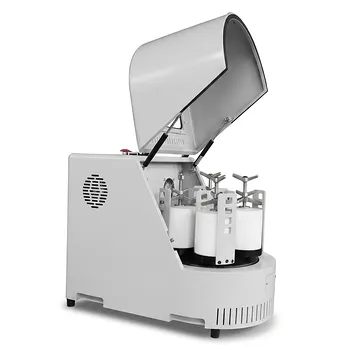
Vertical Semi Circular Planetary Ball Mill for Laboratory Precision Grinding

High Energy Laboratory Planetary Ball Mill for Nano Grinding and Material Science Sample Preparation
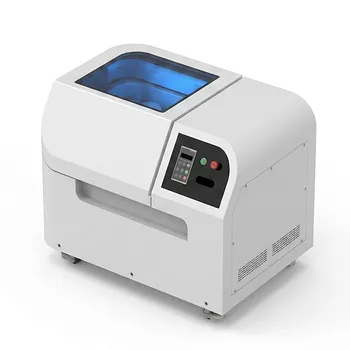
8L Planetary Ball Mill for Laboratory Grinding and Sample Preparation
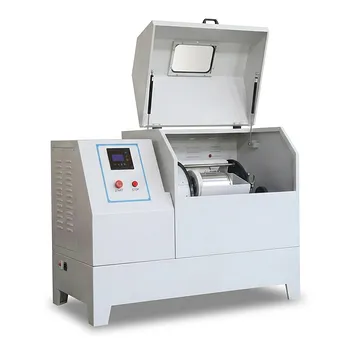
Heavy Duty Horizontal Planetary Ball Mill for Efficient Industrial Grinding and Sample Preparation

Vertical Square Planetary Ball Mill for Laboratory Sample Preparation and Nanoscale Grinding
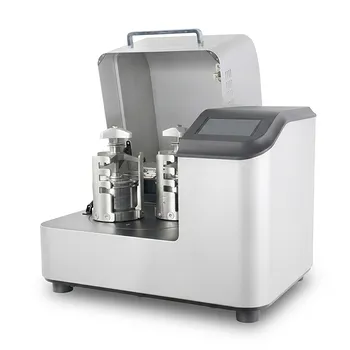
High Energy Planetary Ball Mill for Nano Scale Grinding and Mechanical Alloying