Why are silica grinding balls preferred as the grinding media for milling kaolin and sawdust mixtures? Maximize Purity
Updated 5 months ago
Silica grinding balls are the preferred media for milling kaolin and sawdust mixtures because they ensure chemical compatibility and prevent the introduction of foreign impurities. Since kaolin is naturally rich in silica, using grinding media of the same composition preserves the phase purity of the mixture. This is essential for maintaining the specific mechanical properties and chemical integrity required for high-quality mullite ceramic composites.
Using silica grinding balls adheres to the "identical material" principle, where the grinding media matches the chemical signature of the raw material. This strategy eliminates the risk of metallic or chemical contamination that would otherwise degrade the final ceramic product.
Maintaining Chemical Compatibility and Purity
The Principle of Material Homogeneity
In high-energy milling, the grinding media inevitably experiences a degree of wear and shedding. By using silica balls to grind kaolin (a silica-rich mineral), any trace debris from the balls becomes part of the raw material matrix rather than a contaminant.
Eliminating Metallic Contamination
Unlike steel or other metallic media, silica does not introduce iron or other metal powders into the mixture. This is critical for ceramic applications where metallic particles can cause discoloration, structural defects, or unwanted chemical reactions during the firing process.
Preserving Phase Purity
The primary goal of milling kaolin and sawdust is often the creation of mullite ceramic composites. Maintaining a precise chemical ratio is vital for the successful transformation of these raw materials into the desired crystalline phases during sintering.
Optimizing the Milling Process
Energy Impact and Particle Size Reduction
Silica balls provide the necessary mechanical impact to reduce the particle size of both the soft sawdust and the denser kaolin. This process increases the specific surface area of the particles, which significantly enhances the reactivity of the mixture.
Achieving Powder Homogeneity
The interaction between the silica media and the feedstock ensures a uniform pulverization of the materials. This results in a highly homogeneous powder where the sawdust (a pore-forming agent) is perfectly distributed within the kaolin matrix.
Improving Final Product Density
Consistent particle size distribution, achieved through effective milling, leads to better electrolyte wetting and powder compaction. This ultimately improves the density and ultimate strength of the final ceramic or mineral admixture.
Understanding the Trade-offs
Wear Resistance vs. Purity
While zirconia or alumina grinding balls offer superior hardness and lower wear rates, they introduce foreign elements (Zirconium or Aluminum) into a pure silica-kaolin system. Silica balls are chosen because chemical "invisibility" is more important than the absolute longevity of the grinding media.
Energy Transfer Efficiency
Silica has a lower density than media like zirconia, meaning it may transfer less energy per impact. To compensate for this, operators may need to adjust rotation speeds or increase the number of milling cycles to achieve the desired fineness.
Suitability for Specific Feedstocks
Silica media is ideal for kaolin but may be less effective for extremely hard ores where high-density energy transfer is required. In the context of sawdust and kaolin, however, the hardness of silica is more than sufficient to achieve the necessary particle reduction.
Making the Right Choice for Your Goal
To ensure the best results when milling mineral mixtures, consider your primary objective:
- If your primary focus is Phase Purity: Use silica grinding balls to ensure that media wear does not alter the chemical composition of your kaolin-based feedstock.
- If your primary focus is Reducing Processing Time: Consider higher-density media like zirconia, but only if your process can tolerate trace amounts of foreign chemical stabilization.
- If your primary focus is Eliminating Metal Flaking: Utilize a ceramic-lined mill (porcelain or silica) in conjunction with silica media to prevent any metallic contact.
By matching the chemistry of your grinding media to your raw material, you ensure that the final product remains structurally sound and chemically untainted.
Summary Table:
| Feature | Silica Grinding Media Benefit | Impact on Kaolin/Sawdust Mixture |
|---|---|---|
| Chemical Purity | Matches kaolin's silica-rich composition | Prevents foreign element contamination |
| Contamination Control | Zero metallic debris (unlike steel media) | Avoids discoloration and structural defects |
| Material Phase | Preserves precise chemical ratios | Ensures successful mullite phase transformation |
| Homogeneity | Uniform pulverization of soft & dense parts | Even distribution of pore-forming sawdust |
| Energy Efficiency | Sufficient hardness for mineral/fiber mix | Achieves optimal specific surface area |
Elevate Your Material Research with Precision Sample Prep
Achieving phase purity in ceramic composites starts with the right equipment and media. At [Company Name], we provide complete laboratory sample preparation solutions for material science, specializing in high-performance powder processing and compaction.
Whether you need to optimize your milling process or achieve superior density in your final pellets, our extensive product line has you covered:
- Advanced Milling: Planetary ball mills, jet mills, and cryogenic grinders for ultra-fine particle reduction.
- Premium Media: High-purity grinding media tailored to your specific chemical requirements.
- Compaction Excellence: A full spectrum of hydraulic presses, including Cold Isostatic Presses (CIP), vacuum hot presses, and XRF pellet presses.
- Processing Tools: Jaw/roll crushers, sieve shakers, and specialized powder/defoaming mixers.
Ready to eliminate contamination and improve your powder homogeneity?
Contact our technical experts today to find the perfect equipment match for your laboratory's unique challenges!
References
- Emese Kurovics, László A. Gömze. EXAMINATION OF THE CARBONIZATION PROCESS USING KAOLIN AND SAWDUST. DOI: 10.2495/mc190021
Mentioned Products
- Vertical Semi Circular Planetary Ball Mill for Laboratory Precision Grinding
- High Energy Laboratory Planetary Ball Mill for Nano Grinding and Material Science Sample Preparation
- Vertical Square Planetary Ball Mill for Laboratory Sample Preparation and Nanoscale Grinding
- Miniature Planetary Ball Mill with Vacuum Grinding and High Efficiency for Laboratory Sample Preparation
- High Energy Hybrid Vibratory Ball Mill for Grinding Mixing and Cell Disruption
People Also Ask
- What role does a planetary ball mill play in the synthesis of Li6PS5Cl (LPSCl)? Unlock High Ionic Conductivity
- Why is a planetary ball mill essential for SiBCN-rGO wet-spinning? Achieve Superior Dispersion and Spinnability
- Why is an intermittent grinding process required for perovskites in a planetary ball mill? Ensure Stability & Purity
- Why is a planetary ball mill required for PET micronization? Ensure Accurate Chemical Analysis of Reprocessed PET
- How does mechanized planetary ball milling compare to manual agate grinding? Optimize sulfide standard material precision.

Tech Team · PowderPreparation
Last updated on May 14, 2026
Related Products
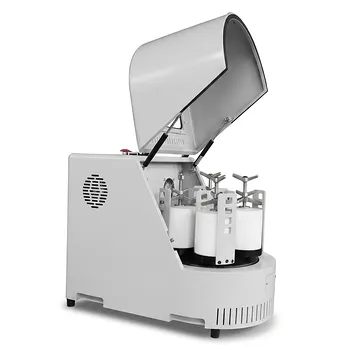
Vertical Semi Circular Planetary Ball Mill for Laboratory Precision Grinding

High Energy Laboratory Planetary Ball Mill for Nano Grinding and Material Science Sample Preparation

Vertical Square Planetary Ball Mill for Laboratory Sample Preparation and Nanoscale Grinding

Miniature Planetary Ball Mill with Vacuum Grinding and High Efficiency for Laboratory Sample Preparation
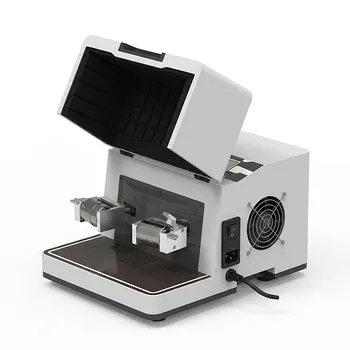
High Energy Hybrid Vibratory Ball Mill for Grinding Mixing and Cell Disruption
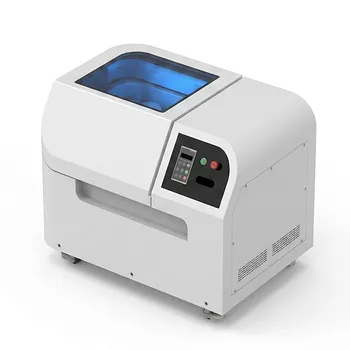
8L Planetary Ball Mill for Laboratory Grinding and Sample Preparation
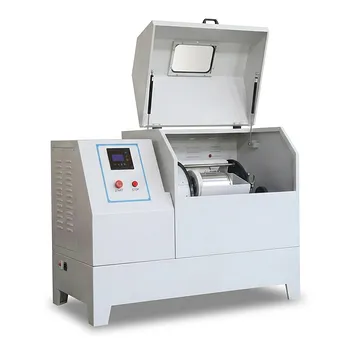
Heavy Duty Horizontal Planetary Ball Mill for Efficient Industrial Grinding and Sample Preparation
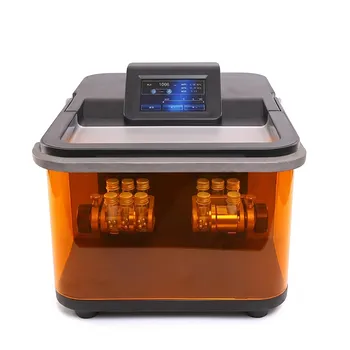
High Throughput Micro Ball Mill for Cryogenic Grinding and Laboratory Cell Disruption
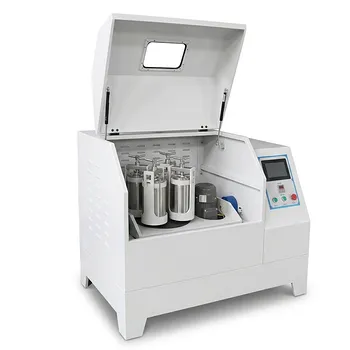
360° Rotating Omnidirectional Laboratory Planetary Ball Mill for Homogeneous Ultra-Fine Grinding and Mixing
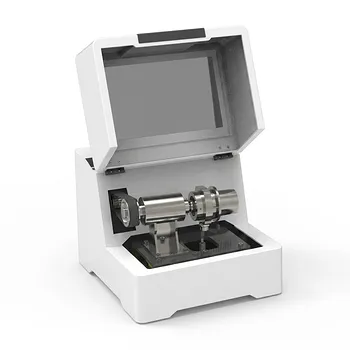
Single Tank High Energy Vibratory Ball Mill for Laboratory Grinding and Mixing

High Energy Planetary Ball Mill for Nano Scale Grinding and Mechanical Alloying
Laboratory Basket Sand Mill for Wet Grinding and Dispersion of Viscous Slurries
High Energy Omnidirectional Planetary Ball Mill 16L