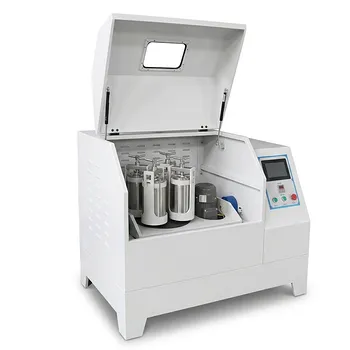
What is the role of lab-grade grinding in biomass soil modification? Unlock Full Material Reactivity & Integration
Updated 5 months ago
Laboratory-grade grinding equipment serves as the critical bridge between raw organic waste and effective soil amendments. It utilizes mechanical shearing and impact forces to pulverize fibrous biomass into fine, uniform particles. This reduction in size significantly increases the specific surface area, facilitating uniform thermal treatment and ensuring that the biomass integrates thoroughly with the soil matrix for enhanced stability and nutrient delivery.
To achieve effective soil modification, biomass must be transformed from a heterogeneous raw material into a standardized reactant. Precision grinding maximizes the material's specific surface area, which is the fundamental driver for both chemical reactivity and physical integration within the soil.
Maximizing Chemical and Physical Reactivity
Increasing Specific Surface Area
The primary role of grinding is the drastic expansion of the specific surface area of the biomass. By reducing coarse materials like Jatropha stems or woody branches into fine powders, more surface molecules are exposed for chemical interaction.
This increased exposure is vital for the thorough mixing of modification agents with arid or expansive soils. It ensures that the biomass can act effectively as a filler or a chemical stabilizer across the entire soil volume.
Breaking Structural Barriers
Biomass possesses a naturally fibrous and complex physical construction that resists integration. Mechanical grinding uses shear forces to break down these external barriers, such as mineralized matrices in eggshells or tough cellulose in stalks.
Once these barriers are breached, the internal microporous structures are exposed. This exposure is a prerequisite for the biomass to act as an effective adsorbent or to allow for the infiltration of subsequent chemical treatments.
Enhancing Subsequent Processing Stages
Facilitating Uniform Heat Transfer
In many soil modification workflows, biomass undergoes low-temperature torrefaction or roasting. Grinding ensures that heat transfer remains uniform across all particles during these thermal processes.
Without standardized particle sizes, larger chunks may remain raw at the core while smaller particles over-process. This uniformity is essential for creating a consistent carbonized product that behaves predictably when added to the soil.
Improving Physical Interlocking and Densification
When biomass is used for soil stabilization through pelletization, fine grinding enhances physical interlocking. Smaller particles (typically less than 2mm) undergo better plastic deformation under pressure.
This allows fibrous components to bond effectively without the need for additional chemical binders. The result is a high-density amendment that maintains its structural integrity within the soil environment.
Understanding the Trade-offs and Limitations
Energy Consumption vs. Particle Fineness
While finer particles generally offer better reactivity, the energy required to achieve ultra-fine powders increases exponentially. Laboratory-grade equipment is efficient, but researchers must balance the desired fineness against the mechanical wear and time required for processing.
Heat Generation During Grinding
High-speed mechanical shearing generates significant heat, which can lead to the thermal degradation of sensitive organic compounds. If the biomass contains volatile components intended for soil enrichment, specialized cooling or interval grinding may be necessary to preserve material integrity.
Sample Representative Accuracy
Grinding must be controlled to ensure the resulting "standardized dust" accurately reflects the intended application. Excessive pulverization can sometimes alter the original grain size of the soil components themselves if they are ground together, potentially masking the true physical characteristics of the soil-biomass interface.
How to Apply This to Your Project
Selecting the Right Grinding Strategy
To optimize biomass pretreatment for soil modification, align your equipment settings with your ultimate stabilization goal.
- If your primary focus is Chemical Stabilization: Prioritize high-fineness grinding to maximize specific surface area and ensure total exposure of internal micropores for reactive contact.
- If your primary focus is Physical Filling/Densification: Aim for a specific particle size distribution (often <2mm) that facilitates interlocking and plastic deformation during compression.
- If your primary focus is Nutrient Extraction/Analysis: Use mechanical grinding to break down agglomerates without altering the base grain size, ensuring all trapped ions are released for accurate measurement.
Precision grinding transforms raw biomass from a waste product into a high-performance engineered material for soil optimization.
Summary Table:
| Key Role | Primary Benefit | Impact on Soil Modification |
|---|---|---|
| Surface Area Expansion | Maximizes chemical exposure | Faster nutrient release & better chemical stability |
| Structural Breakdown | Breaches fibrous barriers | Exposes internal micropores for superior adsorption |
| Thermal Uniformity | Consistent heat transfer | Produces standardized carbonized products |
| Particle Engineering | Enhanced physical interlocking | Improves soil density and structural integrity |
Elevate Your Biomass Pretreatment with Precision Engineering
To transform raw organic waste into high-performance soil amendments, you need equipment that ensures consistency and precision. We provide complete laboratory sample preparation solutions tailored for material science and soil research.
Our extensive product line is designed to handle every stage of your workflow:
- Advanced Milling & Grinding: Achieve the perfect specific surface area with our planetary ball mills, jet mills, rotor mills, and cryogenic grinders.
- Initial Processing: Heavy-duty jaw and roll crushers for breaking down coarse biomass.
- Density & Compaction: A full spectrum of hydraulic presses, including Cold/Warm Isostatic Presses (CIP/WIP) and XRF pellet presses, to ensure superior physical interlocking.
- Sizing & Mixing: Sieve shakers and high-efficiency powder mixers for standardized reactant preparation.
Ready to optimize your soil modification project? Contact our experts today to discuss how our specialized powder processing and compaction equipment can enhance your laboratory's efficiency and results.
References
- Tatsuki Ogura, Jun Kikuchi. Improvement of physical, chemical and biological properties of aridisol from Botswana by the incorporation of torrefied biomass. DOI: 10.1038/srep28011
Mentioned Products
- Multifunctional High Efficiency High Speed Laboratory Grinder
- Small High-Speed Laboratory Grinder for Powder Processing
- High Speed Laboratory Grinder Efficient Stainless Steel Powder Pulverizer Universal Material Science Mill for Sample Preparation
- Small High Speed Grinder for Laboratory Sample Preparation
- High Efficiency High Speed Grinder Laboratory Mill 1300W 25000rpm
People Also Ask
- What role does a laboratory grinder play in the pretreatment of sunflower seed shell-based adsorbents? Boost Efficiency.
- How does a laboratory grinder or mill enhance the adsorption performance of agricultural waste materials? Boost Surface Area
- What is the function of laboratory grinding equipment in ZnO nanosphere sol-gel synthesis? Ensure Superior Particle Size
- Why use lab grinding for eggshell & husk carbon materials? Maximize Surface Area & Heat Transfer for Better Adsorption
- Why is grinding equipment necessary for SnO2-Sb2O3 xerogels? Maximize surface area and photocatalytic activity.

Tech Team · PowderPreparation
Last updated on May 14, 2026
Related Products
Multifunctional High Efficiency High Speed Laboratory Grinder
Small High-Speed Laboratory Grinder for Powder Processing
High Speed Laboratory Grinder Efficient Stainless Steel Powder Pulverizer Universal Material Science Mill for Sample Preparation
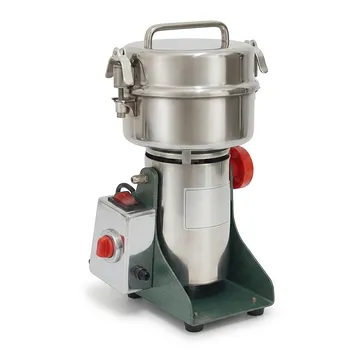
Small High Speed Grinder for Laboratory Sample Preparation
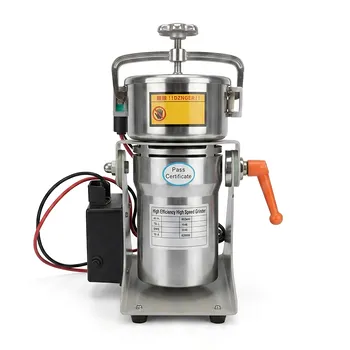
High Efficiency High Speed Grinder Laboratory Mill 1300W 25000rpm
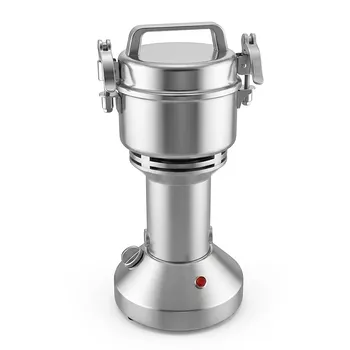
Small High Speed Upright Grinder for Laboratory Sample Preparation
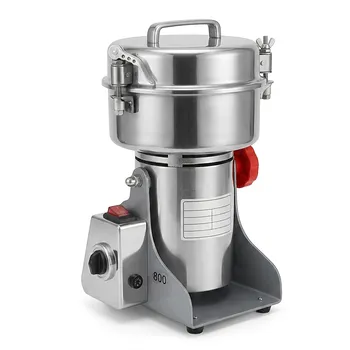
Small High-Speed Laboratory Grinder for Rapid Sample Preparation
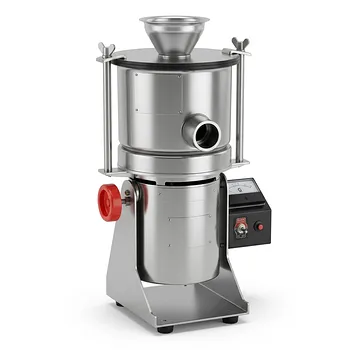
Laboratory Ultrafine Impact and Airflow Grinder for Precise Particle Size Control
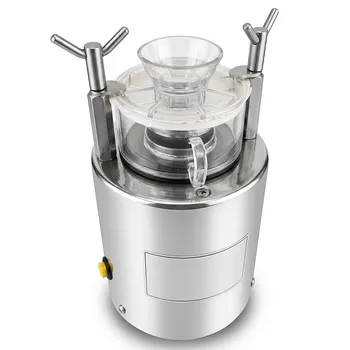
Laboratory Desktop Ultra Fine Powder Grinder High Speed Micronizing Pulverizer
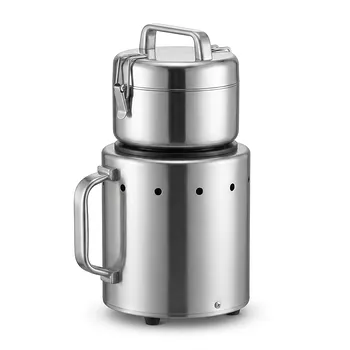
Small High Speed Grinder for Laboratory Sample Preparation
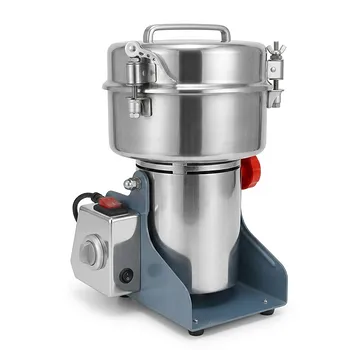
Small High-Speed Grinder for Efficient Laboratory Sample Preparation
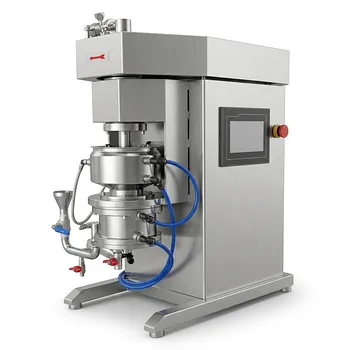
Small Ceramic Structure Laboratory Sand Mill Nanoscale Grinding Dispersion Equipment Seal-less Screen-less Design
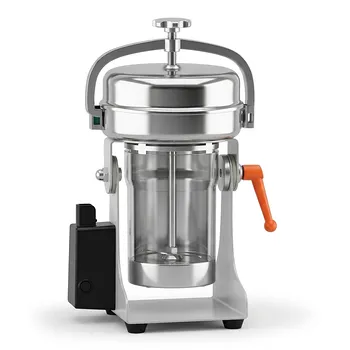
High Efficiency High Speed Grinder 2200W 25000 RPM Laboratory Sample Preparation
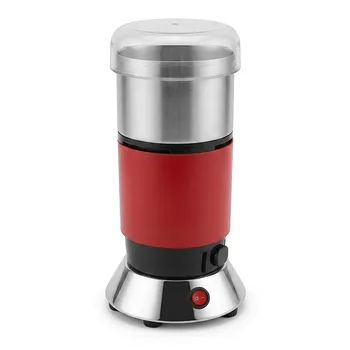
Micro Solid Sample Grinder High Speed Pulverizer for Laboratory Small Batch Grinding
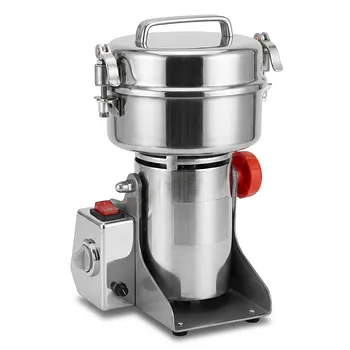
High Speed Laboratory Powder Grinder Small Batch Sample Preparation Mill
Vibratory Superfine Grinder for Ultra Fine Laboratory Powder Milling
Ultra Centrifugal Mill High Speed Laboratory Grinder for Fibrous and Brittle Sample Preparation
Laboratory Disc Mill for Fine Sample Preparation of Hard and Brittle Materials
Small Airflow Ultra-Fine Grinder for Laboratory Sample Preparation