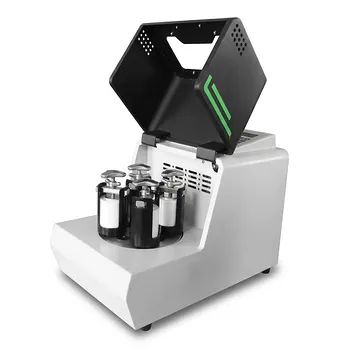
Why use zirconia media for BZCY ceramic powders? Ensure Maximum Purity and Electrochemical Performance
Updated 5 months ago
Zirconia grinding media is the industry standard for processing Barium Zirconium Cerium Yttrium (BZCY) ceramic powders. This preference stems from zirconia’s exceptional hardness and high density, which facilitate rapid powder refinement while ensuring minimal contamination. Because BZCY is a zirconium-containing material, any trace wear from the media is chemically compatible with the powder, preserving the material's critical electrochemical performance.
The use of zirconia media provides the high-energy impact necessary for BZCY powder refinement without the risk of introducing foreign impurities. By matching the chemical composition of the media to the material being processed, you ensure the structural and electrical integrity of the final ceramic.
Maximizing Grinding Efficiency and Powder Refinement
The Role of High Density and Kinetic Energy
High-purity zirconia is notably dense, which allows for a more efficient transfer of mechanical energy during the milling process. This high density provides the necessary kinetic energy to pulverize tough ceramic precursors into fine, uniform powders.
Extreme Hardness for Abrasive Materials
With a hardness rating often exceeding 12.6 Hv, zirconia can withstand the abrasive nature of BZCY without significant spalling. This durability allows for long-duration high-speed milling sessions (often 8 to 24 hours) that are required to achieve the desired particle size distribution.
Maintaining Chemical Purity and Electrochemical Integrity
Compositional Alignment with BZCY
The most significant advantage is that BZCY is a zirconium-containing proton conductor. If the grinding media experiences negligible wear, the resulting debris consists of zirconium-based particles that are compositionally similar to the base material.
Preventing Foreign Ion Contamination
Using non-zirconia media, such as alumina or steel, can introduce "foreign" ions like aluminum or iron into the BZCY lattice. These impurities can migrate to grain boundaries, significantly degrading the material's electrochemical performance and electrical conductivity.
Chemical Inertia and Stability
Zirconia exhibits excellent chemical inertia, meaning it does not react with the BZCY precursors during the high-energy milling process. This stability ensures that the final ceramic maintains the precise stoichiometry required for high-performance fuel cell or sensor applications.
Understanding the Trade-offs
Initial Investment Costs
Zirconia jars and balls are significantly more expensive than standard alumina or stainless steel alternatives. However, the cost is typically offset by the longevity of the media and the high value of the uncontaminated BZCY powder.
Media Selection and Wear Monitoring
While zirconia is wear-resistant, it is not invincible, and media can eventually degrade or undergo phase transformations under extreme stress. Regular inspection of the balls for rounding and size reduction is necessary to maintain consistent milling energy over time.
How to Apply This to Your Project
Recommendations for Material Synthesis
- If your primary focus is electrochemical performance: Always use high-purity zirconia media to prevent "poisoning" the grain boundaries with foreign metallic or oxide impurities.
- If your primary focus is rapid particle size reduction: Leverage the high density of zirconia by using a high ball-to-powder ratio to maximize impact energy.
- If your primary focus is long-term cost management: Implement a strict media cleaning and rotation protocol to extend the life of your zirconia jars and prevent cross-contamination between batches.
Selecting zirconia for BZCY processing is the most effective way to balance the physical demands of high-energy milling with the rigorous purity requirements of advanced proton-conducting ceramics.
Summary Table:
| Key Feature | Benefit for BZCY Processing | Advantage of Zirconia |
|---|---|---|
| High Density | Increased kinetic energy | Rapid and uniform powder refinement |
| Extreme Hardness | Resistance to abrasive materials | Minimal media wear during long milling cycles |
| Chemical Matching | Compositional alignment | Wear debris is compatible with BZCY lattice |
| Chemical Inertia | Maintains stoichiometry | No reaction with ceramic precursors |
| Purity Control | Prevents "poisoning" | Eliminates foreign ions (Fe, Al) contamination |
Elevate Your Material Research with Precision Powder Solutions
Achieving the perfect stoichiometry and electrochemical performance in BZCY ceramics requires the right equipment. At [Insert Brand Name], we provide complete laboratory sample preparation solutions tailored for advanced material science. Our expertise in powder processing and compaction equipment ensures your research is backed by industry-leading technology.
Our extensive product line includes:
- Milling & Grinding: High-energy planetary ball mills, jet mills, and liquid nitrogen cryogenic grinders for ultra-fine particle sizes.
- Sample Preparation: Specialized crushers (jaw/roll), sieve shakers, and high-performance powder mixers.
- Compaction Excellence: A full spectrum of hydraulic presses, including Cold/Warm Isostatic Presses (CIP/WIP), vacuum hot presses, and XRF pellet presses.
Whether you are refining proton-conducting ceramics or developing new alloys, our tools are designed to prevent contamination and maximize efficiency. Contact us today to find the ideal equipment configuration for your laboratory!
References
- Moritz Kindelmann, Olivier Guillon. Highly conductive grain boundaries in cold-sintered barium zirconate-based proton conductors. DOI: 10.1039/d3ta07076j
Mentioned Products
- High Energy Omnidirectional Planetary Ball Mill 16L
- Vertical Semi Circular Planetary Ball Mill for Laboratory Precision Grinding
- Heavy Duty Horizontal Planetary Ball Mill for Efficient Industrial Grinding and Sample Preparation
- High Energy Laboratory Planetary Ball Mill for Nano Grinding and Material Science Sample Preparation
- 8L Planetary Ball Mill for Laboratory Grinding and Sample Preparation
People Also Ask
- What role does an omni-directional planetary ball mill play in brass/cobalt antimonide pretreatment? Achieve Nano-Scale Homogeneity.
- What is the role of a high-energy planetary ball mill in Li2ZrO3 and LBS prep? Achieve Superior Electrolyte Density
- What role does a high-energy planetary ball mill play in processing quenched bioactive glass? Achieve Nano-Scale Precision
- What role does a planetary ball mill play in nano-mineral filler prep? Achieve Sub-100nm Precision & Performance
- What role does a high-energy planetary ball mill play in magnesium-based hydrogen storage alloy preparation?

Tech Team · PowderPreparation
Last updated on May 14, 2026
Related Products
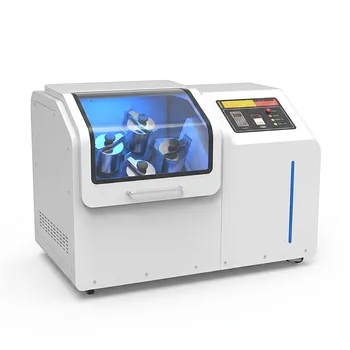
High Energy Omnidirectional Planetary Ball Mill 16L
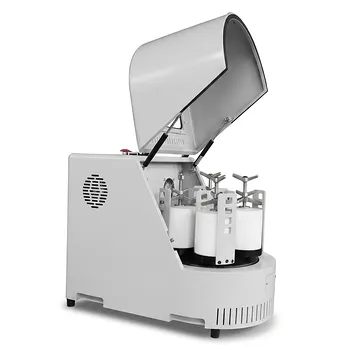
Vertical Semi Circular Planetary Ball Mill for Laboratory Precision Grinding
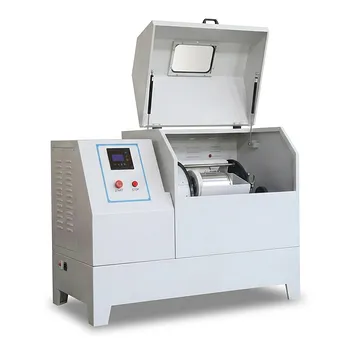
Heavy Duty Horizontal Planetary Ball Mill for Efficient Industrial Grinding and Sample Preparation
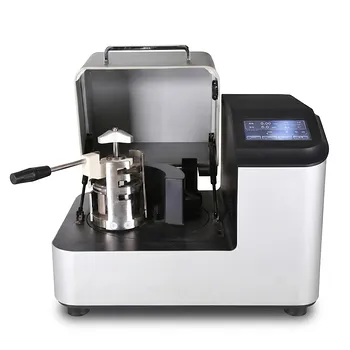
High Energy Laboratory Planetary Ball Mill for Nano Grinding and Material Science Sample Preparation
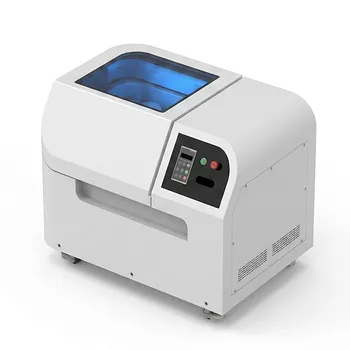
8L Planetary Ball Mill for Laboratory Grinding and Sample Preparation