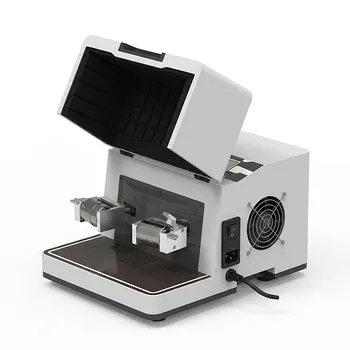
Why are zirconia grinding balls and jars preferred for ρ-alumina? Ensure High Purity & Efficiency in Wet Grinding
Updated 5 months ago
Zirconia grinding media and jars are the preferred choice for $\rho$-alumina processing because they provide a high-energy, low-contamination environment essential for maintaining material purity. Their extreme hardness and wear resistance ensure that the resulting micron-scale powder remains free from metallic or silicon impurities that would otherwise degrade the alumina's electrical and structural properties.
The selection of zirconia components is driven by the need to balance high-impact grinding efficiency with absolute chemical purity. By minimizing media wear and ensuring compositional compatibility, zirconia protects the critical dielectric and mechanical characteristics of high-purity alumina.
The Mechanics of High-Purity Refinement
Exceptional Hardness and Wear Resistance
Zirconia possesses extreme hardness and wear resistance, which are critical during the prolonged ball milling required for $\rho$-alumina. This durability ensures that the grinding media and jars do not shed significant amounts of material into the slurry.
By minimizing "self-wear," zirconia prevents the introduction of metallic or silicon impurities that are common when using lower-grade media. This is essential for producing high-purity, micron-scale powders that meet strict industrial specifications.
High Density and Kinetic Energy
Zirconia is characterized by high density, which allows the grinding balls to generate significant impact kinetic energy during the milling process. This energy is necessary to effectively break down powder agglomerates and achieve rapid refinement.
The increased energy efficiency significantly shortens the milling time required to reach the desired particle size. This not only improves throughput but also reduces the total duration the material is exposed to potential wear-related contamination.
Safeguarding Material Integrity
Preventing Abnormal Grain Growth
The presence of foreign impurities in $\rho$-alumina can lead to abnormal grain growth during subsequent sintering processes. These impurities act as catalysts or inhibitors that disrupt the uniform development of the ceramic microstructure.
Using zirconia media ensures the alumina system remains "clean," allowing for a controlled microstructural evolution. This results in a final product with consistent mechanical strength and predictable performance.
Maintaining Electrical Insulation Properties
High-purity alumina is frequently used for its electrical insulation properties, which are highly sensitive to trace contaminants. Metallic impurities introduced by inferior grinding media can create conductive paths or dielectric losses within the ceramic matrix.
Zirconia is chemically inert and stable, ensuring that the electrical integrity of the $\rho$-alumina is preserved. This makes it the standard choice for applications in electronics and high-voltage insulation.
Understanding the Trade-offs
Initial Capital Investment
The primary drawback of zirconia grinding components is their higher initial cost compared to alumina or hardened steel alternatives. For many operations, this represents a significant upfront expenditure in hardware and media inventory.
However, the extended service life provided by zirconia’s wear resistance often offsets the initial cost over time. Reduced contamination also lowers the rate of "rejected" batches, providing better long-term ROI.
Density-Related Equipment Stress
Because zirconia is significantly denser than many other ceramic media, it places higher mechanical stress on the ball mill’s motor and drive system. Equipment must be properly rated to handle the increased weight and momentum of a zirconia-loaded jar.
Media Compatibility and "Like-on-Like" Wear
While zirconia is highly resistant to wear, it is not invincible; trace amounts of zirconia debris may still enter the alumina. In many $\rho$-alumina applications, small amounts of zirconia are more tolerable or even beneficial (acting as a toughening agent) compared to detrimental metallic or silicon contaminants.
How to Apply This to Your Project
When selecting grinding media and jars for $\rho$-alumina, your choice should align with the specific purity and performance requirements of your end product.
- If your primary focus is Absolute Purity: Utilize high-purity zirconia (yttria-stabilized) for both balls and jars to eliminate metallic contamination and ensure optimal electrical insulation.
- If your primary focus is Processing Efficiency: Leverage the high density of zirconia to reduce milling cycles, ensuring the mill is calibrated for the increased weight of the media.
- If your primary focus is Cost Optimization: Consider using zirconia media in alumina-lined jars if the purity requirements allow for trace alumina wear, balancing performance with lower equipment costs.
By prioritizing material compatibility and kinetic efficiency, you ensure that your $\rho$-alumina retains the precise chemical and physical properties required for high-performance ceramic applications.
Summary Table:
| Feature | Advantage for ρ-alumina Processing | Impact on Final Product |
|---|---|---|
| Extreme Hardness | Minimizes self-wear and media erosion | Eliminates metallic/silicon impurities |
| High Density | Increases impact kinetic energy | Shortens milling time & improves throughput |
| Chemical Inertness | Prevents unwanted chemical reactions | Maintains electrical insulation properties |
| Wear Resistance | Provides a "clean" grinding environment | Ensures uniform grain growth during sintering |
| Durability | Long service life of balls and jars | Better long-term ROI despite initial cost |
Elevate Your Material Purity with Expert Grinding Solutions
Achieving micron-scale precision in $\rho$-alumina processing requires more than just high-quality media; it requires a complete, integrated approach to sample preparation. At [Your Brand Name], we specialize in providing comprehensive laboratory solutions for material science, focusing on high-performance powder processing and compaction.
Whether you need to eliminate contamination with our yttria-stabilized zirconia jars and balls or require robust equipment to handle high-density media, we have you covered. Our extensive product line includes:
- Advanced Milling: Planetary ball mills, jet mills, and cryogenic grinders for ultra-fine refinement.
- Sample Preparation: Jaw/roll crushers, sieve shakers (vibratory/air-jet), and high-precision mixers.
- Compaction Excellence: A full spectrum of hydraulic presses, including Cold/Warm Isostatic Presses (CIP/WIP), vacuum hot presses, and XRF pellet presses.
Don't let impurities compromise your dielectric or structural results. Contact our technical team today to find the perfect equipment configuration for your specific laboratory requirements.
References
- Wei Yi, Zuohua Liu. Preparation and Properties of Micron Near-Spherical Alumina Powders from Hydratable Alumina with Ammonium Fluoroborate. DOI: 10.3390/ma18194589
Mentioned Products
- Vertical Semi Circular Planetary Ball Mill for Laboratory Precision Grinding
- High Energy Laboratory Planetary Ball Mill for Nano Grinding and Material Science Sample Preparation
- Heavy Duty Horizontal Planetary Ball Mill for Efficient Industrial Grinding and Sample Preparation
- Vertical Square Planetary Ball Mill for Laboratory Sample Preparation and Nanoscale Grinding
- 8L Planetary Ball Mill for Laboratory Grinding and Sample Preparation
People Also Ask
- What role does a planetary ball mill play in the synthesis of Li6PS5Cl (LPSCl)? Unlock High Ionic Conductivity
- Why is a planetary ball mill essential for SiBCN-rGO wet-spinning? Achieve Superior Dispersion and Spinnability
- Why is an intermittent grinding process required for perovskites in a planetary ball mill? Ensure Stability & Purity
- Why is a planetary ball mill required for PET micronization? Ensure Accurate Chemical Analysis of Reprocessed PET
- How does mechanized planetary ball milling compare to manual agate grinding? Optimize sulfide standard material precision.

Tech Team · PowderPreparation
Last updated on May 14, 2026
Related Products
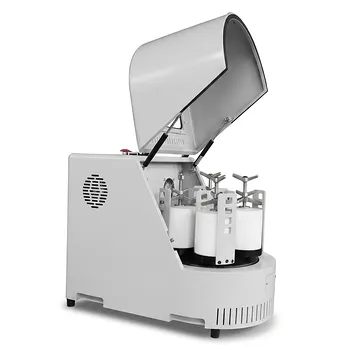
Vertical Semi Circular Planetary Ball Mill for Laboratory Precision Grinding

High Energy Laboratory Planetary Ball Mill for Nano Grinding and Material Science Sample Preparation
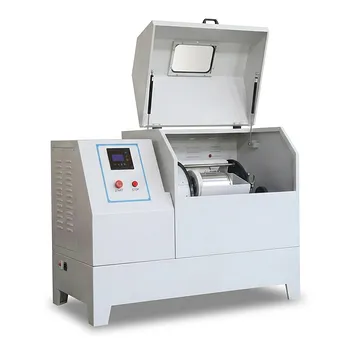
Heavy Duty Horizontal Planetary Ball Mill for Efficient Industrial Grinding and Sample Preparation

Vertical Square Planetary Ball Mill for Laboratory Sample Preparation and Nanoscale Grinding
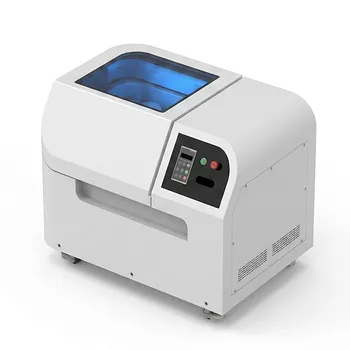
8L Planetary Ball Mill for Laboratory Grinding and Sample Preparation

Miniature Planetary Ball Mill with Vacuum Grinding and High Efficiency for Laboratory Sample Preparation

High Energy Planetary Ball Mill for Nano Scale Grinding and Mechanical Alloying
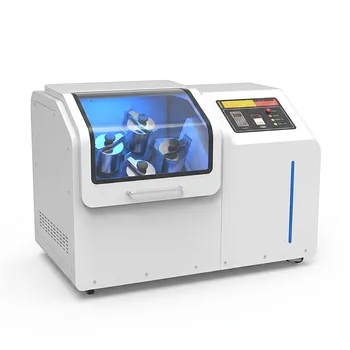
High Energy Omnidirectional Planetary Ball Mill 16L
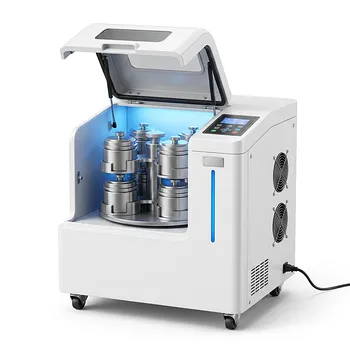
High Energy Omnidirectional Planetary Ball Mill 20L
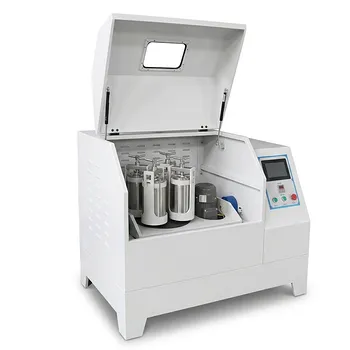
360° Rotating Omnidirectional Laboratory Planetary Ball Mill for Homogeneous Ultra-Fine Grinding and Mixing