Why are zirconia grinding balls frequently selected as the grinding media for nanomilling processes? High Purity Guide
Updated 4 months ago
Zirconia grinding balls are the industry standard for nanomilling because they possess a unique combination of high density and extreme hardness. These properties allow the media to generate the massive kinetic energy required to break down particles into the sub-micron range while exhibiting a wear rate so low that it preserves the chemical purity of the final product.
Core Takeaway: Zirconia is selected for its ability to deliver high-impact energy for efficient particle size reduction while maintaining chemical inertness and superior wear resistance, ensuring that nanomaterials remain free from significant media-induced contamination.
The Mechanics of Efficient Size Reduction
The Role of High Density in Kinetic Energy
Nanomilling requires overcoming the strong intermolecular forces of fine particles, which necessitates high-impact energy. Zirconia’s high density ensures that each collision between the media and the material provides sufficient kinetic energy to fracture tough structures.
Leveraging Hardness for Crushing Efficiency
The extreme hardness of zirconia allows it to maintain its shape and integrity when impacting hard or abrasive powders. This hardness ensures that the energy of the mill is directed entirely toward crushing the sample rather than deforming the grinding media itself.
Shortening the Preparation Cycle
Because zirconia balls deliver more power per impact than lighter alternatives, they significantly improve milling efficiency. This allows researchers and manufacturers to reach target particle sizes (often below 500 nanometers) in a much shorter time frame.
Protecting Material Purity and Integrity
Exceptional Wear Resistance
One of the primary challenges in high-energy milling is the introduction of impurities from the grinding media. Zirconia's superior wear resistance ensures that the physical erosion of the balls is kept to an absolute minimum, even during long-duration processes.
Chemical Stability and Inertness
Zirconia is chemically inert, meaning it will not react with the powders or solvents used during the milling process. This is critical for applications in biological nanosuspensions or high-purity electronic materials where any chemical shift could ruin the batch.
The Homogeneous Grinding Principle
In many advanced ceramic applications, zirconia media is used to grind zirconia-based powders. This homogeneous grinding approach ensures that any trace wear that does occur is chemically identical to the product, effectively eliminating foreign chemical contamination.
Resilience Under High-Stress Conditions
Withstanding High-Frequency Impacts
High-speed planetary ball mills can reach speeds up to 4000 rpm, creating intense mechanical stress. Zirconia’s high fracture toughness allows it to withstand these high-frequency impacts without cracking or shattering.
Stability in Extreme Environments
Zirconia maintains its physical and chemical properties even in high-temperature or high-intensity environments. This makes it the preferred choice for processing materials like zirconium diboride or other tough, high-temperature ceramics.
Understanding the Trade-offs
While zirconia is highly efficient, it is not entirely immune to wear. Under extreme high-energy conditions, micro-scale metal wear can occur if the milling parameters—such as rotational speed and duration—are not carefully optimized.
Furthermore, the high density of zirconia, while a benefit for energy transfer, requires robust milling equipment capable of handling the increased mechanical load. Users must balance the intensity of the mill with the specific sensitivity of their material to prevent over-milling or unnecessary heat generation.
How to Apply This to Your Project
When selecting grinding media for your specific nanomilling application, consider the primary requirements of your end product to determine the best approach.
- If your primary focus is maximum purity: Use high-purity zirconia media and, if possible, match the media material to your powder material to ensure any wear is non-contaminating.
- If your primary focus is processing speed: Utilize smaller-diameter zirconia balls to increase the number of contact points and leverage their high density to shorten the milling cycle.
- If your primary focus is biological safety: Choose zirconia for its chemical inertness and low wear rate to ensure the resulting nanosuspension is free from metallic impurities.
By aligning the high-energy capabilities of zirconia with optimized milling parameters, you can achieve consistent, high-purity results in even the most demanding nanomilling applications.
Summary Table:
| Key Feature | Material Property | Benefit to Nanomilling |
|---|---|---|
| Energy Transfer | High Density | Generates massive kinetic energy to reach sub-micron particle sizes. |
| Crushing Efficiency | Extreme Hardness | Directs milling energy into the sample rather than deforming the media. |
| Product Purity | Low Wear Rate | Minimizes media-induced contamination for high-purity applications. |
| Chemical Safety | Inert Nature | Prevents reactions with solvents or powders in bio and electronic materials. |
| Durability | Fracture Toughness | Withstands high-frequency impacts (up to 4000 rpm) without cracking. |
Optimize Your Nanomilling and Material Preparation Workflow
Achieving consistent sub-micron particle sizes requires the right combination of high-performance media and precision equipment. At our facility, we provide complete laboratory sample preparation solutions tailored for material science and advanced manufacturing.
Whether you need high-energy planetary ball mills, jet mills, or disc mills to leverage the power of zirconia media, or robust compaction equipment like Cold/Warm Isostatic Presses (CIP/WIP) and vacuum hot presses, our technical team is ready to support your research. From initial crushing and grinding to final pelletizing and sintering, we ensure your materials meet the highest standards of purity and density.
Ready to enhance your lab's capabilities? Contact our experts today to find the perfect powder processing and compaction solution for your specific application!
References
- Hironori Tanaka, Ken‐ichi Ogawara. Nanocrystal Preparation of Poorly Water-Soluble Drugs with Low Metal Contamination Using Optimized Bead-Milling Technology. DOI: 10.3390/pharmaceutics14122633
Mentioned Products
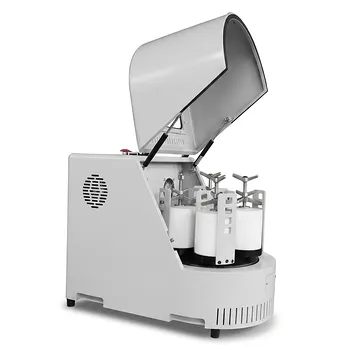
- Vertical Semi Circular Planetary Ball Mill for Laboratory Precision Grinding
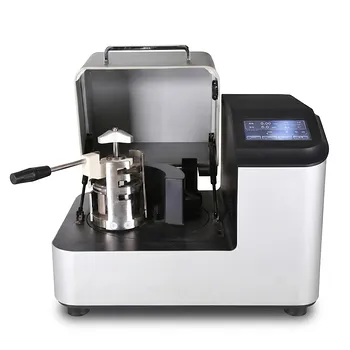
- High Energy Laboratory Planetary Ball Mill for Nano Grinding and Material Science Sample Preparation
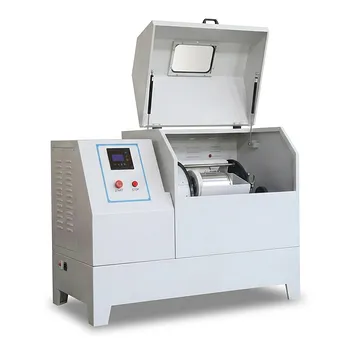
- Heavy Duty Horizontal Planetary Ball Mill for Efficient Industrial Grinding and Sample Preparation
- Vertical Square Planetary Ball Mill for Laboratory Sample Preparation and Nanoscale Grinding
- 8L Planetary Ball Mill for Laboratory Grinding and Sample Preparation
People Also Ask
- What role does a planetary ball mill play in the synthesis of Li6PS5Cl (LPSCl)? Unlock High Ionic Conductivity
- Why is a planetary ball mill essential for SiBCN-rGO wet-spinning? Achieve Superior Dispersion and Spinnability
- Why is an intermittent grinding process required for perovskites in a planetary ball mill? Ensure Stability & Purity
- Why is a planetary ball mill required for PET micronization? Ensure Accurate Chemical Analysis of Reprocessed PET
- How does mechanized planetary ball milling compare to manual agate grinding? Optimize sulfide standard material precision.

Tech Team · PowderPreparation
Last updated on May 14, 2026
Related Products
Vertical Semi Circular Planetary Ball Mill for Laboratory Precision Grinding
High Energy Laboratory Planetary Ball Mill for Nano Grinding and Material Science Sample Preparation
Heavy Duty Horizontal Planetary Ball Mill for Efficient Industrial Grinding and Sample Preparation
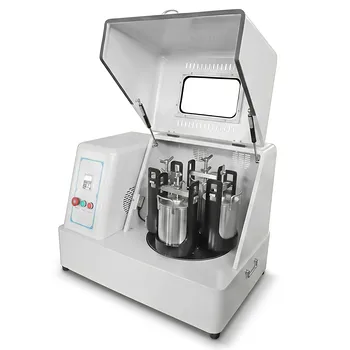
Vertical Square Planetary Ball Mill for Laboratory Sample Preparation and Nanoscale Grinding
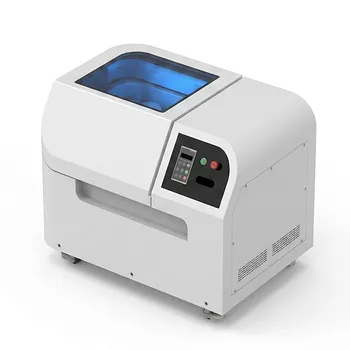
8L Planetary Ball Mill for Laboratory Grinding and Sample Preparation
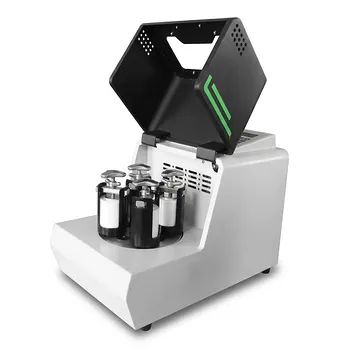
Miniature Planetary Ball Mill with Vacuum Grinding and High Efficiency for Laboratory Sample Preparation
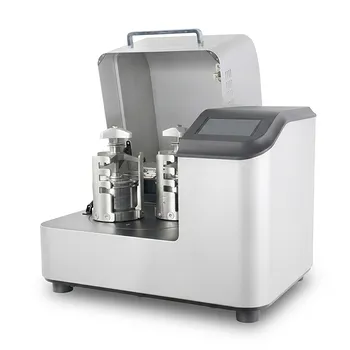
High Energy Planetary Ball Mill for Nano Scale Grinding and Mechanical Alloying
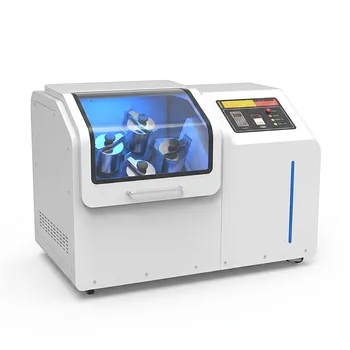
High Energy Omnidirectional Planetary Ball Mill 16L
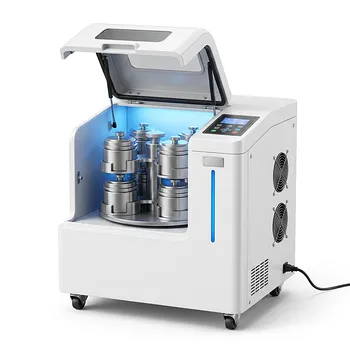
High Energy Omnidirectional Planetary Ball Mill 20L
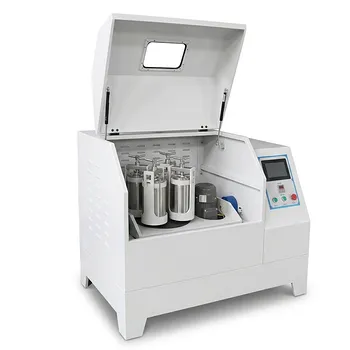
360° Rotating Omnidirectional Laboratory Planetary Ball Mill for Homogeneous Ultra-Fine Grinding and Mixing