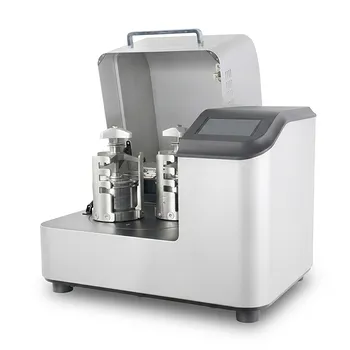
Why are zirconia grinding balls preferred for lead-free piezoceramics? Ensure high purity and mechanical efficiency.
Updated 5 months ago
Zirconia grinding balls are the preferred medium for wet grinding lead-free piezoceramics because they combine high mechanical efficiency with extreme chemical purity. These media possess the high density and hardness required to pulverize tough ceramic particles while offering a nearly negligible wear rate. This ensures that the delicate chemical composition and electrical properties of lead-free materials, such as BaTiO3 or KNN, remain uncontaminated during long milling cycles.
Zirconia media solve the dual challenge of achieving sub-micron particle sizes while preventing foreign impurities from degrading the material’s piezoelectric performance. By utilizing high kinetic energy and chemical inertness, they maintain the strict stoichiometric balance required for high-performance lead-free ceramics.
The Mechanical Advantage: Density and Hardness
Maximizing Kinetic Energy Transfer
The high density of zirconia (typically around 6.0 g/cm³) provides the significant impact kinetic energy necessary for efficient material breakdown. During wet grinding, this mass allows the balls to overcome the viscosity of the slurry and strike the raw materials with enough force to induce fracturing.
Achieving Rapid Particle Size Reduction
Because zirconia is exceptionally hard, it maintains its shape and integrity when colliding with abrasive ceramic powders. This hardness ensures that the energy from the milling equipment is used to crush the target material rather than deforming the grinding media itself, significantly shortening the time required to reach the target particle size.
Safeguarding Material Purity and Performance
Minimizing Contamination through Wear Resistance
Lead-free piezoceramics are highly sensitive to "doping" from foreign elements like iron, silicon, or aluminum, which can be introduced by lower-quality grinding media. Zirconia’s ultra-low wear rate ensures that the amount of media material shed into the powder is minimal, even during 24-hour high-energy milling sessions.
Preserving Electrical Integrity
The chemical inertness of zirconia prevents unwanted chemical reactions between the media and the piezoceramic slurry. This is critical for maintaining the purity of electrical properties, such as the dielectric constant and impedance characteristics, which can deviate if foreign metal oxides are introduced.
The Homogeneous Grinding Principle
Using high-purity zirconia often aligns with the homogeneous grinding principle, where the media's composition is compatible with the ceramic system being processed. This reduces the risk of "chemical shock" to the mixture, ensuring the final sintered product achieves its maximum theoretical density and superior mechanical properties.
Understanding the Trade-offs and Pitfalls
Initial Cost vs. Long-Term Value
While zirconia balls have a higher upfront cost compared to alumina or steel media, their longevity and the value of the preserved ceramic powder usually justify the investment. Using cheaper media often results in "poisoning" the batch, leading to expensive losses in material performance.
Equipment Stress and Heat Generation
Due to their high density, zirconia balls can cause increased mechanical wear on the milling jars and the drive system of the mill. Additionally, the high-energy impacts generate significant heat, which must be managed in wet grinding systems to prevent the evaporation of solvents or the premature aging of the slurry.
Media Sizing and Loading
Choosing the wrong size of zirconia balls can lead to inefficient grinding or "dead zones" in the mill. Smaller balls provide more contact points for fine grinding, but if the media is too small, it may lack the mass to break down larger agglomerates effectively.
How to Apply This to Your Process
Selecting the right grinding media depends on your specific material requirements and production scale.
- If your primary focus is maximum electrical sensitivity: Use high-purity (95% Yttria-stabilized) zirconia to ensure zero metallic contamination that could disrupt the piezoelectric effect.
- If your primary focus is rapid throughput and particle fineness: Opt for smaller diameter zirconia beads (0.5mm - 1.0mm) to increase the surface area contact and accelerate the breakdown of BaTiO3 or KNN particles.
- If your primary focus is minimizing equipment maintenance: Ensure your milling jars are also lined with zirconia to prevent the high-density balls from eroding the walls of the mill.
By prioritizing the synergy between mechanical force and chemical stability, you ensure that your lead-free piezoceramics reach their full functional potential.
Summary Table:
| Feature | Advantage | Impact on Piezoceramics |
|---|---|---|
| High Density (~6.0 g/cm³) | Maximum kinetic energy transfer | Efficiently breaks down tough BaTiO3/KNN particles |
| Extreme Hardness | Rapid particle size reduction | Achieves sub-micron fineness with shorter milling cycles |
| Ultra-Low Wear Rate | Minimal media shedding | Prevents contamination that degrades electrical properties |
| Chemical Inertness | Zero reactive interference | Maintains strict stoichiometric balance and performance |
| Yttria-Stabilized | High durability & longevity | Reduces long-term costs despite higher initial investment |
Optimize Your Advanced Material Synthesis with Precision Equipment
Achieving superior piezoelectric performance requires a contamination-free workflow from powder to pellet. [Brand Name] provides complete laboratory sample preparation solutions for material science, specializing in high-performance powder processing and compaction equipment.
Whether you are refining lead-free powders or forming high-density components, our specialized range supports every stage of your process:
- Advanced Milling: Achieve sub-micron particle sizes with our planetary ball mills, jet mills, and bead mills using high-purity zirconia media.
- Preparation & Sizing: Ensure consistency with our jaw/roll crushers and vibratory or air-jet sieve shakers.
- Superior Compaction: Maximize theoretical density using our Cold/Warm Isostatic Presses (CIP/WIP), vacuum hot presses, and XRF pellet presses.
- Mixing & De-aeration: Prepare homogeneous slurries with our powder and defoaming mixers.
Ready to enhance your lab's efficiency and material purity? Contact our technical experts today to find the perfect solution for your specific piezoceramic applications!
References
- А. А. Тихонов, И. Шишковский. Определение глубин полимеризации бессвинцовых пьезокерамических паст для УФ 3D печати. DOI: 10.21883/os.2022.10.53625.3825-22
Mentioned Products
- Vertical Semi Circular Planetary Ball Mill for Laboratory Precision Grinding
- High Energy Laboratory Planetary Ball Mill for Nano Grinding and Material Science Sample Preparation
- Vertical Square Planetary Ball Mill for Laboratory Sample Preparation and Nanoscale Grinding
- 8L Planetary Ball Mill for Laboratory Grinding and Sample Preparation
- Heavy Duty Horizontal Planetary Ball Mill for Efficient Industrial Grinding and Sample Preparation
People Also Ask
- What role does a planetary ball mill play in the synthesis of Li6PS5Cl (LPSCl)? Unlock High Ionic Conductivity
- Why is a planetary ball mill essential for SiBCN-rGO wet-spinning? Achieve Superior Dispersion and Spinnability
- Why is an intermittent grinding process required for perovskites in a planetary ball mill? Ensure Stability & Purity
- Why is a planetary ball mill required for PET micronization? Ensure Accurate Chemical Analysis of Reprocessed PET
- How does mechanized planetary ball milling compare to manual agate grinding? Optimize sulfide standard material precision.

Tech Team · PowderPreparation
Last updated on May 14, 2026
Related Products
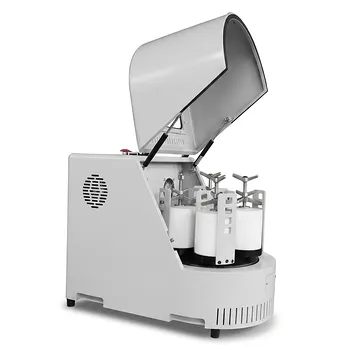
Vertical Semi Circular Planetary Ball Mill for Laboratory Precision Grinding
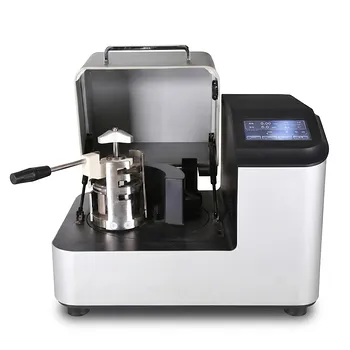
High Energy Laboratory Planetary Ball Mill for Nano Grinding and Material Science Sample Preparation
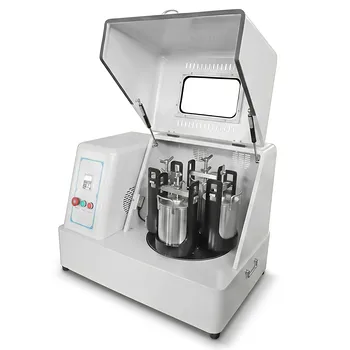
Vertical Square Planetary Ball Mill for Laboratory Sample Preparation and Nanoscale Grinding
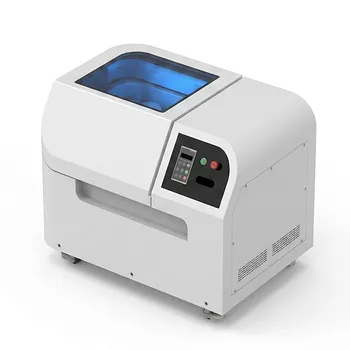
8L Planetary Ball Mill for Laboratory Grinding and Sample Preparation
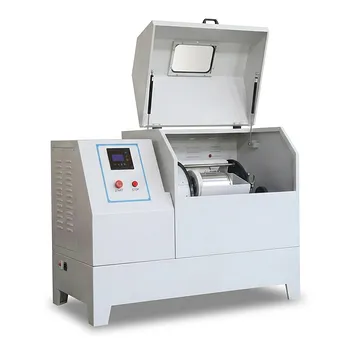
Heavy Duty Horizontal Planetary Ball Mill for Efficient Industrial Grinding and Sample Preparation
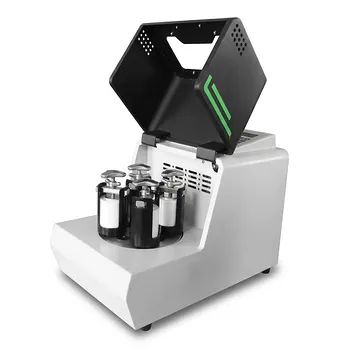
Miniature Planetary Ball Mill with Vacuum Grinding and High Efficiency for Laboratory Sample Preparation
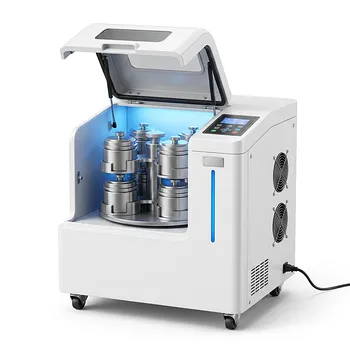
High Energy Omnidirectional Planetary Ball Mill 20L
High Energy Omnidirectional Planetary Ball Mill 16L
High Energy Hybrid Vibratory Ball Mill for Grinding Mixing and Cell Disruption