What are the advantages of wet mechanochemical grinding over bottom-up synthesis? Scaling Silica Production
Updated 5 months ago
Wet mechanochemical grinding offers a more practical path to large-scale silica nanoparticle production than bottom-up chemical synthesis. By utilizing inexpensive raw materials like natural sand and simplifying operational parameters, this method significantly reduces the financial and technical burdens associated with complex chemical precursors. It provides a robust, high-volume solution for industrial applications where material volume and cost-per-gram are the primary drivers.
Core Takeaway: While bottom-up synthesis offers atomic-level precision, wet mechanochemical grinding prioritizes industrial scalability and cost-efficiency. It leverages physical force and liquid mediums to transform common minerals into nanoparticles without the need for expensive organic reagents or sensitive reaction environments.
Economic and Operational Advantages
Low-Cost Feedstock vs. Expensive Precursors
Bottom-up synthesis typically requires costly organic precursors and specialized chemical reagents to build particles from the ground up. In contrast, mechanochemical grinding utilizes inexpensive natural white or yellow sand as the primary raw material. This shift in feedstock dramatically lowers the entry barrier for mass production and improves the commercial viability of the final product.
Simplified Process Control
Chemical synthesis requires rigorous monitoring of pH, temperature, and concentration to ensure consistent particle growth. Mechanochemical grinding features fewer operating parameters, making the process easier to manage at scale. This simplicity reduces the likelihood of batch-to-batch variation and lowers the requirement for highly specialized labor.
Ease of Industrial Scaling
Scaling a chemical reaction from a laboratory beaker to an industrial reactor often introduces complex thermodynamic and mixing challenges. Grinding methods, particularly those using laboratory-scale ball mills that can be modularly expanded, are inherently easier to scale for mass production. This makes the technology ideal for high-volume sectors such as the construction and concrete additives market.
The Role of the Liquid Medium in Wet Grinding
Preventing Particle Agglomeration
In dry grinding, fine particles often clump together due to electrostatic forces, leading to incomplete separation. The addition of a liquid—usually water—alters the rheological properties of the material and improves the fluidity of fine particles. This ensures that nanoparticles remain dispersed, allowing them to pass through closed-circuit sieves more effectively.
Improving Impact Efficiency
A wet environment allows particles to disperse more evenly between the grinding balls. This increases the frequency of effective impacts and prevents the "cushioning" effect where fine powder sticks to the ball surfaces. Consequently, wet grinding can produce finer products with lower energy consumption than dry methods.
Thermal Management and Equipment Protection
The friction generated during intensive grinding creates significant heat, which can damage equipment or alter material properties. The liquid phase acts as a coolant for the charge, protecting the internal components of the ball mill. This thermal regulation extends equipment longevity and ensures the stability of the silica particles during processing.
Understanding the Trade-offs
Limits of Physical Reduction
While grinding is efficient, it generally cannot match the atomic-level reorganization provided by bottom-up synthesis. Synthesis can achieve smaller, more uniform nanometer scales and can even alter the crystalline structure or aggregation state of a material. Grinding is a "top-down" approach, meaning it is ultimately limited by the mechanical energy required to break increasingly small bonds.
Purity and Contamination Risks
Mechanochemical grinding involves significant wear on the grinding media and the mill lining. Over time, traces of the ball or mill material can contaminate the silica product. Bottom-up synthesis, being a chemical process, generally offers higher purity levels because it does not rely on physical abrasion.
How to Apply This to Your Project
When choosing between these two methodologies, your decision should be driven by the intended application and the required volume of the material.
- If your primary focus is industrial-scale additives (e.g., concrete or coatings): Wet mechanochemical grinding is the superior choice due to its low feedstock costs and ease of scaling.
- If your primary focus is high-precision biomedical or optical applications: Bottom-up chemical synthesis is preferable as it allows for the atomic-level control and high purity required for these fields.
- If your primary focus is reducing operational energy costs: Implement wet grinding protocols to leverage improved particle fluidity and reduced adhesion on grinding surfaces.
Choosing wet mechanochemical grinding allows organizations to bridge the gap between laboratory-scale nanoparticle research and high-volume industrial reality.
Summary Table:
| Feature | Wet Mechanochemical Grinding | Bottom-Up Chemical Synthesis |
|---|---|---|
| Feedstock | Low-cost natural minerals (sand) | Expensive organic precursors |
| Scalability | High (Easier industrial scaling) | Complex (Thermodynamic challenges) |
| Process Control | Simplified (Fewer parameters) | Rigorous (pH/temp monitoring) |
| Purity/Precision | Moderate (Media wear risk) | High (Atomic-level control) |
| Primary Use | Construction, coatings, mass volume | Biomedical, optics, electronics |
Bridge the Gap from Lab to Industrial Scale
Transitioning from research to high-volume production requires equipment that balances precision with durability. Our Brand provides complete laboratory sample preparation solutions for material science, specializing in the powder processing and compaction equipment you need to succeed.
Whether you are implementing wet mechanochemical grinding for cost-effective silica production or developing advanced materials, we offer:
- Advanced Milling: Planetary ball mills, jet mills, and rotor mills for efficient nanoparticle reduction.
- Preparation & Sizing: Jaw/roll crushers, cryogenic grinders, and air-jet sieve shakers.
- Compaction Solutions: A full spectrum of hydraulic presses, including Cold/Warm Isostatic Presses (CIP/WIP), hot presses, and vacuum hot presses.
Maximize your operational efficiency and lower your cost-per-gram today. Contact our experts now to find the perfect equipment for your material processing requirements!
References
- Magda A. Akl. Preparation and Characterization of Silica Nanoparticles by Wet Mechanical Attrition of White and Yellow Sand. DOI: 10.4172/2157-7439.1000183
Mentioned Products
- Small Laboratory Colloid Mill for Ultra-Fine Wet Grinding and Emulsification
- Laboratory Small Horizontal Sand Mill for Nano Materials Wet Grinding
- Laboratory Basket Sand Mill for Wet Grinding and Dispersion of Viscous Slurries
- Water Cooled Pulse Jet Ultrafine Grinder
- Horizontal Bead Mill for Nanoscale Grinding and Advanced Material Powder Processing
People Also Ask
- What is the purpose of using a laboratory mill to grind dried precipitates? Optimize TiO2/AuNRs Catalyst Homogeneity
- What is the technical significance of the relative collision velocity of grinding media? Maximize Milling Efficiency
- Why use a grinding mill to refine mine filling samples to below 75μm? Ensure Accurate XRF and Chemical Analysis
- What Role Does Lab Grinding Play in Banana Fiber Thermal Coatings? Optimize Waste Into High-Performance Barriers
- Why is high-efficiency ultra-fine grinding required for Portland cement before XRD? Get Accurate Rietveld Results

Tech Team · PowderPreparation
Last updated on May 14, 2026
Related Products
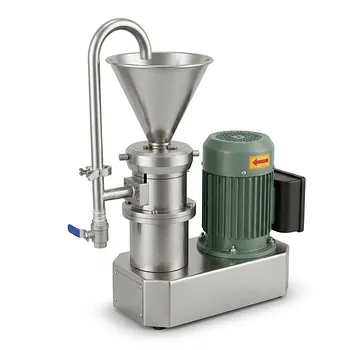
Small Laboratory Colloid Mill for Ultra-Fine Wet Grinding and Emulsification
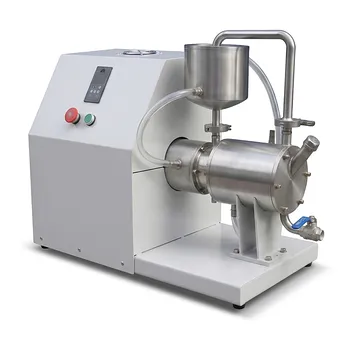
Laboratory Small Horizontal Sand Mill for Nano Materials Wet Grinding
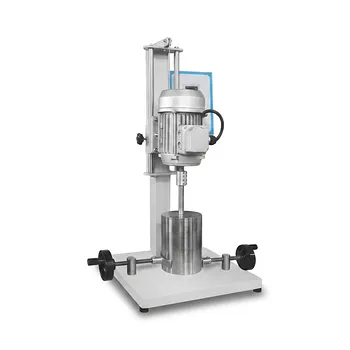
Laboratory Basket Sand Mill for Wet Grinding and Dispersion of Viscous Slurries
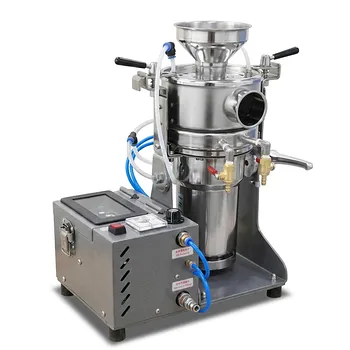
Water Cooled Pulse Jet Ultrafine Grinder
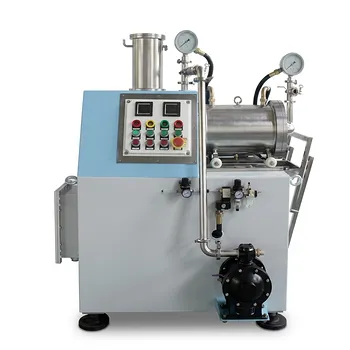
Horizontal Bead Mill for Nanoscale Grinding and Advanced Material Powder Processing
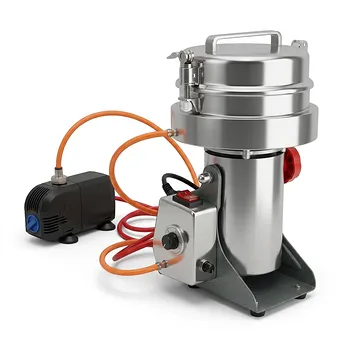
Water Cooled High Speed Grinder with Cryogenic Option for Laboratory Sample Preparation
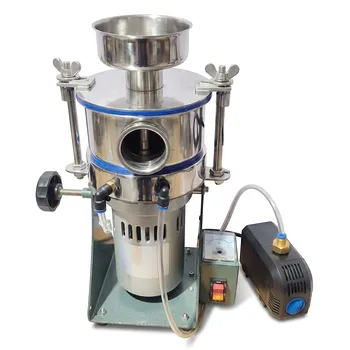
Water Cooled Airflow Ultra Fine Grinder for Low Temperature Material Processing
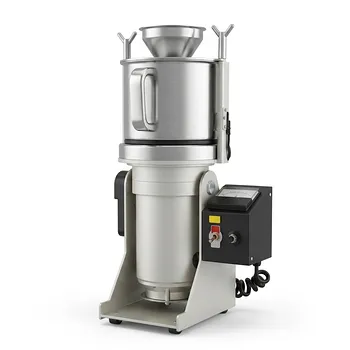
Water Cooled Pulse Jet Ultra Fine Pulverizer for Continuous Grinding
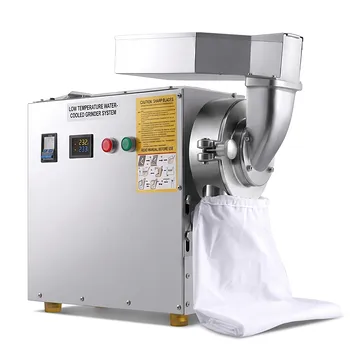
Low Temperature Water Cooled Continuous Feed Grinder Two Stage Coarse and Fine Grinding System
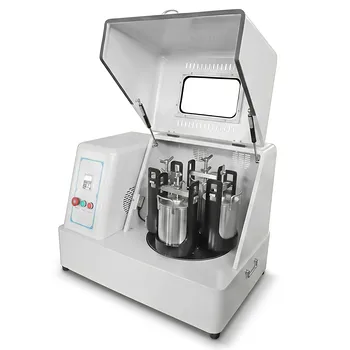
Vertical Square Planetary Ball Mill for Laboratory Sample Preparation and Nanoscale Grinding
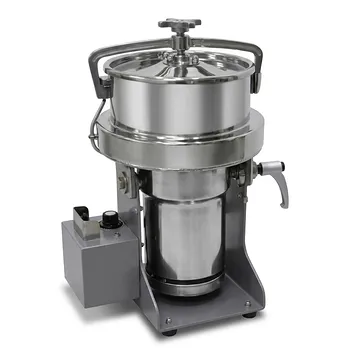
500g Capacity Water Cooled Low Temperature Grinder with Variable Speed and Safety Cover
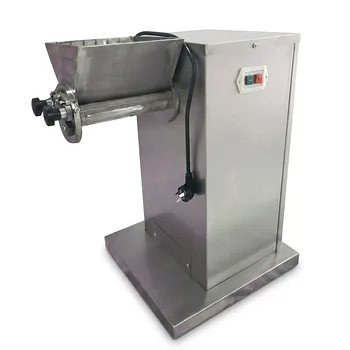
Small Laboratory Oscillating Granulator for Wet and Dry Granulation Processing
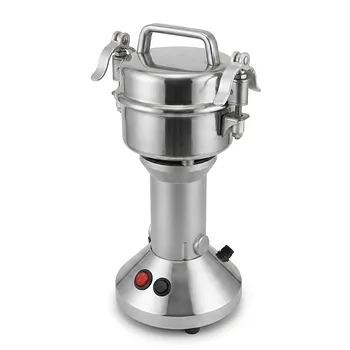
Continuous Feeding Grinding Mill for Dry Fibrous Tough and Hard Materials in Laboratory and Small Production