How does the duration of the grinding process affect silica nanoparticle size? Optimize Your Particle Size Control
Updated 5 months ago
The duration of the grinding process is the primary determinant of cumulative mechanical energy input into the system.
In the initial stages of milling, increasing the grinding time continuously reduces the particle size by providing the energy necessary to fracture the silica. However, this relationship is not linear; once a critical threshold is reached, the system enters a "reverse grinding" phase where extremely fine particles re-agglomerate due to high surface energy. To achieve a specific target, such as the 22–48 nm range, the milling duration must be precisely calibrated to stop at the point of maximum refinement before re-agglomeration begins.
Core Takeaway: Effective particle size control requires balancing energy-driven reduction against surface-energy-driven re-agglomeration. The optimal grinding duration is the window where mechanical fracture is maximized and particle stability is maintained.
The Mechanics of Size Reduction
Mechanical Energy and Fracture
Grinding duration represents the total mechanical energy transferred to the silica particles. During the early and middle stages of the process, each collision between the grinding media and the silica provides the stress needed to break internal bonds and create new surfaces.
The Grinding Equilibrium Point
Every grinding setup has a grinding equilibrium diameter, which is the smallest particle size achievable under specific conditions. As you approach this limit, the rate of size reduction slows significantly, regardless of how much additional time is added to the process.
The Phenomenon of Reverse Grinding
High Surface Energy and Re-agglomeration
When particles reach the nanometer scale, their surface energy increases dramatically because a high percentage of atoms are located on the particle surface. If grinding continues beyond the critical point, this energy drives particles to stick together to reach a more stable state.
The Apparent Increase in Particle Size
In this "reverse grinding" phase, the particles do not actually grow through chemical bonds, but they form dense clusters that act as single, larger units. This results in an increase in the measured particle size, effectively undoing the progress made during the earlier stages of milling.
Factors Influencing Time Efficiency
The Role of Grinding Media Size
The size of the beads used in the mill directly affects how quickly the target size is reached. Smaller grinding media (such as 0.1 mm to 0.3 mm zirconia beads) provide a higher density of contact points, increasing the collision frequency and reaching the target size in a shorter duration.
Balancing Collision Frequency and Heat
While smaller beads and longer durations can produce finer particles, they also increase heat generation and fluid resistance. Excessive heat can alter the physical properties of the silica or further accelerate the re-agglomeration process, making temperature management a critical companion to time control.
Understanding the Trade-offs and Pitfalls
Efficiency vs. Over-processing
Longer grinding times do not guarantee better results. Beyond the optimal window, you face diminishing returns where energy costs and equipment wear increase while the quality of the nanoparticle distribution degrades.
Media Wear and Contamination
Extending the grinding duration increases the physical stress on the grinding media and chamber lining. This can lead to the introduction of impurities into the silica powder, which is particularly detrimental in high-purity applications like electronics or pharmaceuticals.
How to Optimize Duration for Your Project
To master particle size control, you must treat grinding duration as a variable that interacts with media size and material characteristics.
- If your primary focus is reaching the smallest possible size (e.g., <30 nm): Use the smallest available grinding media (0.1–0.2 mm) and perform a "time-series" study to identify the exact moment before reverse grinding occurs.
- If your primary focus is process stability and repeatability: Implement strict, automated controls on milling time—such as a fixed 10-minute interval—to ensure that every batch is subjected to identical mechanical intensity.
- If your primary focus is preventing contamination: Minimize grinding duration by increasing the rotation speed or using higher-density media to reach the target size faster, reducing the time available for media wear.
Ultimately, the key to silica nanonization is identifying the specific "energy window" where the material is sufficiently refined but the surface forces have not yet triggered re-agglomeration.
Summary Table:
| Grinding Phase | Effect on Particle Size | Primary Mechanism | Critical Risk |
|---|---|---|---|
| Early Stage | Rapid Reduction | Mechanical bond fracture | Under-processing |
| Equilibrium | Size Stabilization | Fracture-agglomeration balance | Diminishing efficiency |
| Late Stage | Apparent Increase | High surface energy re-agglomeration | Media contamination & heat |
| Optimized Window | Target Range Met | Precisely calibrated energy input | None |
Elevate Your Material Research with Precision Sample Preparation
Achieving consistent silica nanonization requires more than just timing—it requires the right technology. We provide complete laboratory sample preparation solutions for material science, specializing in high-performance powder processing and compaction equipment.
Our extensive product lines are designed to help you hit your target particle size with precision:
- Advanced Milling: Planetary ball, jet, sand/bead, and disc mills for superior refinement.
- Preparation & Sizing: Jaw/roll crushers, cryogenic grinders, and vibratory/air-jet sieve shakers.
- Mixing & Compaction: Defoaming mixers and a full spectrum of hydraulic presses, including Cold/Warm Isostatic Presses (CIP/WIP) and vacuum hot presses.
Whether you need to prevent re-agglomeration or minimize media wear, our experts are ready to support your specific application.
Contact us today to discover how our specialized solutions can enhance your lab's efficiency and material quality.
References
- Magda A. Akl. Preparation and Characterization of Silica Nanoparticles by Wet Mechanical Attrition of White and Yellow Sand. DOI: 10.4172/2157-7439.1000183
Mentioned Products
- Laboratory Small Horizontal Sand Mill for Nano Materials Wet Grinding
- Mass Production Nano Sand Mill for Industrial Nanomaterial Grinding and Dispersion
- High Energy Laboratory Planetary Ball Mill for Nano Grinding and Material Science Sample Preparation
- High Energy Planetary Ball Mill for Nano Scale Grinding and Colloidal Mixing in Material Science Research
- Vertical Semi Circular Planetary Ball Mill for Laboratory Precision Grinding
People Also Ask
- Why is a sand mill used to process solid carbon-forming agents like PPVA and PER? Enhance Dispersion & Flame Retardancy
- What role does a laboratory mill play in the study of lignite coal co-combustion? Optimizing Fuel Blends and Reactivity
- What is the function of a laboratory mill in Cassia tora L. seed analysis? Master Precision Thermal Data Prep.
- What is the purpose of using a laboratory mill to grind dried precipitates? Optimize TiO2/AuNRs Catalyst Homogeneity
- What function does a laboratory mill serve in corn starch saccharification experiments? Optimize Surface Area & Reactions

Tech Team · PowderPreparation
Last updated on May 14, 2026
Related Products
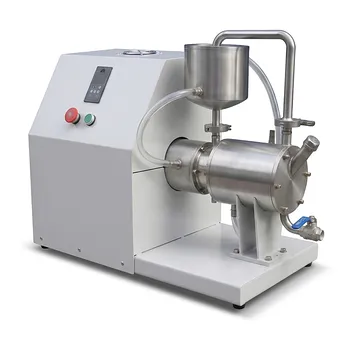
Laboratory Small Horizontal Sand Mill for Nano Materials Wet Grinding
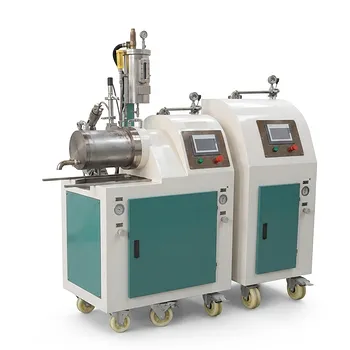
Mass Production Nano Sand Mill for Industrial Nanomaterial Grinding and Dispersion

High Energy Laboratory Planetary Ball Mill for Nano Grinding and Material Science Sample Preparation
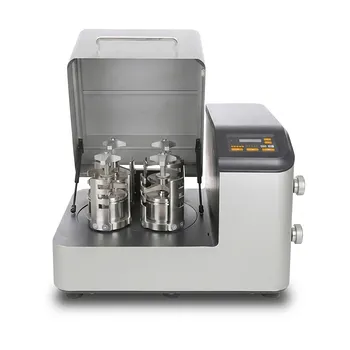
High Energy Planetary Ball Mill for Nano Scale Grinding and Colloidal Mixing in Material Science Research
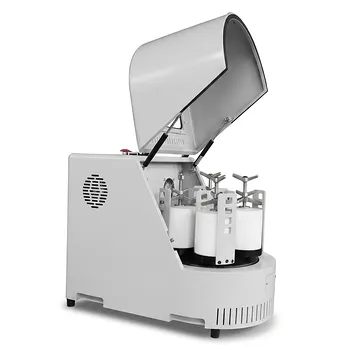
Vertical Semi Circular Planetary Ball Mill for Laboratory Precision Grinding
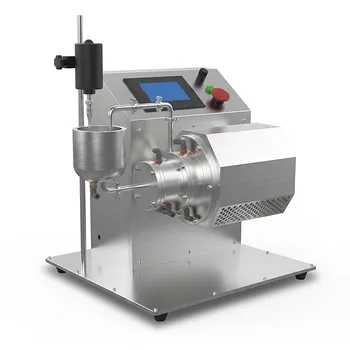
Laboratory Horizontal Pin Nano Sand Mill
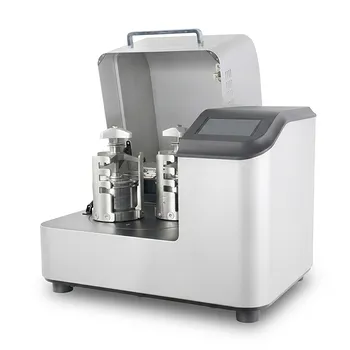
High Energy Planetary Ball Mill for Nano Scale Grinding and Mechanical Alloying
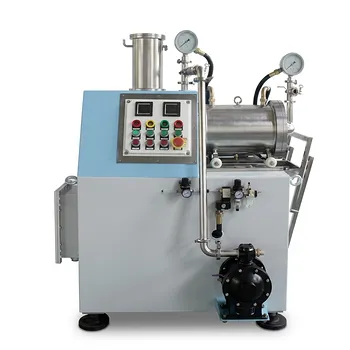
Horizontal Bead Mill for Nanoscale Grinding and Advanced Material Powder Processing
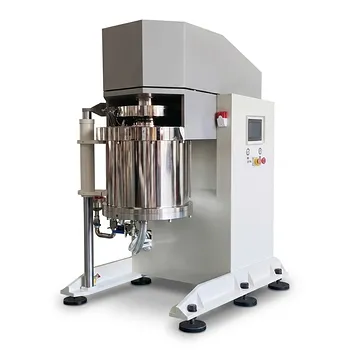
Vertical Nano Bead Mill for Ceramic Materials with Permanent Magnet Motor and High Efficiency Grinding
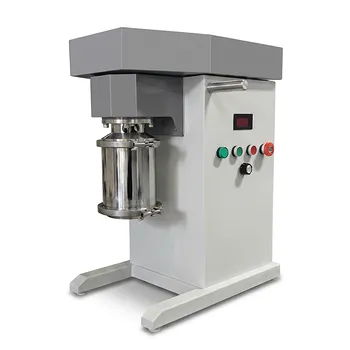
Nano Laboratory Bead Mill Desktop Sub Micron Sand Mill Screenless Seal Less Powder Grinder

Vertical Square Planetary Ball Mill for Laboratory Sample Preparation and Nanoscale Grinding
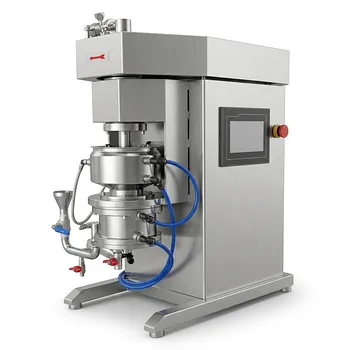
Small Ceramic Structure Laboratory Sand Mill Nanoscale Grinding Dispersion Equipment Seal-less Screen-less Design
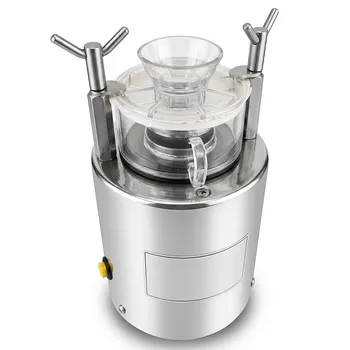
Laboratory Desktop Ultra Fine Powder Grinder High Speed Micronizing Pulverizer
Laboratory Ultrafine Impact and Airflow Grinder for Precise Particle Size Control