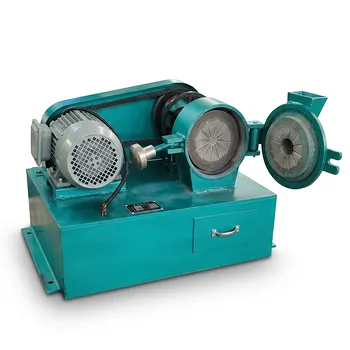
What is the primary role of grinding equipment in BLA preparation? Enhance Reactivity & Material Uniformity
Updated 5 months ago
Laboratory grinding and milling equipment serves as the critical bridge between raw organic biomass and high-reactivity mineral additives. Its primary role in preparing Banana Leaf Ash (BLA) is to mechanically reduce the material into a fine powder both before and after the calcination process. This dual-stage processing ensures complete combustion of the raw leaves and optimizes the chemical reactivity of the final ash for engineering applications like soil stabilization.
The effectiveness of Banana Leaf Ash as a pozzolanic material depends entirely on its particle size and surface area. Grinding transforms bulk biomass into a high-surface-area precursor that yields a chemically active, uniform ash suitable for industrial use.
Pre-Calcination: Maximizing Combustion Efficiency
Increasing Specific Surface Area
Mechanical pulverization breaks down the complex fibrous structure of dried banana leaves into fine particles. By significantly increasing the specific surface area, the equipment allows for more efficient heat transfer and oxygen contact during the heating process.
Ensuring Uniform and Complete Combustion
Uniform particle size prevents the formation of "cold spots" or unburnt organic matter within the furnace. This consistency is vital for producing a high-purity ash that possesses stable physicochemical properties required for research and industrial applications.
Post-Calcination: Enhancing Chemical Reactivity
Particle Refinement for Pozzolanic Activity
Secondary milling after the leaves have been calcined further reduces the ash to microscopic dimensions. These refined ash particles exhibit higher chemical reactivity, which is a prerequisite for BLA to function as an effective pozzolanic material.
Improving Material Dispersion
Finer particles disperse more evenly when mixed into a soil or coating matrix. This mechanical pulverization ensures that the BLA reacts consistently with other minerals, leading to more predictable structural outcomes in composite materials.
Understanding the Trade-offs and Technical Challenges
Energy Consumption vs. Particle Size
While finer particles generally offer superior reactivity, the energy required for ultra-fine milling increases significantly as particle size decreases. Engineers must balance the desired reactivity of the BLA against the operational costs and time associated with extended milling cycles.
Potential for Material Contamination
High-speed shearing and impact grinding can introduce trace contaminants from the milling media or chamber into the ash. It is critical to select wear-resistant equipment to ensure that the chemical profile of the Banana Leaf Ash remains pure and effective for its intended use.
How to Optimize Milling for Your Project
The specific goals of your project will dictate how you utilize grinding and milling equipment during the BLA preparation process.
- If your primary focus is soil stabilization: Prioritize intensive post-calcination secondary milling to maximize the chemical reactivity and binding strength of the ash particles.
- If your primary focus is furnace efficiency: Focus on rigorous pre-calcination grinding to ensure the biomass achieves complete combustion and minimizes organic residue.
Mastering the mechanical preparation of Banana Leaf Ash is the essential first step in unlocking its potential as a sustainable and high-performance industrial material.
Summary Table:
| Processing Stage | Key Function | Impact on Banana Leaf Ash (BLA) |
|---|---|---|
| Pre-Calcination | Mechanical Pulverization | Increases surface area to ensure complete, uniform combustion. |
| Post-Calcination | Particle Refinement | Minimizes ash size to maximize pozzolanic activity and reactivity. |
| Optimization | Uniform Grinding | Ensures consistent material dispersion for predictable structural results. |
| Quality Control | Wear-Resistant Milling | Prevents sample contamination and maintains chemical purity. |
Elevate Your Material Research with Precision Powder Solutions
Achieving the perfect particle size is the critical first step in unlocking the potential of Banana Leaf Ash and other biomass materials. At KINTEK, we provide complete laboratory sample preparation solutions for material science, specializing in high-performance powder processing and compaction equipment.
Our specialized product lines are designed to meet the rigorous demands of research and industry:
- Grinding & Milling: Enhance reactivity with our planetary ball mills, jet mills, cryogenic grinders, and rotor mills.
- Crushing & Sizing: Prepare raw biomass with precision jaw/roll crushers and vibratory or air-jet sieve shakers.
- Advanced Compaction: Transform powders into high-density samples using our full spectrum of hydraulic presses, including Cold/Warm Isostatic Presses (CIP/WIP), vacuum hot presses, and XRF pellet presses.
- Mixing: Ensure material homogeneity with our specialized powder and defoaming mixers.
Whether you are focusing on soil stabilization or high-purity chemical additives, our equipment delivers the reliability and performance your project requires. Contact our experts today to find the ideal solution for your laboratory workflow!
References
- Henri Haggai Y. Cua, Irene Olivia Ubay-Anongphouth. Strength Development Assessment Of Banana Leaf Ash and Lime Mixture in Clayey Sand Soils. DOI: 10.5109/7395574
Mentioned Products
- Multifunctional High Efficiency High Speed Laboratory Grinder
- Small High Speed Upright Grinder for Laboratory Sample Preparation
- Small High Speed Grinder for Laboratory Sample Preparation
- High Speed Laboratory Grinder Efficient Stainless Steel Powder Pulverizer Universal Material Science Mill for Sample Preparation
- Laboratory Ultrafine Impact and Airflow Grinder for Precise Particle Size Control
People Also Ask
- What role does a laboratory grinder play in the pretreatment of sunflower seed shell-based adsorbents? Boost Efficiency.
- How does a laboratory grinder or mill enhance the adsorption performance of agricultural waste materials? Boost Surface Area
- What is the function of laboratory grinding equipment in ZnO nanosphere sol-gel synthesis? Ensure Superior Particle Size
- Why use lab grinding for eggshell & husk carbon materials? Maximize Surface Area & Heat Transfer for Better Adsorption
- Why is grinding equipment necessary for SnO2-Sb2O3 xerogels? Maximize surface area and photocatalytic activity.

Tech Team · PowderPreparation
Last updated on May 14, 2026
Related Products
Multifunctional High Efficiency High Speed Laboratory Grinder
Small High Speed Upright Grinder for Laboratory Sample Preparation
Small High Speed Grinder for Laboratory Sample Preparation
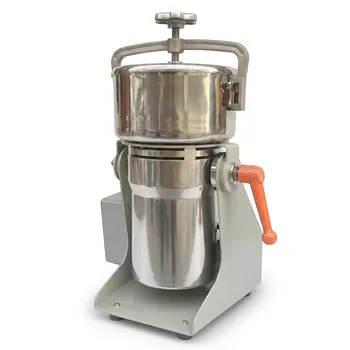
High Speed Laboratory Grinder Efficient Stainless Steel Powder Pulverizer Universal Material Science Mill for Sample Preparation
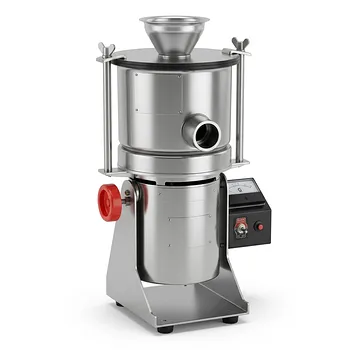
Laboratory Ultrafine Impact and Airflow Grinder for Precise Particle Size Control
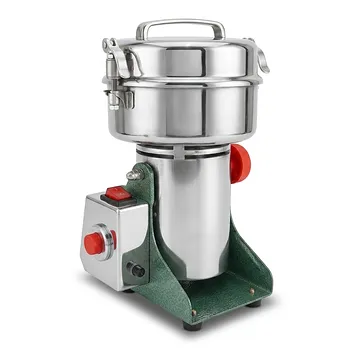
Small High-Speed Laboratory Grinder for Powder Processing
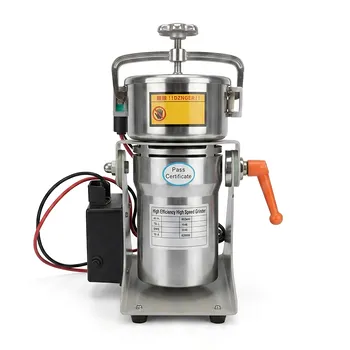
High Efficiency High Speed Grinder Laboratory Mill 1300W 25000rpm
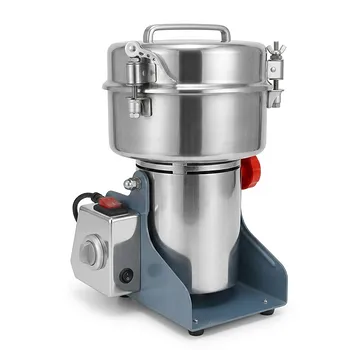
Small High-Speed Grinder for Efficient Laboratory Sample Preparation
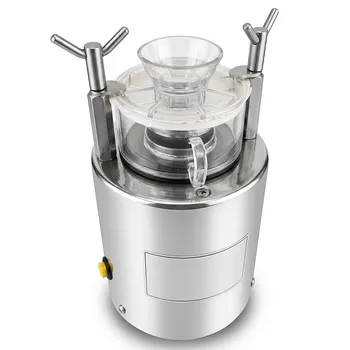
Laboratory Desktop Ultra Fine Powder Grinder High Speed Micronizing Pulverizer
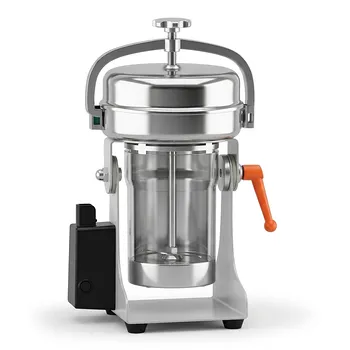
High Efficiency High Speed Grinder 2200W 25000 RPM Laboratory Sample Preparation
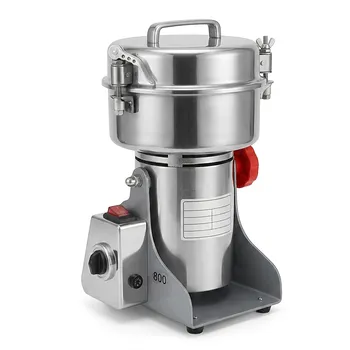
Small High-Speed Laboratory Grinder for Rapid Sample Preparation
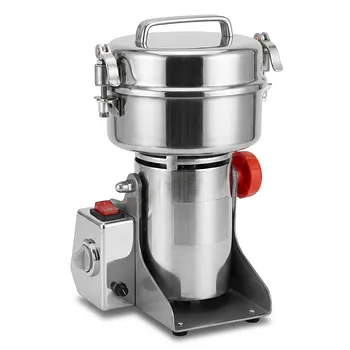
High Speed Laboratory Powder Grinder Small Batch Sample Preparation Mill
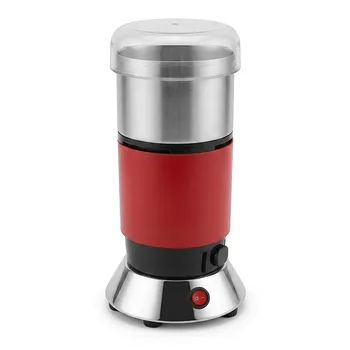
Micro Solid Sample Grinder High Speed Pulverizer for Laboratory Small Batch Grinding
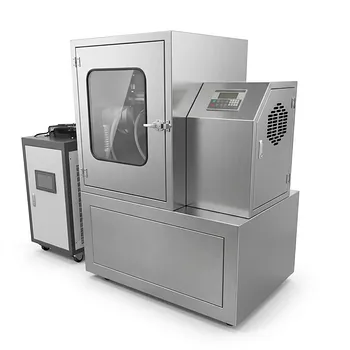
Vibratory Superfine Grinder for Ultra Fine Laboratory Powder Milling
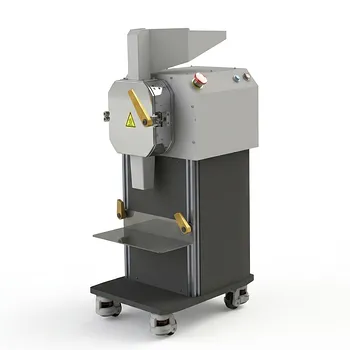
Small Laboratory Knife Crusher for Plastic Sample Preparation and Material Grinding
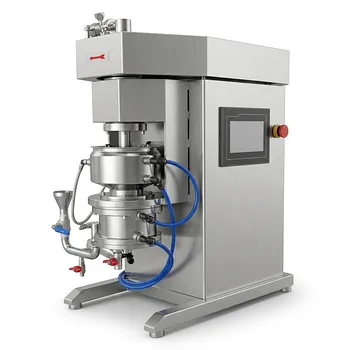
Small Ceramic Structure Laboratory Sand Mill Nanoscale Grinding Dispersion Equipment Seal-less Screen-less Design
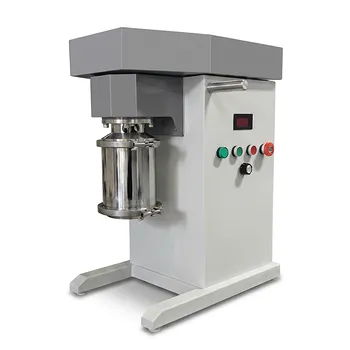
Nano Laboratory Bead Mill Desktop Sub Micron Sand Mill Screenless Seal Less Powder Grinder
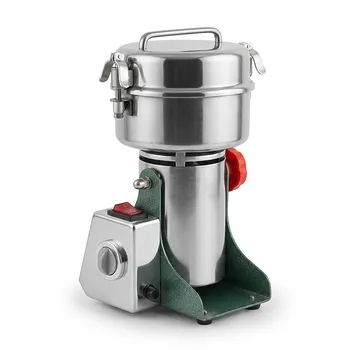
Small High-Speed Swing Grinder for Laboratory Sample Preparation
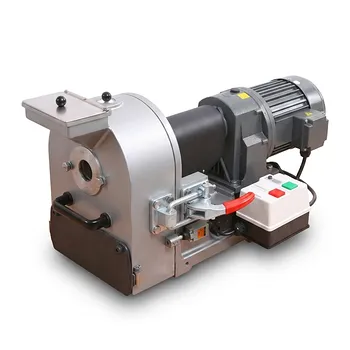
Laboratory Disc Mill for Fine Sample Preparation of Hard and Brittle Materials