Why are zirconia grinding balls preferred for SrTiO3 milling? Ensure High Purity & Precise Particle Size Refinement
Updated 5 months ago
Zirconia grinding balls are preferred for milling $SrTiO_3$ (ST) ceramic fillers because they offer a unique combination of high mechanical energy and extreme chemical purity. These media provide the high-intensity impact forces required to break down tough calcined agglomerates while ensuring that no foreign impurities degrade the sensitive dielectric properties of the strontium titanate powder.
The selection of zirconia media is a strategic decision to balance particle size refinement with material integrity. By utilizing zirconia's high density and wear resistance, manufacturers can achieve a uniform, fine-grained filler without the risk of metallic or chemical contamination that typically occurs during long-duration milling.
Superior Mechanical Energy for Particle Refinement
High Hardness and Impact Force
Zirconia possesses exceptional hardness and high density, which are critical for generating the kinetic energy needed during ball milling. This high-energy impact is essential for effectively crushing and refining the tough, calcined particles of $SrTiO_3$.
Uniform Particle Size Distribution
The consistent shape and weight of zirconia media allow for uniform impact forces throughout the milling chamber. This results in a more homogenous powder with a narrow particle size distribution, which is vital for the performance of ceramic fillers in composite materials.
Efficient Breakdown of Agglomerates
During the secondary milling stage, $SrTiO_3$ often exists as agglomerated clusters that are difficult to separate. Zirconia balls provide the stable impact energy necessary to break these bonds, transforming large clusters into fine, individual grains.
Preservation of Chemical Purity and Performance
Exceptional Wear Resistance
Zirconia is renowned for its extremely low wear rate, even during high-intensity cycles that may last between 10 to 24 hours. Because the media does not easily erode, the risk of introducing "grinding debris" into the high-purity $SrTiO_3$ powder is significantly minimized.
Protection of Dielectric Properties
For $SrTiO_3$, maintaining high chemical purity is non-negotiable for preserving its dielectric characteristics. Even minor contamination from metallic or silica-based grinding media can cause parasitic electrical losses or alter the permittivity of the final ceramic-polymer composite.
Prevention of Heterogeneous Contamination
Unlike softer media, zirconia remains chemically stable and does not react with the ceramic filler. This ensures that the final material maintains its intended chemical composition, which is critical for applications ranging from capacitors to microwave dielectrics.
Understanding the Trade-offs
The Cost-to-Performance Ratio
Zirconia media generally carries a higher upfront cost compared to alumina or steel balls. However, this is offset by their longevity and the reduction in "scrap" material caused by contamination, making them more cost-effective for high-performance applications.
Density and Mill Wear
While high density is a benefit for milling efficiency, it can lead to increased wear on the milling jar itself if the jar material is not sufficiently hard. It is common practice to use zirconia-lined jars alongside zirconia balls to maintain a fully synchronized, low-wear environment.
Potential for Structural Damage
In some specialized composites, such as those involving nanotubes, the high energy of zirconia can be overly aggressive. In these cases, the diameter of the zirconia balls must be carefully reduced to minimize mechanical damage to fragile secondary structures within the powder.
Making the Right Choice for Your Goal
How to Apply This to Your Project
To optimize your $SrTiO_3$ milling process, consider your primary objective for the final composite material:
- If your primary focus is maximum dielectric constant: Use high-purity zirconia media to prevent even trace levels of foreign ions from entering the $SrTiO_3$ lattice.
- If your primary focus is ultra-fine particle size: Opt for small-diameter zirconia beads (0.1mm to 1mm) to increase the frequency of contact points while maintaining high impact energy.
- If your primary focus is long-term production stability: Invest in Yttria-Stabilized Zirconia (YSZ) balls, as they offer the highest fracture toughness and the lowest wear rates for continuous 24-hour cycles.
By choosing zirconia media, you ensure that the mechanical refinement of your ceramic filler does not come at the expense of its vital chemical and electrical integrity.
Summary Table:
| Key Feature | Benefit for SrTiO3 Milling | Impact on Final Ceramic |
|---|---|---|
| High Density/Hardness | Superior kinetic energy for crushing | Uniform particle size distribution |
| Low Wear Rate | Minimal introduction of grinding debris | Preserved dielectric properties |
| Chemical Stability | No reaction with SrTiO3 powder | Maintained chemical composition |
| Geometric Precision | Stable and uniform impact forces | Homogenous powder quality |
Elevate Your Material Research with High-Purity Processing Solutions
Achieving the perfect particle size for $SrTiO_3$ ceramic fillers requires more than just high-quality media—it requires a complete, integrated approach to sample preparation. We provide comprehensive laboratory sample preparation solutions designed specifically for the rigorous demands of material science.
From refining powders to final compaction, our specialized equipment ensures your materials maintain their chemical and electrical integrity:
- Advanced Milling & Grinding: High-performance planetary ball mills, jet mills, and cryogenic grinders optimized for use with zirconia media.
- Precision Compaction: A full spectrum of hydraulic presses, including Cold/Warm Isostatic Presses (CIP/WIP), XRF pellet presses, and vacuum hot presses.
- Powder Handling: Vibratory sieve shakers, high-efficiency powder mixers, and defoaming mixers.
Don't let contamination compromise your dielectric performance. Contact us today to discuss your specific application and discover how our powder processing and compaction expertise can drive your research forward!
References
- Nina Kuzmić, Matjaž Spreitzer. Dielectric Properties of Upside-Down SrTiO3/Li2MoO4 Composites Fabricated at Room Temperature. DOI: 10.3389/fmats.2021.669421
Mentioned Products
- Vertical Semi Circular Planetary Ball Mill for Laboratory Precision Grinding
- High Energy Laboratory Planetary Ball Mill for Nano Grinding and Material Science Sample Preparation
- Heavy Duty Horizontal Planetary Ball Mill for Efficient Industrial Grinding and Sample Preparation
- Vertical Square Planetary Ball Mill for Laboratory Sample Preparation and Nanoscale Grinding
- 8L Planetary Ball Mill for Laboratory Grinding and Sample Preparation
People Also Ask
- What role does a planetary ball mill play in the synthesis of Li6PS5Cl (LPSCl)? Unlock High Ionic Conductivity
- Why is a planetary ball mill essential for SiBCN-rGO wet-spinning? Achieve Superior Dispersion and Spinnability
- Why is an intermittent grinding process required for perovskites in a planetary ball mill? Ensure Stability & Purity
- Why is a planetary ball mill required for PET micronization? Ensure Accurate Chemical Analysis of Reprocessed PET
- How does mechanized planetary ball milling compare to manual agate grinding? Optimize sulfide standard material precision.

Tech Team · PowderPreparation
Last updated on May 14, 2026
Related Products
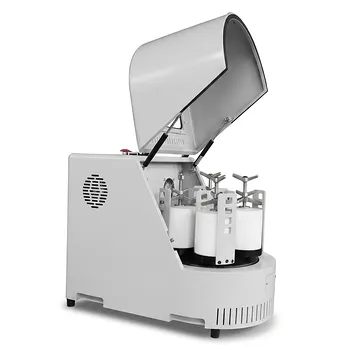
Vertical Semi Circular Planetary Ball Mill for Laboratory Precision Grinding
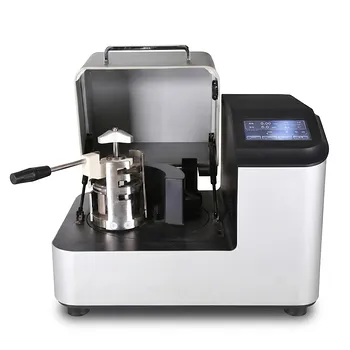
High Energy Laboratory Planetary Ball Mill for Nano Grinding and Material Science Sample Preparation
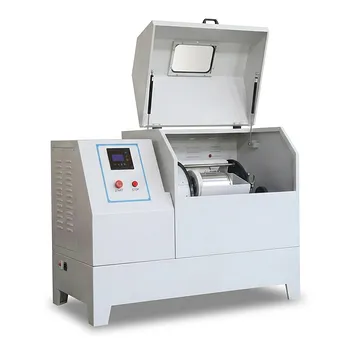
Heavy Duty Horizontal Planetary Ball Mill for Efficient Industrial Grinding and Sample Preparation
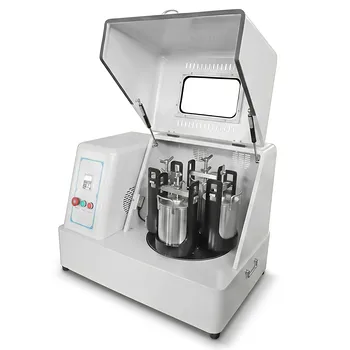
Vertical Square Planetary Ball Mill for Laboratory Sample Preparation and Nanoscale Grinding
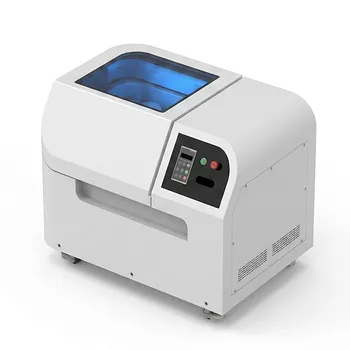
8L Planetary Ball Mill for Laboratory Grinding and Sample Preparation
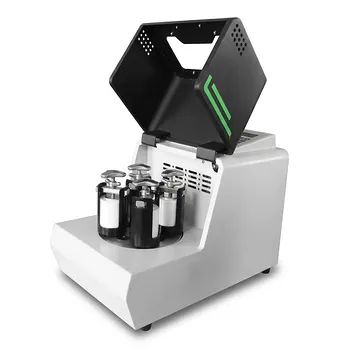
Miniature Planetary Ball Mill with Vacuum Grinding and High Efficiency for Laboratory Sample Preparation
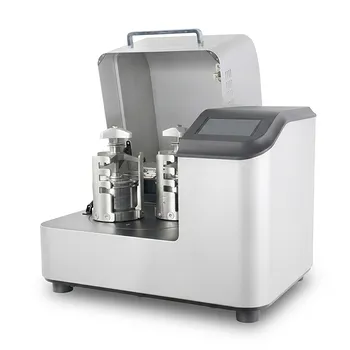
High Energy Planetary Ball Mill for Nano Scale Grinding and Mechanical Alloying
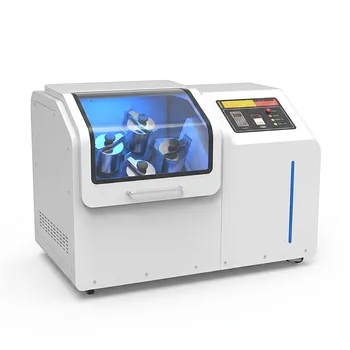
High Energy Omnidirectional Planetary Ball Mill 16L
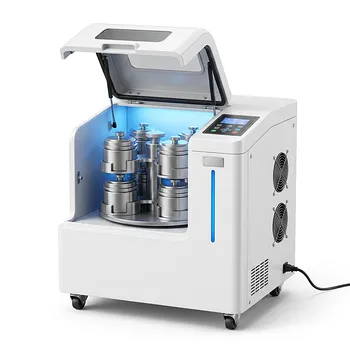
High Energy Omnidirectional Planetary Ball Mill 20L
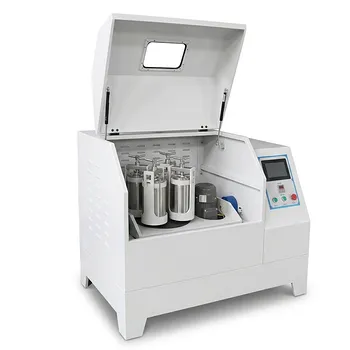
360° Rotating Omnidirectional Laboratory Planetary Ball Mill for Homogeneous Ultra-Fine Grinding and Mixing