How is equipment wear and its impact on product purity assessed? Monitor Steel Media Wear in Silica Grinding via EDS
Updated 5 months ago
Quantifying contamination through elemental analysis is the standard method. When grinding silica with steel media, equipment wear is assessed by measuring the concentration of iron in the final product using Energy Dispersive X-ray Spectroscopy (EDS). This technique identifies the presence and quantity of metallic flaking that occurs during the high-energy milling process.
The integrity of silica nanoparticles depends on monitoring iron contamination via EDS, as mechanical wear from steel jars and balls is unavoidable. This quantitative assessment determines if the final product satisfies the stringent purity standards required for specific industrial applications.
The Mechanics of Material Degradation
Understanding Abrasive Wear
Mechanical wear is a fundamental characteristic of the ball milling process rather than a system failure. In a wet grinding environment, the constant impact and friction between the media and the jar walls inevitably lead to surface degradation.
The Source of Contamination
As the silica particles are reduced in size, they act as an abrasive against the steel components. This interaction causes microscopic fragments of the steel grinding jars and balls to flake off, directly entering the silica slurry.
Assessing Equipment Longevity
By monitoring the rate at which iron content increases over multiple batches, engineers can predict the lifespan of the grinding media. A sudden spike in metallic presence often signals that the jars or balls have reached a critical level of fatigue and require replacement.
Analytical Methods for Purity Assessment
The Role of EDS
Energy Dispersive X-ray Spectroscopy (EDS) is the primary analytical tool used to monitor purity. It functions by bombarding the silica sample with an electron beam, which triggers the emission of characteristic X-rays that identify the elemental "fingerprint" of the material.
Quantitative Iron Monitoring
EDS allows for the quantitative measurement of iron content within the final silica product. By comparing the iron levels in the post-grinding sample to the baseline purity of the raw silica, technicians can determine the exact mass of steel lost during the process.
Meeting Industrial Standards
This elemental analysis is vital for verifying that the silica meets specific application requirements. For industries where high-purity silica is non-negotiable, EDS provides the empirical evidence needed to approve or reject a production batch.
Understanding the Trade-offs
Durability vs. Contamination
Steel is often selected for grinding due to its high density and impact energy, which results in faster particle size reduction. However, the trade-off is the introduction of metallic impurities that can alter the chemical properties of the silica.
Limitations of EDS Sensitivity
While EDS is excellent for detecting significant flaking, it may lack the sensitivity required for ultra-trace analysis in extremely high-purity applications. In scenarios where parts-per-billion (ppb) accuracy is required, supplementary methods may be necessary.
Cost Efficiency vs. Product Quality
Using steel media is cost-effective for large-scale operations, but the subsequent need for iron-removal steps or the risk of product rejection can offset these savings. Assessing wear accurately ensures that the cost-benefit ratio remains favorable.
How to Apply This to Your Project
Understanding the relationship between equipment wear and product purity is essential for maintaining consistent manufacturing standards.
- If your primary focus is maximum product purity: Consider transitioning from steel to ceramic media (such as zirconia) to eliminate iron contamination entirely.
- If your primary focus is process efficiency and cost: Continue using steel components but implement a mandatory EDS screening protocol for every batch to ensure iron levels remain within tolerance.
- If your primary focus is equipment maintenance: Track the "iron-gain" trends over time to establish a proactive replacement schedule for your grinding balls and jars.
Rigorous elemental assessment ensures that your grinding process remains both efficient and compliant with your industry's quality standards.
Summary Table:
| Assessment Category | Key Consideration | Monitoring Method/Metric |
|---|---|---|
| Wear Mechanism | Abrasive degradation from silica particles | Visual inspection & weight loss monitoring |
| Contamination Type | Metallic flaking (Iron) in slurry | Energy Dispersive X-ray Spectroscopy (EDS) |
| Purity Impact | Alteration of chemical properties | Quantitative elemental mass percentage |
| Equipment Life | Fatigue of jars and balls | Long-term "iron-gain" trend analysis |
| Optimization | Balance of speed vs. purity | Selection of steel vs. zirconia media |
Achieve Uncompromising Purity in Your Material Processing
Are metallic impurities compromising your research or production quality? At KINTEK, we specialize in providing complete laboratory sample preparation solutions tailored for material science. Whether you need the high-impact energy of steel or the contamination-free performance of ceramic media, our equipment is designed for precision and durability.
Our comprehensive product line includes:
- Advanced Milling: Planetary ball mills, jet mills, and disc mills for superior particle size reduction.
- Compaction Excellence: Cold/Warm Isostatic Presses (CIP/WIP), standard lab presses, and vacuum hot presses.
- Sample Refinement: Liquid nitrogen cryogenic grinders, sieve shakers, and high-performance powder mixers.
Don't let equipment wear dictate your product's quality. Our experts are ready to help you select the ideal grinding media and processing equipment to meet your specific purity standards.
Contact KINTEK Today to Optimize Your Lab Workflow
References
- Magda A. Akl. Preparation and Characterization of Silica Nanoparticles by Wet Mechanical Attrition of White and Yellow Sand. DOI: 10.4172/2157-7439.1000183
Mentioned Products
- Vertical Square Planetary Ball Mill for Laboratory Sample Preparation and Nanoscale Grinding
- Single Tank High Energy Vibratory Ball Mill for Laboratory Grinding and Mixing
- Small Laboratory Colloid Mill for Ultra-Fine Wet Grinding and Emulsification
- Laboratory Basket Sand Mill for Wet Grinding and Dispersion of Viscous Slurries
- Laboratory Sand Mill Grinding Dispersing Machine for Wet Particle Size Reduction
People Also Ask
- What is the function of a planetary ball mill in wollastonite ceramic prep? Achieve Molecular Homogenization & Reactivity
- How does a planetary ball mill contribute to the homogenization of trace elements? Achieve Sub-Micron Uniformity
- Why grind lime-pozzolan specimens for TG/DTA for 3 mins? Master sample prep for high-precision thermal analysis.
- What role does a planetary ball mill play in the synthesis of Li6PS5Cl (LPSCl)? Unlock High Ionic Conductivity
- What role does a planetary ball mill play in KNTO ceramic refinement? Optimize Homogeneity & Reactivity

Tech Team · PowderPreparation
Last updated on May 14, 2026
Related Products

Vertical Square Planetary Ball Mill for Laboratory Sample Preparation and Nanoscale Grinding
Single Tank High Energy Vibratory Ball Mill for Laboratory Grinding and Mixing
Small Laboratory Colloid Mill for Ultra-Fine Wet Grinding and Emulsification
Laboratory Basket Sand Mill for Wet Grinding and Dispersion of Viscous Slurries
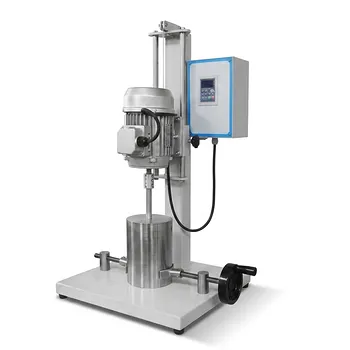
Laboratory Sand Mill Grinding Dispersing Machine for Wet Particle Size Reduction
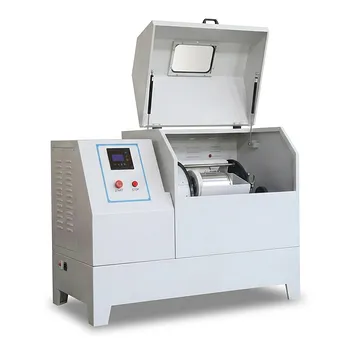
Heavy Duty Horizontal Planetary Ball Mill for Efficient Industrial Grinding and Sample Preparation

High Energy Omnidirectional Planetary Ball Mill 16L
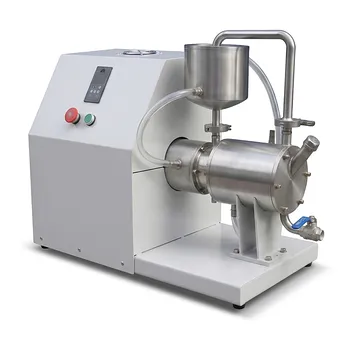
Laboratory Small Horizontal Sand Mill for Nano Materials Wet Grinding
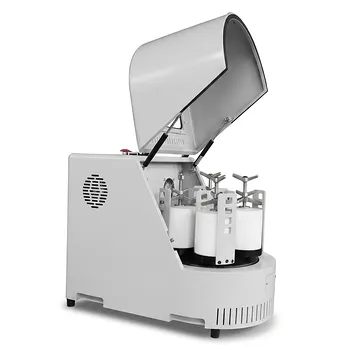
Vertical Semi Circular Planetary Ball Mill for Laboratory Precision Grinding
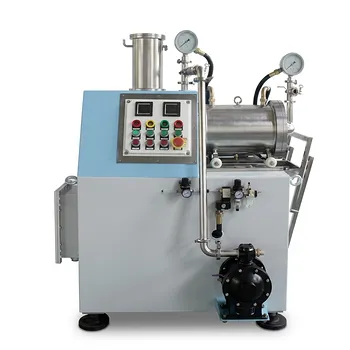
Horizontal Bead Mill for Nanoscale Grinding and Advanced Material Powder Processing
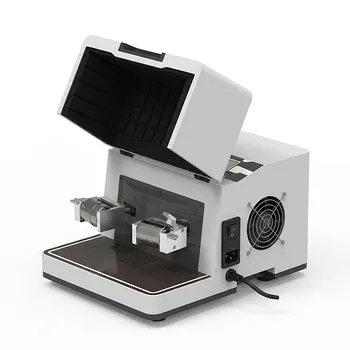
High Energy Hybrid Vibratory Ball Mill for Grinding Mixing and Cell Disruption

High Energy Laboratory Planetary Ball Mill for Nano Grinding and Material Science Sample Preparation
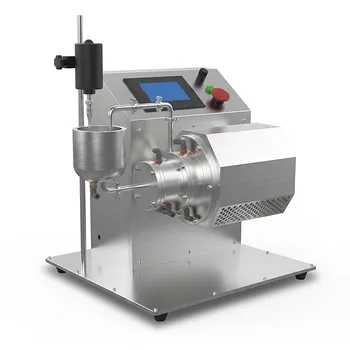
Laboratory Horizontal Pin Nano Sand Mill
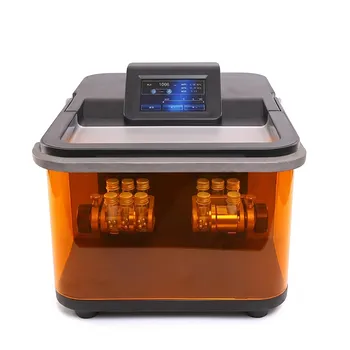
High Throughput Micro Ball Mill for Cryogenic Grinding and Laboratory Cell Disruption
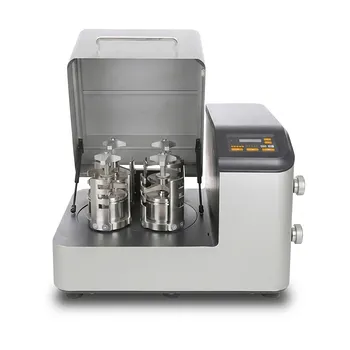
High Energy Planetary Ball Mill for Nano Scale Grinding and Colloidal Mixing in Material Science Research

High Energy Planetary Ball Mill for Nano Scale Grinding and Mechanical Alloying

Miniature Planetary Ball Mill with Vacuum Grinding and High Efficiency for Laboratory Sample Preparation

Vertical Production Planetary Ball Mill for High Throughput Powder Processing

High Energy Omnidirectional Planetary Ball Mill 20L