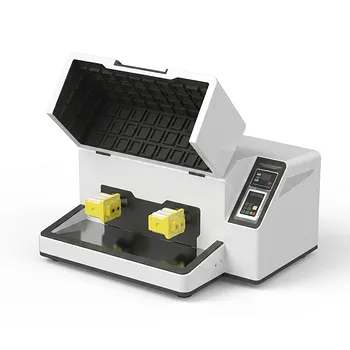
What is the role of high-efficiency powder refinement equipment in the preparation of advanced ceramic armor materials?
Updated 5 months ago
High-efficiency powder refinement is the critical precursor to ballistic excellence. In the production of advanced ceramic armor materials like silicon carbide (SiC) or alumina, equipment such as planetary ball mills and jet mills serves to reduce raw materials to ultra-fine, sub-micron, or even nanometer scales. This process precisely controls particle size distribution and purity, which are the fundamental requirements for achieving the high density, hardness, and fracture toughness necessary to survive high-velocity impacts.
High-efficiency powder refinement transforms raw ceramic precursors into highly reactive, homogenous powders. This preparation is the non-negotiable foundation for creating the dense, defect-free microstructures required for modern ballistic protection.
Enhancing Sintering Activity and Densification
Increasing the Sintering Driving Force
High-energy milling uses physical impact and shear forces to significantly increase the specific surface area of the ceramic powder. This process elevates the chemical potential difference, which acts as a powerful driving force for sintering. By increasing surface reactivity, manufacturers can achieve full densification and grain rearrangement at lower temperatures.
Establishing Micro-scale Uniformity
Refinement equipment ensures that all components—including sintering aids and plasticizers—are distributed with molecular-level uniformity. This homogeneity prevents composition segregation, which is a leading cause of performance fluctuations in the final ceramic plate. A uniform distribution is particularly vital for complex material systems involving multiple mineral components or metallic binders.
Optimizing the Green Body Foundation
The refinement process establishes the quality of the green body (the unfired ceramic shape). Precisely controlled particle sizes allow for tighter packing during the forming stage. This initial structural integrity directly influences the efficiency of atomic diffusion during the subsequent heat treatment.
Achieving Ballistic-Grade Microstructures
Grain Size Control and Hardness
The ability to refine powders to sub-micron scales allows for the creation of fine-grained microstructures after sintering. In armor applications, smaller grain sizes generally correlate with higher impact hardness. By eliminating micro-scale structural defects through better powder preparation, the material becomes significantly more resistant to crack propagation.
Enhancement of Fracture Toughness
High-efficiency milling ensures that secondary phases and toughening agents are dispersed perfectly throughout the ceramic matrix. This precise control over grain boundary composition is essential for maximizing fracture toughness. Improved toughness allows the armor to absorb and dissipate the kinetic energy of a projectile without shattering prematurely.
Facilitating Advanced Synthesis Techniques
For specialized processes like Reaction Bonded Aluminum Oxide (RBAO) or combustion synthesis, high-efficiency mixing is mandatory. It ensures that metallic precursors and oxidants reach a state of stoichiometric accuracy. This prevents unreacted impurities that would otherwise serve as failure points under ballistic stress.
Understanding the Trade-offs and Pitfalls
The Risk of Media Contamination
While high-energy milling is effective, extended milling times can lead to wear of the grinding media. This introduces impurities into the high-purity ceramic powder, which can negatively impact the final grain boundary chemistry. Selecting media that matches the chemistry of the armor material is a critical necessity.
Energy Intensity and Material Loss
High-efficiency refinement is an energy-intensive process that adds significant cost to the production cycle. Additionally, ultra-fine powders are prone to clumping (agglomeration) and can be difficult to recover from the equipment. Improper handling of these fine particles can lead to material waste or inhalation hazards in the facility.
Making the Right Choice for Your Goal
Effective powder refinement is the bridge between raw minerals and high-performance defense systems. Choosing the right equipment depends on the specific material properties required for your ballistic application.
- If your primary focus is Maximum Hardness: Prioritize high-energy jet milling to achieve the smallest possible particle size and ensure a fine-grained sintered microstructure.
- If your primary focus is Batch Consistency: Utilize planetary ball mills with high-purity media to ensure molecular-level homogeneity across large production volumes.
- If your primary focus is Complex Composites: Invest in high-efficiency mixing equipment that can handle multiple components and additives without composition segregation.
Ultimately, the precision of your powder refinement equipment dictates the survival limit of the final armor material.
Summary Table:
| Refinement Objective | Equipment Type | Impact on Ballistic Material |
|---|---|---|
| Ultra-fine Particle Size | Jet Mills / Planetary Ball Mills | Increases impact hardness and prevents crack propagation. |
| Molecular Homogeneity | High-Efficiency Mixers | Eliminates composition segregation for uniform plate strength. |
| High Surface Activity | High-Energy Milling | Lowers sintering temperature and promotes full densification. |
| Structural Integrity | CIP / Hot Presses | Creates defect-free microstructures for maximum energy absorption. |
Elevate Your Ballistic Material Performance
Achieving survival-grade ceramic armor requires more than just raw materials—it demands precise powder processing and superior compaction. We provide complete laboratory sample preparation solutions tailored for material science and advanced defense applications.
Our extensive equipment line supports every stage of your ceramic workflow:
- Refinement: High-energy planetary ball mills, jet mills, and disc mills for sub-micron particle control.
- Preparation: Jaw/roll crushers, vibratory sieve shakers, and high-efficiency powder mixers for stoichiometric accuracy.
- Compaction: A full spectrum of hydraulic presses, including Cold/Warm Isostatic Presses (CIP/WIP), vacuum hot presses, and standard lab presses to ensure maximum green body density.
Whether you are optimizing silicon carbide or alumina composites, our specialized tools help you eliminate structural defects and achieve superior sintering results.
Ready to refine your process? Contact our technical experts today to find the perfect equipment for your armor research and production.
References
- Halil Burak Mutu. Ballistic Performance Analysis of Silicon Carbide Ceramic Body Armor Using Finite Element Method and Machine Learning Algorithms. DOI: 10.17134/khosbd.1731217
Mentioned Products
- Benchtop Micro Air Jet Mill for Ultrafine Grinding of High Value Powders
- Heating Temperature Controlled High Energy Vibratory Ball Mill
- Heavy Duty Horizontal Planetary Ball Mill for Efficient Industrial Grinding and Sample Preparation
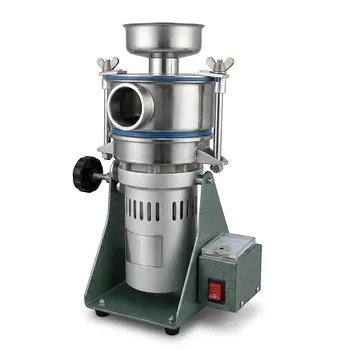
- Small Airflow Ultra-Fine Grinder for Laboratory Sample Preparation
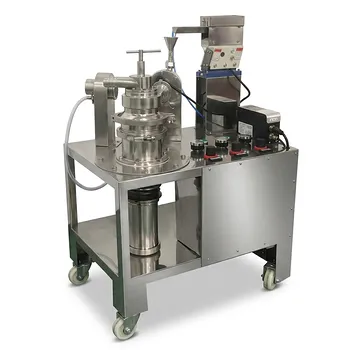
- Laboratory Classification Jet Mill for Ultrafine Powder Grinding
People Also Ask
- How does an air-jet mill enhance the performance of Mo2N when used as an electrocatalyst? Optimize Electrode Efficiency
- Why is secondary jet milling necessary for products processed through HME? Achieve Precision for Inhalation Delivery
- Why is a jet mill used for the co-milling of inhalable Itraconazole microparticles? Optimize Pulmonary Drug Delivery
- What are the advantages of a jet mill vs. a ball mill for high-purity ceramics? Achieve superior purity and precision.
- What are the advantages of using a jet mill compared to a ball mill for Sm-Co magnets? Purity vs. Performance

Tech Team · PowderPreparation
Last updated on May 14, 2026
Related Products
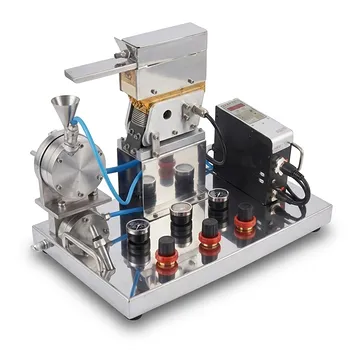
Benchtop Micro Air Jet Mill for Ultrafine Grinding of High Value Powders
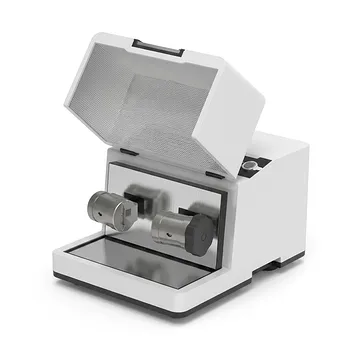
Heating Temperature Controlled High Energy Vibratory Ball Mill
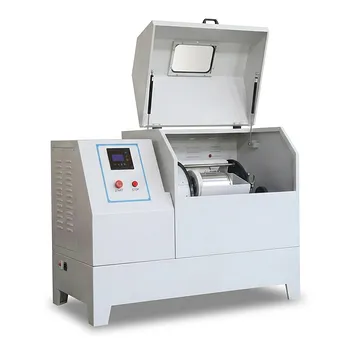
Heavy Duty Horizontal Planetary Ball Mill for Efficient Industrial Grinding and Sample Preparation
Small Airflow Ultra-Fine Grinder for Laboratory Sample Preparation
Laboratory Classification Jet Mill for Ultrafine Powder Grinding
Single Tank High Energy Vibratory Ball Mill for Laboratory Grinding and Mixing
Dual Jar High Energy Vibratory Ball Mill
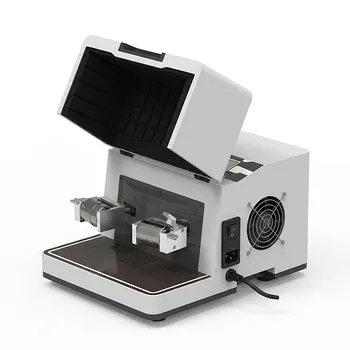
High Energy Hybrid Vibratory Ball Mill for Grinding Mixing and Cell Disruption
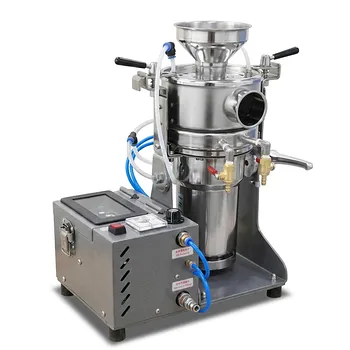
Water Cooled Pulse Jet Ultrafine Grinder
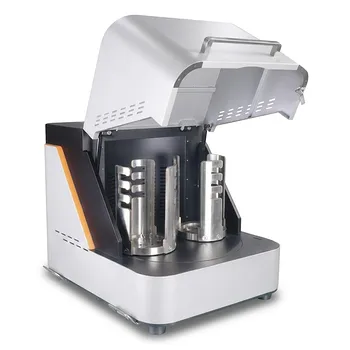
High Energy Laboratory Planetary Ball Mill for Nano Grinding and Colloidal Mixing of Hard and Brittle Materials
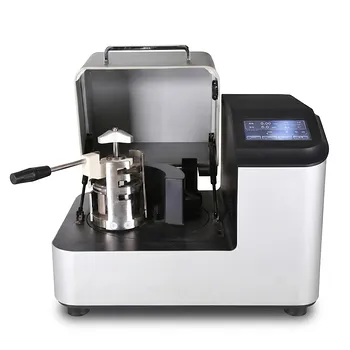
High Energy Laboratory Planetary Ball Mill for Nano Grinding and Material Science Sample Preparation
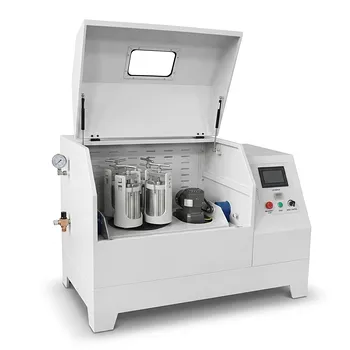
Vertical Production Planetary Ball Mill for High Throughput Powder Processing
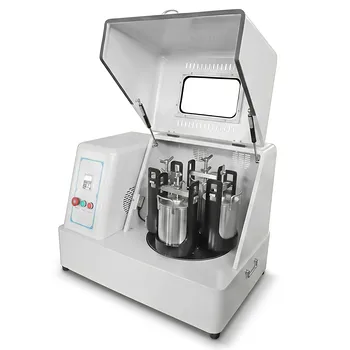
Vertical Square Planetary Ball Mill for Laboratory Sample Preparation and Nanoscale Grinding
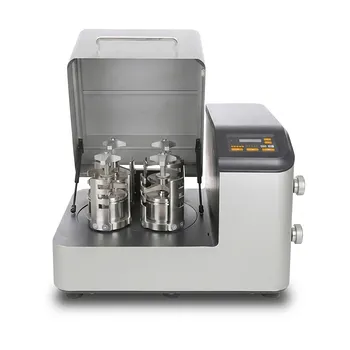
High Energy Planetary Ball Mill for Nano Scale Grinding and Colloidal Mixing in Material Science Research
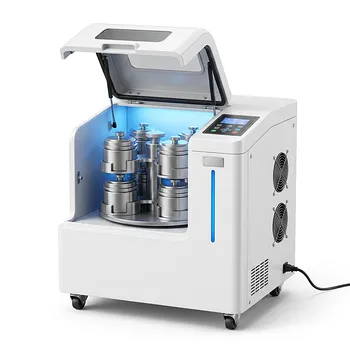
High Energy Omnidirectional Planetary Ball Mill 20L

Nano High Energy Vibratory Ball Mill for Laboratory Sample Preparation
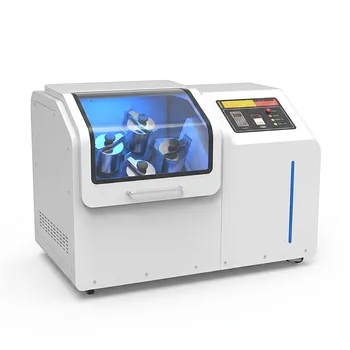
High Energy Omnidirectional Planetary Ball Mill 16L
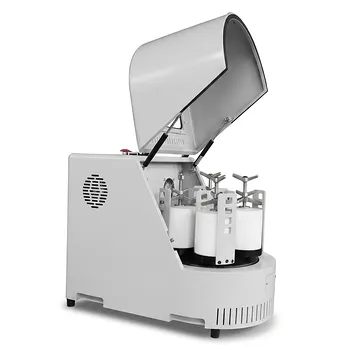
Vertical Semi Circular Planetary Ball Mill for Laboratory Precision Grinding
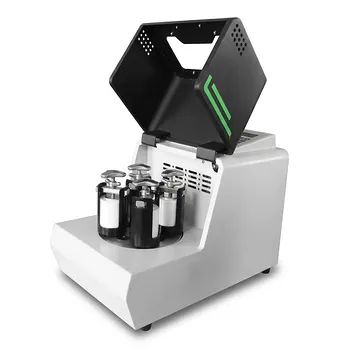
Miniature Planetary Ball Mill with Vacuum Grinding and High Efficiency for Laboratory Sample Preparation