How to Select SS Grinding Media for Aluminum-Based Composite Powders? Technical Factors for Lab Success
Updated 5 months ago
Selecting stainless steel grinding media for aluminum-based composites requires balancing high kinetic energy transfer with chemical purity. The primary technical considerations involve the media's ability to overcome the plastic deformation resistance of aluminum through hardness and density, while maintaining wear resistance to prevent contamination during milling cycles that can last up to 72 hours.
Core Takeaway: To successfully process aluminum-based powders, stainless steel media must provide sufficient impact force to induce grain refinement and mechanical solid solution. Success depends on optimizing the ball-to-powder weight ratio (BPR) and utilizing diverse ball diameters to create an efficient energy transfer gradient.
Overcoming Plastic Deformation with Kinetic Energy
The Role of Hardness and Mass
Stainless steel is selected for its high hardness and density, which are essential for delivering significant kinetic energy during high-speed operation. This energy is required to overcome the inherent ductility and plastic deformation resistance of metallic aluminum.
Achieving Mechanical Solid Solution
High-energy impacts induce severe plastic deformation, which is the physical foundation for grain refinement. This process allows reinforcement particles, such as nano-alumina or boron nitride, to effectively embed into the aluminum matrix.
Impact Strength and Rotational Speed
The media must withstand high rotational speeds, often between 600 and 800 rpm, without fracturing. High-strength stainless steel ensures that the kinetic energy is transferred efficiently to the powder rather than being dissipated through media deformation.
Managing Material Purity and Integrity
Minimizing Media Wear
During long-duration milling—sometimes exceeding 72 hours—the superior wear resistance of stainless steel is critical. It minimizes the introduction of metallic impurities that could compromise the final composite's electrical or mechanical performance.
Chemical Stability and Composition Control
Stainless steel offers high chemical stability, which helps maintain the precise chemical composition of the aluminum matrix. This is particularly important when the intended application requires specific reactive activity or structural properties.
Thermal and Environmental Stability
Stainless steel maintains its structural integrity across a wide temperature range, including low-temperature liquid nitrogen environments. This ensures stability during cryogenic milling, which is often used to manage the heat generated by aluminum's high ductility.
Process Configuration and Ratios
Optimizing the Ball-to-Powder Weight Ratio (BPR)
The ratio of grinding balls to the weight of the powder typically ranges from 7:1 to 10:1. A consistent BPR ensures sufficient collision frequency and energy intensity within the milling chamber to refine the powder effectively.
Energy Transfer Gradients via Ball Sizing
Utilizing a combination of ball sizes, such as 5 mm to 20 mm, creates a diverse energy transfer gradient. This variety improves milling efficiency by ensuring both high-impact collisions and fine-scale grinding occur simultaneously.
Controlling Particle Morphology
By adjusting the BPR and milling duration, engineers can precisely control the final particle size distribution and aspect ratio. This level of control is necessary to achieve the desired morphology and reactive activity in the resulting composite fillers.
Understanding the Trade-offs
Contamination vs. Processing Time
While stainless steel is wear-resistant, trace iron contamination is inevitable during extended milling cycles. Users must weigh the benefits of increased refinement against the potential impact of these impurities on the composite's specialized properties.
Energy Input vs. Heat Generation
High-energy milling generates significant frictional heat, which can cause aluminum powders to cold-weld to the jars and balls. Managing this requires a careful balance between rotational speed and the use of process control agents or cooling systems.
Media Cost vs. Performance
Stainless steel is a cost-effective choice for many aluminum applications, but it may lack the extreme hardness of ceramic media like zirconia. However, zirconia's lower density may not provide the impact momentum required to deform metallic aluminum as effectively as stainless steel.
Making the Right Choice for Your Goal
- If your primary focus is maximum grain refinement: Utilize a higher ball-to-powder ratio (10:1) and a mix of ball sizes to maximize collision frequency and energy intensity.
- If your primary focus is high chemical purity: Limit milling duration and use high-grade, wear-resistant stainless steel to minimize the shedding of iron impurities into the aluminum matrix.
- If your primary focus is preventing cold-welding: Opt for lower rotational speeds (600 rpm) or implement cryogenic cooling to manage the heat generated during the deformation of ductile aluminum.
Selecting the correct stainless steel media and jar configuration ensures that the mechanical energy input is perfectly calibrated to transform ductile aluminum into a high-performance composite.
Summary Table:
| Technical Factor | Recommended Parameter | Key Benefit |
|---|---|---|
| Material Density | High-grade Stainless Steel | Overcomes Al plastic deformation resistance |
| Ball-to-Powder Ratio | 7:1 to 10:1 | Ensures optimal collision frequency/energy |
| Ball Size Distribution | 5 mm to 20 mm (Mixed) | Creates efficient energy transfer gradients |
| Rotational Speed | 600 to 800 rpm | Induces grain refinement and solid solution |
| Temperature Control | Cryogenic / Process Agents | Prevents powder cold-welding and oxidation |
Optimize Your Material Preparation with Expert Solutions
Achieving the perfect grain refinement in aluminum-based composites requires precision equipment and the right media configuration. At [Company Name], we provide complete laboratory sample preparation solutions tailored for advanced material science. Our expertise spans the entire powder processing workflow, offering high-performance equipment including:
- Advanced Milling: Planetary ball mills, jet mills, liquid nitrogen cryogenic grinders, and rotor mills for superior particle size control.
- Powder Processing: Crushers (jaw/roll), sieve shakers (vibratory/air-jet), and high-efficiency powder/defoaming mixers.
- Compaction Excellence: A full spectrum of hydraulic presses, including Cold/Warm Isostatic Presses (CIP/WIP), vacuum hot presses, and standard lab presses.
Whether you are focusing on maximizing grain refinement or ensuring ultra-high chemical purity, our technical team is ready to help you configure the ideal system for your research goals.
Contact us today to enhance your laboratory efficiency!
References
- Xiaohui Du, F. Liu. Microstructure and mechanical properties of graphene-reinforced aluminum-matrix composites. DOI: 10.17222/mit.2018.021
Mentioned Products
- Small High-Speed Laboratory Grinder for Powder Processing
- High Speed Laboratory Grinder Efficient Stainless Steel Powder Pulverizer Universal Material Science Mill for Sample Preparation
- High Energy Omnidirectional Planetary Ball Mill 16L
- Heavy Duty Horizontal Planetary Ball Mill for Efficient Industrial Grinding and Sample Preparation
People Also Ask
- What role does a laboratory grinder play in the pretreatment of sunflower seed shell-based adsorbents? Boost Efficiency.
- How does a laboratory grinder or mill enhance the adsorption performance of agricultural waste materials? Boost Surface Area
- What is the role of laboratory grinding equipment in the preparation of waste glass powder for eco-friendly red bricks?
- Why is grinding equipment necessary for SnO2-Sb2O3 xerogels? Maximize surface area and photocatalytic activity.
- What is the primary role of grinding equipment in BLA preparation? Enhance Reactivity & Material Uniformity

Tech Team · PowderPreparation
Last updated on May 14, 2026
Related Products
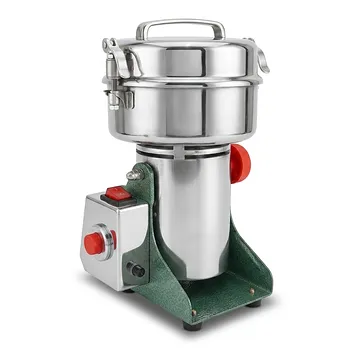
Small High-Speed Laboratory Grinder for Powder Processing
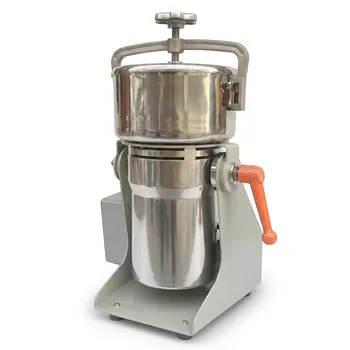
High Speed Laboratory Grinder Efficient Stainless Steel Powder Pulverizer Universal Material Science Mill for Sample Preparation

High Energy Omnidirectional Planetary Ball Mill 16L