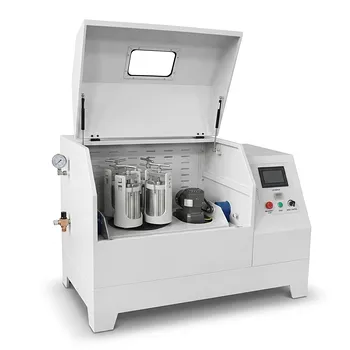
Tungsten Carbide vs. Stainless Steel: Boosting Titanium Powder Refinement Efficiency
Updated 5 months ago
The use of high-density tungsten carbide milling balls dramatically accelerates the refinement of titanium powder by maximizing kinetic energy transfer.
Because tungsten carbide is approximately twice as heavy as stainless steel, it transfers significantly greater mechanical energy to the titanium powder at any given milling frequency. This intensive energy input results in a shorter processing duration to achieve target particle sizes and promotes a more thorough breakdown of the internal grain structure.
Utilizing tungsten carbide milling media optimizes refinement efficiency by leveraging superior density and hardness to deliver high-impact kinetic energy, which is essential for the rapid production of ultrafine and mechanically activated powders.
The Mechanics of Enhanced Refinement Efficiency
The Role of Density in Energy Transfer
The primary advantage of tungsten carbide (WC) over stainless steel is its significantly higher density. At the same rotational speed, the increased mass of WC balls generates much higher kinetic energy during impact.
This increased energy serves as the primary physical driver for breaking down metallic grain boundaries. Consequently, the titanium powder undergoes more frequent and intense compression and fracturing cycles.
Accelerated Grain Refinement
The intensive impact energy provided by WC media promotes more rapid grain refinement within the titanium particles. This process is far more aggressive than what can be achieved with stainless steel media.
By accelerating the internal structural breakdown, researchers can achieve nanometer-sized powder characteristics much faster. This efficiency is critical when processing difficult-to-refine or high-melting-point materials.
Impact on Powder Morphology and Quality
Achieving Thinner Particle Geometries
The high-intensity grinding provided by tungsten carbide tends to produce thinner, finer, disc-shaped particles. This morphology is often desirable for specific downstream applications like additive manufacturing or specialized coatings.
Stainless steel media, while effective, often requires significantly longer milling times to reach comparable levels of particle thinning. The efficiency of WC ensures that the desired morphology is reached before excessive thermal energy can negatively affect the powder.
Mechanical Activation of Elemental Powders
The extreme hardness of tungsten carbide allows for the mechanical activation of titanium powders. This activation increases the surface energy of the particles, making them more reactive for subsequent chemical or thermal processing.
For advanced ceramic precursors or complex metallic alloys, this high-energy transfer is often non-negotiable. Without the intensity of WC media, these materials may fail to reach the necessary state of refinement.
Understanding the Trade-offs
Risk of Impurity Contamination
While tungsten carbide is highly wear-resistant, prolonged processing can still lead to minimal tungsten carbide impurities in the titanium powder. This occurs as the media surfaces experience micro-wear over hundreds of hours of high-energy impact.
In applications where absolute chemical purity is paramount, the presence of trace tungsten must be carefully monitored. However, for most industrial applications, the high wear resistance of WC actually minimizes overall media loss compared to softer steel alternatives.
Cost and Equipment Stress
Tungsten carbide is a premium material with a significantly higher acquisition cost than stainless steel. The increased weight of the media also places higher mechanical stress on the milling equipment’s motors and drive systems.
Operators must ensure that their planetary mills or stirred ball mills are rated for the increased load of high-density media. Failing to account for this weight can lead to premature equipment failure or inconsistent milling speeds.
Making the Right Choice for Your Goal
To determine if tungsten carbide is the appropriate choice for your titanium refinement process, consider your specific production requirements and material constraints.
- If your primary focus is maximum refinement speed: Utilize tungsten carbide balls to drastically reduce milling time and achieve the finest possible grain structures.
- If your primary focus is cost-sensitive bulk processing: High-strength stainless steel remains a viable option if extended milling times are acceptable for your workflow.
- If your primary focus is minimizing specific heavy-metal contamination: Evaluate if the trace tungsten introduced by WC wear is compatible with your final product specifications.
Choosing the correct milling media is a balance between the energy required for refinement and the practical limitations of cost and purity.
Summary Table:
| Feature | Tungsten Carbide (WC) | Stainless Steel (SS) |
|---|---|---|
| Density | Very High (~15 g/cm³) | Moderate (~7.8 g/cm³) |
| Energy Transfer | Maximum kinetic energy | Standard kinetic energy |
| Refinement Speed | Significantly faster | Slower; requires longer milling |
| Particle Size | Achieves nanometer range easily | Harder to reach ultrafine sizes |
| Morphology | Thinner, disc-shaped particles | Standard rounded/angular |
| Media Cost | Premium / High | Economical / Low |
| Equipment Stress | High (due to weight) | Moderate |
Elevate Your Material Research with Precision Sample Preparation
Maximize your powder processing efficiency with [Brand Name]. We provide complete laboratory sample preparation solutions tailored for material science, ensuring you achieve the exact particle morphology and refinement your application demands.
Our specialized range includes:
- High-Energy Mills: Planetary ball mills, jet mills, and cryogenic grinders designed for high-density media like tungsten carbide.
- Advanced Compaction: A full spectrum of hydraulic presses, including Cold/Warm Isostatic Presses (CIP/WIP), vacuum hot presses, and XRF pellet presses.
- Processing Essentials: Jaw crushers, sieve shakers, and high-performance powder/defoaming mixers.
Whether you are refining titanium for additive manufacturing or developing advanced alloys, our equipment delivers the durability and precision required for superior results.
Ready to optimize your workflow? Contact our technical team today for a custom solution!
References
- Jiří Kozlík, Miloš Janeček. Microstructure and texture in cryomilled and spark plasma sintered Ti Grade 2. DOI: 10.1051/matecconf/202032112030
Mentioned Products
- Vertical Semi Circular Planetary Ball Mill for Laboratory Precision Grinding
- High Energy Laboratory Planetary Ball Mill for Nano Grinding and Colloidal Mixing of Hard and Brittle Materials
- High Energy Laboratory Planetary Ball Mill for Nano Grinding and Material Science Sample Preparation
- Vertical Square Planetary Ball Mill for Laboratory Sample Preparation and Nanoscale Grinding
- 8L Planetary Ball Mill for Laboratory Grinding and Sample Preparation
People Also Ask
- What role does a planetary ball mill play in the synthesis of Li6PS5Cl (LPSCl)? Unlock High Ionic Conductivity
- Why is a planetary ball mill essential for SiBCN-rGO wet-spinning? Achieve Superior Dispersion and Spinnability
- Why is an intermittent grinding process required for perovskites in a planetary ball mill? Ensure Stability & Purity
- Why is a planetary ball mill required for PET micronization? Ensure Accurate Chemical Analysis of Reprocessed PET
- How does mechanized planetary ball milling compare to manual agate grinding? Optimize sulfide standard material precision.

Tech Team · PowderPreparation
Last updated on May 14, 2026
Related Products
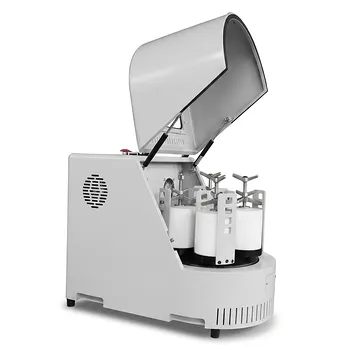
Vertical Semi Circular Planetary Ball Mill for Laboratory Precision Grinding
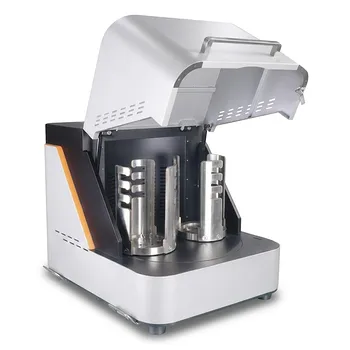
High Energy Laboratory Planetary Ball Mill for Nano Grinding and Colloidal Mixing of Hard and Brittle Materials
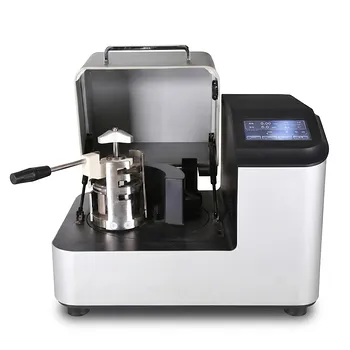
High Energy Laboratory Planetary Ball Mill for Nano Grinding and Material Science Sample Preparation
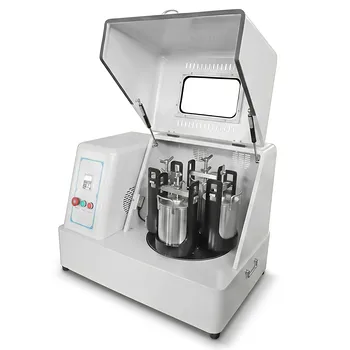
Vertical Square Planetary Ball Mill for Laboratory Sample Preparation and Nanoscale Grinding
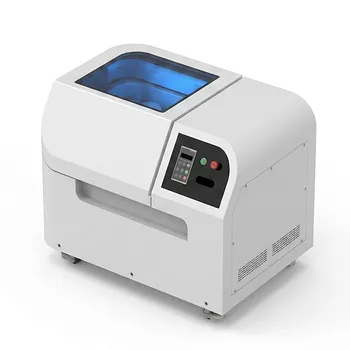
8L Planetary Ball Mill for Laboratory Grinding and Sample Preparation
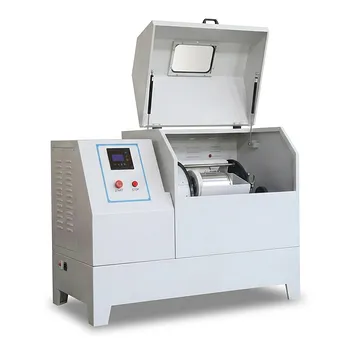
Heavy Duty Horizontal Planetary Ball Mill for Efficient Industrial Grinding and Sample Preparation
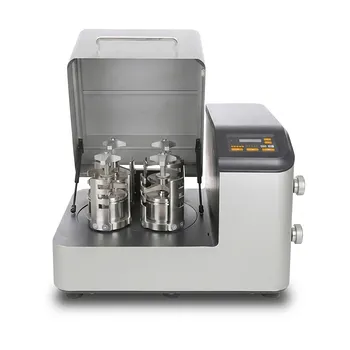
High Energy Planetary Ball Mill for Nano Scale Grinding and Colloidal Mixing in Material Science Research
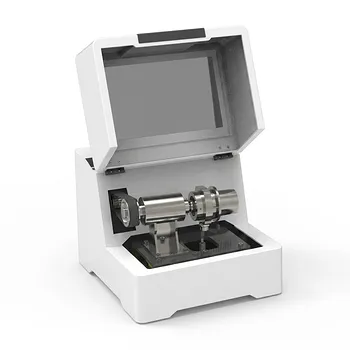
Single Tank High Energy Vibratory Ball Mill for Laboratory Grinding and Mixing
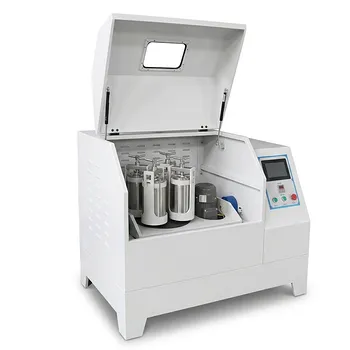
360° Rotating Omnidirectional Laboratory Planetary Ball Mill for Homogeneous Ultra-Fine Grinding and Mixing
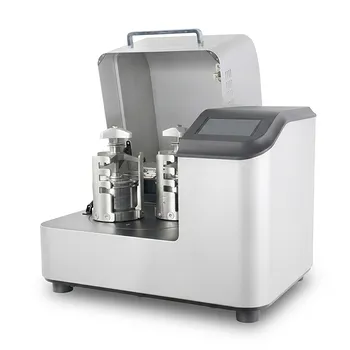
High Energy Planetary Ball Mill for Nano Scale Grinding and Mechanical Alloying
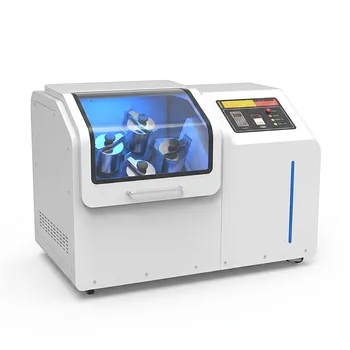
High Energy Omnidirectional Planetary Ball Mill 16L
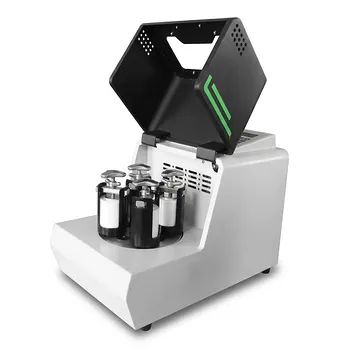
Miniature Planetary Ball Mill with Vacuum Grinding and High Efficiency for Laboratory Sample Preparation
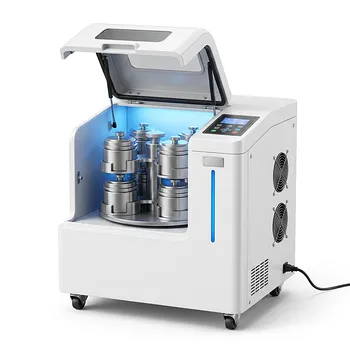
High Energy Omnidirectional Planetary Ball Mill 20L
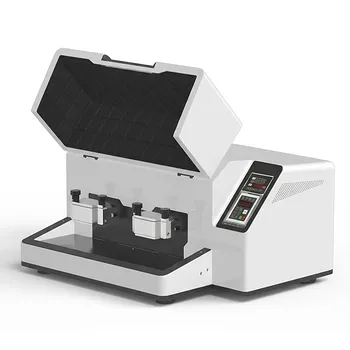
Nanoscale High-Energy Vibratory Ball Mill for Laboratory Sample Preparation, Mechanochemistry, and Mechanical Alloying