Why are zirconia grinding balls with a diameter of 10 mm preferred for preparing rare-earth doped bismuth ferrite powders?
Updated 5 months ago
The preference for 10 mm zirconia grinding balls is driven by the critical need for high kinetic energy and uncompromising chemical purity. These balls provide the necessary impact force to break down tough agglomerates in rare-earth doped bismuth ferrite while maintaining an exceptionally low wear rate. The 10 mm diameter is specifically optimized to balance grinding efficiency with the energy transfer required for consistent powder refinement over extended 24-hour durations.
Zirconia media offer a unique combination of high density and chemical inertness, ensuring that rare-earth doped bismuth ferrite powders reach the desired particle size without the introduction of metallic impurities that could compromise their electronic properties.
The Mechanics of Material Refinement
High Density and Kinetic Energy
Zirconia’s high density and hardness are essential for generating the kinetic energy needed to pulverize raw material agglomerates. Because bismuth ferrite is a hard ceramic, it requires media with sufficient mass to deliver high-impact force during the milling cycle.
The Efficiency of the 10 mm Diameter
The 10 mm diameter strikes a precise balance between the mass of the individual ball and the total number of contact points within the mill. This size ensures there is enough weight to crush larger particles while maintaining a high collision frequency to ensure a uniform particle size distribution.
Overcoming Material Agglomeration
Rare-earth dopants can often lead to stubborn powder clusters that resist refinement. The mechanical impact provided by 10 mm zirconia balls effectively shears these clusters, leading to a more homogeneous precursor powder.
Safeguarding Chemical Integrity
Minimizing Metallic Impurities
Rare-earth doped bismuth ferrite is highly sensitive to cross-contamination, which can degrade its magnetic and electrical performance. Zirconia is chemically stable and resistant to wear, ensuring that no unwanted metallic elements are introduced into the powder during the process.
Durability During 24-Hour Milling
The preparation of high-quality ceramic targets often requires extended grinding periods of up to 24 hours. Zirconia's superior wear resistance allows it to withstand these high-frequency impacts without fracturing or losing significant mass.
Maintaining Performance Stability
By utilizing high-purity media, manufacturers ensure the stability of the ionic conductivity and electrical properties of the final bismuth ferrite ceramic. Any contamination from the grinding media could cause unpredictable shifts in the material's functional characteristics.
Understanding the Trade-offs
Impact Force vs. Surface Area
While 10 mm balls provide excellent impact energy, they offer less total surface area than smaller media (such as 2 mm or 5 mm balls). This means that while they are superior for breaking down large agglomerates, they may be less efficient for reaching sub-micron fineness compared to smaller media.
Heat Generation
High-energy ball milling with dense media like zirconia can generate significant internal heat. If the temperature is not monitored, it can lead to unintended phase transformations or secondary reactions in the bismuth ferrite powder.
Media Cost and Maintenance
Zirconia is a premium material compared to alumina or steel media. While it offers a lower wear rate and better purity, the initial investment is higher, requiring a clear justification based on the sensitivity of the final electronic ceramic application.
Optimizing Your Milling Strategy
Choosing the right media size and material depends heavily on your specific production requirements and the sensitivity of your final product.
- If your primary focus is maximum chemical purity: Utilize high-purity zirconia media to ensure that no foreign metallic or chemical impurities compromise the doping balance of the bismuth ferrite.
- If your primary focus is rapid reduction of large agglomerates: Select the 10 mm diameter to take advantage of the high kinetic energy transfer and crushing force provided by the larger mass.
- If your primary focus is achieving ultra-fine particle size: Consider a two-stage milling process that starts with 10 mm media for initial breakdown and finishes with smaller zirconia beads for increased surface area contact.
By selecting 10 mm zirconia media, you ensure a robust process that balances physical refinement with the strict purity standards required for advanced electronic ceramics.
Summary Table:
| Key Feature | Benefit for Bismuth Ferrite | Resulting Material Quality |
|---|---|---|
| 10 mm Diameter | High kinetic energy & impact force | Efficient breakdown of tough rare-earth agglomerates |
| Zirconia Material | Chemical inertness & high density | Zero metallic contamination; stable electronic properties |
| Wear Resistance | Durable for 24h milling cycles | Consistent particle size without media degradation |
| Optimized Mass | Balanced collision frequency | Uniform powder refinement and phase stability |
Elevate Your Material Research with Precision Powder Solutions
Are you struggling with agglomeration or contamination in your electronic ceramic powders? Achieving the perfect doping balance in materials like bismuth ferrite requires both high-quality media and high-performance equipment.
We provide complete laboratory sample preparation solutions for material science, specializing in cutting-edge powder processing and compaction equipment. Our expert-grade lineup includes:
- Advanced Milling & Grinding: Planetary ball mills, jet mills, and liquid nitrogen cryogenic grinders for ultra-fine refinement.
- Precision Pressing: A full spectrum of hydraulic presses, including Cold/Warm Isostatic Presses (CIP/WIP), XRF pellet presses, and vacuum hot presses.
- Sizing & Mixing: Vibratory sieve shakers, powder mixers, and high-efficiency crushers.
Whether you are refining precursors or manufacturing ceramic targets, our solutions ensure uncompromising purity and consistency.
Contact us today to optimize your laboratory workflow!
References
- Ming‐Wei Chu, Wei Sea Chang. Coupled Ferroelectric–Photoelectrochemical in Water Reduction Over BiFeO <sub>3</sub> Thin Film Heterostructure Modulated by Rare‐Earth Doping. DOI: 10.1002/adfm.202516031
Mentioned Products
- Heating Temperature Controlled High Energy Vibratory Ball Mill
- High Energy Omnidirectional Planetary Ball Mill 20L
- 8L Planetary Ball Mill for Laboratory Grinding and Sample Preparation
- Small High-Speed Laboratory Grinder for Rapid Sample Preparation
- Multi-Platform Nanoscale High-Energy Vibratory Ball Mill
People Also Ask
- How does a high-energy vibratory ball mill improve the performance of MgH2? Optimize Hydrogen Storage Kinetics
- What is the primary purpose of using a vibratory ball mill in the preparation of respirable carbon fiber fragments?
- What is the purpose of using a vibratory ball mill for Al-Ni-Fe alloy ribbons? Achieve High Catalytic Activity
- Why is a vibratory ball mill preferred over a planetary ball mill for rapid powder particle refinement? High-Speed Impact
- What is the purpose of adding alcohol as a PCA during titanium ball milling? Prevent Cold Welding & Enhance Refinement

Tech Team · PowderPreparation
Last updated on May 14, 2026
Related Products
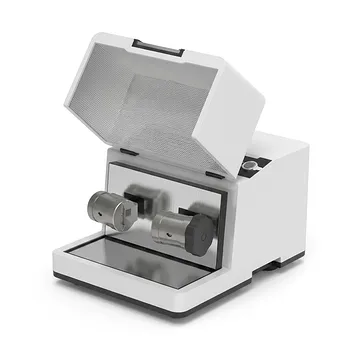
Heating Temperature Controlled High Energy Vibratory Ball Mill
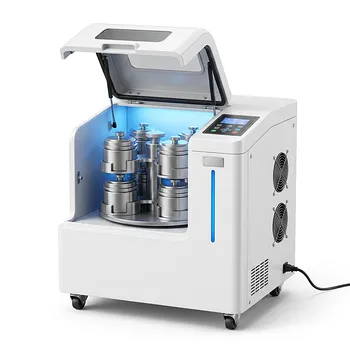
High Energy Omnidirectional Planetary Ball Mill 20L
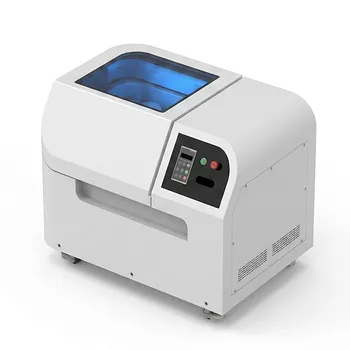
8L Planetary Ball Mill for Laboratory Grinding and Sample Preparation
Small High-Speed Laboratory Grinder for Rapid Sample Preparation
Multi-Platform Nanoscale High-Energy Vibratory Ball Mill

Miniature Planetary Ball Mill with Vacuum Grinding and High Efficiency for Laboratory Sample Preparation

Vertical Production Planetary Ball Mill for High Throughput Powder Processing
Small High-Speed Grinder for Efficient Laboratory Sample Preparation
Laboratory Disc Mill for Fine Sample Preparation of Hard and Brittle Materials
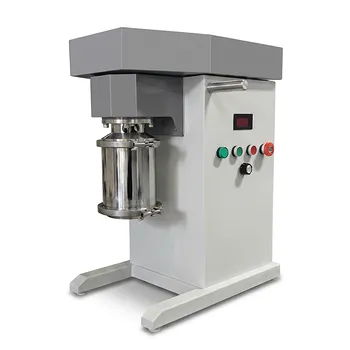
Nano Laboratory Bead Mill Desktop Sub Micron Sand Mill Screenless Seal Less Powder Grinder
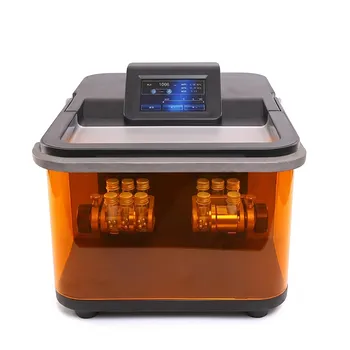
High Throughput Micro Ball Mill for Cryogenic Grinding and Laboratory Cell Disruption

High Energy Planetary Ball Mill for Nano Scale Grinding and Mechanical Alloying
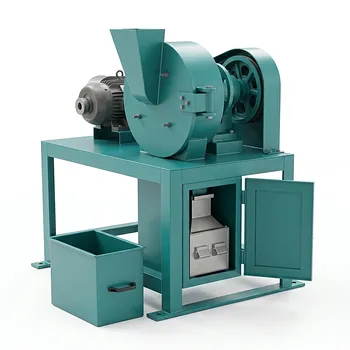
Sealed Disc Pulverizer Customized Model
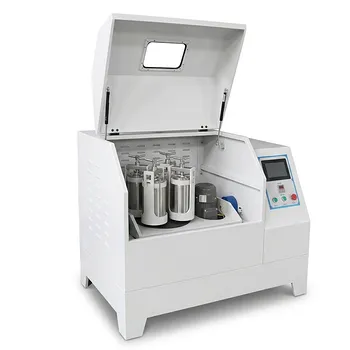
360° Rotating Omnidirectional Laboratory Planetary Ball Mill for Homogeneous Ultra-Fine Grinding and Mixing
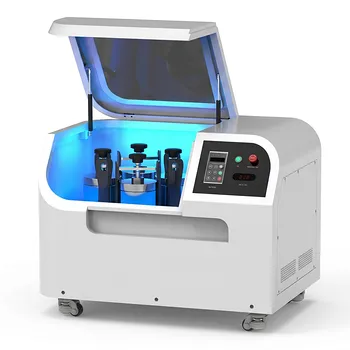
Planetary Ball Mill 12L
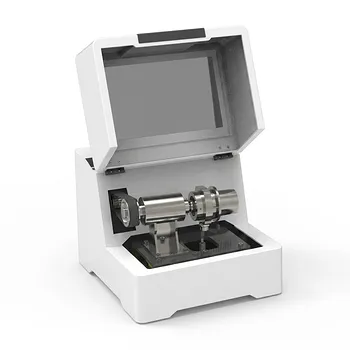
Single Tank High Energy Vibratory Ball Mill for Laboratory Grinding and Mixing
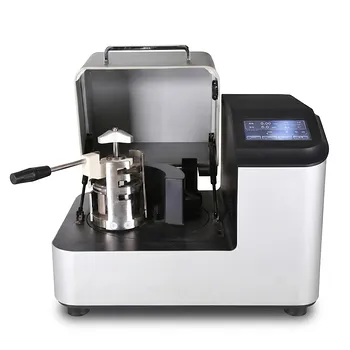
High Energy Laboratory Planetary Ball Mill for Nano Grinding and Material Science Sample Preparation
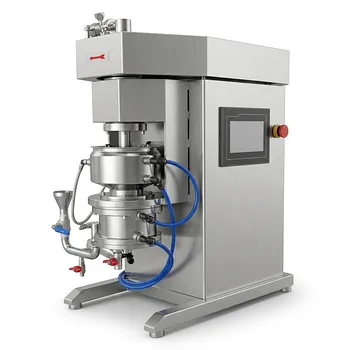
Small Ceramic Structure Laboratory Sand Mill Nanoscale Grinding Dispersion Equipment Seal-less Screen-less Design
High Energy Hybrid Vibratory Ball Mill for Grinding Mixing and Cell Disruption