Why are agate grinding jars and balls selected for silver oxide? Ensure Purity and Prevent Thermal Reduction
Updated 5 months ago
The selection of agate grinding tools is a strategic choice to preserve the chemical integrity of sensitive materials. Agate is chosen specifically to manage the thermal energy generated during high-energy collisions, preventing silver oxide from prematurely reducing to metallic silver. By mitigating heat accumulation and providing a chemically inert environment, agate ensures the powder remains stable and suitable for high-performance applications like conductive pastes.
Agate serves as a critical thermal and chemical safeguard during the mechanochemical process. It prevents the unintended thermal decomposition of silver oxide while ensuring the final powder is free from metallic impurities that could compromise electrochemical performance.
Preventing Unintended Chemical Reduction
Managing Thermal Energy Accumulation
During high-energy ball milling, the kinetic energy of the grinding media is converted into heat upon impact with the powder. Agate's specific material properties allow for a more controlled environment that minimizes the rapid heat buildup common with denser, more thermally conductive media.
Preserving Silver Oxide Stability
Silver oxide ($Ag_2O$) is sensitive to thermal stress and can easily reduce to metallic silver if temperatures spike during processing. By using agate jars and balls, researchers prevent this premature reduction, ensuring the chemical composition remains silver oxide rather than a silver-rich mixture.
Maintaining Chemical Inertness
Agate is highly valued for its excellent chemical stability, meaning it does not react with the silver oxide powder during the milling process. This inert nature ensures that the "mechanochemical" aspect of the grinding remains focused on particle size reduction rather than unwanted side reactions.
Maintaining Absolute Material Purity
High Hardness and Wear Resistance
Agate is a naturally hard material that resists the abrasive forces present during the grinding of metal oxides. This extreme hardness minimizes the wear and tear of the jars and balls, which would otherwise introduce foreign debris into the silver oxide powder.
Eliminating Metallic Contamination
Unlike hardened steel media, which can shed iron or chromium particles into the mix, agate is non-metallic. For materials destined for conductive pastes or electronic components, avoiding metallic or ceramic impurities is essential to maintain the accuracy of the powder's final properties.
Ensuring Stoichiometric Precision
In advanced material science, maintaining a precise ratio of elements is vital for the performance of the final product. Agate's low wear rate ensures that the stoichiometric ratio of the silver oxide remains unchanged by external additives from the grinding equipment itself.
Understanding the Trade-offs
Impact Energy vs. Material Sensitivity
While agate is excellent for heat management and purity, it has a lower density than steel or tungsten carbide. This means it provides lower impact energy, which may result in longer milling times to achieve the same particle size reduction as heavier media.
Fragility and Thermal Shock
Agate is a ceramic-like material and can be susceptible to mechanical fracturing if subjected to extreme or sudden physical shocks. It requires careful handling and should not be used in high-frequency impact settings that exceed its structural limits.
Cost and Scale Considerations
High-purity agate is more expensive than standard steel media and is often limited to laboratory or small-batch production. For large-scale industrial applications, the balance between purity and cost must be carefully evaluated against the specific requirements of the final product.
How to Apply This to Your Milling Project
The choice of agate depends entirely on the sensitivity of your precursor materials and the required purity of the end result.
- If your primary focus is thermal stability: Agate is the superior choice for powders like silver oxide that are prone to heat-induced decomposition or phase changes.
- If your primary focus is electrical or chemical purity: Use agate to eliminate the risk of iron or other metallic ions contaminating your sample, which is critical for electronic-grade materials.
- If your primary focus is maximum particle size reduction speed: Consider denser media like zirconia or steel, provided your material can withstand the heat and potential contamination.
Selecting the right grinding media ensures that your final material performs exactly as designed without the interference of unintended chemical shifts.
Summary Table:
| Feature | Benefit for Silver Oxide Processing | Why Agate is Selected |
|---|---|---|
| Thermal Control | Prevents reduction to metallic silver | Low heat accumulation during high-energy impact |
| Chemical Stability | Maintains stoichiometric precision | Highly inert; no reaction with metal oxides |
| Purity Level | Eliminates iron/metallic contamination | Non-metallic composition protects electronic properties |
| Wear Resistance | Minimizes foreign debris in powder | High natural hardness prevents media erosion |
| Material Integrity | Preserves chemical phase/composition | Gentle yet effective energy transfer for sensitive precursors |
Achieve Unmatched Precision in Material Sample Preparation
Is your research sensitive to metallic contamination or thermal decomposition? [Your Brand Name] provides complete laboratory sample preparation solutions designed specifically for high-stakes material science. We specialize in powder processing and compaction equipment that preserves the chemical integrity of your most sensitive materials.
Our extensive product range includes:
- Advanced Milling Solutions: Planetary ball mills, jet mills, and cryogenic grinders with a variety of high-purity media including Agate, Zirconia, and Alumina.
- Precision Sizing & Mixing: Vibratory sieve shakers and high-efficiency powder mixers.
- Superior Compaction: A full spectrum of hydraulic presses, including Cold/Warm Isostatic Presses (CIP/WIP), vacuum hot presses, and XRF pellet presses.
Whether you are developing conductive pastes or advanced ceramics, our expertise ensures your powders remain stable and pure. Contact our technical team today to find the ideal equipment configuration for your application!
References
- Alena Pietriková, Peter Nemergut. Effect of mechanochemical milling on the properties of Ag₂O self-reducing pastes for conductive layers in flexible electronics. DOI: 10.1007/s10854-025-14893-x
Mentioned Products
- Heavy Duty Horizontal Planetary Ball Mill for Efficient Industrial Grinding and Sample Preparation
- Vertical Square Planetary Ball Mill for Laboratory Sample Preparation and Nanoscale Grinding
- Vertical Semi Circular Planetary Ball Mill for Laboratory Precision Grinding
- 8L Planetary Ball Mill for Laboratory Grinding and Sample Preparation
- High Energy Omnidirectional Planetary Ball Mill 16L
People Also Ask
- Why grind lime-pozzolan specimens for TG/DTA for 3 mins? Master sample prep for high-precision thermal analysis.
- What is the role of a planetary ball mill in the mechanical activation of ZTA powder? Boost Sintering Performance
- What is the function of a planetary ball mill in wollastonite ceramic prep? Achieve Molecular Homogenization & Reactivity
- How does a planetary ball mill contribute to the homogenization of trace elements? Achieve Sub-Micron Uniformity
- What is the function of a high-performance planetary ball mill in AMZ laminates? Master Ceramic Homogenization.

Tech Team · PowderPreparation
Last updated on May 14, 2026
Related Products
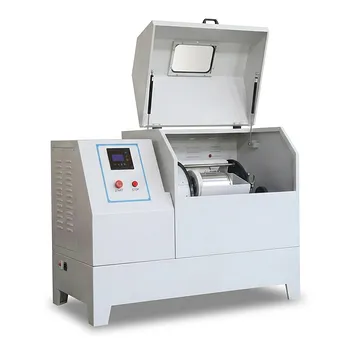
Heavy Duty Horizontal Planetary Ball Mill for Efficient Industrial Grinding and Sample Preparation

Vertical Square Planetary Ball Mill for Laboratory Sample Preparation and Nanoscale Grinding
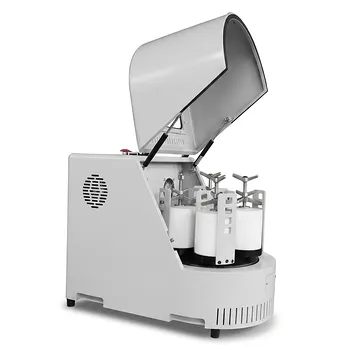
Vertical Semi Circular Planetary Ball Mill for Laboratory Precision Grinding
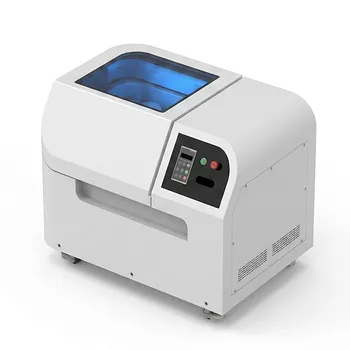
8L Planetary Ball Mill for Laboratory Grinding and Sample Preparation

High Energy Omnidirectional Planetary Ball Mill 16L
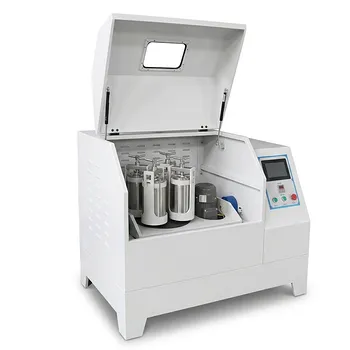
360° Rotating Omnidirectional Laboratory Planetary Ball Mill for Homogeneous Ultra-Fine Grinding and Mixing
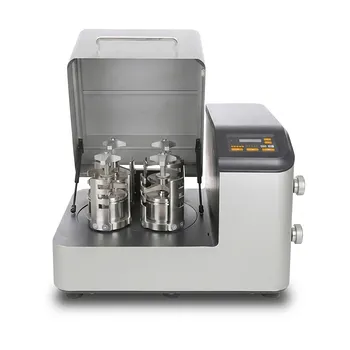
High Energy Planetary Ball Mill for Nano Scale Grinding and Colloidal Mixing in Material Science Research

High Energy Laboratory Planetary Ball Mill for Nano Grinding and Material Science Sample Preparation

High Energy Planetary Ball Mill for Nano Scale Grinding and Mechanical Alloying
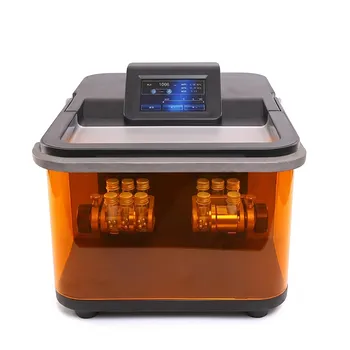
High Throughput Micro Ball Mill for Cryogenic Grinding and Laboratory Cell Disruption

Miniature Planetary Ball Mill with Vacuum Grinding and High Efficiency for Laboratory Sample Preparation
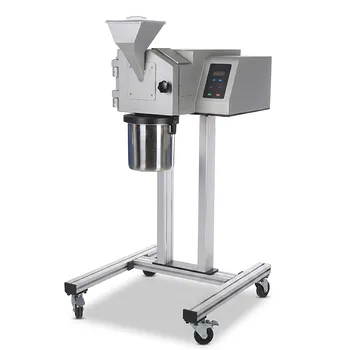
Cross Beater Mill for Brittle Material Grinding and Continuous Fine Crushing Industrial Sample Preparation

High Energy Omnidirectional Planetary Ball Mill 20L

Vertical Production Planetary Ball Mill for High Throughput Powder Processing