Why use hardened ball mill media for SiC-MoSi2? Ensure high purity and prevent contamination in composite ceramics.
Updated 5 months ago
The necessity of utilizing hardened ball mill drums and grinding balls stems from the extreme abrasiveness of Silicon Carbide (SiC) and Molybdenum Disilicide (MoSi2). During high-energy mixing, standard milling equipment undergoes significant wear, which introduces metallic impurities into the powder; these contaminants critically degrade the material's chemical purity, interfering with subsequent high-temperature sintering and compromising the final mechanical and electrical properties.
To achieve high-performance SiC-MoSi2 composite ceramics, you must prioritize the prevention of metallic contamination. Hardened milling media serve as a safeguard for chemical purity while providing the necessary kinetic energy to refine and homogenize extremely hard ceramic precursors.
The Preservation of Chemical Purity
Preventing Metallic Contamination
Both SiC and MoSi2 are exceptionally hard materials that act as abrasives during the milling process. Standard steel or soft alloy drums cannot withstand the constant friction and impact, leading to the "shedding" of metal particles into the ceramic mixture.
Eliminating Sintering Interference
The introduction of foreign metallic atoms can create unwanted liquid phases or secondary reactions during high-pressure, high-temperature (HPHT) sintering. These impurities disrupt the sintering kinetics, often leading to non-uniform grain growth or structural defects in the final composite.
Ensuring Material Performance
In composite systems like SiC-MoSi2, the electrical and mechanical properties are highly sensitive to the chemical environment. Hardened surfaces ensure that the final product maintains its intended electrical stability and structural integrity by keeping the matrix free from rogue elements.
Mechanical Energy and Uniformity
Overcoming Nanoparticle Agglomeration
Nanostructured powders have a high surface energy and naturally tend to form tight clusters or agglomerates. Hardened grinding media provide the intense mechanical force required to break these clusters, ensuring that MoSi2 and SiC are distributed uniformly at the molecular level.
Efficient Particle Size Reduction
High-energy ball milling acts as a carrier for mechanical energy transfer. Hardened materials, such as tungsten carbide or silicon nitride, maintain their physical shape under stress, allowing for a more efficient transfer of kinetic energy to pulverize the hard raw materials into micron or nano-level distributions.
Homogenization of Multi-Component Systems
For composites involving multiple phases, such as Mo, Si, and SiC, uniform spatial distribution is critical for a complete reaction. Hardened milling tools facilitate a deep mix that prevents "pockets" of unreacted material, which would otherwise become weak points in the finished ceramic.
Understanding the Trade-offs
Equipment Cost vs. Material Quality
Investing in hardened media like tungsten carbide or silicon nitride involves a higher upfront cost compared to standard steel. However, the cost of a failed production batch due to contamination or poor sintering typically far outweighs the investment in high-quality milling tools.
Media Selection and "Self-Contamination"
A common strategy to avoid foreign impurities is using milling media made of the same material as the reinforcement phase, such as silicon carbide balls. While this does not eliminate wear, any material shed from the media is chemically identical to the composite, thereby maintaining the purity of the system.
Making the Right Choice for Your Project
Guidelines for Media Selection
- If your primary focus is absolute chemical purity: Use grinding media and drum linings made of the same material as your ceramic reinforcement (e.g., SiC media for SiC composites).
- If your primary focus is maximum refinement of hard particles: Select ultra-hard media such as tungsten carbide (WC) to provide the extreme wear resistance and kinetic energy needed for pulverization.
- If your primary focus is maintaining electrical properties: Utilize silicon nitride (Si3N4) media to ensure high grinding efficiency without introducing conductive metallic traces.
The integrity of SiC-MoSi2 composite ceramics is ultimately determined by the cleanliness and uniformity of the raw material mix established during the milling stage.
Summary Table:
| Media Material | Key Advantage | Best Application |
|---|---|---|
| Tungsten Carbide | Superior hardness & kinetic energy | Efficient particle size reduction to nano-levels |
| Silicon Nitride | High wear resistance; non-metallic | Projects requiring stable electrical properties |
| Silicon Carbide | Zero foreign impurity introduction | Maintaining absolute chemical purity in SiC composites |
| Standard Steel | Low upfront cost | Not Recommended: Causes high metallic contamination |
Elevate Your Material Purity with Expert Solutions
Achieving the perfect SiC-MoSi2 composite requires precision from the very first mix. We provide complete laboratory sample preparation solutions tailored for material science, specializing in high-performance powder processing and compaction equipment.
Our specialized lineup includes high-energy planetary ball mills, jet mills, and disc mills equipped with ultra-hardened drums and media to eliminate contamination. To ensure your refined powders reach their full potential, we offer a full spectrum of hydraulic presses, including Cold/Warm Isostatic Presses (CIP/WIP), vacuum hot presses, and XRF pellet presses, designed for superior structural integrity.
Ready to optimize your advanced ceramic production? Contact our technical experts today to find the ideal equipment for your high-performance material research and manufacturing needs.
References
- P.A. Márquez Aguilar, V. Stetsenko. Laser irradiation of SiC-MoSi2 composite ceramics. DOI: 10.2298/sos0803271a
Mentioned Products
- High Energy Laboratory Planetary Ball Mill for Nano Grinding and Colloidal Mixing of Hard and Brittle Materials
- Heavy Duty Horizontal Planetary Ball Mill for Efficient Industrial Grinding and Sample Preparation
- Vertical Square Planetary Ball Mill for Laboratory Sample Preparation and Nanoscale Grinding
- High Energy Laboratory Planetary Ball Mill for Nano Grinding and Material Science Sample Preparation
- Vertical Semi Circular Planetary Ball Mill for Laboratory Precision Grinding
People Also Ask
- What role does a high-energy planetary ball mill play in processing quenched bioactive glass? Achieve Nano-Scale Precision
- What role does a high-energy planetary ball mill play in magnesium-based hydrogen storage alloy preparation?
- What is the primary function of a high-energy planetary ball mill in Ni2MnSn synthesis? Optimize Solid-State Alloying.
- What role does a planetary ball mill play in nano-mineral filler prep? Achieve Sub-100nm Precision & Performance
- What is the role of a high-energy planetary ball mill in Li2ZrO3 and LBS prep? Achieve Superior Electrolyte Density

Tech Team · PowderPreparation
Last updated on May 14, 2026
Related Products

High Energy Laboratory Planetary Ball Mill for Nano Grinding and Colloidal Mixing of Hard and Brittle Materials

Heavy Duty Horizontal Planetary Ball Mill for Efficient Industrial Grinding and Sample Preparation

Vertical Square Planetary Ball Mill for Laboratory Sample Preparation and Nanoscale Grinding

High Energy Laboratory Planetary Ball Mill for Nano Grinding and Material Science Sample Preparation

Vertical Semi Circular Planetary Ball Mill for Laboratory Precision Grinding

8L Planetary Ball Mill for Laboratory Grinding and Sample Preparation

Miniature Planetary Ball Mill with Vacuum Grinding and High Efficiency for Laboratory Sample Preparation

High Energy Planetary Ball Mill for Nano Scale Grinding and Colloidal Mixing in Material Science Research
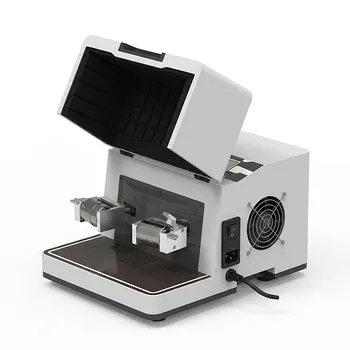
High Energy Hybrid Vibratory Ball Mill for Grinding Mixing and Cell Disruption

High Energy Planetary Ball Mill for Nano Scale Grinding and Mechanical Alloying

360° Rotating Omnidirectional Laboratory Planetary Ball Mill for Homogeneous Ultra-Fine Grinding and Mixing

High Throughput Micro Ball Mill for Cryogenic Grinding and Laboratory Cell Disruption

High Energy Omnidirectional Planetary Ball Mill 20L

High Energy Omnidirectional Planetary Ball Mill 16L
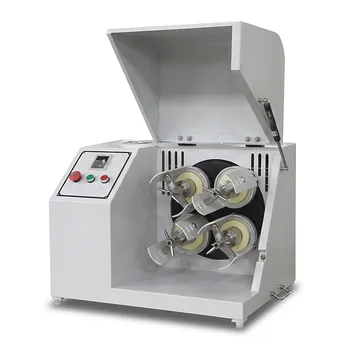
Horizontal Light Duty Planetary Ball Mill for Laboratory Sample Preparation

Vertical Production Planetary Ball Mill for High Throughput Powder Processing
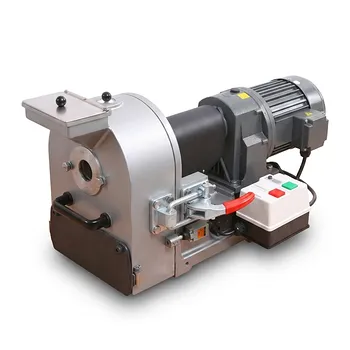
Laboratory Disc Mill for Fine Sample Preparation of Hard and Brittle Materials
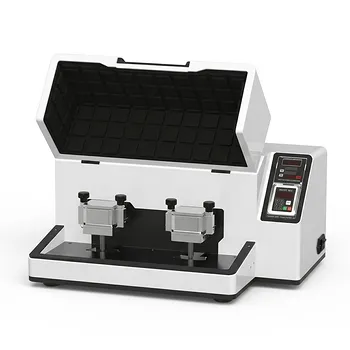
Nanoscale High Energy Vibratory Ball Mill Low Temperature
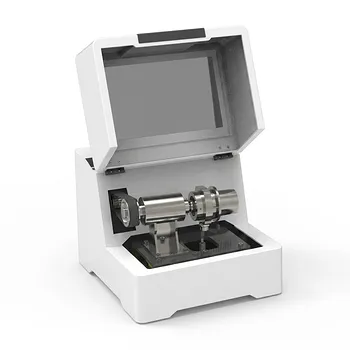
Single Tank High Energy Vibratory Ball Mill for Laboratory Grinding and Mixing